

MAY 0000000000000000000, 2026
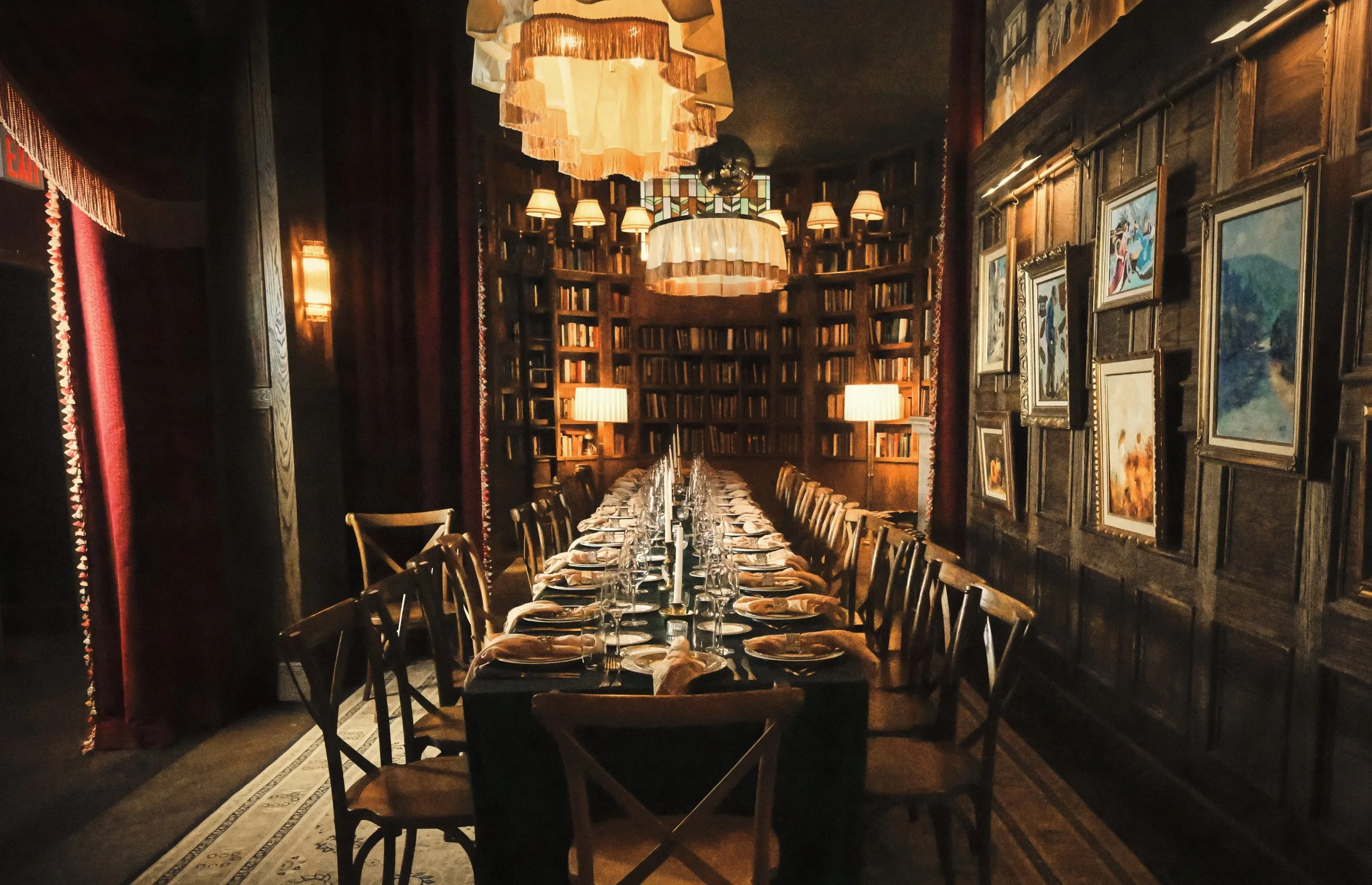
PHOTOGRAPHY KEVIN SINCLAIR ARTICLE DAVID GARGIULO DOCUMENTED AT MAXWELL SOCIAL
“ WE BUILT MAXWELL SOCIAL FOR PEOPLE WHO WANT MEANINGFUL CONVERSATIONS,
NOT JUST ANOTHER PLACE TO BE SEEN.”
— DAVID LITWAK, FOUNDER
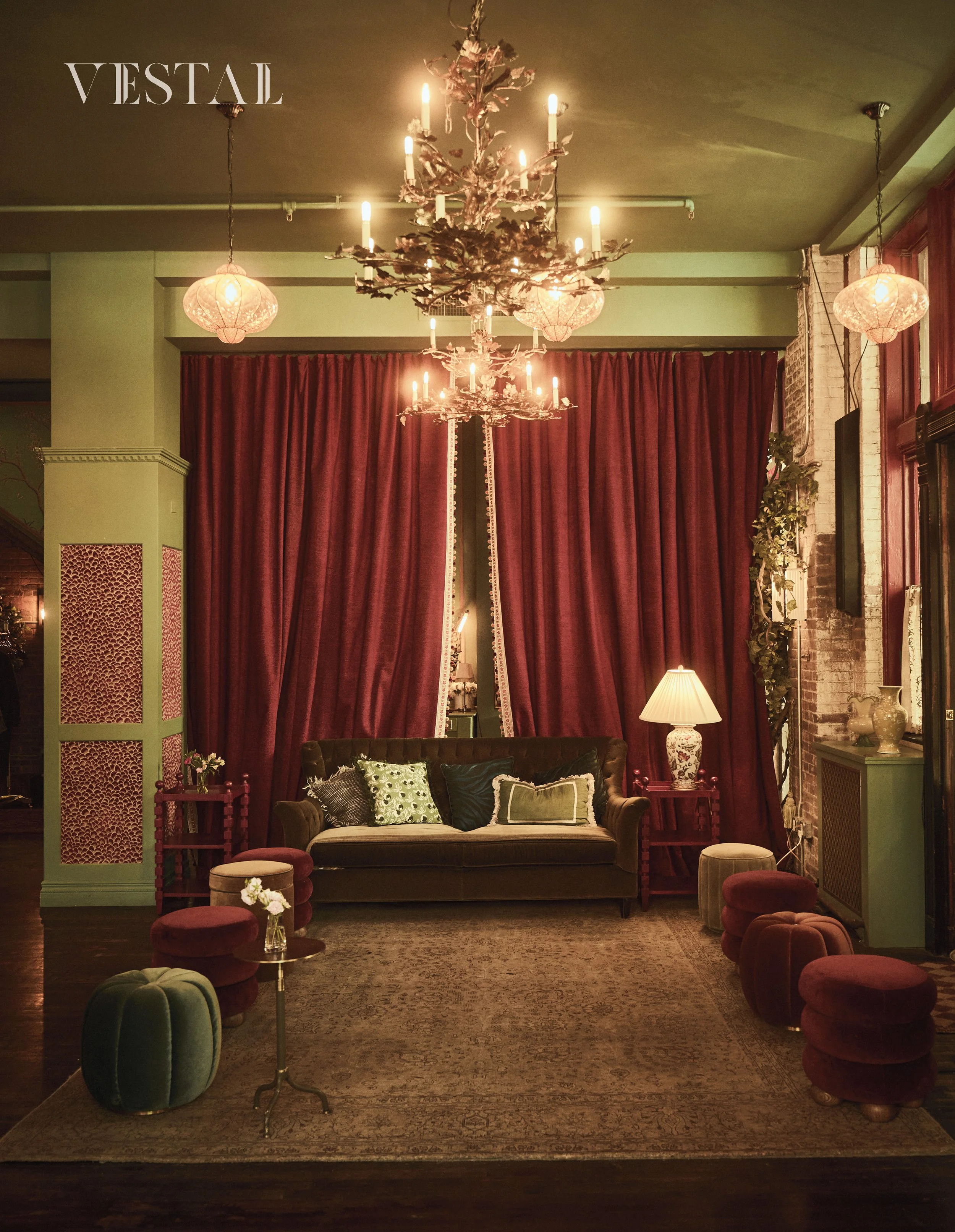
THE GARDEN ROOM
MAXWELL SOCIAL DESIGNED TO CONNECT
CULTURE THE ARCHITECT OF COMMUNITY
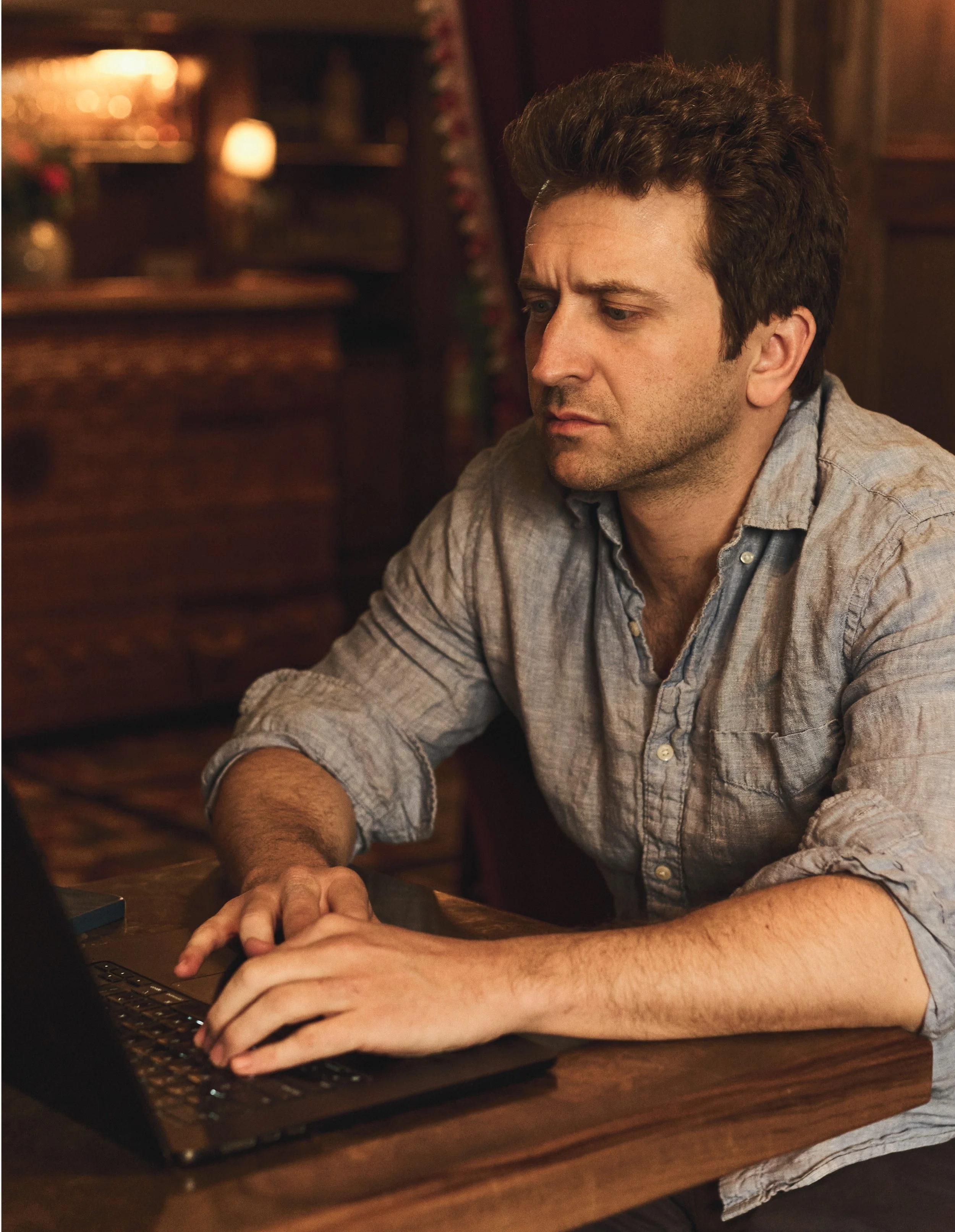
Founder DAVID LITWAK.
AT MAXWELL SOCIAL, DAVID LITWAK IS RUNNING THE MOST COMPLEX SYSTEMS PROBLEM OF HIS CAREER.
THE SYSTEM IS PEOPLE.
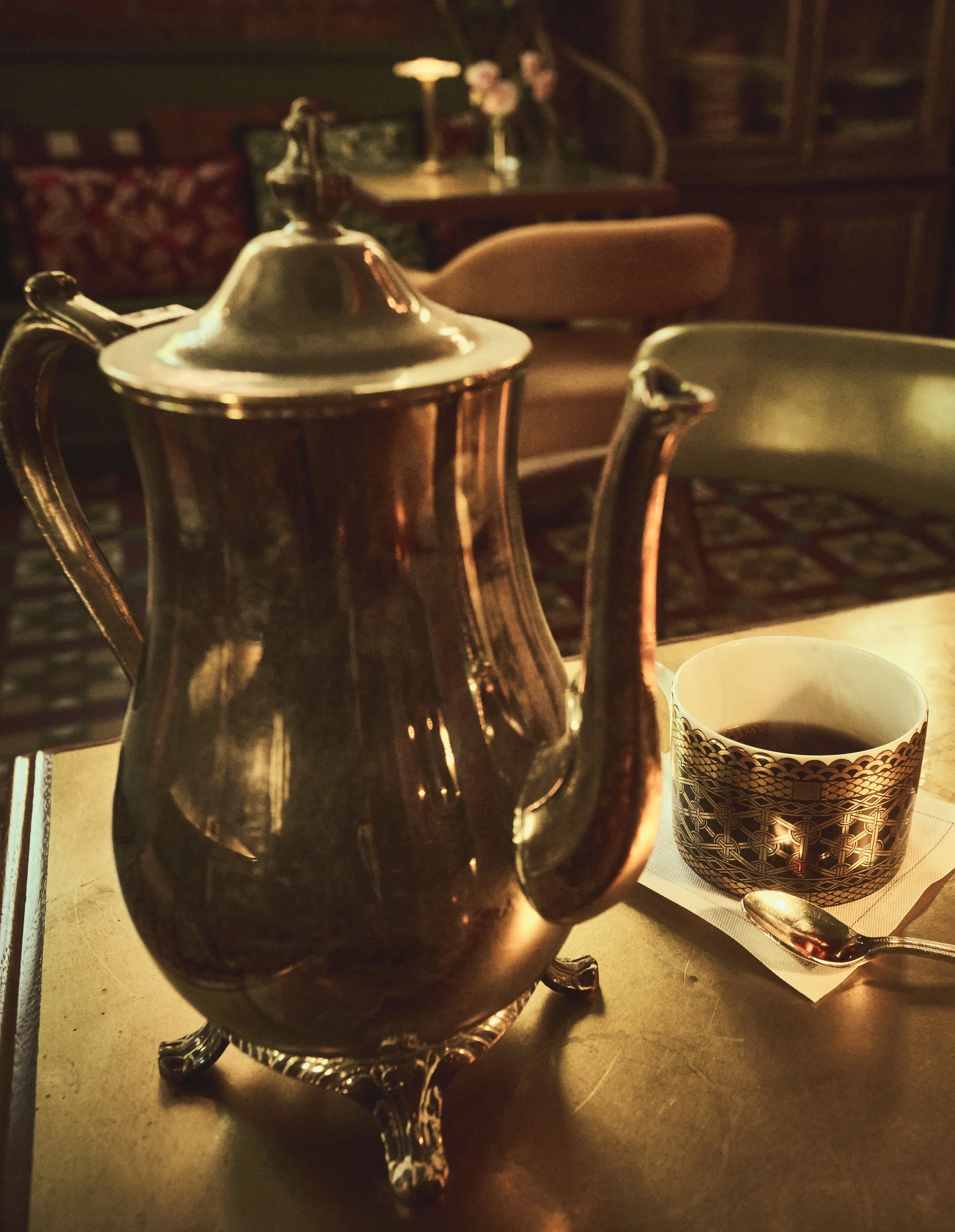
Jacob Brown meets me at the door on Watts Street with the confidence of someone who knows exactly what I'm about to feel. Brown is Maxwell Social's creative director, and he has clearly done this before. The unhurried pace, the slight smile as he watches me take in the entrance for the first time. I step through, and the city disappears. Not gradually; Immediately. The sound of Tribeca, the delivery trucks, and the hum of lower Manhattan, simply stops. What replaces it is something softer: the faint scent of flower arrangements placed throughout the space. The light is warm and directional. Stage red velvet curtains frame every doorway, floor-length and dramatic, catching the light in that particular way that makes a room feel like it belongs to another era. The space is grand. There is no other word for it. It is also, somehow, warm and welcoming. The decoration is layered and abundant. You notice something new every time your eye moves, but it's been done with taste and restraint, feeling curated rather than cluttered. This is a place that has been carefully considered while pretending it hasn't been. At the center of the Grand Room, a long dining table has been set for the evening, the kind of table that implies a dinner party of consequence. It spills naturally into the adjacent library, where books line the walls two stories high and the boundary between eating, reading, and talking becomes unclear. I stood there for a moment longer than I had planned to.
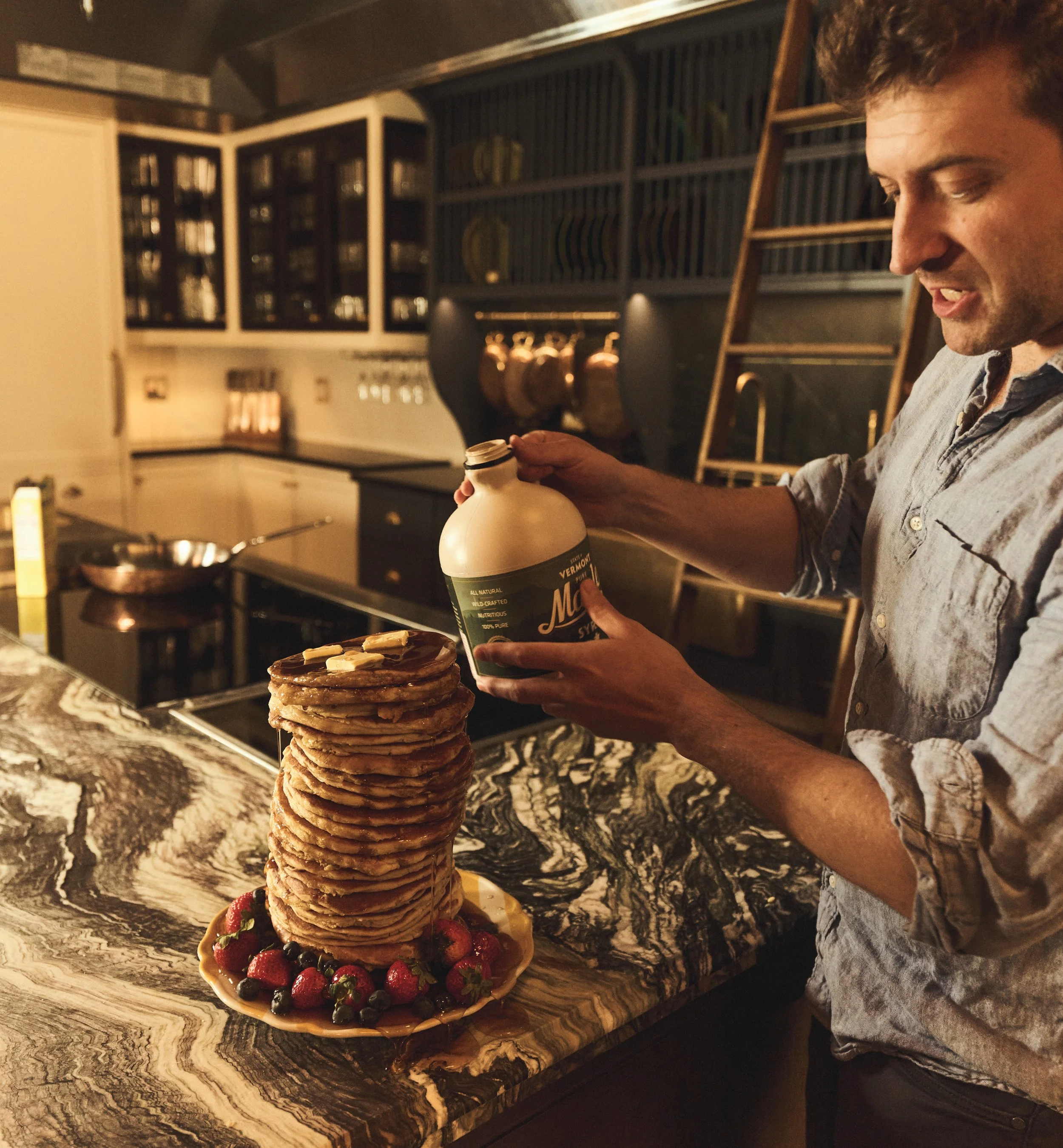
Brown moves me through the kitchen next. A chef's dream of leathered marble, Jennair appliances, and Ruffoni copper pots hanging in a row. And then into the Explorers Room, which is its own particular universe. The hand-painted Galapagos wallpaper wraps the room in something between an adventure novel and a fever dream. The bar is built into a hot air balloon basket. A two-floor library rises above it. It is, objectively, too much. It is also completely wonderful. By the time we reach the Garden Room, lighter and flooded with afternoon sun, I have stopped trying to summarize the place and simply surrendered to it. I settle onto a couch. A few minutes later, David Litwak walks in.
It's 1:30 in the afternoon, and Maxwell Social is already alive with the particular controlled chaos of a place that takes hospitality seriously. Staff weaves between tables, adjusting settings, folding napkins, carrying flowers. Delivery men wheel in crates through the front. An elegant well-appointed woman in an impeccably cut coat moves slowly through the rooms with the practiced eye of someone who has thrown many important parties and knows exactly what she is looking for.
Litwak arrives in a light jeans shirt and dark chinos, unhurried but already mid-thought. He's lean and sharp-eyed, the kind of person who listens to your question just long enough to know where it's going before his answer is already forming. He speaks fast with the momentum of a witty mind. Ideas tumbling into each other, pivoting mid-sentence when a better analogy surfaces, circling back to nail something he half-said two minutes ago. When the subject is Maxwell, which is to say when the subject is everything, there's a current running through him that doesn't quit. He is, he tells me, an electrical engineer by training. A UC Berkeley graduate. A career entrepreneur. None of which explains why he opened a members' club in a 150-year-old Romanesque Revival brownstone on Watts Street in Tribeca. Except that it completely does. "Social life is so many interconnected things," he says, leaning forward, elbows on his knees. "Status, real estate, design, programming. How many couches versus one-on-one tables, how you design the flow of a room, how many parties versus pizza nights versus intimate dinners." He ticks them off quickly, not reading from a list but pulling from somewhere he's clearly spent a lot of time. "It's a massive, massive system problem. And I think any good engineer, any good entrepreneur, ultimately loves solving systems problems."
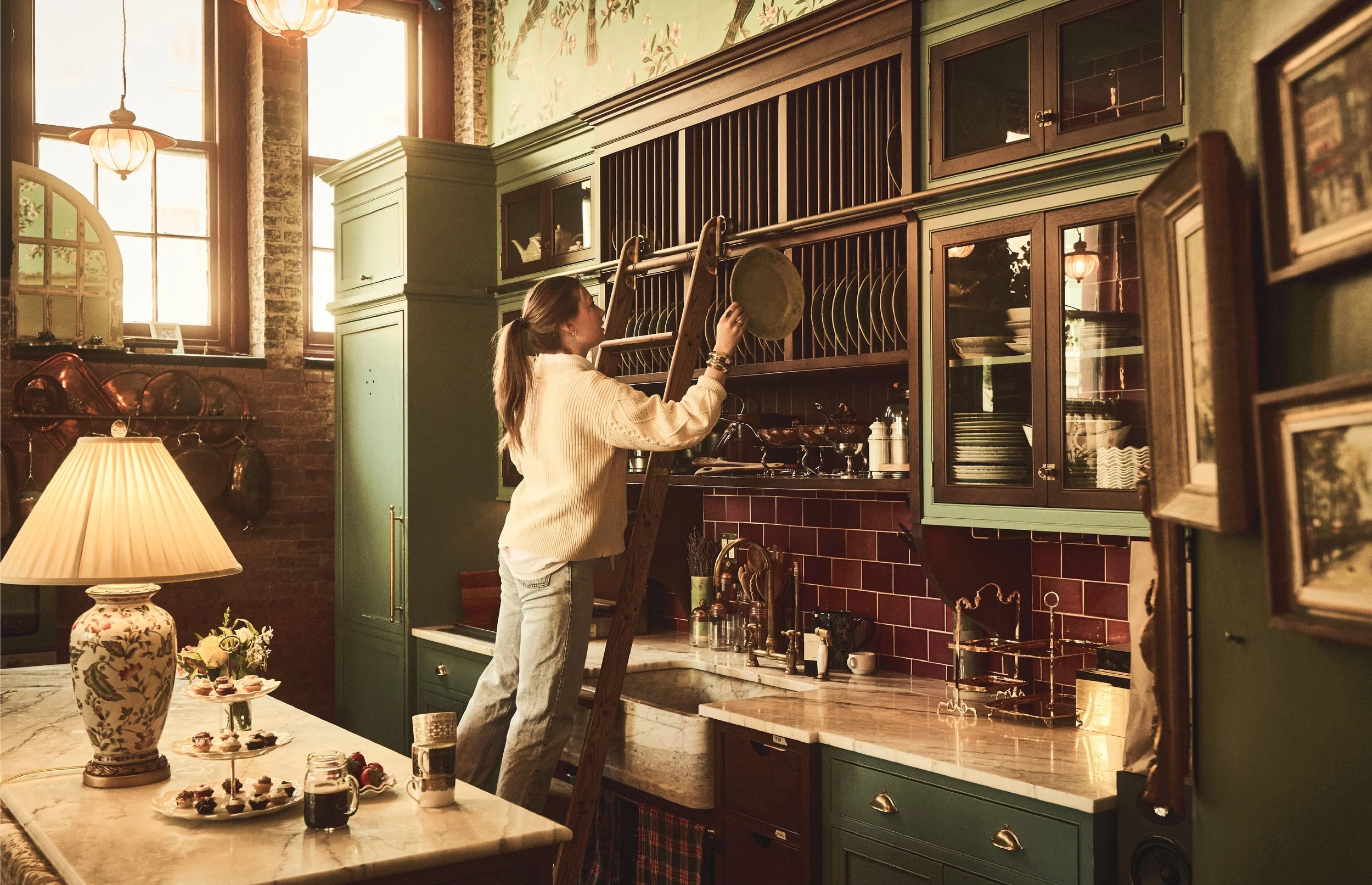
THE GARDEN ROOM KITCHEN
Before Maxwell, Litwak ran a dinner party series called Supper Club; friends-of-friends gatherings in San Francisco that expanded to New York and London. Guests answered questions in advance; the funniest answers were read aloud at the start of the night, and tables switched halfway through. It took off in a way that surprised even him. "Our conclusion was less that what we were doing was so awesome and more that the alternatives were so bad," he says, with a quick grin. "Would you rather go to a dinner party with friends of friends, or go to a random bar and stab in the dark, hoping you meet someone? Obviously, most people choose the former."
But events, he realized, weren't the answer. You can throw dinner parties forever and
THE KITCHENS
never actually build a community. The problem ran deeper, and it was a problem, he came to believe, that most people couldn't even name. "I don't think most people who are lonely recognize that they don't have a sense of community. They just feel it in some way they can't fully identify." He pauses here, one of the few times he does. "We don't know what we're missing. We never had it. So how do you even start speaking the language of something you've never experienced?"
He grew up atheist, never Bar Mitzvahed. Many of his members didn't grow up in a church or synagogue either. The Italian American men's clubs, the Rotarians, the Elks, the Moose. These were places that functioned as second homes for generations, built around shared identity, regular ritual, and genuine contribution. Then they faded. And nothing replaced them. "Our society has been without this structure for so long that it's become an unknown unknown. People want it, and when they find us, they often recognize it immediately. Like, oh, this is what I was missing. But they couldn't have told you that before they walked in."
The woman in the impeccable coat reappears briefly at the doorway of the Garden Room, peering in with quiet assessment before a staff member glides over to guide her elsewhere. Litwak barely clocks it. He's already onto social media. There's a phrase, coined by the researcher Sherry Turkle, about the particular loneliness of modern urban life: being alone together. Surrounded by people, connected to hundreds, genuinely close to almost no one. Litwak knows the concept well, and he thinks it describes something that has only gotten worse. "I'm not one of these people who thinks social media is the devil," he says, hands moving now, qualifying before he pivots. "But the idea that it's a substitute for IRL is proving more and more false. We're on the verge of a huge reaction. AI is calling our bluff. So much of online activity isn't genuine. And now we're about to take it to its logical conclusion, where it isn't even humans generating the content anymore." He reaches for an analogy, finds one fast. Digital connection, he says, is empty calories. You can survive on it for a while. It even feels good in the moment. But it isn't nutrition. "The dopamine you get from real human connection — from a conversation that actually goes somewhere, from cooking a meal with someone and sitting down to eat it — that's different. That lasts. Social media gives you a spike. Real community gives you something to come back to."
And coming back, he'll tell you, is the whole point.
The standard playbook for a modern social club is well understood: great food, a beautiful space, a hard-to-get membership, some celebrity adjacency to generate the velvet rope effect. Soho House invented it. A generation of imitators refined it. Litwak calls these places "subscription
spaces" or "gated restaurants." He is not complimentary, and he doesn't slow down to soften it. "They've put a velvet rope in a particular way and let in a bunch of Instagram-worthy people. Many of them have 'do not approach' rules. You're literally not supposed to talk to someone you don't know." He shakes his head slightly, the way you do when something still baffles you even after you've thought about it for years. "They were private clubs, not social clubs. You were meant to go there with your existing friends, feel exclusive because Taylor Swift was in the corner, and leave. That's a rebrand of the nightclub," he says, throwing his hands up.
The obvious question lingers beneath the critique. If community cannot be bought, it still has to be chosen, and choosing inevitably means excluding. Every great social institution in history has defined itself as much by who was outside the room as who sat inside it. Maxwell’s interviews, cohorts, and cultural filtering are designed to create belonging, but they also raise a tension: can a space built on intentional selection avoid recreating the very social hierarchies it claims to replace? Litwak doesn’t resist the premise. In fact, he seems to accept it as unavoidable. The deeper problem, he argues, isn't aesthetic. It's structural. Every one of those clubs is built on a hospitality business model that is fundamentally incompatible with community. Restaurants need to flip tables. Clubs that hemorrhage money need to accept members they don't really want. And when you're not selective, you can't build the thing people actually came for. "There's plenty of spas in New York. There's plenty of restaurants. People did not sign up for the Italian American club because it had a Michelin-star risotto. They signed up for the people."
Maxwell charges less than most “competitors,” by design. Members go through four interviews. The space has no full-time kitchen staff because members cook in it together. Programming is largely member-run: debate nights, pizza parties, Shabbat dinners that
turn into dance parties. There is a Member Council that plans events and shapes the culture of the house. And here is the belief at the center of all of it, the one Litwak returns to again and again, the one that makes Maxwell genuinely different: you cannot purchase community. You have to earn it." Every successful community model in history required contribution. Whether you were teaching Sunday school, cooking the Shabbat dinner, or helping plan the Italian American festival. You had to do something." He leans back, more emphatic than animated. "The idea that you can be a passive consumer of community is hilarious to me. It has literally never worked. Not once."
"It doesn't matter what you pay. If you don't show up to your best friend's wedding, he's not going to be your best friend anymore." He spent the first year of Maxwell not fully believing his own conviction. A paying customer, he kept thinking, I should be doing things for them. But every time he gave members more ownership, more responsibility, more freedom to shape the space, they rose to meet it. "Some of our members now want to bartend." He laughs, quick, genuine. "Why didn't we do that earlier? Every time I thought we'd hit the limit of how much to empower them, the limit turned out to be further than I realized. People want to be put to work. That is the most contrarian thing we believe and it keeps turning out to be true."
“ THE GOAL WASN’T EXCLUSIVITY. IT WAS ENERGY, PUTTING THE RIGHT PEOPLE IN THE SAME ROOM AND LETTING MAGIC HAPPEN.”
So what kind of people does Maxwell want? The answer is less a list of criteria than a philosophy of selection. "We're asking one question," Litwak says, tapping his knee once for emphasis. "Do we want to be across the dinner table from this person frequently? That's it. You can't always label the algorithm by which people build their friend groups. But you can build the structure by which it chooses itself." He reaches, naturally, for an engineering metaphor. The membership base, he says, functions like a neural network. You don't program the output directly, you design the inputs, set the conditions, and let the pattern emerge. At a certain scale, the community becomes self-sustaining, selecting its own next members, reinforcing its own culture.
Every new member at Maxwell enters in a cohort of roughly thirty people. Over three months, those thirty are introduced to each other through a structured sequence of dinners, events, and rituals. By the time they're
folded into the wider house, they already have a web of relationships inside it. The idea is that when you walk into Maxwell on a random Tuesday, it feels less like entering a venue and more like walking into a party where you already know half the
room. "We onboard members so that when they walk in, it actually has that feeling of Cheers, where everyone knows your name. Now there are a ton of bars that launch with that tagline. But if you ask what they actually did to make it true — did they change any structure, did they rethink the business model — the answer is usually nothing. We changed the fundamental way we operate.
“ I HOPE IT [THE FUTURE] FEELS LIKE AN OCEAN, CALM AND PEACEFUL, BUT ALSO DEEP, WITH SPACE TO GO WHEREVER YOU WANT.”
DG __ I relate to that. In Italy we do two kisses when we greet people. Do you do that?
BK __ Yes, two kisses. But in America it always becomes confusing. You go in for the greeting, then you go the wrong direction, then you try to fix it… and it becomes a whole situation. [laughs]
DG __ Totally! [laughs] So heroes or villains, which is more fun to play?
BK __ Villains. I love the challenge. In the end, people will always love heroes. But making a villain likable is much more interesting as an actor because there are more layers to it. Heroes are heroes. They stay heroes. But villains have reasons behind what they do. For me, heroes are two-dimensional but villains are three-dimensional. Also, they’re more fun to watch.
DG __ Most of your career has been in Turkey. What part of that identity did you bring with you to the US and what did you leave behind?
BK __ I brought everything! I don’t really believe in borders. I’ve always lived like a world citizen. I’ve lived in different countries and cities over the years. But with this role, because the character is Turkish, it felt meaningful. I knew Turkish audiences would be watching and it would be one of the first times they see a Turkish character in a major international show. So I brought a lot of cultural details into the performance, gestures, reactions, ways of speaking, but also parts of my own identity into the set itself. For example, do you know baklava, the traditional Turkish dessert?
DG __ Yes, very familiar, it’s delicious!
BK __ This was funny. The first day, I brought it on set because in Turkey it’s common to bring it on the first or last day as a gesture. But hear this, the first day we were shooting in a cemetery! [laughs] So imagine this Turkish guy handing out baklava to the crew in a cemetery. And at that point, most of the crew members didn’t even know who I was yet, so I think a few people were probably like, “Who is this guy bringing dessert to a graveyard?” [laughs] But I like sharing culture. I love learning about other cultures. That’s one of the best parts of this industry. You get to experience different people, different worlds, and different perspectives through film and television.
DG __ What surprised you most about the difference between a U.S. production and a Turkish set?
BK __ No difference, really. That’s actually something I’m proud of when it comes to my country and industry. We’re doing great! Honestly, I expected a contrast. I thought, “Okay, I’m going to a Hollywood set, let’s see what changes.” But it felt very similar. The only real difference was that in America, they don’t work on weekends, which was amazing for me. For the first time in my life, I had weekends off! [laughs] I could actually see friends who have normal jobs, Monday to Friday schedules. That was fun.
DG __ You said before you are a world citizen. What does that actually look like for you? Where do you go, and what do you do?
BK __ I don’t think there’s a deadline when it comes to learning in our job. Acting is very connected to real life, so it’s important to stay in it. Observe people, live, and experience things. I remember in my first year of conservatory, one of my teachers gave us an assignment. There was a train station near our school in Istanbul, and the homework was to go there, sit for a few hours with a notebook, and observe how people greet each other, how they say goodbye, how they leave. When you train your brain like that, you start noticing everything, the small emotional beats in everyday life. For example, someone realizing too late that the person they’re saying goodbye to is gone. Those moments make acting richer because they come from real observation. After that, every week we had similar assignments, watching people in bookstores, observing how they choose books, things like that. It trained me to look at life in detail. Of course, I don’t do it in a strange way like a stalker [laughs]. But it’s important as an actor to study details of how people behave. I also can’t really do that openly anymore because I’m recognized in Turkey. So I travel as a way to keep that part of me alive. I’ve lived in Paris, Milan, Rome, Amsterdam. I try to spend time in different cities when I can. It helps me slow down and breathe. I like arriving somewhere new and immediately making it feel familiar. In the first week, I’ll walk around, find my grocery store, my pharmacy, the places I’ll return to. I build a routine quickly. That helps me feel grounded.
DG __ I love that first exploratory week, figuring things out. It’s like an adventure. If the next decade of your career could look like anything, what does that look like for you?
BK __ I hope it feels like an ocean, calm and peaceful, but also deep, with space to go wherever you want.
Photographer James Macari (Art Department), Stylist Julia Müller (The Wallgroup), Interviewer David Gargiulo, Groomer Hector Simancas, Photo Assistant Liz Lucsko, Stylist Assistant Cole Stevens, Talent Boran Kuzum (ImPRint), Producer All Good NYC, Location Neighbors Studio, Special Thanks Felix Cadieu (Neighbors), Grayson Crounse (Milk).
