

COURREGES WINTER 2026 COLLECTION INSERT
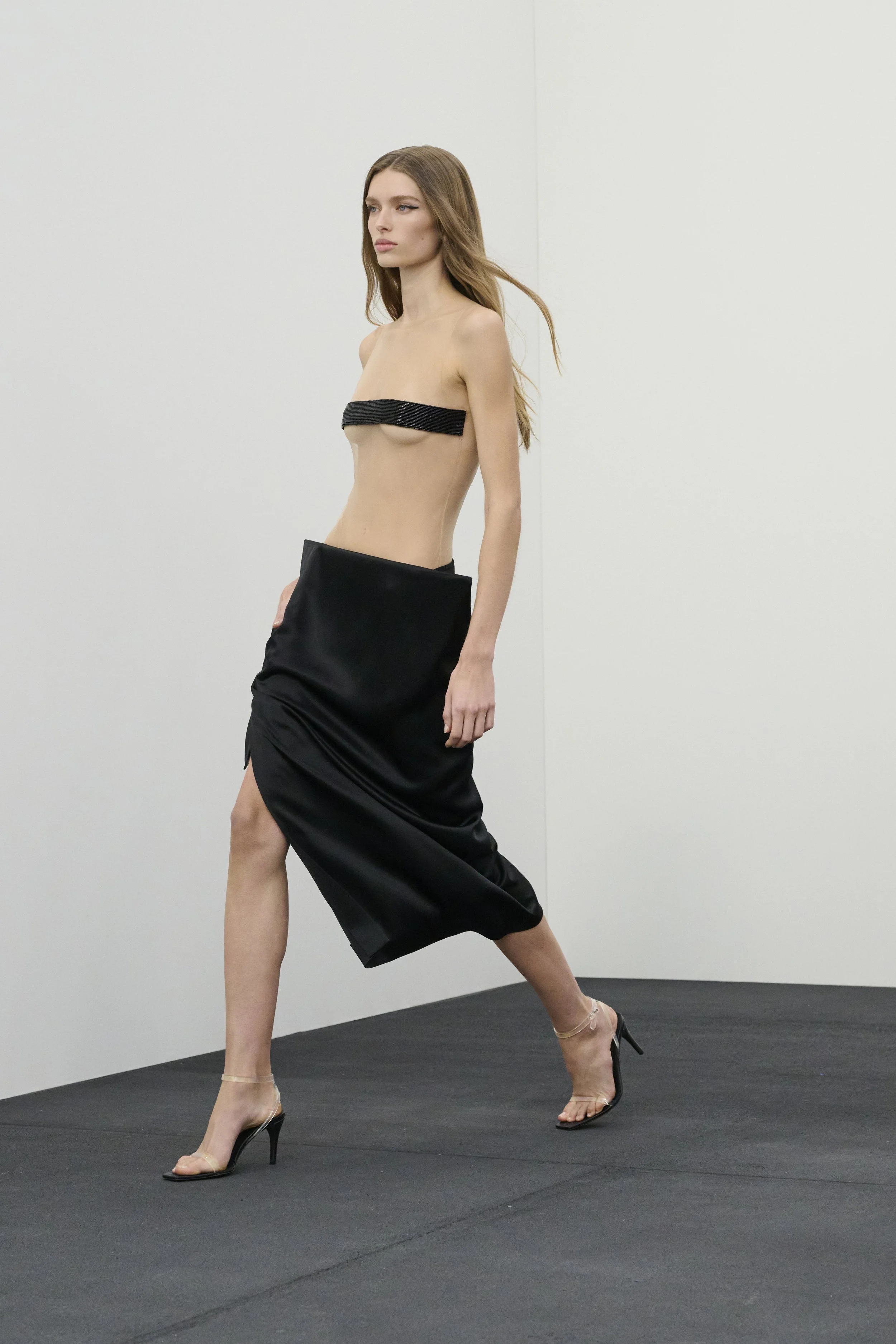
Courtesy of COURRÈGES VIEW LOOKS
COURRÈGES FW26: TWENTY-FOUR HOURS OF MODERN LIFE
Fashion often divides life into moments. Daywear serves one purpose. Eveningwear another. Work exists separately from leisure, utility from glamour, reality from fantasy. At Courrèges, Nicolas Di Felice has spent the past five years questioning those distinctions. For Winter 2026, he brings that conversation to its most complete expression. Titled 24 Hours in the Life of a Courrèges Woman, the collection unfolds as the rhythm of a single day. Morning becomes afternoon. Afternoon gives way to evening. The city itself becomes the runway, replacing fantasy with something unexpectedly familiar: the choreography of everyday life. It is an idea that feels true to the house André Courrèges first imagined more than six decades ago. When André Courrèges introduced his radically modern silhouettes in the 1960s, he wasn't designing escapism. He was designing for movement. His geometric tailoring, abbreviated hemlines, white boots, and architectural precision reflected an optimistic belief that fashion should evolve alongside the people wearing it. Clothing was meant to accompany modern life. Nicolas Di Felice understands that legacy better than most. Since taking the creative helm in 2020, he has resisted the temptation to treat Courrèges as an archive to be endlessly referenced. Instead, he has stripped the house back to its essential vocabulary—clarity, precision, movement, and sensuality—and asked what those ideas mean today. Winter 2026 feels like the culmination of that exploration.
The collection follows a woman through the city from the moment she leaves home until she returns long after dark. Utility becomes elegance without requiring a costume change. Tailored coats, technical separates, sculptural dresses, and precise knitwear move naturally through the hours, suggesting that contemporary wardrobes should respond to life. Fashion has increasingly embraced versatility, but Di Felice approaches it with unusual discipline. He removes anything unnecessary. What remains is a clean geometry, purposeful construction, and silhouettes that feel aerodynamic. Every line exists for a reason, revealing just enough to remind us that confidence is communicated through intention rather than exposure. Throughout the show, the body remains central. Coats frame movement and dresses skim. It is clothing designed not for a photograph, but for the experience of inhabiting a city. The set reinforced that philosophy. Di Felice recreated fragments of the streets themselves. Manhole covers, road markings, ambient traffic, footsteps, snippets of conversation, sounds of an ordinary morning. That decision says something important about where Courrèges stands today. For much of the past decade, luxury has often celebrated fantasy. Nicolas Di Felice offers something different. He finds optimism in reality. The ordinary becomes worthy of attention. The commute, the walk home, the changing light across a single day all become opportunities for design. Even the collection's more experimental gestures remain grounded in that philosophy. Winter 2026 also marks an important milestone. Five years after presenting his first collection for Courrèges, Di Felice has developed one of Paris's most disciplined design languages. His work has never relied on nostalgia, despite leading one of fashion's most historically significant houses. Instead, he has consistently asked how André Courrèges' belief in progress might look if imagined today. This season offers perhaps the clearest answer yet. Rather than presenting modernity as something futuristic, Di Felice locates it in the present. In the routines we repeat, the cities we move through, and clothes that evolve alongside us throughout the day. That perspective feels rare. Courrèges proposes something more enduring: that the best design begins by understanding how people actually live. In following one woman through twenty-four ordinary hours, Nicolas Di Felice reminds us that there may be nothing more extraordinary than designing for reality itself.