

JULY 29, 2026
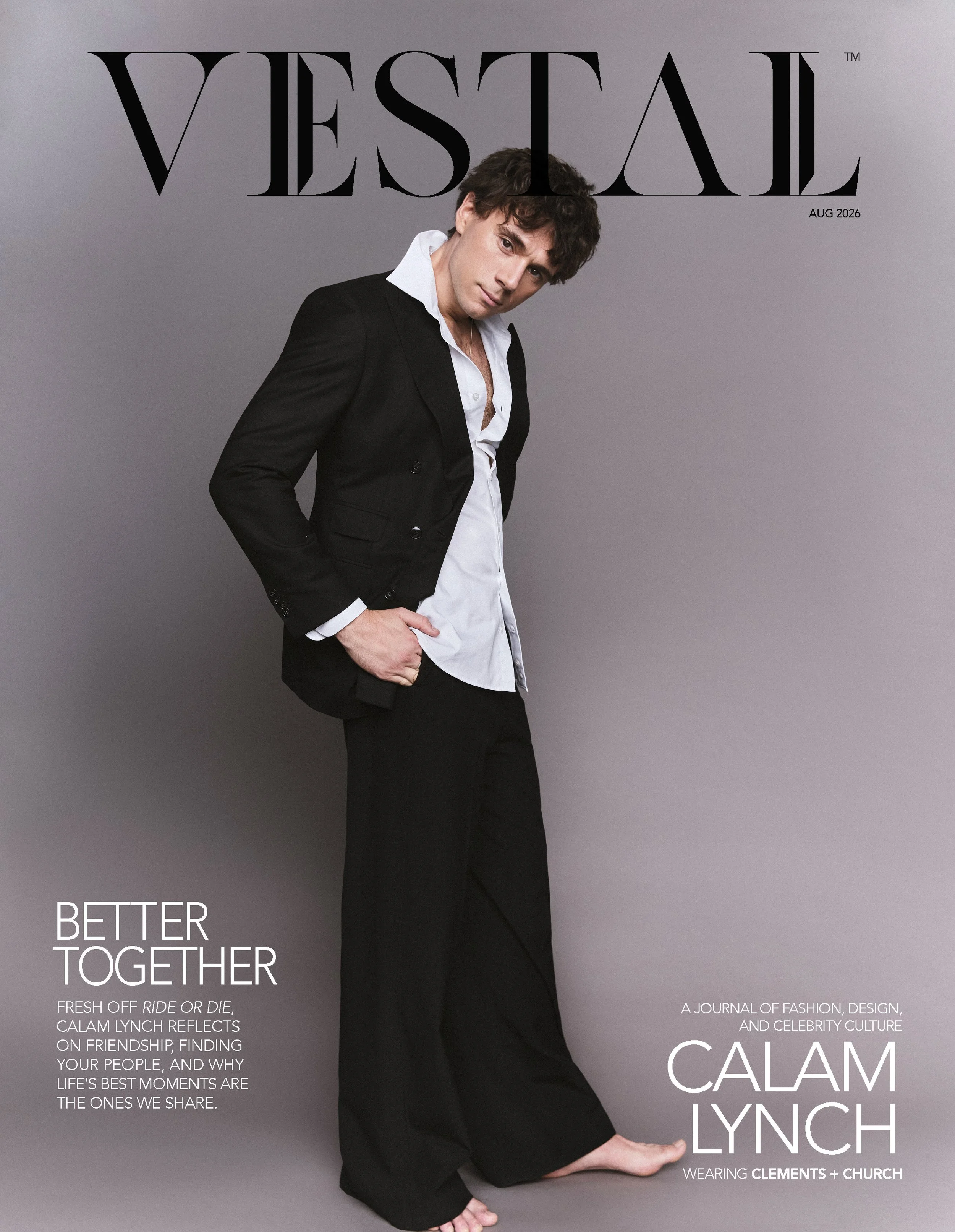
PHOTOS DAVID REISS STYLING KEELEY DAWSON INTERVIEW DAVID GARGIULO LOCATION THE CORNER STUDIO WEARING TRUSSARDI
“ HAVING A SENSE OF AGENCY IS ONE OF THE MOST IMPORTANT THINGS IN LIFE.”
INTERVIEW WITH CALAM LYNCH
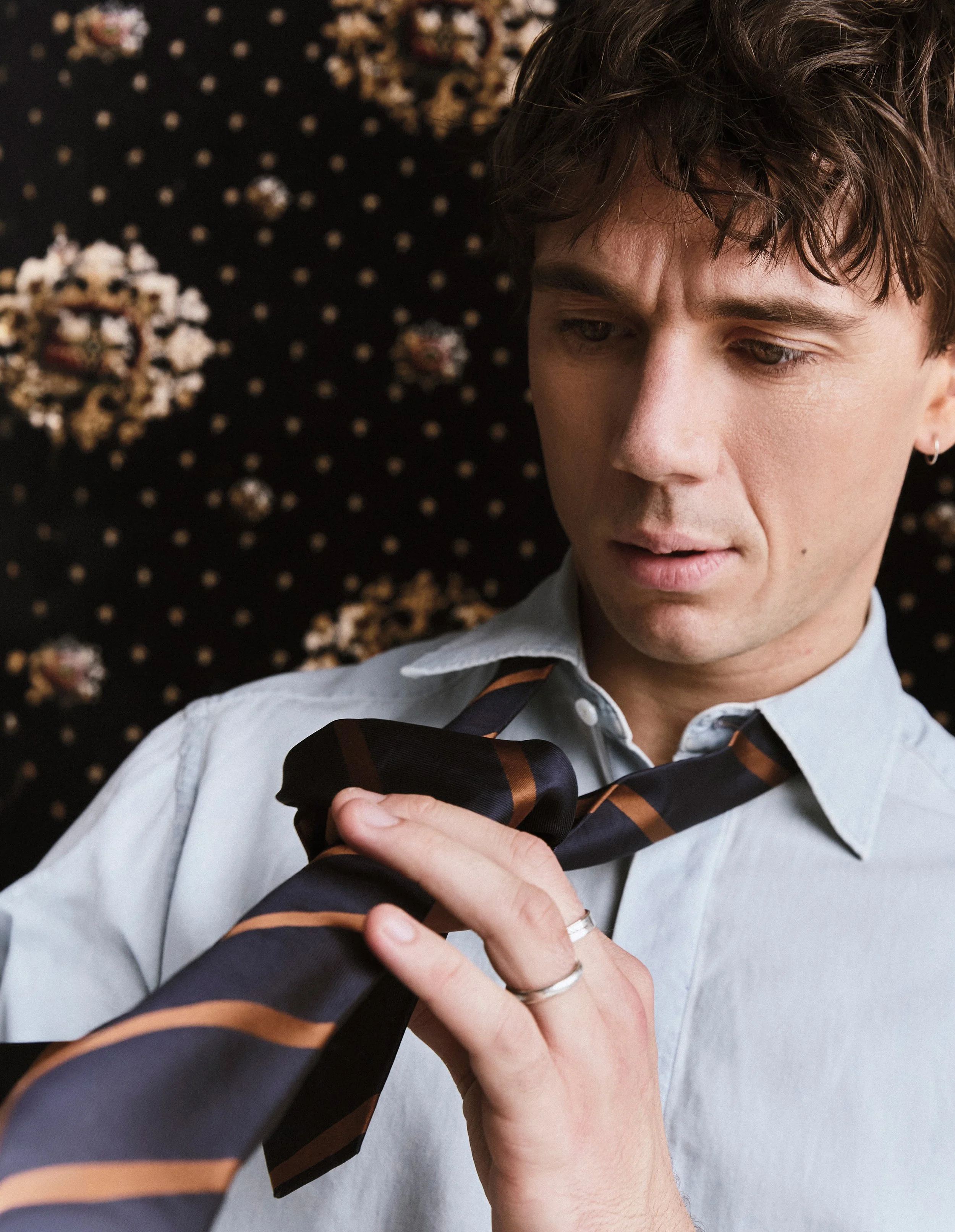
Total look DUNHILL. Photography by David Reiss, captured in studio and on location in London. With appreciation to our collaborators across the pond.

Everyone talks about the people who arrive when things go well. Far fewer talk about the ones who stay.
For Calam Lynch, those are the people who knew him before the premieres, the press schedules, and the industry recognition. They are the ones who witnessed the early victories, the inevitable disappointments, and the long, in-between stretches spent simply trying to figure things out. They are the ones who remember who you were before the achievements, before expectations, before anyone else had an opinion about who you should become. For Calam, those people are his “ride or dies.” It is a phrase that has been worn thin by internet culture, but for him it carries something much more genuine: loyalty, history, and the comfort of knowing someone has been there through every version of yourself. These friendships are not built around one defining moment. They are built slowly, through years of conversations, shared memories, late nights, ordinary days, and the rare ability to be completely yourself without having to perform.
It feels fitting, then, that Calam’s latest project carries the same name. In Ride or Die, he plays Sam, a character caught between chaos, comedy, and the uncertainty of figuring out who he wants to be. Away from the screen, Calam finds himself in a similar moment of reflection, thinking about the relationships, choices, and experiences that have shaped the person he is becoming. Turning 30 has brought its own set of questions. The focus shifts from discovering what you are capable of doing to understanding what is actually worth holding onto. For Calam Lynch, this next chapter is not simply about where his career takes him, but about the people, values, and choices that will define the life he builds along the way.
David Gargiulo __ I was told you just came back from the New York premiere. How was the experience?
Calam Lynch __ It was amazing. I got back this morning, so it still feels like I’m there a little. We had a screening in London about two weeks before the New York premiere, so we’d already had a moment to all see each other and watch the show in front of an audience for the first time, which was exciting but also nerve-wracking. Sometimes when you do TV premieres, you haven’t seen the show yet, and you’re watching it for the first time in a cinema on a massive screen, which can be quite intense. As an actor, the first time you watch something, you’re quite preoccupied with yourself. You’re thinking, “Do I like how that scene goes?” or “How did I feel that day?” or “Which take did they use?” But by the time we got to the New York premiere, I knew what to expect so I could just enjoy it as a viewer, which was so much nicer. I really love the cast and the core creative team who made it, and I’ve missed them, so it’s been great to see everyone again over the last few weeks.
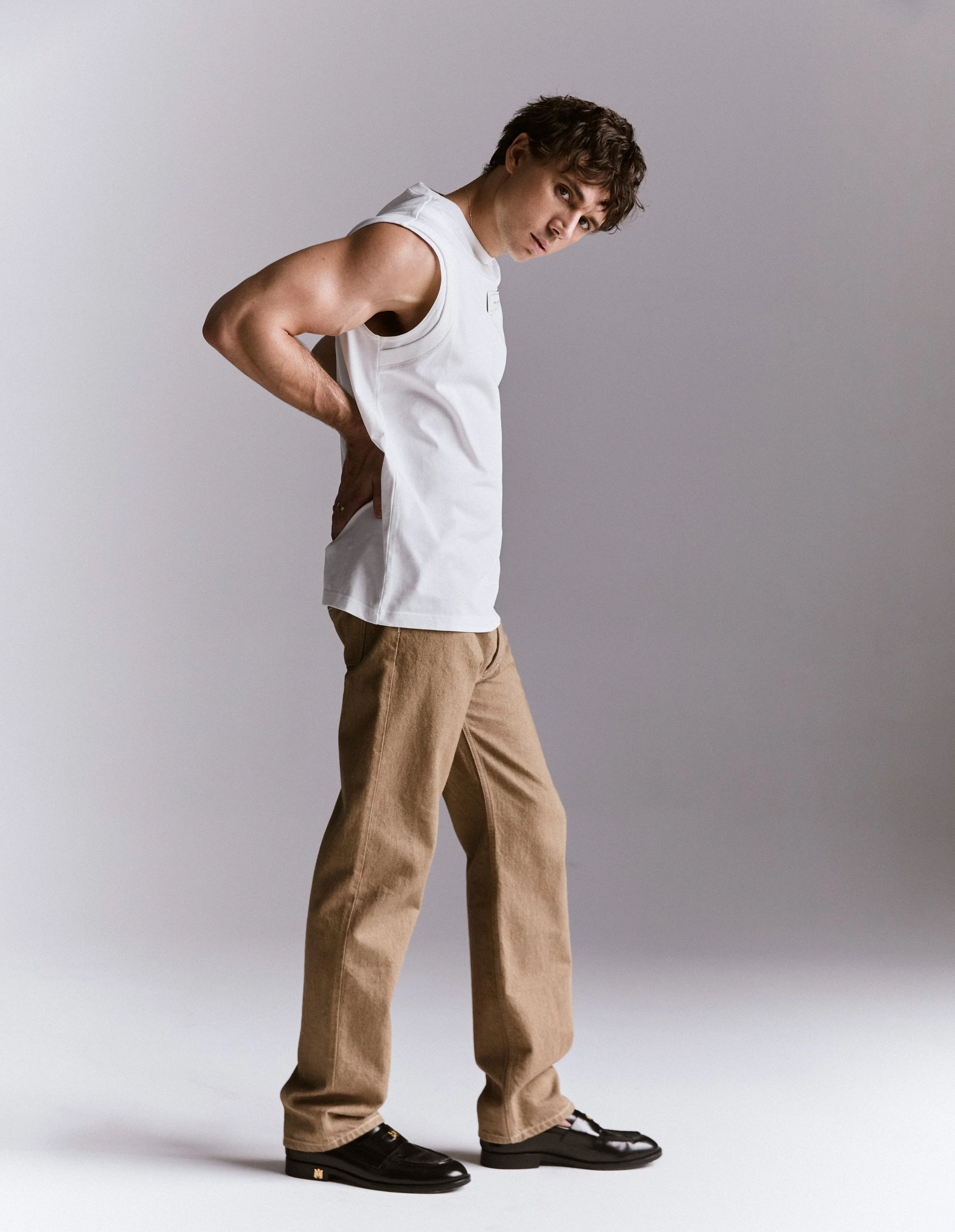
T-shirt FENG CHEN WANG, trousers AGNES B, shoes AMIRI.
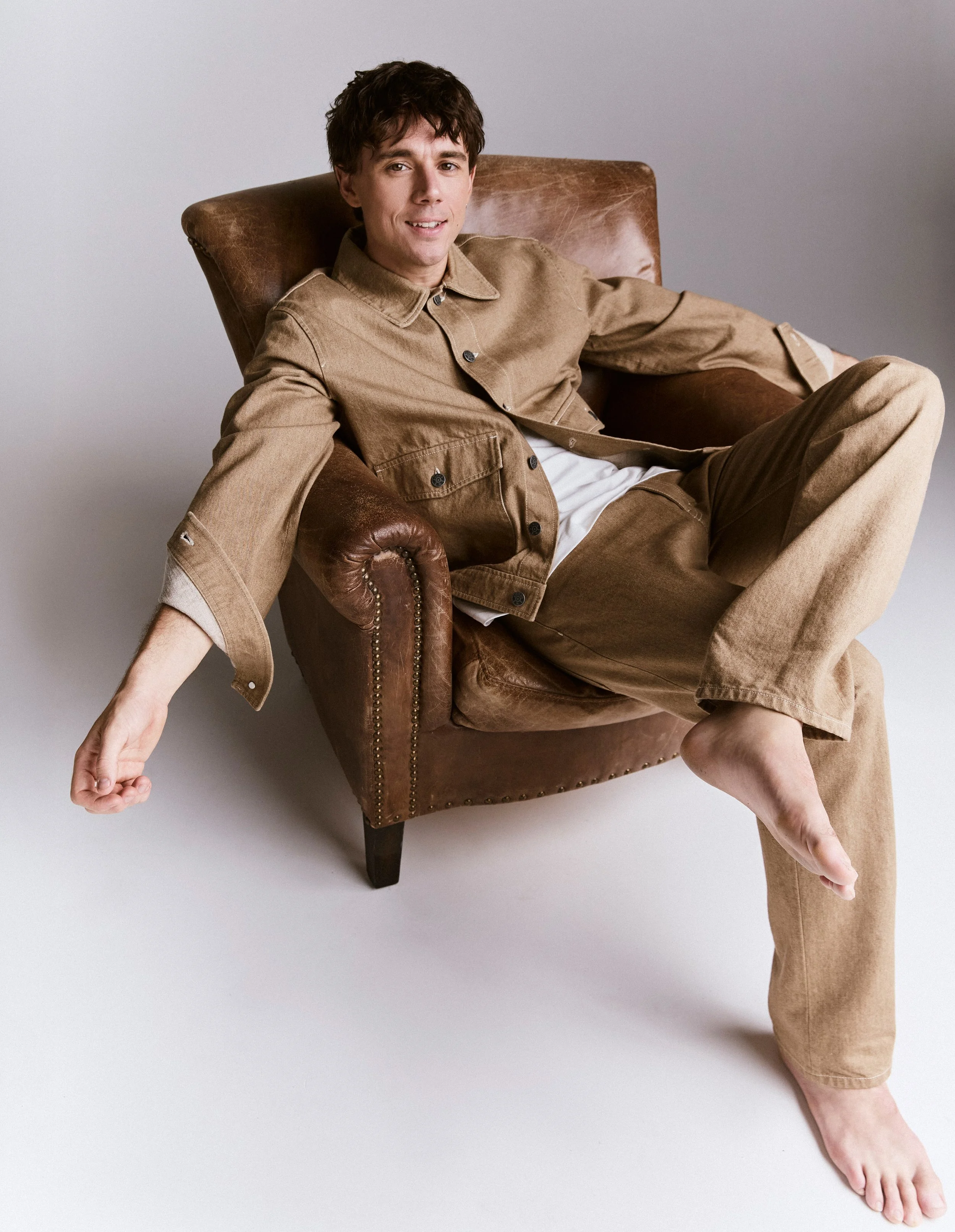
Total look AGNES B.
DG __ How does it feel seeing your face so big on a screen?
CL __ I don’t know. I guess I’m a little bit more used to it these days, but it is weird, isn’t it? It’s always funny afterward because you’re at the after-party, hanging around with people, and obviously some people there worked on the show, but plenty of people are there for other reasons. Some people are like, “Oh yeah, it’s that guy we’ve been watching, on this massive cinema screen." But it’s been great. With this show, it’s a shame people can’t watch it in cinemas because the action sequences are so cinematic. The director of the first two episodes is Peyton Reed, who directed the Ant-Man films, so he’s a proper movie director, and I think he shot it with that scale in mind. I hope people have big TVs at home. [laughs]
DG __ Well, in the US, for sure. We’re well known for that. [laughs] How did you find New York?
CL __ I loved it. I’ve actually lived there for six months, but I was just two years old, so I don’t really remember it. My dad was doing a play over there; he was on Broadway. Then I went back two years ago for about 10 days, and I’d love to maybe live there one day. It’s such a cool city. Having been raised in London and spent my whole life there, New York feels similar enough that you don’t feel like a fish out of water. But it also has its own identity that’s completely distinct from anywhere else in the world, including London. I think it helped that I have quite a few friends there now. Going to a city like that without any kind of anchor might feel overwhelming, but for me this time it was the show, and then getting to see all my friends. It was just the best five days.
DG __ I know you grew up in a family surrounded by storytelling and performance. What was the environment you grew up in like, and how did it shape the person you became?
CL __ Growing up, like most kids, whatever your circumstances are, it just feels normal. My parents being actors and often going to work to do a play in the evening when I got home from school, that was just normal for me. I think by the time I was around 11, I started realizing, “Oh, none of my friends’ parents do this.” It was kind of unusual. But in the way that you do when you’re young, I didn’t necessarily think much about it. I really loved football, and I think I was probably more interested in doing that than doing theatre. One thing I’ve become more grateful for as I’ve gotten older is that my parents always had a really strong sense of their own identity. Maybe that came from being actors. They were around a lot, but they also went away and worked, and work was really important to them. It was almost their raison d’être. I think I’ve probably inherited that. I can’t really imagine living a life that isn’t connected to some kind of vocation. So much of what I think about is tied to the industry, but also to the art itself. I love film, I love cinema, I love watching television, and I love seeing my friends give great performances, or seeing my friends who are writers and directors create things. It’s what consumes me, and I think my parents had that same approach. I’ve probably got that from them, and I’m really grateful for it because I genuinely enjoy it.
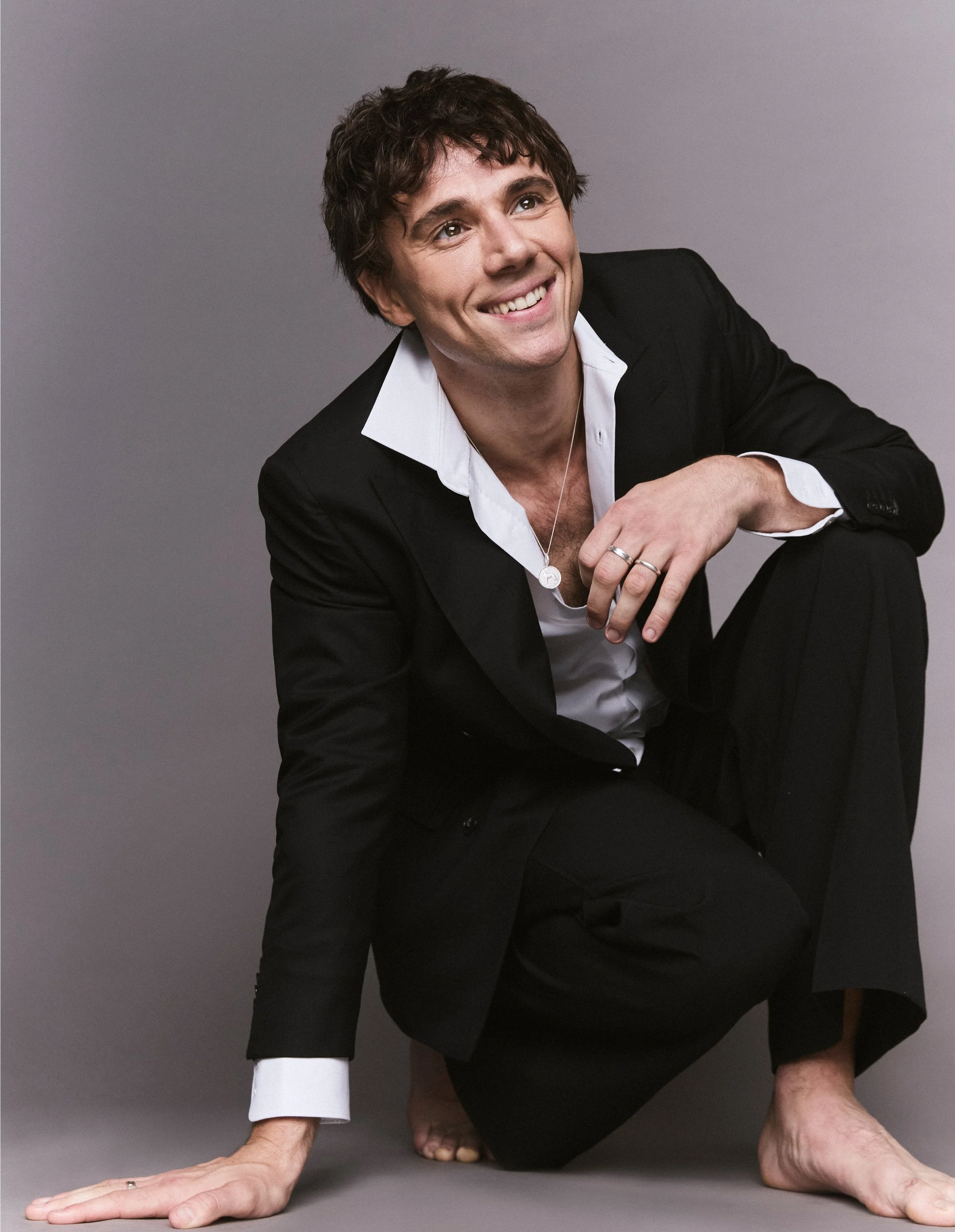
Total look CLEMENTS + CHURCH
DG __ What are the things you value most in the people you surround yourself with?
CL __ I think loyalty is really important. The older you get, the more things you go through, the more you understand the value of people who you know are genuinely going to be there. But I think, for me, the bread and butter, the sustenance of life, is humor and being light about things. That’s often how I interact with the world. I want to be silly, make jokes, and be around people who have that same energy. What’s beautiful when I look at my closest friends is that there’s a lot of variety. Not many of my closest friends are actors. A lot of them are doing things adjacent to the industry, and some are doing completely different things. I think it’s easy as an actor, the more you do it, to start feeling like what you’re doing has a certain gravity. And I think it’s important to take the work seriously, but I’m really glad I’m surrounded by people who constantly take the piss out of me. Otherwise, I think it would be very easy to become self-important, and I don’t want to be that person. So I’m pleased that, with my closest friends, that’s kind of the currency: we all take the piss out of each other in a loving way, but we also support each other.
DG __ So constructive criticism?
CL __ I’d say perspective. It’s such a funny job being an actor because when you’re away on set, you’re treated in a way that doesn’t necessarily reflect real life. If you’re a movie star, maybe that becomes your reality because that’s how you’re always treated, but for most people it’s not. I remember when I did Benediction years ago. We were shooting in Wolverhampton in the Midlands. We were making this period drama, and I was doing a scene with Jack Lowden, who’s an amazing actor, and Terence Davies, the director, who sadly is no longer with us but was incredible. It was this really intense, amazing day, and then I wrapped up at 2 p.m., got on the train back to London, and suddenly I was like, “Oh yeah, this is real life.” Because being on set, having all the makeup, having people say, “That was amazing, Calam,” that isn’t actually real. It’s entertainment. It’s a wonderful thing, and it’s important, but it’s not the be-all and end-all.
DG __ But you need that energy on set!
CL __ Absolutely! I just think it’s important to leave it there. It’s about balance.
DG __ What was the first thing about Ride or Die that made you think, “I need to be part of this story”?
CL __ When you get an audition, it’s usually an email from your agent with the scenes you have to prepare. For this one, I was sent the pilot, and it said Hannah [Waddingham] and Octavia [Spencer] were both attached. As an actor, you read a lot of scripts, and I think I’ve now done enough work to know that my instincts aren’t always right. Sometimes I’ll read something and think, “I don’t see how this is going to work,” and then I do the job and it’s fantastic, or the opposite happens. But with this one, it was one of the best pilots I’d ever read. Hands down. I thought it was so exciting, the characters were so specific, and I could immediately picture Hannah and Octavia in those roles and how their dynamic would work. The humor was a huge part of it too. Tessa [Coates], our creator, was a stand-up comedian before she moved into television, and I really love that kind of British humor. For me, the character I play, Sam, gets to be part of all of that. He gets to do a lot of silly comedy, especially in the early episodes, but there’s also a real journey for him, which is always exciting as an actor, especially when you’re doing a TV series with eight episodes
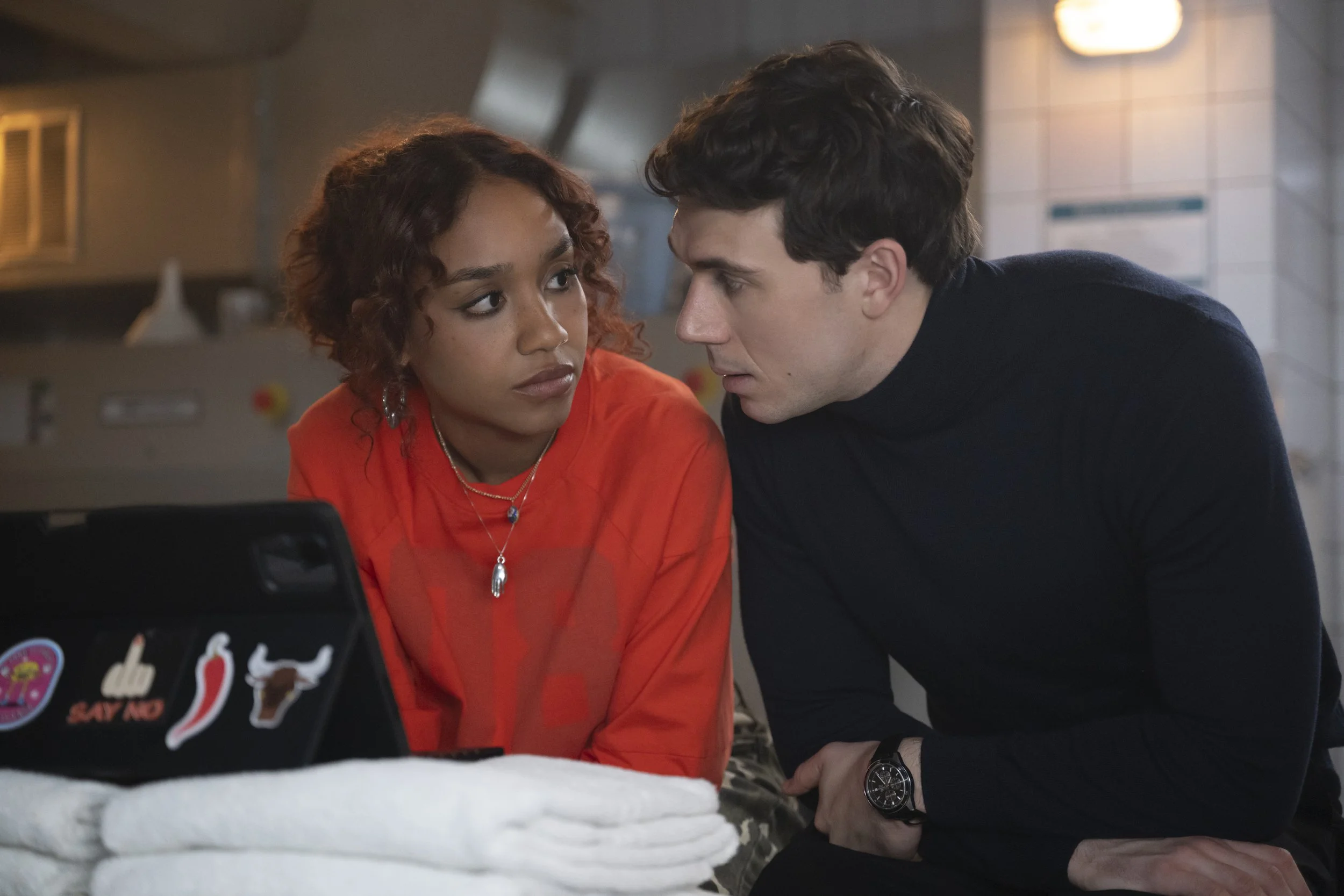
Courtesy of Amazon Prime
and filming for six months. You want to feel like there’s an arc and that you’re going somewhere. I remember reading the pilot and having about a week before I had to submit my first tape. It’s pretty rare that I have this feeling, but I remember thinking, “Okay, this is all I’m going to be thinking about for the next five days. I’m just going to prepare for this because I won’t be able to live with myself if I don’t give it my best possible shot.”
DG __ What does “ride or die” mean to you personally? Not the show but the phrase itself.
CL __ To be completely frank with you, David, I think the first time I heard the phrase “ride or die” was actually in one of my favorite TV shows, Selling Sunset. It’s this amazing reality show, and they’re always talking about their “ride or die” in these very glamorous Valley Girl accents. I just remember thinking, “That’s such a great phrase.” I feel like everyone instinctively knows what it means. I’m an only child. My two closest friends, I’ve known them since I was seven. We went to school together, and they’re like brothers to me, they’re my “ride or dies.” They’ve known me from the very beginning. They’ve seen me go through lots of things, and I’ve seen them go through lots of things. Obviously, we really get along as well, but that history, having people who have been there through all those different chapters of your life, that’s such an important thing to have. It’s an anchor.
DG __ Beyond knowing your closest friends for so many years, what are the experiences you’ve shared that made you think, “These are my people”?
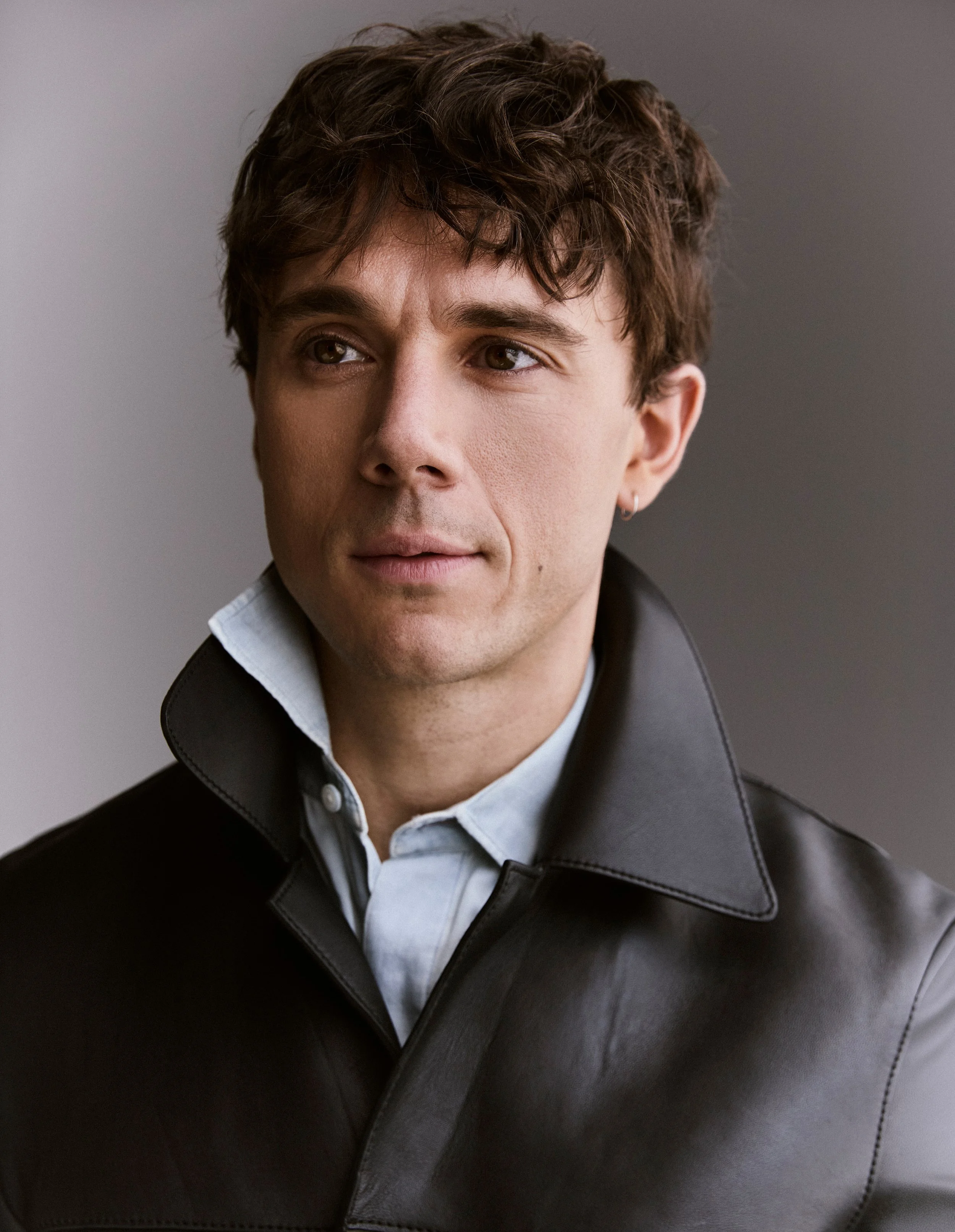
Jacket SANDRO, shirt DUNHILL.
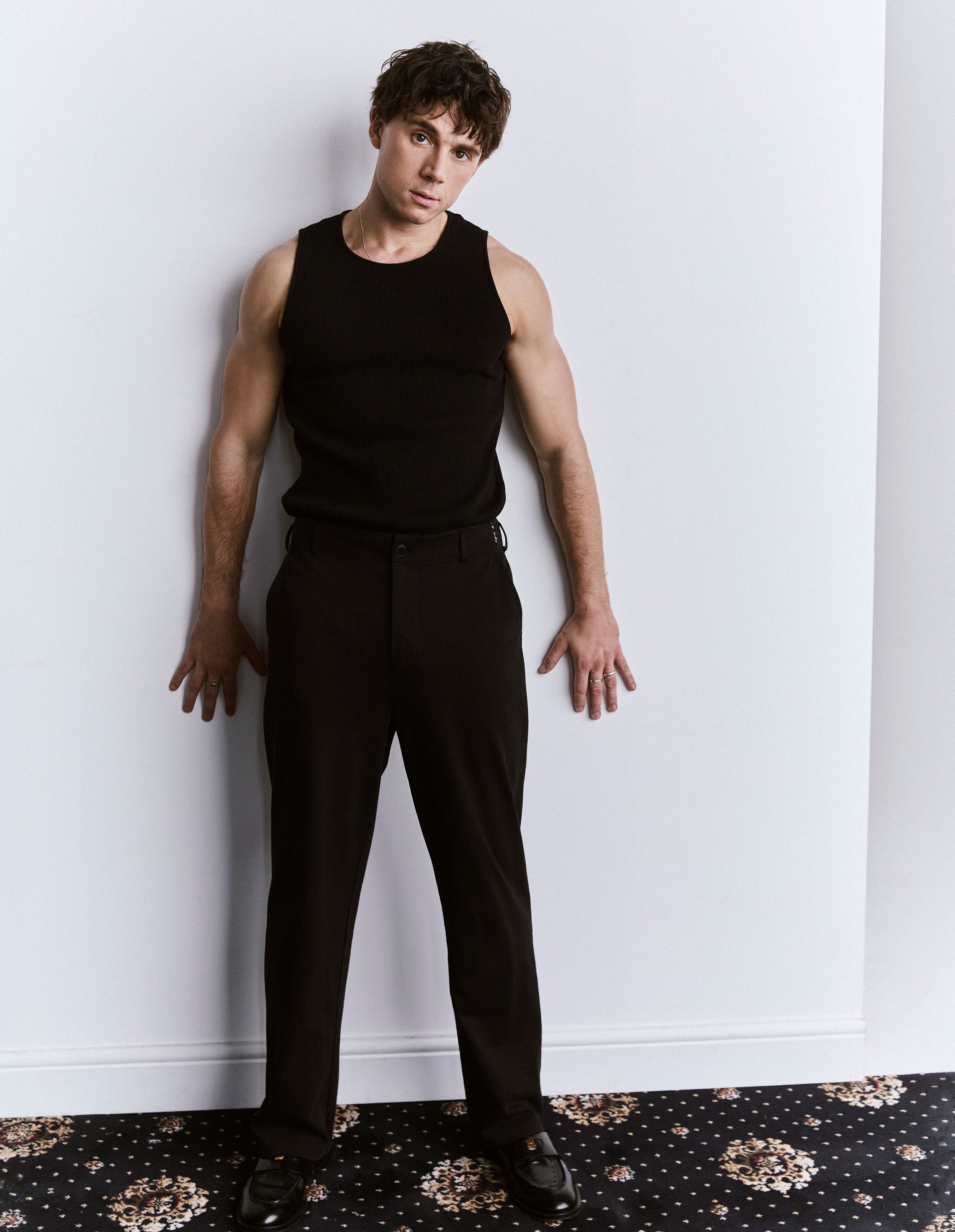
Tank top LIVID, trousers CLEMENTS + CHURCH, shoes AMIRI.
CL __ I think the truth is that it’s a slow, cumulative thing. It’s not necessarily one specific moment. With one of my best friends, Rafi, one of the things we’ve always shared is football. We’re both massive Arsenal fans. One of my first football memories was Arsenal losing the Champions League final in 2006. We were away with school and we all watched it together. Rafi and I cried ourselves to sleep when Arsenal lost. Then, almost 20 years later, this summer, Arsenal finally won the league. I was doing a play about Brian Epstein at the time, and when it happened I was on stage. I came off, did the bow, checked my phone, and saw that Arsenal had won. I went straight to meet Rafi, and it was such a beautiful moment. Because that’s what it’s really about. It’s not about football; it’s about the relationship. We’ve spent months of our lives over the last 20 years talking about Arsenal. Constantly messaging, sending voice notes, calling each other after games saying, “What did you think?” And it always ended in disappointment. Then finally, we had that moment together. It was just really special.
DG __ What did you discover about your character, Sam, that wasn’t immediately obvious when you first read the script?
CL __ When I first read the script, my first interpretation of him was really leaning into the silliness and the stress of everything happening to him. And that is true of his situation, especially in the first few episodes. But I think I often get cast as sweet characters, and Sam is sweet as well. What I didn’t immediately realize was that there’s a really strong moral compass underneath everything. I don’t think that fully clicked for me until we were actually filming. Even when I was reading the scripts, I don’t know if I had fully understood it, but then I started thinking, “Oh no, this guy is young, but he’s actually interrogating the way he lives.” And that’s something I probably didn’t even do myself until much later, maybe even just last year. I really admired that about him.
DG __ What happened last year that made you start thinking about those things?
CL __ Probably turning 30. I don’t know. I think my general approach to life has always been: have a good time and be kind to people. That’s kind of it. I think life is about enjoying our brief moment here and trying to help other people enjoy theirs. But I guess the older I get, the more I think about how I want to spend my time. What’s important to me. What kind of life I want to be living. I don’t know if I have any answers, but I definitely spend more time thinking about those questions now.
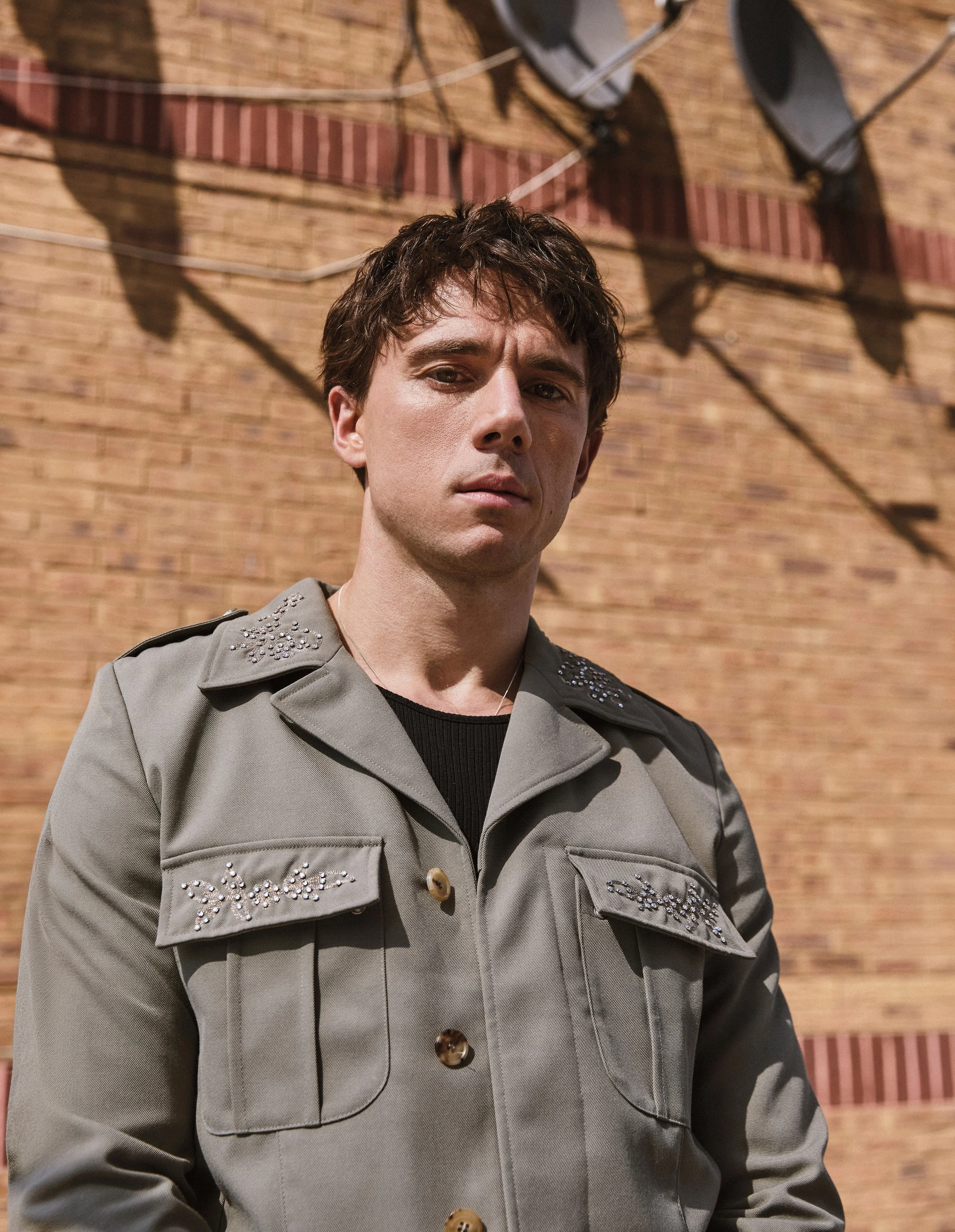
Total look AMIRI.
DG __ What have you found from asking yourself those questions?
CL __ I really love that I’ve done lots of different kinds of projects. I did a show called What It Feels Like for a Girl, which aired in the UK last year and is now streaming in the US on Prime. That was maybe one of the first times I’d worked on something where I felt there was a really tangible impact on people’s lives. It was part of a really important conversation around a social issue that is very current, trans rights in the UK and worldwide. I felt incredibly proud to be part of it. It wasn’t my biggest role, but I think what it gave me was this feeling of, “This is the kind of work I want to keep doing.” If I can do this alongside other kinds of projects, I’ll always want to be part of things that feel personally meaningful to me and connected to the moment we’re living in.
DG __ You spend your career telling other people’s stories, but everyone has a story they’re still writing about themselves. What chapter are you currently living?
CL __ I’m not a big astrology person, but recently I feel like I did experience my Saturn return. When I was around 28, I felt like I was questioning everything. I think I reached a point in my 20s where I understood who I wanted to be, and I felt like I had become that person. But now that I’m in my 30s and getting older, I feel like I’m becoming more of a man. And I think I’m in this transitional moment where I’m asking: What kind of man do I want to be? Who do I want to become? That’s the chapter I’m in right now. It’s a transitional period, but I feel ready for it.
DG __ What does it mean to be in a Saturn return?
CL __ You’ve got to look it up. Basically, it’s like a quarter-life crisis. [laughs] It’s when you start questioning all your life choices: “Am I in the right place? Am I doing the right thing?” I think a lot of people have that moment when they turn 30. For so long, especially if you’re someone born in the ’90s or the 2000s, you’re told, “You can do anything.” Then as you get older, you realize life narrows a little bit. And that’s not necessarily a bad thing. You make choices, and choices are good. But it can be scary because you’re not always used to that.
DG __ What have you figured out so far?
CL __ What have I figured out so far? I think maybe something I struggled with before was that, as an actor, it’s very easy to perceive your life passively. To feel like everything is just happening to you. I think that’s a really unhealthy way to think. Something I’ve learned is that having a sense of agency is one of the most important things in life. Feeling like, “I’m here because I choose to be here. I’ve made decisions that have brought me here.” Obviously, there are limits to that. I’m not saying, “You deserve whatever happens to you.” I don’t mean that at all. But I think as actors, it’s very easy to complain: “I didn’t get that job,” or “I wish I was doing this or that.” And I think I’ve realized: no one is making you be an actor. You choose this. And that’s a good thing, but you have to own it. Like everything in life, your choices have consequences. There are difficult parts and there are wonderful parts. I love being an actor. Of course, there are difficult things about it, but I love the good parts so much that I don’t mind. I would still choose it every day.
Photography David Reiss, Styling Keeley Dawson, Editor-in-Chief Kevin Sinclair, Interview David Gargiulo, Groomer Gareth Bromell (A Frame), Talent Calam Lynch (Tapestry), Location The Corner Studio.
