

APRIL 27, 2026
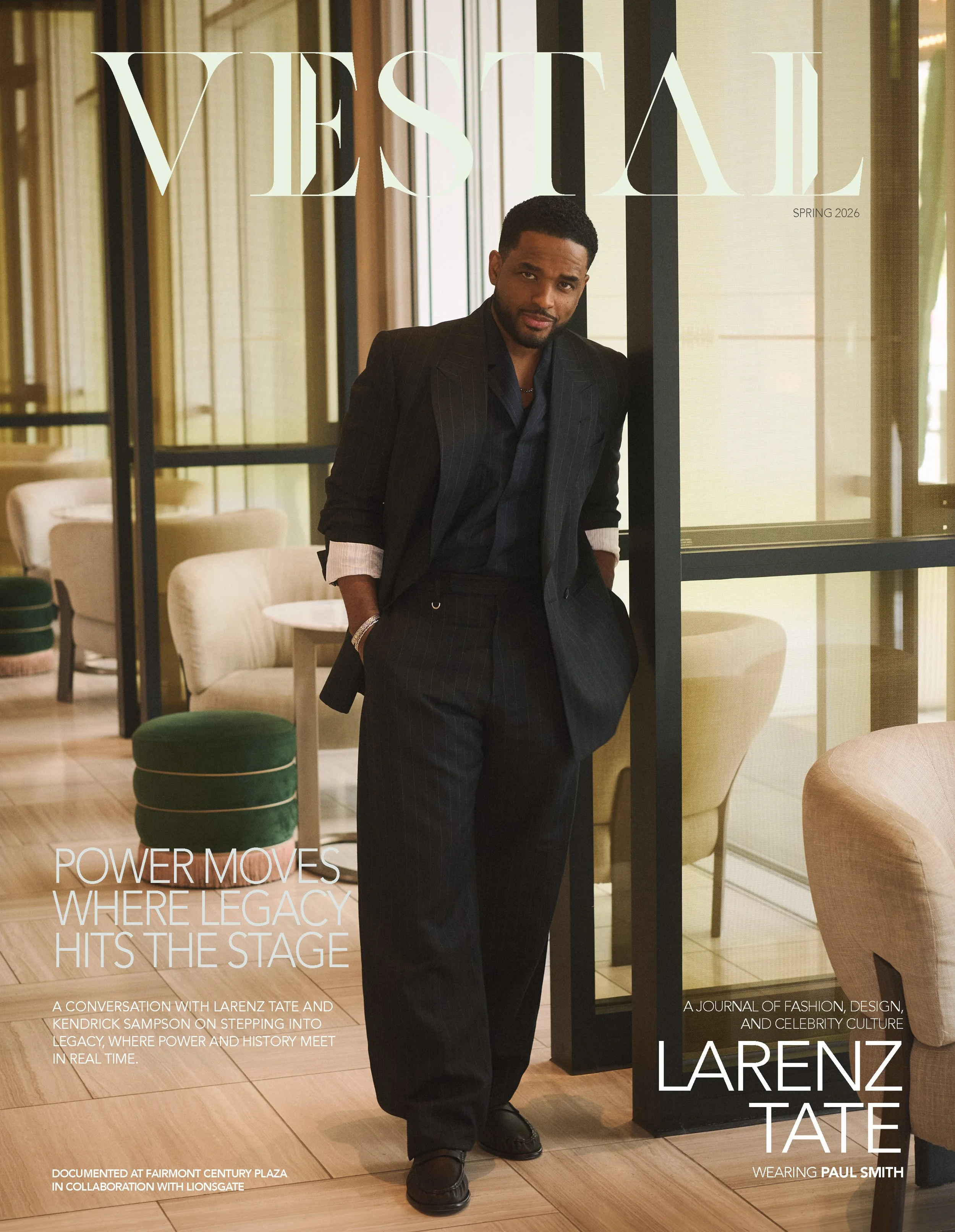
WEARING PAUL SMITH
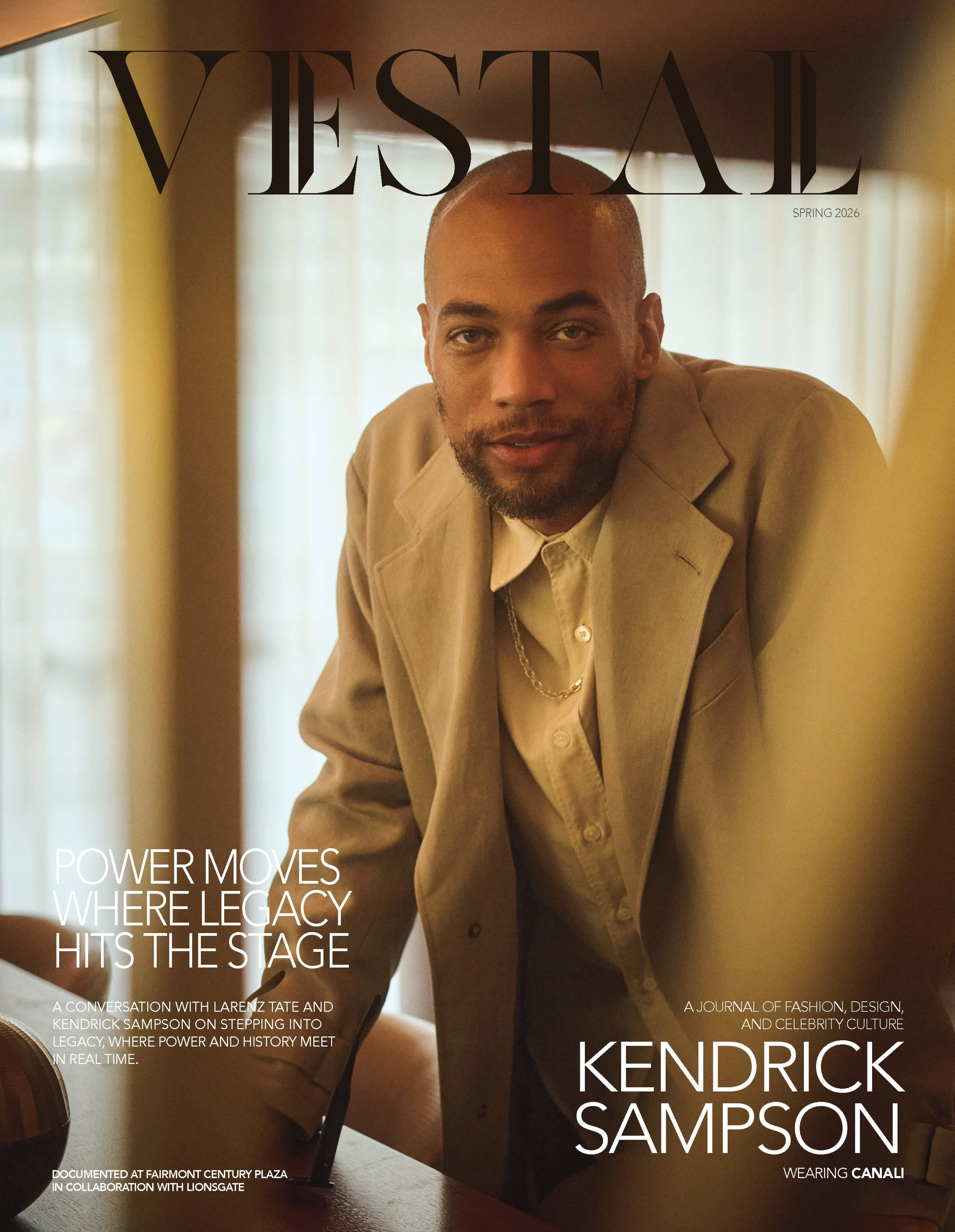
WEARING CANALI
“ THIS IS THE MOVIE THAT PEOPLE WANT TO BE A PART OF.”
— LARENZ TATE
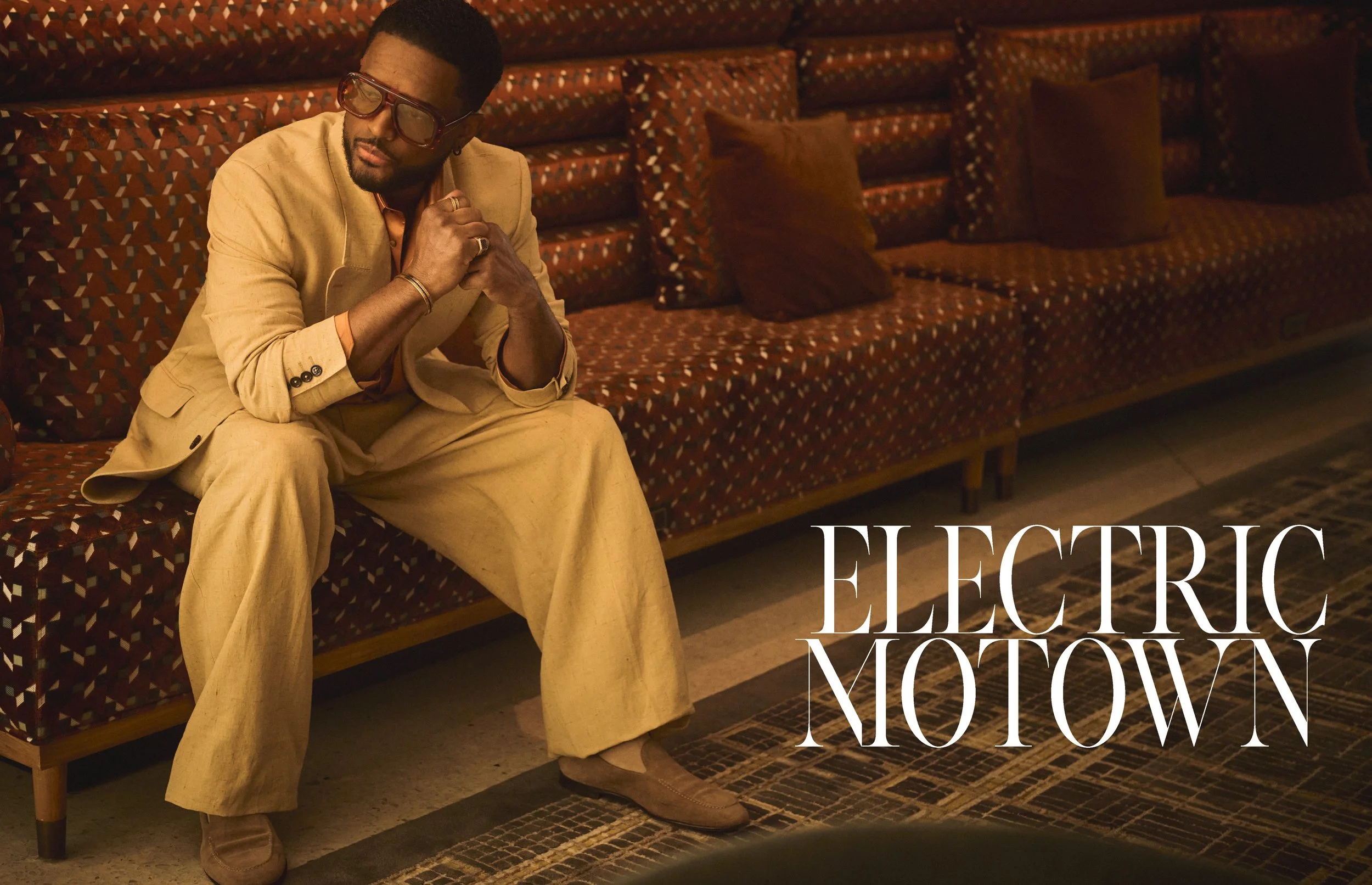
PHOTOGRAPHY KEVIN SINCLAIR STYLING SOAREE COHEN INTERVIEW CARL AYERS DOCUMENTED AT FAIRMONT CENTURY PLAZA
Total look DOLCE & GABBANA, sunglasses DEZI.
INTERVIEW WITH LARENZ TATE & KENDRICK SAMPSON
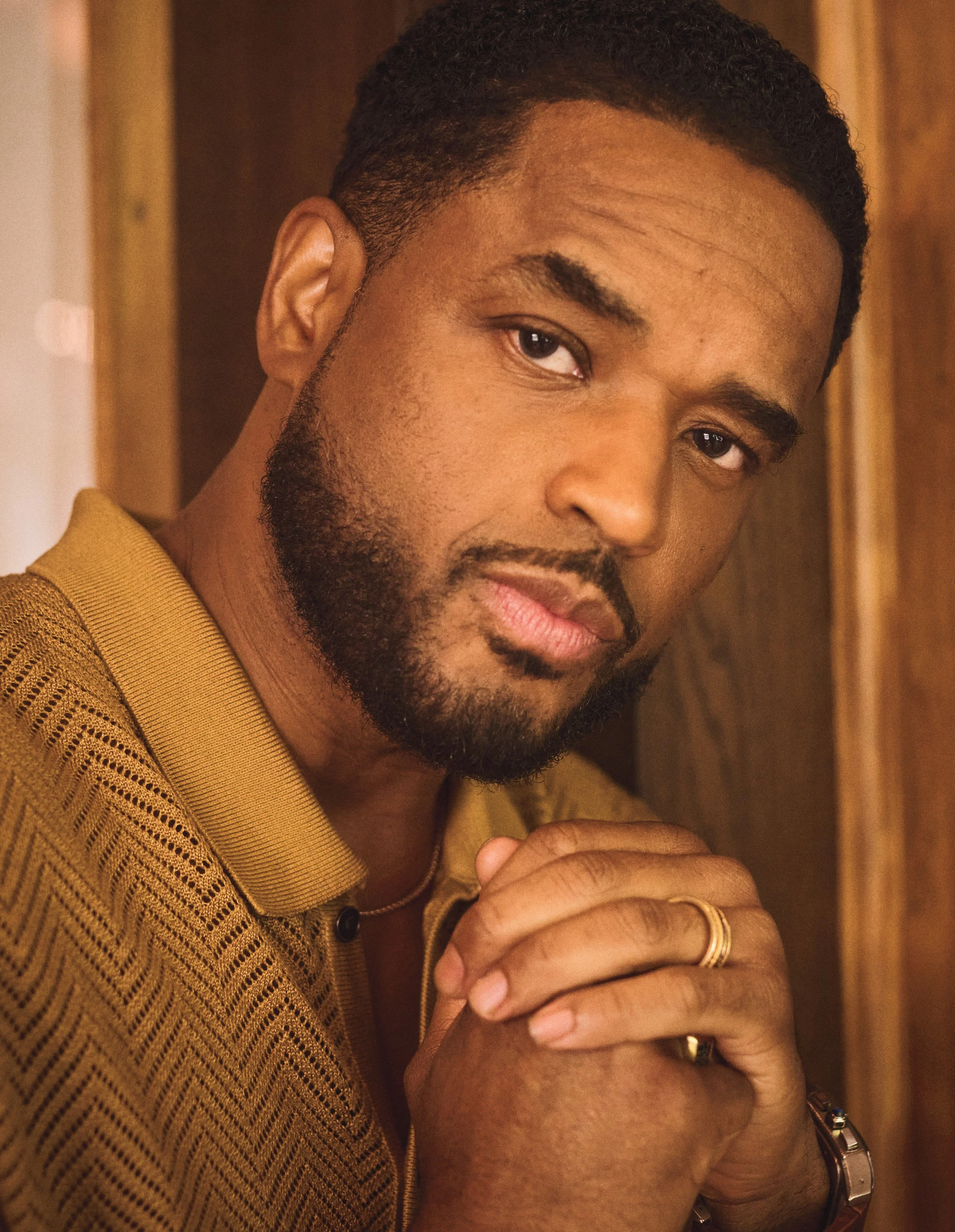
Shirt JOHN VARVATOS.
The story of Michael Jackson is one of the most told tales in modern music. People all over the world know his songs and his dance moves. Yet for a figure so mythologized, Hollywood had long been missing a major cinematic portrait of his life. Until now.
To truly understand how a young boy from Gary, Indiana became the King of Pop, you have to look at the people who helped shape him along the way. In the new film Michael, directed by Antoine Fuqua, we see a dramatized account of those early years, from the Jackson 5 to the rise of a child prodigy becoming a global superstar. Fashion and culture are always linked to the stories of the artists who shape our world. We sat down with two of the film's standout performers at the Fairmont Century Plaza in Los Angeles. A place that understands all about legacy. Designed by Minoru Yamasaki and built on the former backlot of 20th Century Fox Studios, the hotel opened in 1966 as the crescent-shaped centerpiece of what was conceived as "a city within a city." From the moment it opened, its sweeping curve framing made it an instant landmark. Presidential press conferences, peace rallies, the Emmys, the Grammys, inaugural celebrations, the Fairmont Century Plaza has held it all. This year marks its 60th anniversary, a diamond jubilee for a building that has spent six decades at the intersection of Hollywood history, politics, and culture. It felt right to be here, in a room that hosted legends, talking about the men who helped make one. Larenz Tate plays Motown founder Berry Gordy. Kendrick Sampson steps into the shoes of legendary producer Quincy Jones. Two very different men, two very different paths to the same film.
Neither man had to fight for the role. Both got a phone call, said yes immediately, and found themselves part of a film that everyone in Hollywood, as Tate put it, wanted to be part of. "I got the phone call. I knew they were putting a movie together, I didn't know exactly what characters because they were pretty quiet about that," Tate told us. "When I got the call about Berry, I jumped right to it. It was a straight offer and I was just, you know, grateful." Part of what sealed it was the director. Tate and Antoine Fuqua had been looking for the right project together for years. "He and I had been trying to find something to do for many years," he said, "and so this seemed like the perfect opportunity."
Sampson's call came under considerably more pressure, but how it arrived says something important about how he's built his career. His longtime friend Lee Gente, a casting director, reached out on a Friday, walked him in a video call with the production team on the spot, and asked if he wanted to play Quincy Jones. By Monday, he was on set. What matters to Sampson about that story isn't just the speed of it, it's what the relationship with Lee represents. The two of them came up together, back when she was an agent's assistant and he was an early-career actor trying to find his footing. They invested in each other when neither of them had anything to offer except loyalty. "It is about building with your homies," he said. "Not reaching up for the elites, the people you think could get you where you want to go — really building with your people on your level." Years later, Lee walked him onto the set of Insecure. Then she walked him into Michael. "I would just pray that I'd honor him, do him justice," Sampson said of the moment he said yes. "Do you know what that would mean to my soul?"
Both men were quick to note that their own casting was the easy part. The real weight of the process fell on finding the two actors at the film's center, Juliano Krue Valdi as young Michael, and Jaafar Jackson as the adult version. "Their process was a lot different than mine," Tate said, "because they're so heavily in the film and it's really focused on them." Sampson, who had known Jaafar before filming began, echoed it simply: "To see him live in his power, in what he was meant to do; it looked and felt like a dream come true."
“ THAT IS ONE OF THE CENTRAL ANSWERS TO OUR STRUGGLE; MAKING SURE WE CONNECT ART TO THE REVOLUTION.”
— KENDRICK SAMPSON
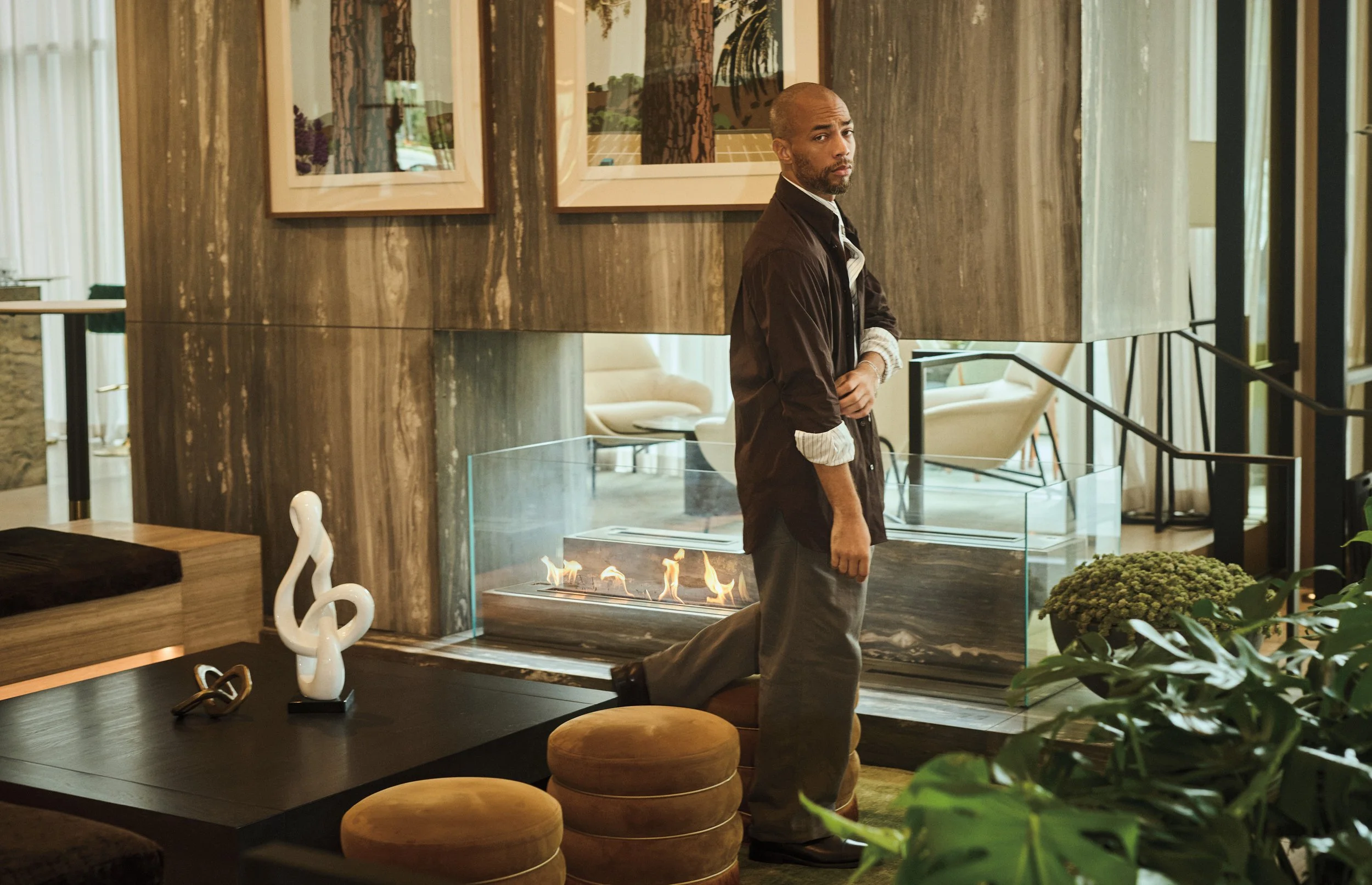
Total look BOSS, shoes THURSDAY, jewelry BRILLIANT EARTH.
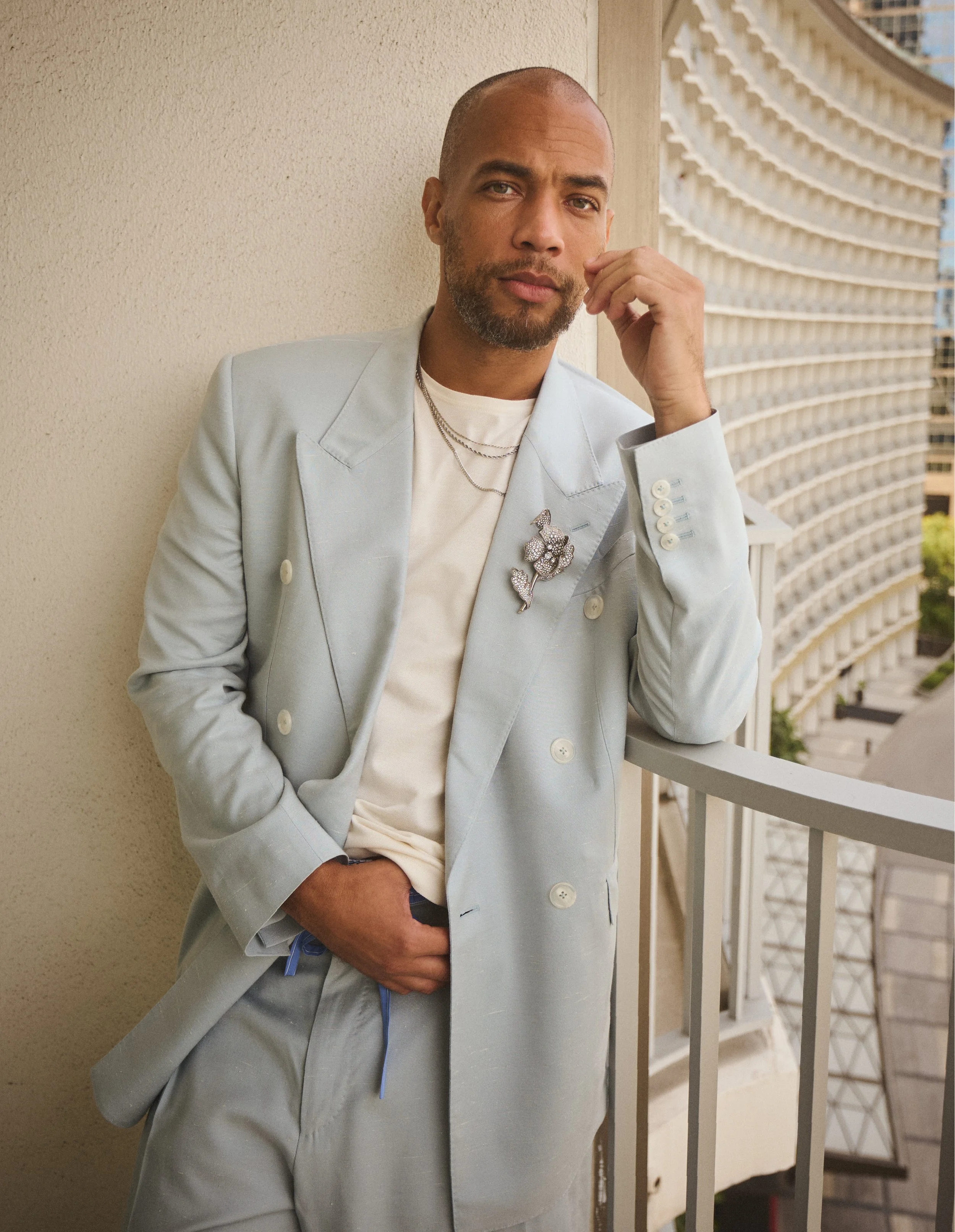
Total look DOLCE & GABBANA, broach DOLCE & GABBANA, necklaces BRILLIANT EARTH.
The gap between Tate's timeline and Sampson's was spaced, and yet both arrived on set equally ready. Just by completely different routes. Tate, a lifelong devotee of the Motown sound — Diana Ross, the Supremes, Marvin Gaye, the Temptations — he went straight to Gordy's autobiography, reading it chapter by chapter, then spent hours in online archives studying footage of Motown in its prime. "As an actor, you have to find your own homework to do," he said. "Especially when it's someone who's alive, or someone the world knows. You have your homework cut out for you." Sampson had no such runway. But as it turned out, he had accidentally done something better years earlier, without knowing he'd ever need it. At a couple of high-profile music events where a long line of famous people waited to get five minutes with the legendary Quincy Jones, Sampson would do what he always does: find a corner, get some food, and stay out of the crowd. As it turned out, that's exactly what Quincy Jones did too. "Quincy came over to the corner where we were hiding, where we were posting up," Sampson told us. "He took over the corner. He sat there with his security and started talking to me." Every time Sampson tried to excuse himself, Jones pulled him back down. "I realized he was using me so that he didn't have to engage with all those conversations happening around him." Sampson laughed. This happened twice, at two separate events. Each time, Jones held Sampson for four or five hours and just told stories about producing the opening ceremony of the Beijing Olympics, about getting stabbed in the face, about surviving a double aneurysm before The Wiz, before Thriller. "That crash course, those years before, was invaluable," Sampson said. "There's no way to quantify that. If I would've waited until I booked this role to try and get those sessions, I never would've had them." He also noticed something that helped him settle quickly into the part: he and Jones were cut from similar cloth. The same laid-back, unhurried energy. "We had very similar demeanors, very similar communication styles," he said with a smile. "I could really relax and ground myself in myself."
One of the film's most powerful threads is the idea of protection. The adults in Michael's world saw something irreplaceable in him and built walls around it. Both Tate and Sampson found themselves drawn to this theme independently, from very different angles. For Tate, it was central to understanding who Berry Gordy was as a man. "Berry wasn't really keen on having another child or young group on the Motown label," he explained. "He had already been working with Stevie Wonder and the idea of having multiple kids on the label just wasn't appealing to him. But once he got a chance to see Michael — this kid would sing songs written by adults, love songs, and really embody what that was — it was just mind blowing for Berry. He understood something very special about Michael and he wanted to make sure Michael was safe." That protectiveness put Gordy on a collision course with Joe Jackson, and it produced one of the film's most charged moments: a showdown between the two men in the recording studio that Tate describes with satisfaction. "Joe Jackson was all about power and control. He was not going to relinquish any control. But in that space, with the record label, he's not the one in control. Especially when you have somebody like Berry Gordy. Berry understands how to make hit records. He knows how to make stars, period." He paused. "It was two lions. But it's like, this is Berry's space. This is where he lives, and where he runs the show." Antoine Fuqua trusted Tate to play it without words. "A lot of things were just going to be told in the eyes," Tate said. "And that part is not easy!"
Sampson found the same current running through the Quincy and Michael relationship, just expressed differently. Where Gordy's protection was executive and structural, Quincy's was creative and deeply personal. On set, Sampson and Jaafar Jackson mirrored that dynamic in real time. "We were both exploring these two characters that we deeply admire," Sampson said. "And we were, in a way, experiencing the same thing they were experiencing when trying to help each other. 'You good? You feel that? Is that the creative direction you want to go?' How do you take care of each other through that? How do you nourish it and encourage it?" The care, he said, was what made the freedom possible. "You have to feel grounded and safe to be as creative and dialed in as you possibly can be."
“ THIS IS THE MOVIE THAT PEOPLE WANT TO BE A PART OF.”
— LARENZ TATE
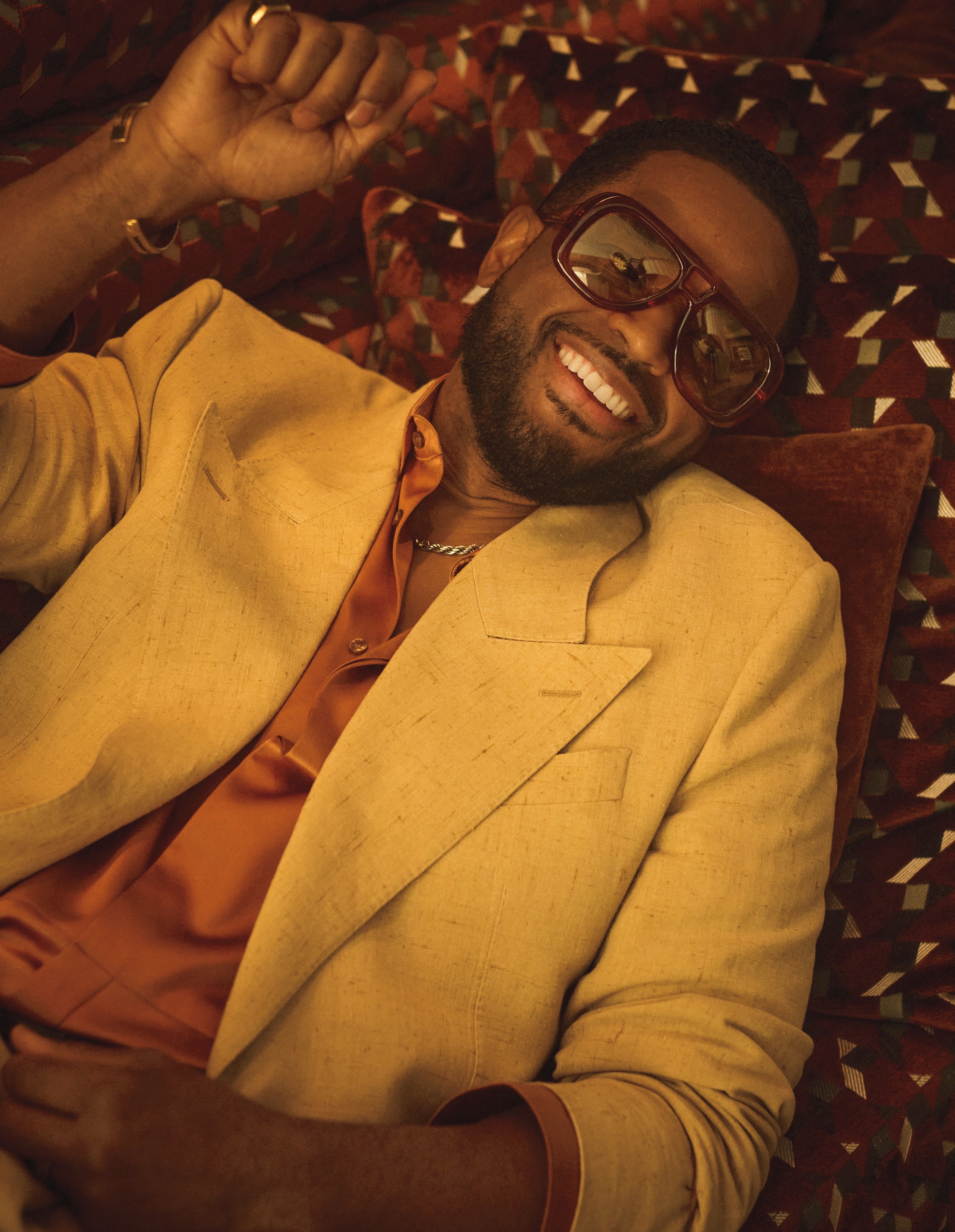
Total look DOLCE & GABBANA, necklace BOTTEGA VENETA, sunglasses DEZI.
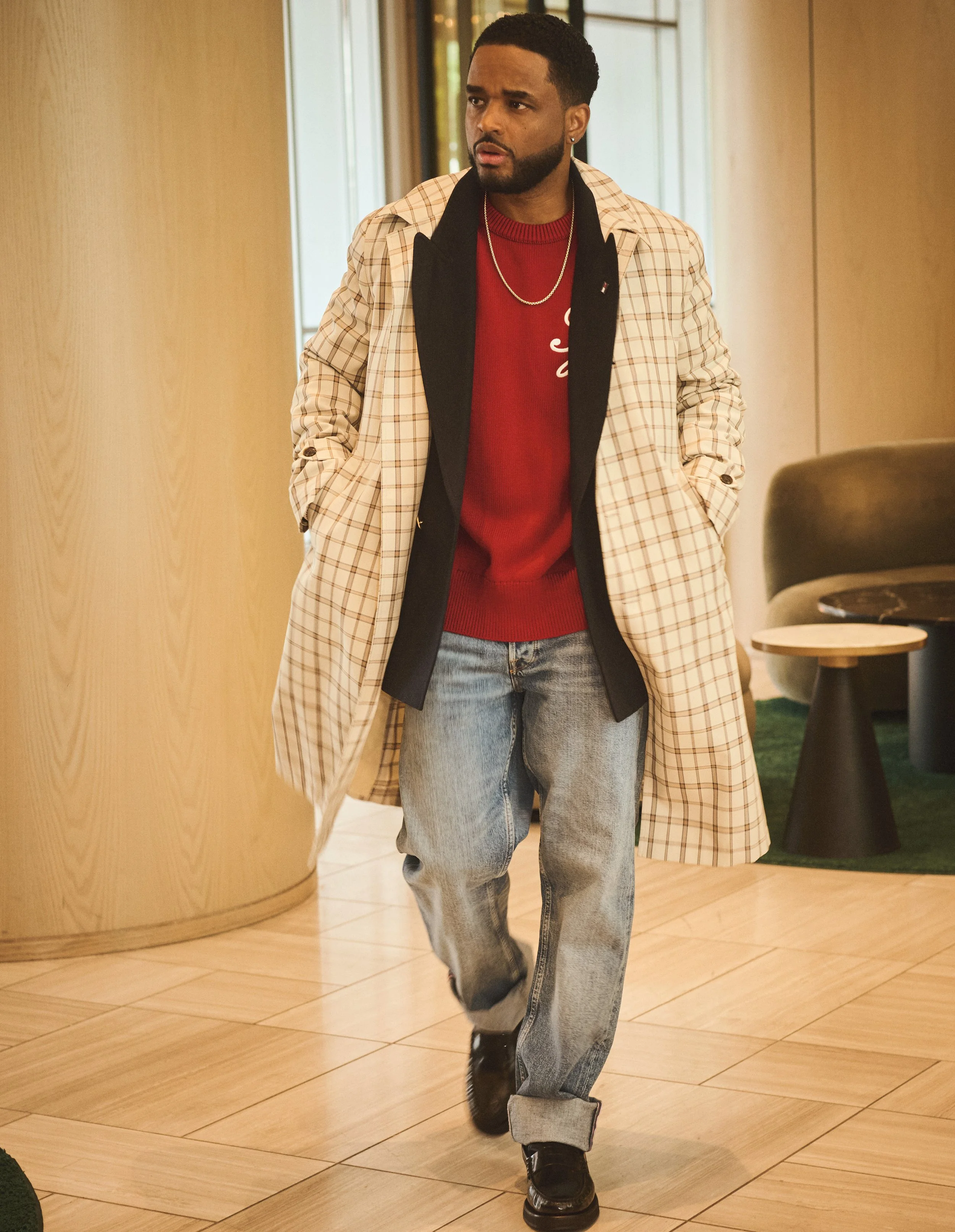
Total Look TOMMY HILFIGER.
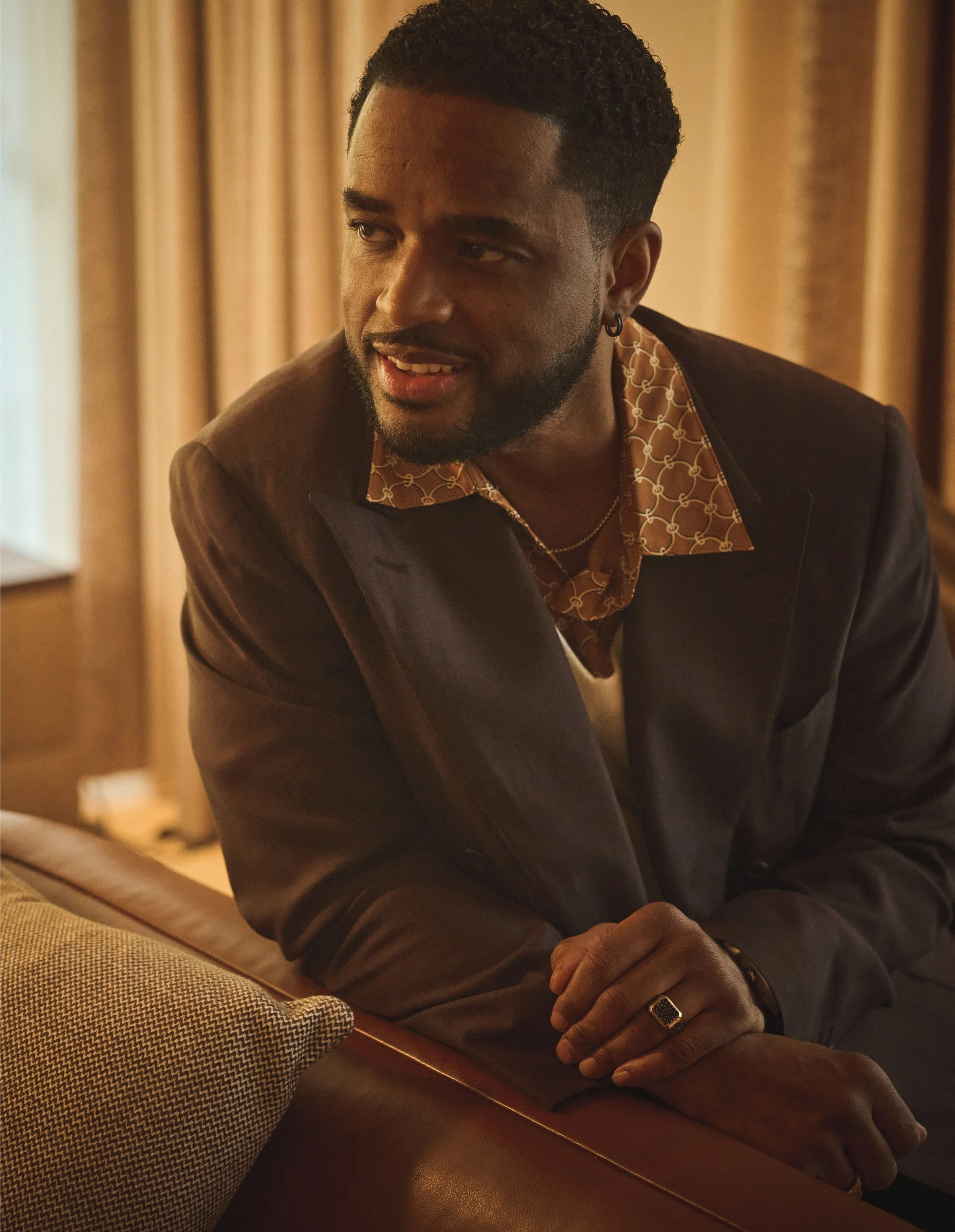
Total look ISABEL MARANT.
Both men also spoke, with real warmth, about the young actor at the film's center. Tate spent the most time with Juliano Valdi on set, and the experience clearly meant something to him. Not just professionally, but personally. Tate started acting at ten years old so he knows well what it is to be a child in a room full of adults, aware of what's at stake. He also has four sons of his own. "I get it," he laughed. "Working with a young Juliano, being in that position at one point, I totally understood," he said. "He was just an energetic kid and you can recognize somebody who just has the it thing, and he definitely has it." The energy was relentless. During long days shooting studio scenes, Juliano never stopped moving. "I would tell him, you know, you're gonna be here all day. You might wanna reserve some of that energy for the scene, because we're gonna have to do this ten, fifteen times," Tate laughed. It made no difference. At the film's premiere: dancing on the red carpet, dancing after the screening, dancing at the after party. "We have to be reminded that it's okay to have fun. And Juliano represented that."
Sampson saw the same spirit in Jaafar; more interior, but no less total. "I know for a fact that he was so dedicated to his art, an incredible performer long before this film, long before the training for it," he said. "And to see him embody this, really explore how to embody it, it was like watching your nephew or a homie live in what they're meant to do. That was encouraging."
Michael arrives with the weight of everything that came before it: documentaries, docudramas, the contentious 1992 miniseries, decades of tabloid mythology. Tate is clear-eyed about what makes this one different, and it comes down to a simple shift in focus. "The other films we've seen were kind of focused on the overall family," he said, "but this one is a more detailed look at who Michael was, especially in his early years." What that means in practice is a film willing to sit with Michael as a child — a relatively poor kid from Gary, Indiana, in a big family that didn't have much but had each other, chasing a version of the American dream that came with a price nobody fully understood until it was paid. "This is not a movie about the loud, noisy tension that people want to define Michael by in his later years," Tate said. "This is the early part of his life, where we rediscover how amazing this person really was. He was one of a kind, and this is what the movie focuses on. We get to celebrate that in a real way."
That celebration, both men are careful to say, doesn't erase the harder truth underneath it. Tate sees the Jackson story as both a tribute and a reckoning. "Joe Jackson and Michael Jackson never took their foot off the gas," he said. "They just kept grinding nonstop, like it was embedded in them, like they were machines. But it also took away from his childhood. Things that are really important." The cost was real. But so, he believes, was the result. "It made him the greatest entertainer ever, in my opinion."
For Sampson, the weight falls differently. On the specific, almost impossible cultural footprint that Quincy Jones left behind, and what it meant to have stepped into it, he notes "People don't realize how many genres he touched, The Wiz, Fresh Prince, Thriller, We Are the World, these aren't just songs or shows that I liked. They are works that shaped how we imagine, how we think, how we understand liberation. His art spans decades and was core to Black culture. So I felt the pressure to make sure my dedication to that performance was as profound and purposeful as the impact his work has had on me."
Sampson also notices a parallel about the independence both Michael and Quincy were chasing. Michael wanting to break free from his family's control, Quincy navigating a transition into pop that many doubted he could make, as leading somewhere unexpected. "That journey towards independence leads you to realize how dependent we should be on each other. Every decision for that art is connected to our people, connected to our power, connected to our loved ones." And he brings it all the way back to the daily act of making a film. "Storytelling is care," he said. "Everything you need to protect and nourish stories is everything you need to build a community: lighting, plumbing, clean water, food. But also, person to person, you have to check in with each other. Care is at the center of it. Making sure you're good, you have what you need, that you feel grounded and safe and free. Those are the building blocks of not just art, but community."
“ STORYTELLING IS CARE. EVERYTHING YOU NEED TO PROTECT AND NOURISH STORIES IS EVERYTHING YOU NEED TO BUILD A COMMUNITY.”
— KENDRICK SAMPSON
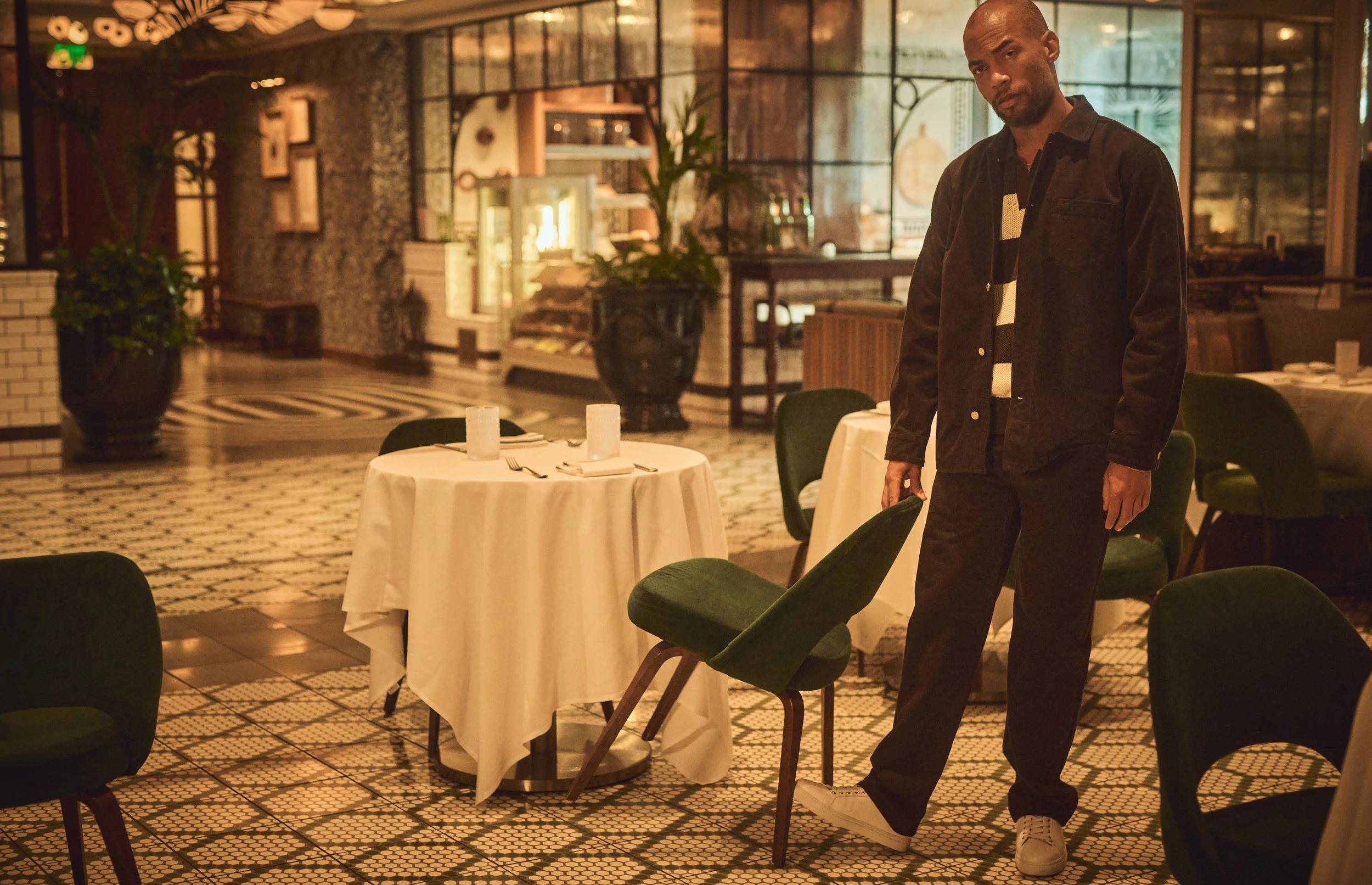
Total look LACOSTE, shoes THURSDAY.
There's a thread that runs through Tate's own career that speaks to legacy in a way he hadn't fully articulated until now. In 1998, Tate played Frankie Lymon, the performer who inspired a young Michael Jackson. In Ray, he also played Quincy Jones, the man who would shape Michael's greatest albums. And now, Berry Gordy, the man who first discovered Michael and gave him a chance. Across different decades, his filmography has woven itself into the entire arc of the Michael Jackson story. When we pointed that out, Tate paused. "That's actually quite nice," he said. "And for me, I always want to show my range. If those watching me and growing up looking at my career can be inspired or motivated and say, 'I can do that too,' that really feels special." His vision of legacy is ultimately about freedom and about refusing to let anyone else define its limits. "I wanted to make sure that we as a people, specifically those who identify as Black, that we are not monolithic. We should have the right and the space to be unapologetically who we are. We use our own barometer, our own measuring stick. Not other people's."
What becomes clear, listening to Tate and Sampson, is that Michael is as much about the people who protected Michael Jackson as it is about the icon himself. Long before the mythology, before the headlines and spectacle, there were mentors, collaborators, and believers working behind the scenes. Adults who recognized genius early and tried, in their own ways, to protect it.
One last note worth holding. The real Quincy Jones passed away in November 2024. Filming had wrapped that summer. Sampson had wanted Jones to be at the premiere. "I wanted him to be there smiling," he said sadly. "I wanted that. But I won't ever forget those conversations. Especially that it happened multiple times. That I was able to study him for hours." Then: "If I would've waited till I booked this to do that, I wouldn't have had those experiences to pull from." Some preparation, it turns out, can’t be planned, rehearsed, or even understood in the moment. Sometimes it arrives years earlier, in conversations you don’t yet know you’ll need. Waiting for the day history asks you to carry someone else’s story forward.
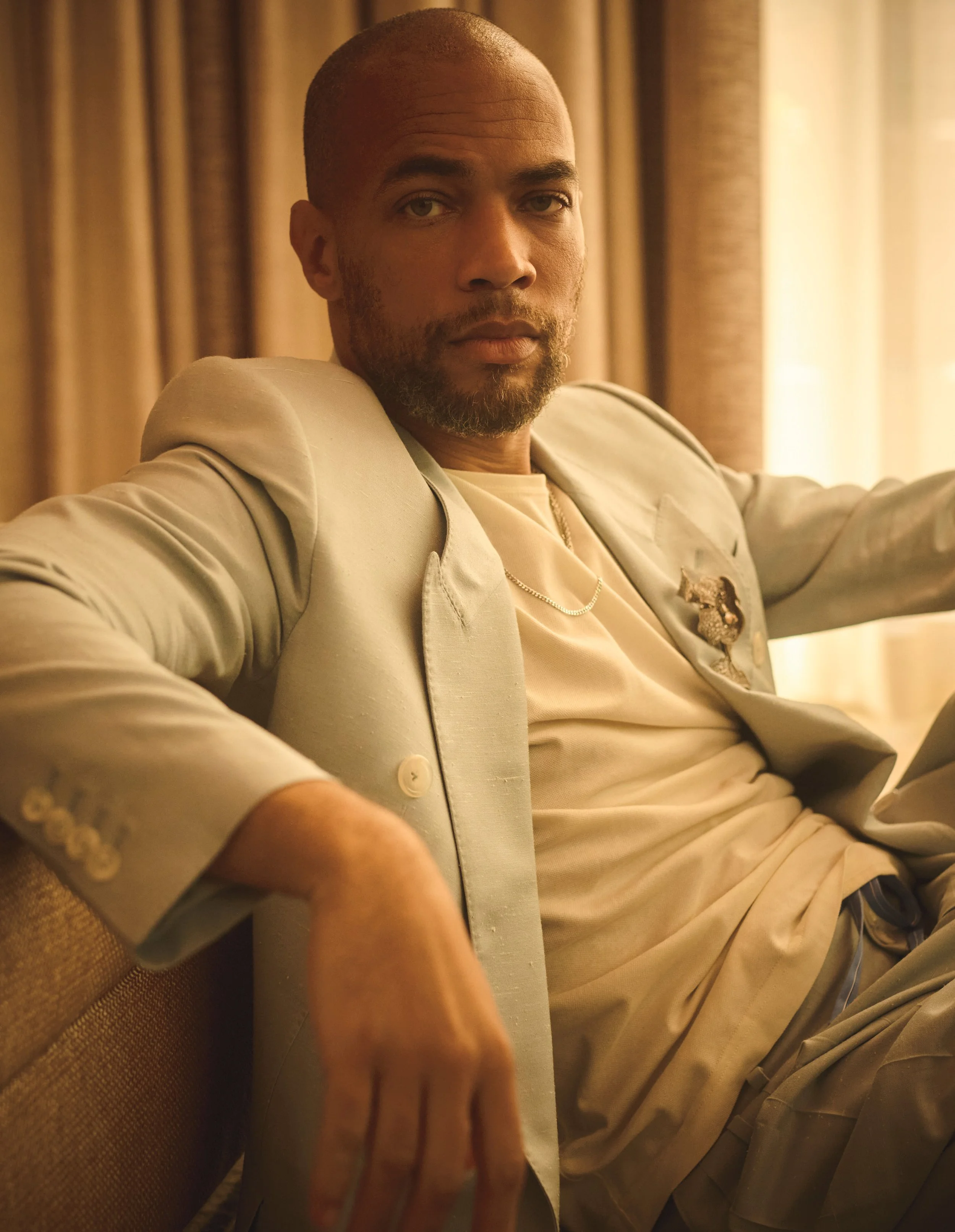
Total look DOLCE & GABBANA, broach DOLCE & GABBANA, necklaces BRILLIANT EARTH.
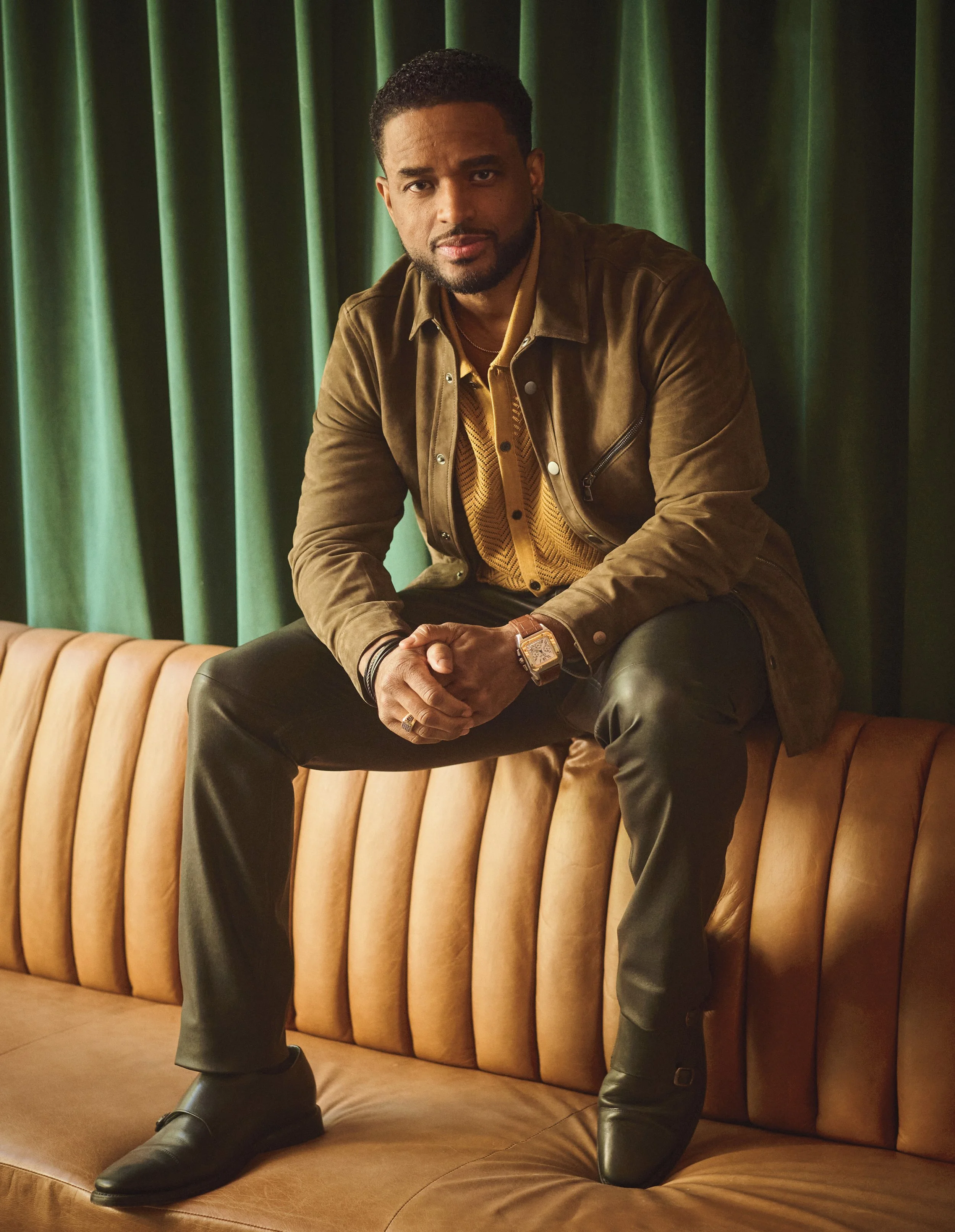
Shirt JOHN VARVATOS, shoes THURSDAY.
“ IT CAME WITH A PRICE THAT WE ALL QUESTIONED, WAS IT WORTH IT? AND TO MOST OF US, YES. BECAUSE WE WOULDN'T HAVE THE MICHAEL THAT WE ALL REVERE AND LOVE TODAY.”
— LARENZ TATE
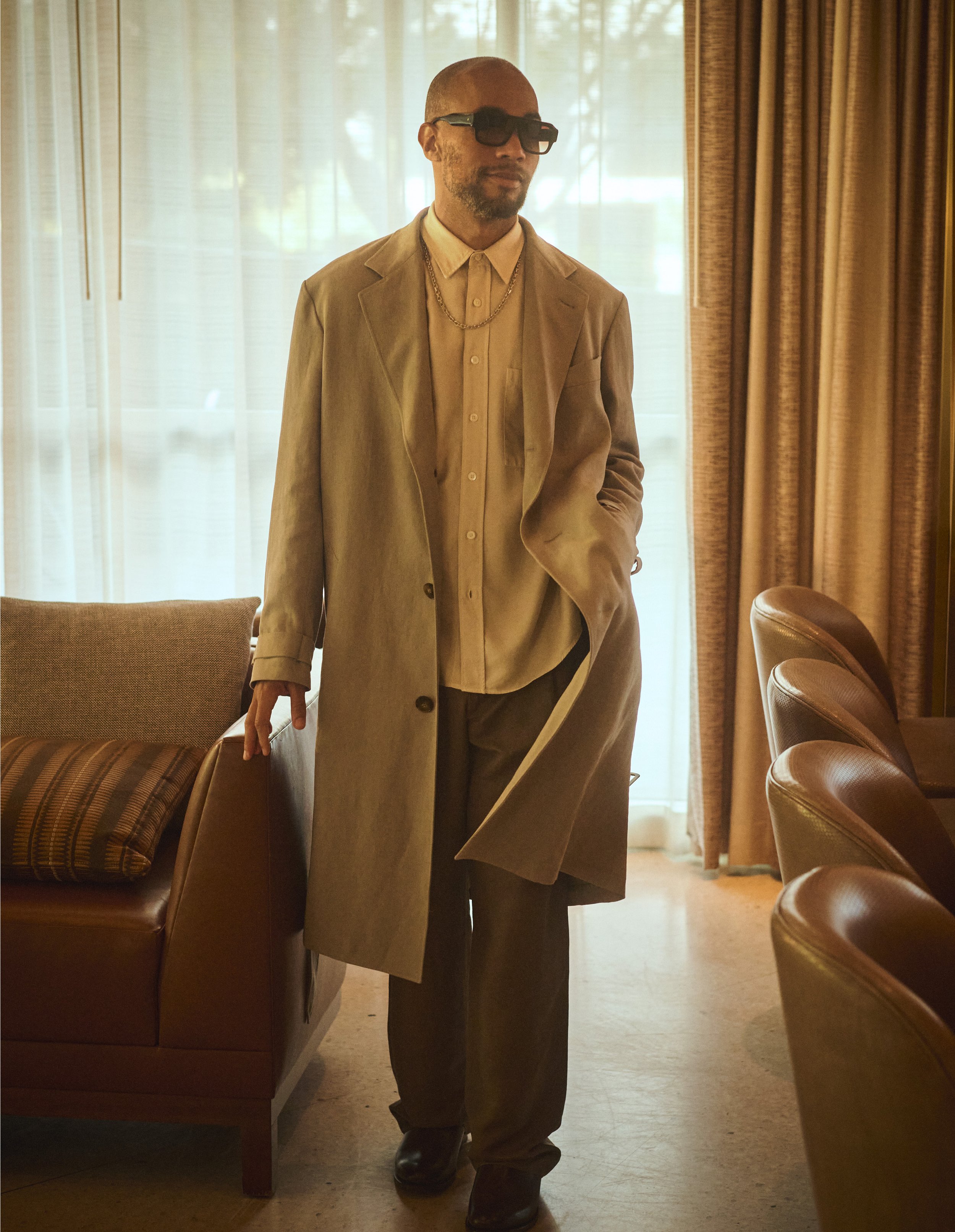
Total look CANALI, shoes THURSDAY, sunglasses DEZI.
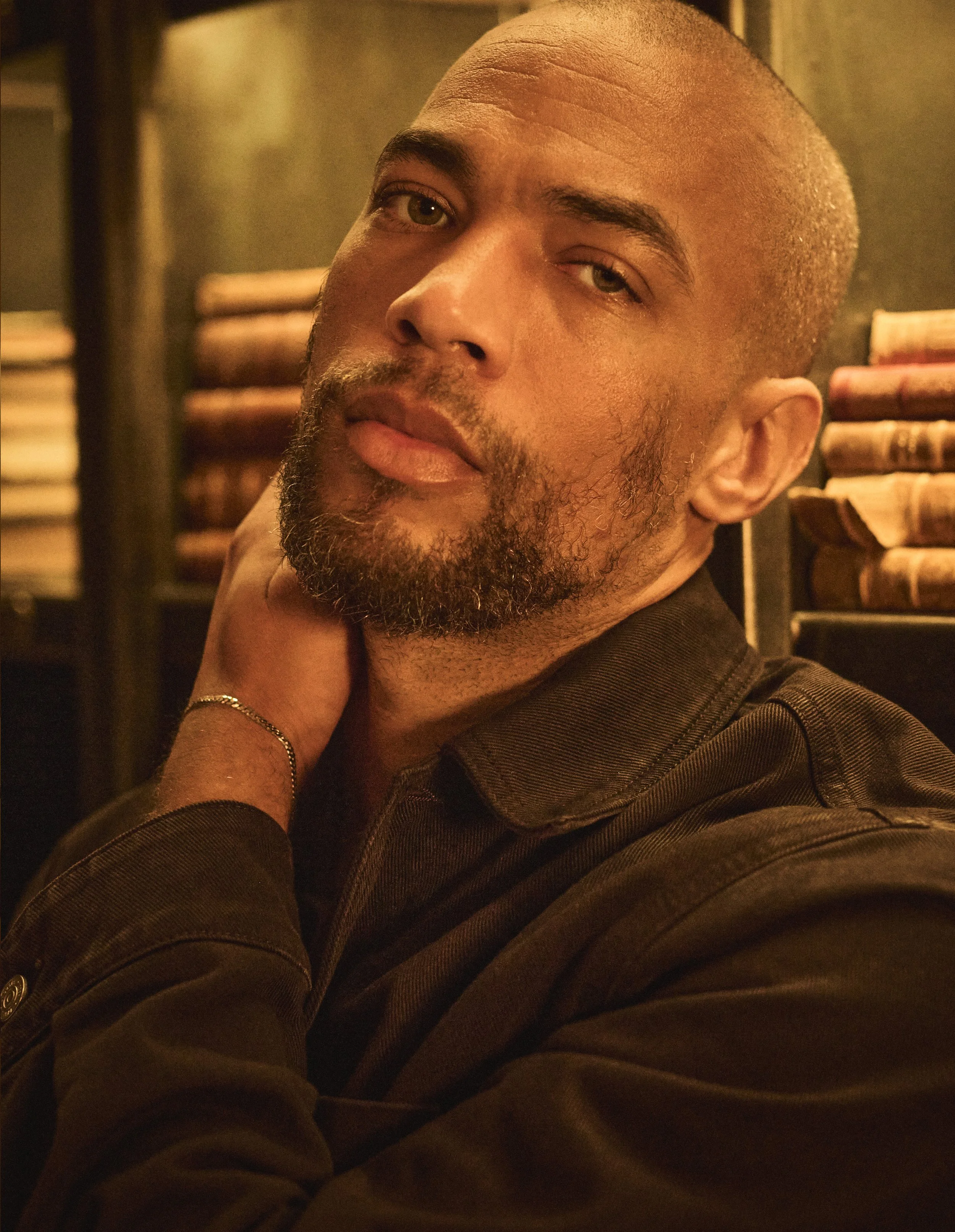
Total look LACOSTE.
“I’M BEING REALLY INTENTIONAL WITH THE NEXT PROJECT I TAKE ON.”
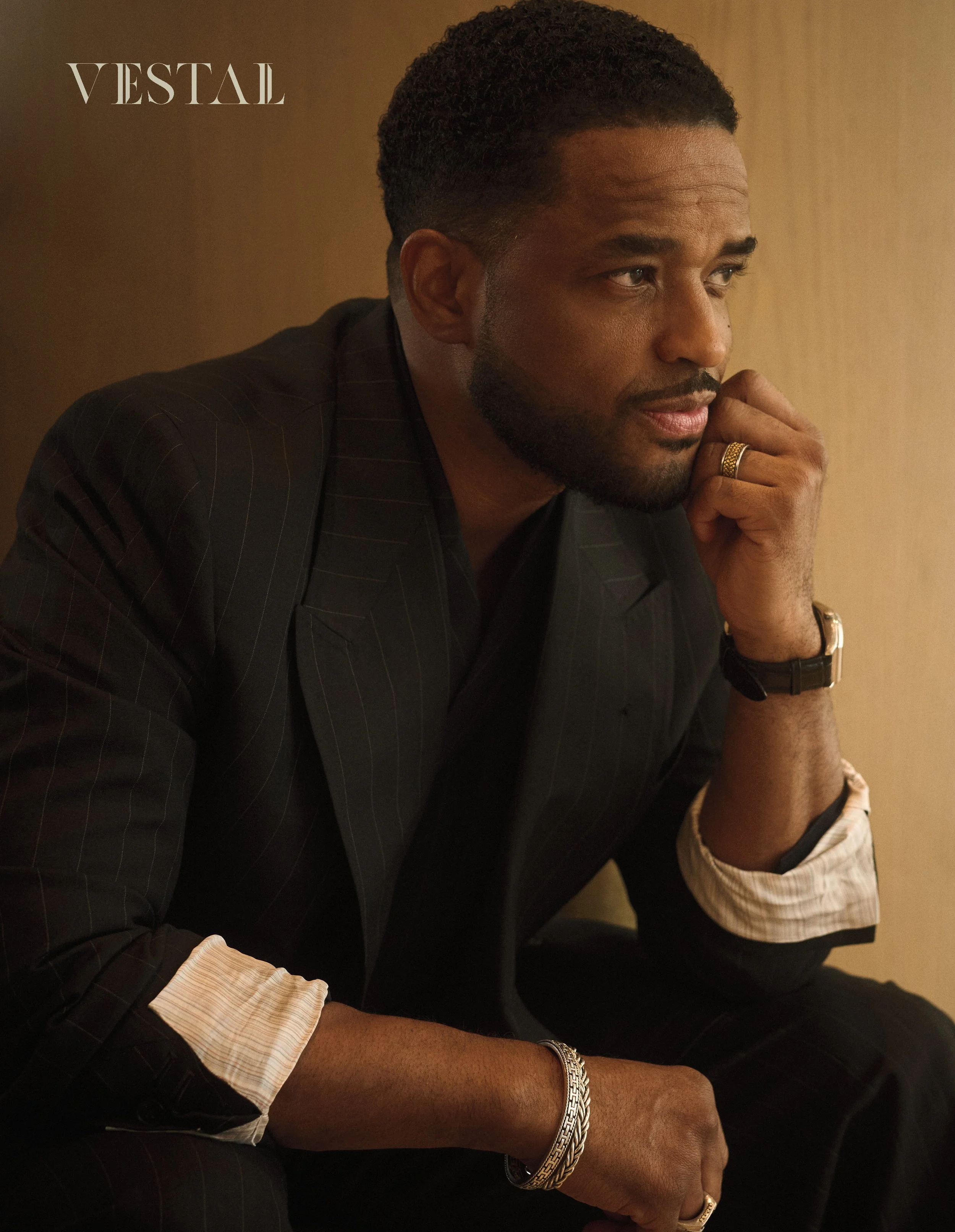
Total look PAUL SMITH, Watch VACHERON CONSTANTIN.

Courtesy of Lionsgate
STREAMING
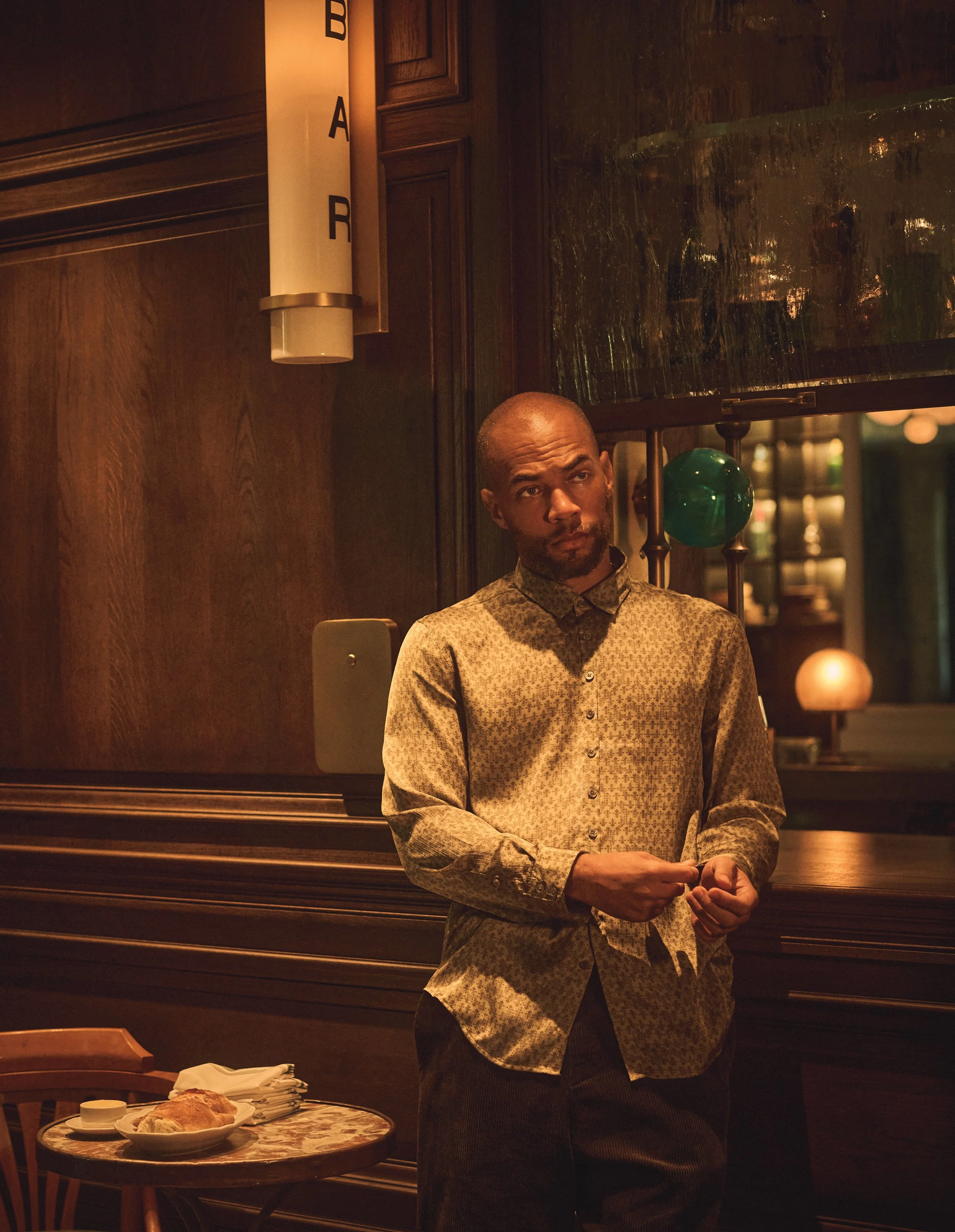
Shirt JOHN VARVATOS, shoes THURSDAY, pants NN07.
Creative Director Kevin Sinclair, Stylist Soaree Cohen (Art Department), Interview Carl Ayers, Production David Gargiulo, Grooming Koh (The Visionaries), Stylist Assistant Kassidy Taylor, Talents Larenz Tate and Kendrick Sampson (Ascend Public Relations), Location Fairmont Century Plaza (J Public Relations).
