

JUNE 12, 2026
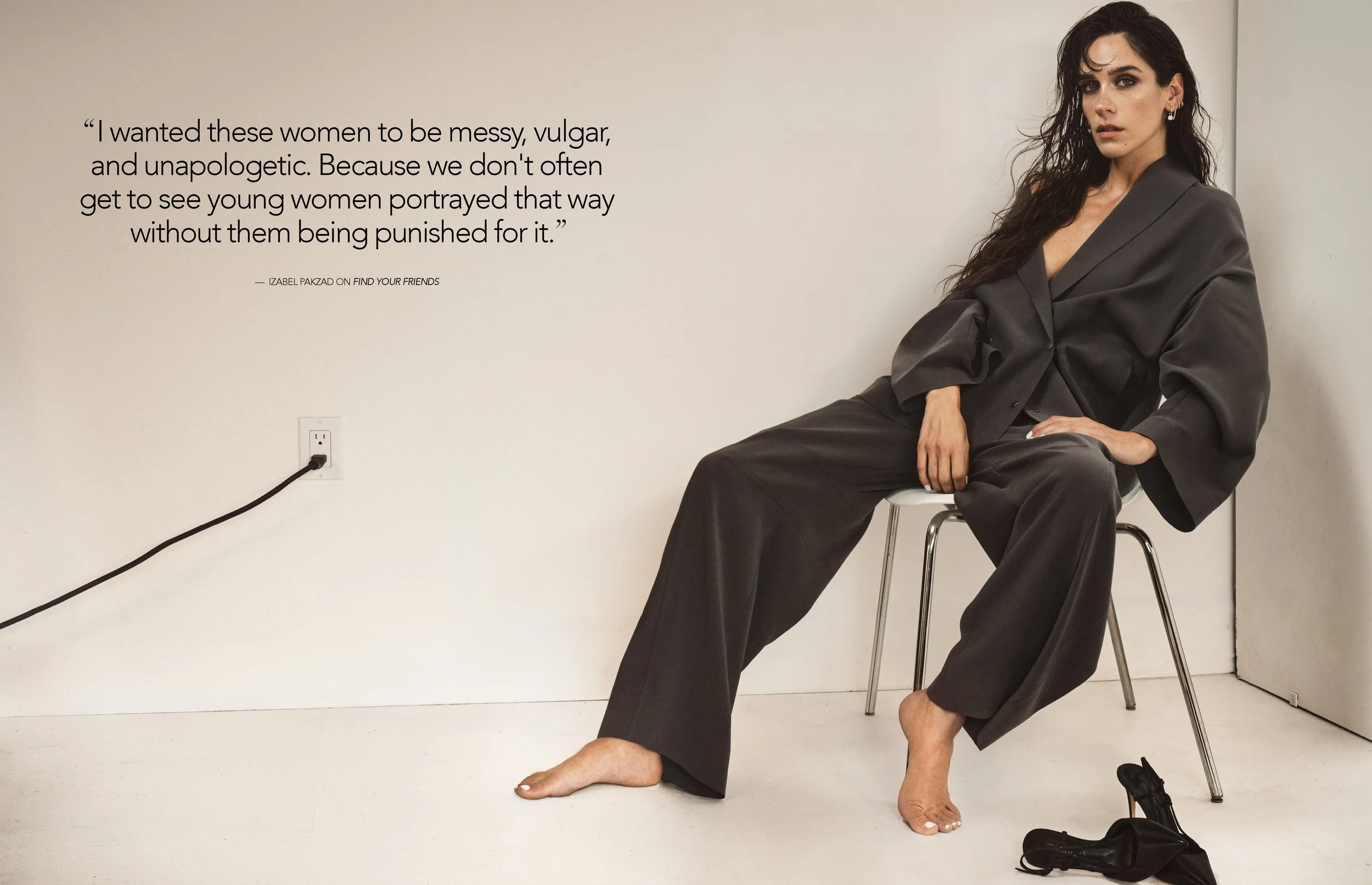
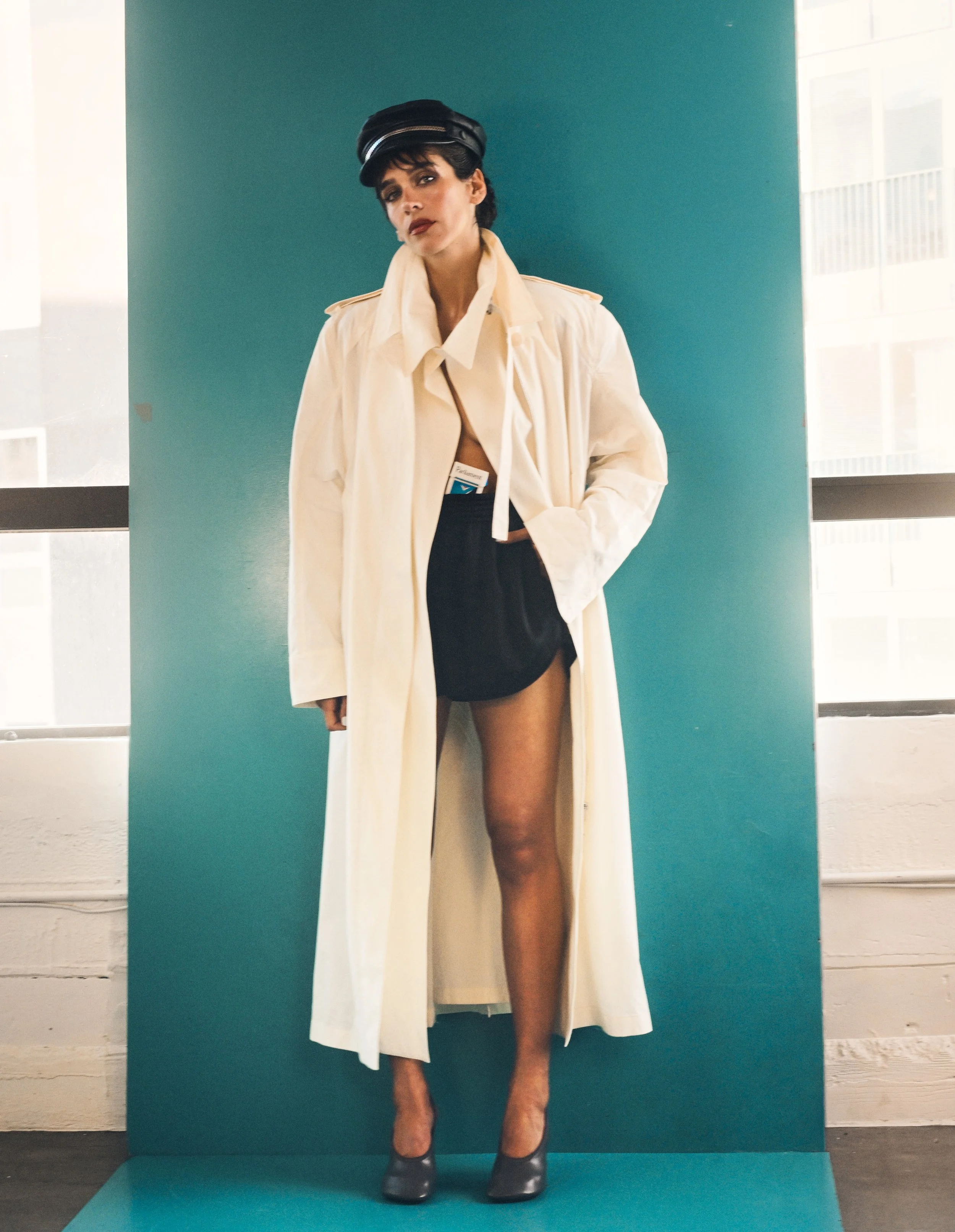
PHOTOS KEVIN SINCLAIR FASHION EDITOR ORETTA CORBELLI INTERVIEW DAVID GARGIULO LOCATION LOS ANGELES, CA. Total look GIORGIO ARMANI, earrings DE LA PAIX, shoes CASADEI.
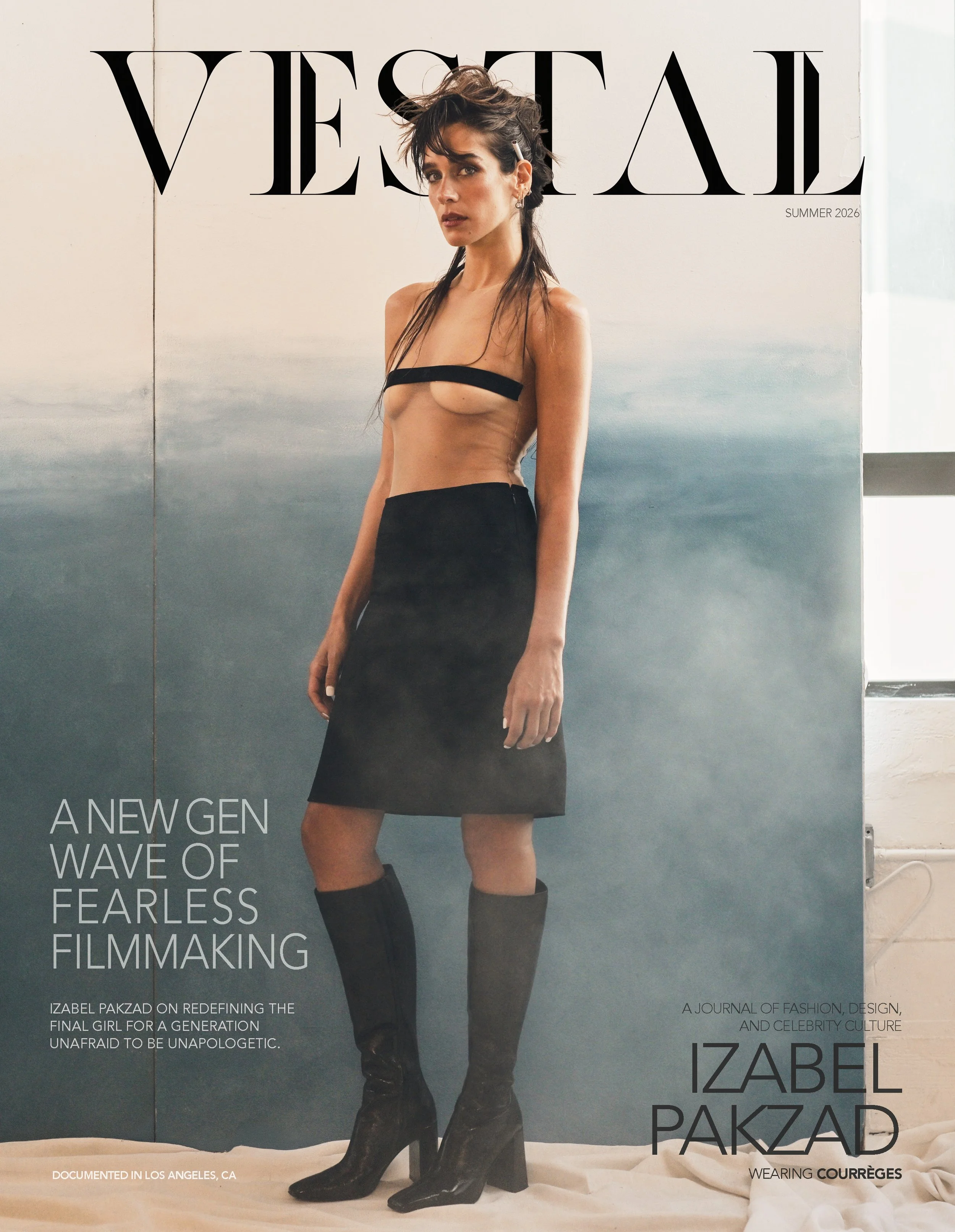
WEARING COURRÈGES
INTERVIEW WITH IZABEL PAKZAD
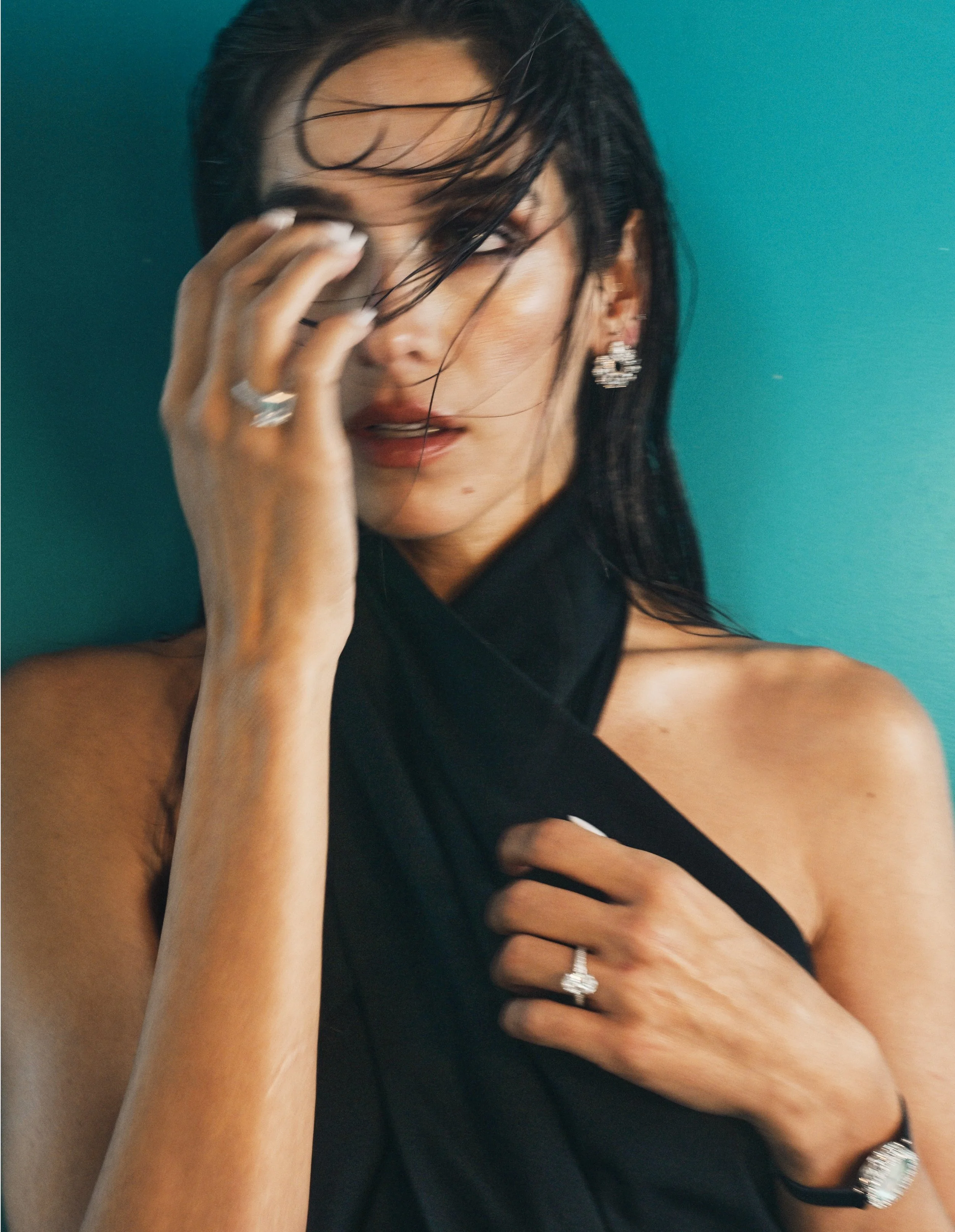
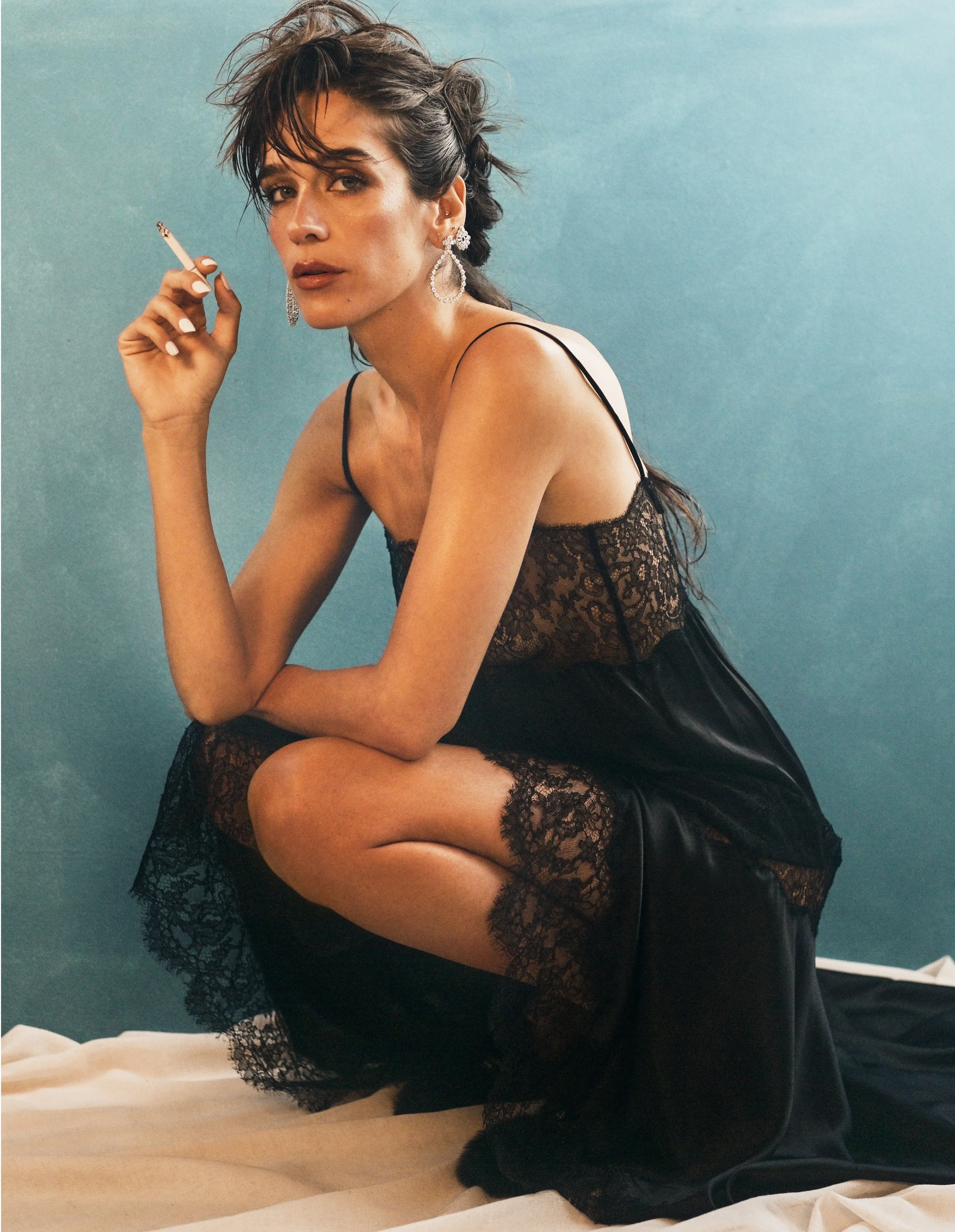
Total look COPERNI, jewelry and watch CHOPARD.

When Izabel Pakzad was nine years old, her late father introduced her to the surrealist, unsettling world of David Lynch’s Mulholland Drive. It became their shared language, cementing a lifelong obsession with cinema that would see a young Izabel documenting her own life through a camera lens.
Decades later, she is directing her own psychological landscape, and it is entirely unvarnished. Her debut feature, Find Your Friends, is a sharp, genre-bending thriller that aggressively strips away the pristine, well-behaved clichés typically forced onto young women in survival cinema. Fronted by an unapologetic ensemble including Helena Howard, Bella Thorne, and Chloe Cherry, Izabel’s characters are intentionally messy, aggressive, and loud, capturing the raw, unfiltered conversations about sex, drugs, and toxic social survival that women actually have behind closed doors.
But beneath the high-octane genre thrills lies a sharper, more insidious terror: the exhausting, low-level, constant state of alertness that often defines modern womanhood. Inspired by a terrifying 2 a.m. highway chase Izabel survived in the high desert, the film trades traditional "final girl" purity for a jagged look at the systemic difficulties women face, from the isolating silence of keeping a dangerous gut feeling to oneself, to the deep institutional friction of simply trying to be believed by male authority figures.
Following a packed, adrenaline-fueled screening at Los Angeles' historic Vista Theatre, VESTAL documented Izabel Pakzad and connected with the filmmaker for a candid conversation about channeling real-world trauma into art, the complexities of female camaraderie, and why she refuses to let her characters be punished for being complicated.
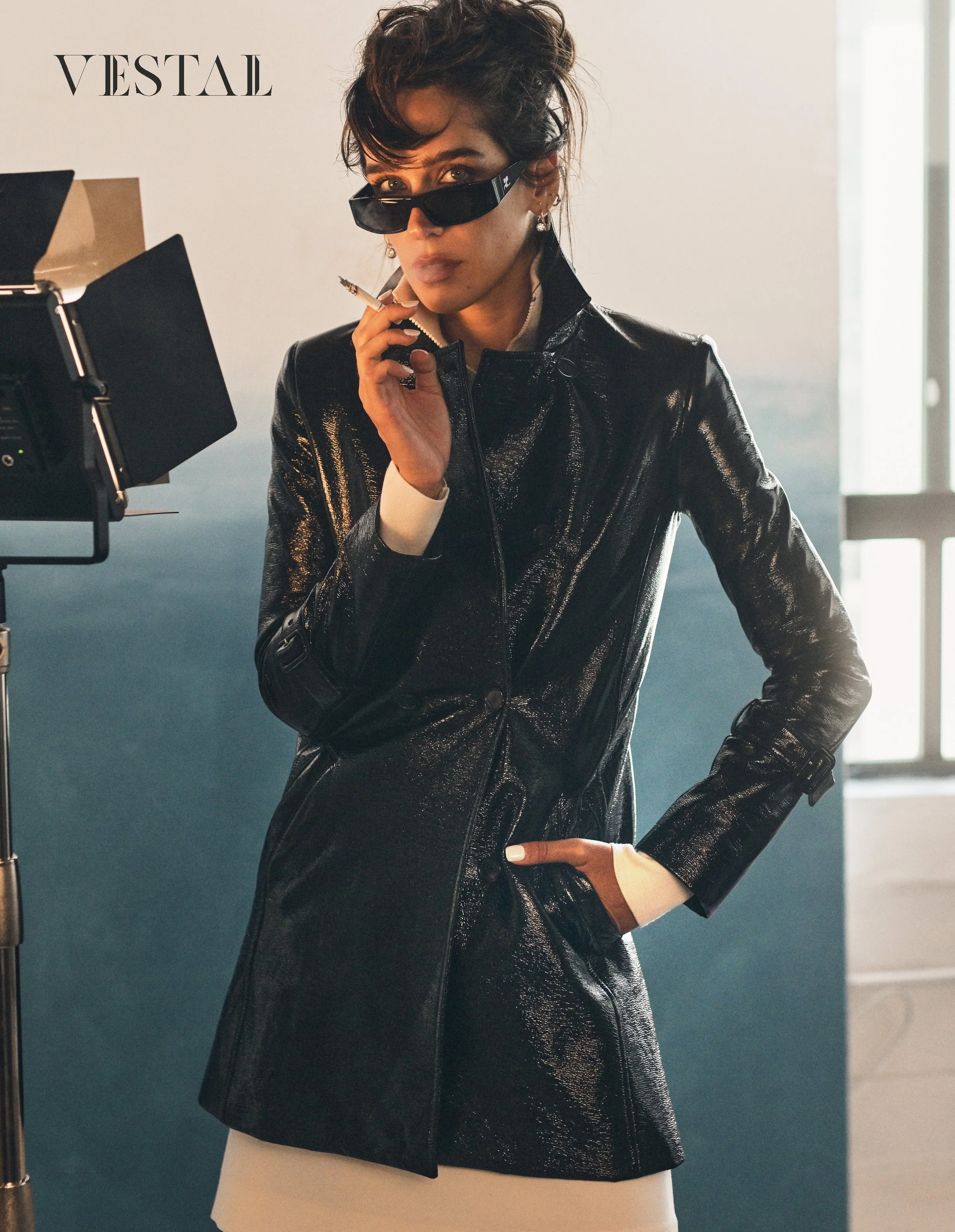
Total look COURRÈGES, earrings DE LA PAIX.
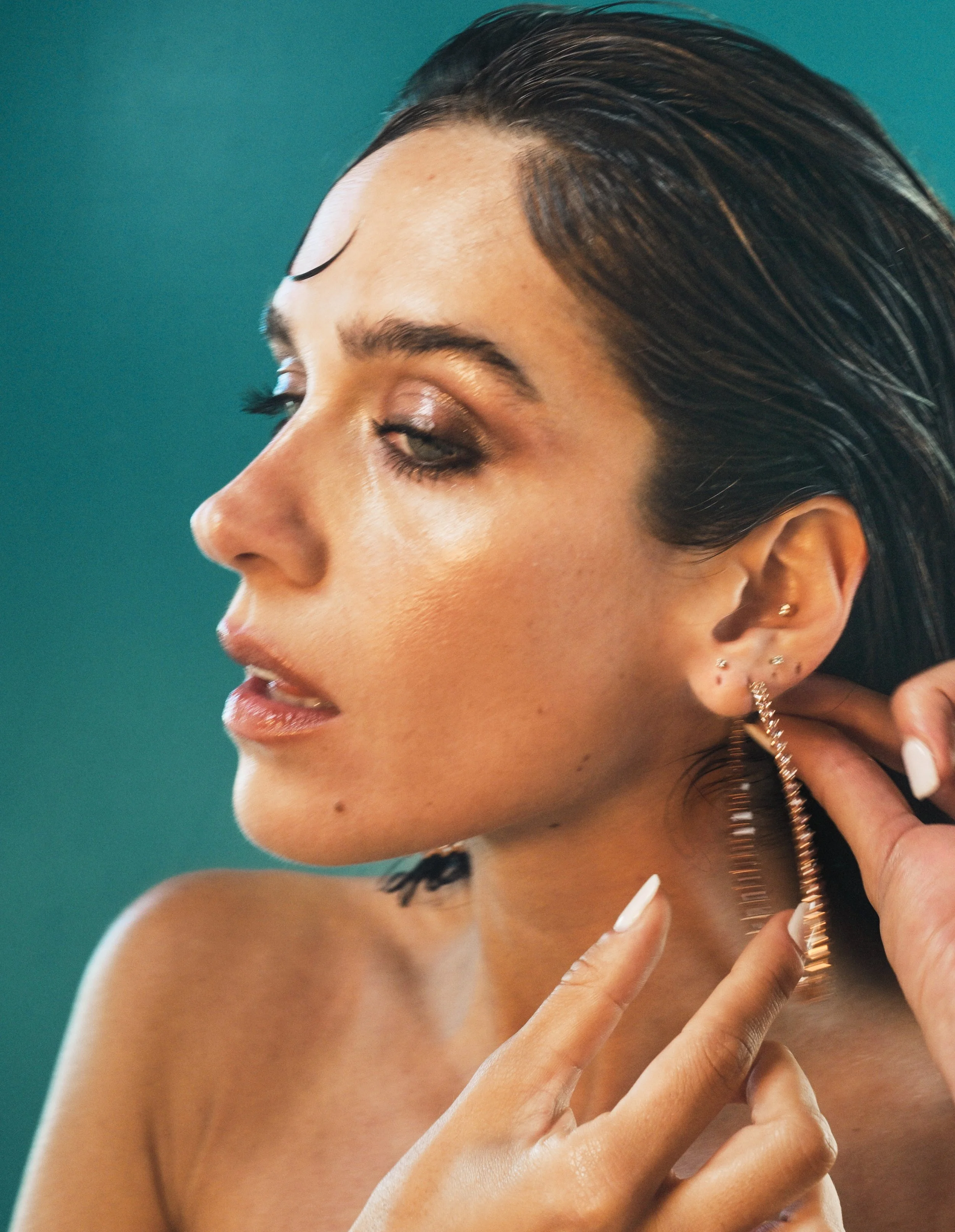
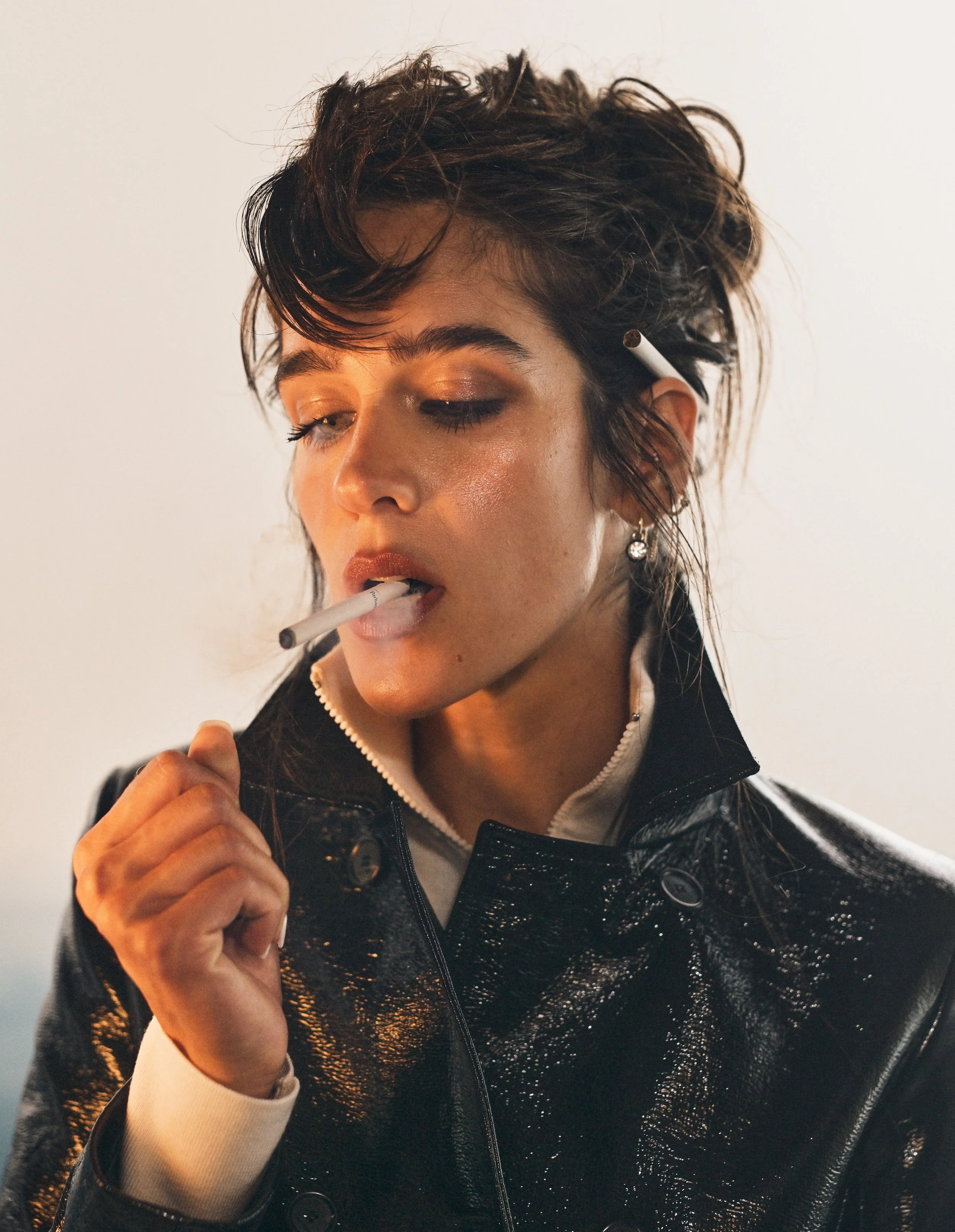
Earring CHOPARD.
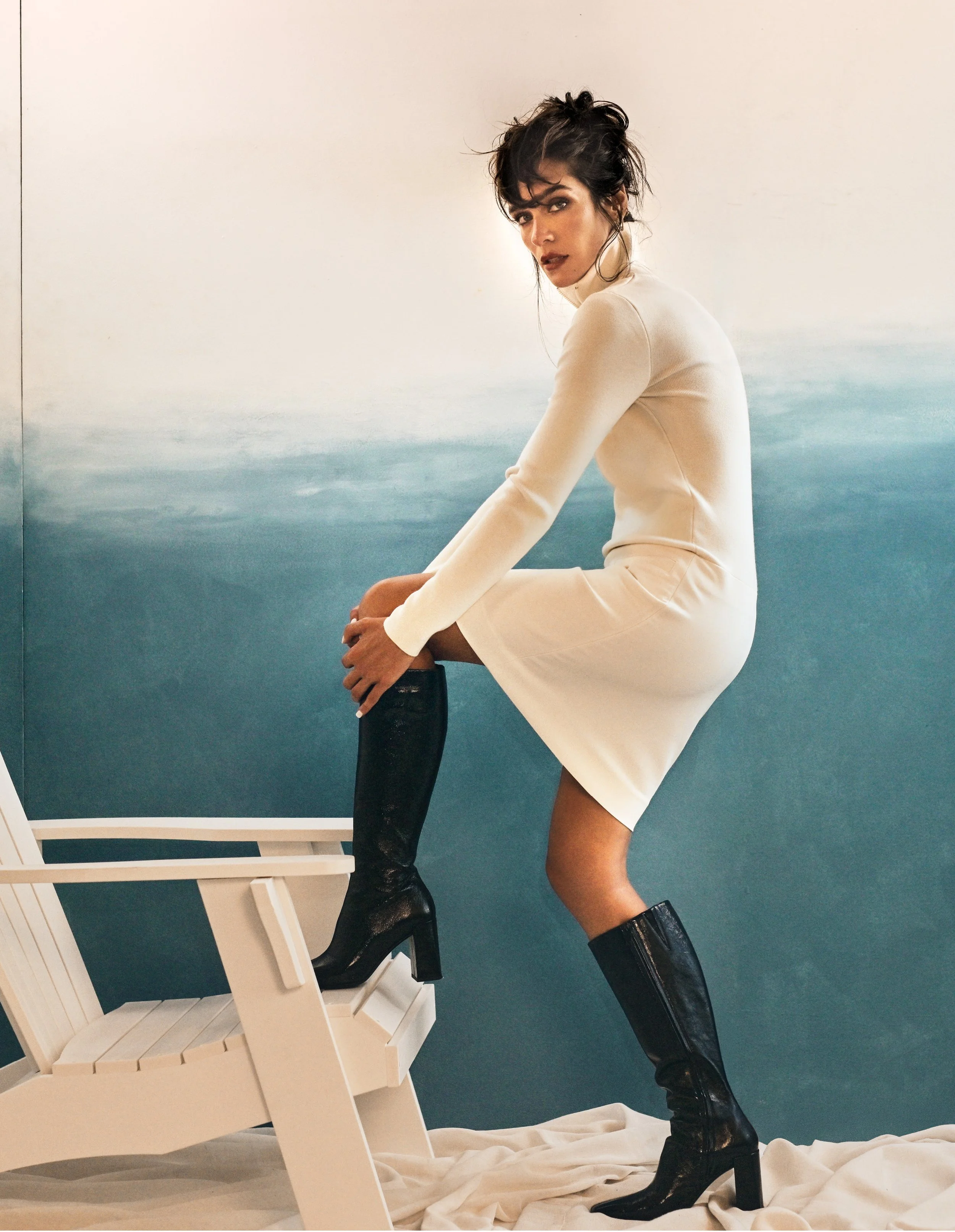
Total look COURRÈGES.
David Gargiulo __ You were born in New York and spent your formative years on the East Coast. What are the qualities from that upbringing that still show up in the way you move through the world today?
Izabel Pakzad __ I think there's a certain East Coast mentality where we hustle and do whatever it takes to make things happen. Both sides of my family are immigrants from different countries, and they came to this country and had to build a life here. They never gave up on anything. I think now that's really ingrained in me as well. I’m currently back in New York for a screening of my movie Find Your Friends, and I feel the energy of the city and the people. It made me a very hard worker and someone who doesn't let a "no" discourage me. If anything, it motivates me to keep going. That's also how I was able to get my movie made. This business is incredibly difficult, and having that mentality has helped me navigate it.
DG __ Hearing ‘no’ motivates you? How does that work?
IP __ Yes! Because I want to prove everyone wrong when they say no.
DG __ You mentioned that both of your parents were immigrants. I know your mom is from Greece. Where is your dad from?
IP __ He was from Iran. He passed away when I was young. When the Iran revolution happened, his family left and came to New York. My parents met in Queens. My dad was working at a clothing boutique, and my mom walked in. That's how they met. They were both in their early twenties. Some months later they married.
DG __ What was young Izabel like? What did she imagine her future would look like?
IP __ I always saw myself with a camera, whether it was in front of it or behind it. When I look at old videos of myself, I'm holding the camera, moving around, narrating the movie of my life as a 10-year-old. I don't think I ever knew exactly what my path would be, but when I look back at who I was and what I was passionate about, movies are always the common thread. I really do feel like this was always my path.
DG __ Was it encouraged by your parents?
IP __ Yes. It was kind of an ongoing joke in my family. My mom always says, "I always knew this was what you were going to do." And with my dad, movies were the thing we really bonded over. We would watch films together all the time. We watched Mulholland Drive over and over when I was a kid. I think I was nine years old. That was our shared language. He had such a deep love for movies. I definitely got that from him.
DG __ As you mentioned, you’ve worked in front of the camera, behind the camera, and in development for several years. At what point did Find Your Friends stop being an idea and become a film you knew you had to make?
IP __ The movie is very loosely inspired by real events that happened to me. After that experience, I had this moment where I knew I needed to tell this story. It was kind of a traumatizing experience. It was the first time in my life I felt like I was in real danger as a young woman, like my life was being threatened. And it really stayed with me. I’ve always been very aware of my surroundings, very cautious. I move through the world that way, so the fact that it still happened to me was shocking. You always think you’re smarter than that or that you’ll avoid those situations. But it made me step back and realize I really wanted to explore it through a story. At the same time, I had just graduated college and I was in this phase with my friends where we were kind of stuck in these strange partying rituals. It felt like we were in this awkward transition into adulthood, figuring out how to socialize, how to be, what “being cool” even meant. And for a lot of us, that meant being the life of the party, drinking, all of that. I started thinking about those two things: what I went through personally and this broader social environment we were all in. And how we were all connected. It happened pretty quickly after that. It was almost like a revelation. I just knew I had to write it, and I did it fast. So it was almost immediate.
“ MY DAD AND I WATCHED MULHOLLAND DRIVE OVER AND OVER WHEN I WAS A KID. IT BECAME OUR SHARED LANGUAGE.”
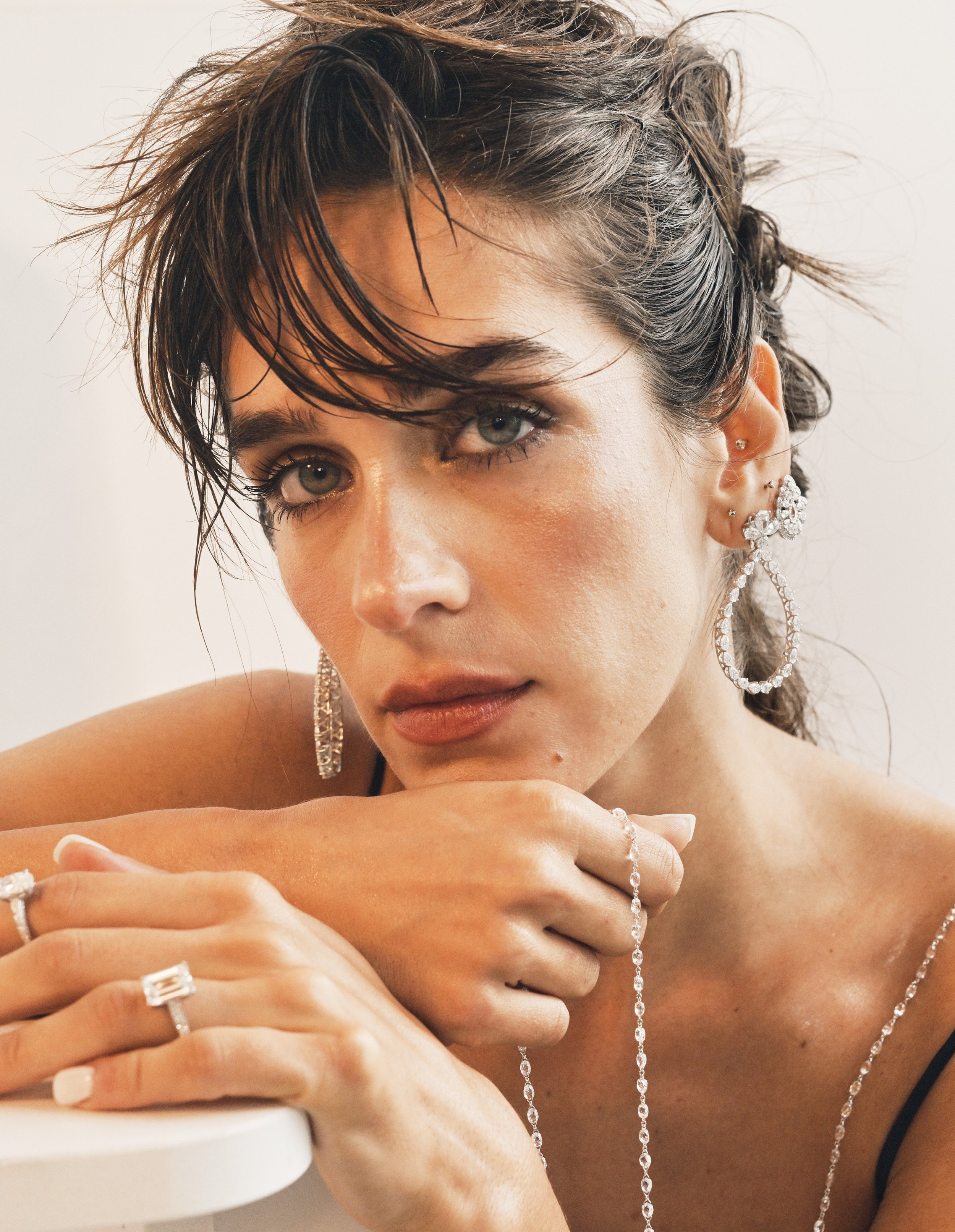
Jewelry CHOPARD.
DG __ It sounds like you were testing boundaries. Looking back, how much of that was driven by curiosity versus social expectation?
IP __ I had fun with it. I own it. [laughs] I had this idea that, in college, you have to drink a lot, party a lot, be fun, or otherwise you’re not really accepted socially. It’s a very strong pressure, especially at Penn State. I also realize now that a lot of it was me performing a version of myself or feeling like I had to, in order to be accepted. I’m really grateful for my experience there, I had a great time, but I definitely had to rewire how I thought about some of that afterward.
DG __ You mentioned this film is inspired by real events. Can you be specific, what were those events?
IP __ So basically, my best friend and I went on a trip to Joshua Tree. It was our first time going. And it’s funny because I wasn’t even supposed to be on that trip. I was in LA at the time and they were like, “Please come, please come,” so I ended up going. It wasn’t planned at all. We got there and from the beginning, something just felt off. It was more of an intuition thing, but we had these strange interactions with some of the local men. There was also a neighbor who kept appearing and saying odd things to us. It just felt like something wasn’t right. One of my friends actually said, “I have a weird gut feeling about this,” but the rest of us were kind of trying to ignore it and just have a good time. Then I had to leave early to go back to LA that Saturday night for a meeting the next morning. I didn’t want to wake up early, so I decided I’d just drive late. One of my friends said she’d come with me. But everyone else decided to stay. The Airbnb was on a dead-end street, so I pulled out and turned around at the end of the road, and that’s when I saw a green Mustang parked outside the house. The headlights turned on, and the car was just there, blocking the end of the street. Mind, it was 2 a.m. in the middle of the desert. Immediately I knew something wasn’t right. I drove onto the neighbor’s lawn just to get around him, and then I sped off. When I looked in the rearview mirror, he was already turning around and following us. We ended up in this almost 10-minute chase on the highway in Joshua Tree. He was trying to swerve into us, trying to push us off the road. We were trying to call the police, but service kept cutting out and we couldn’t even explain where we were because it’s just a long stretch of highway in the desert so you don’t know exactly where you are. It was probably the scariest ten minutes of my life. I genuinely thought we weren’t going to make it out. At one point I remember thinking of Nocturnal Animals, that scene with Jake Gyllenhaal and his family. It felt like that. Eventually we saw a car in the distance and started honking and waving, and that’s when he peeled off. But as he turned around, I caught a glimpse of his license plate and realized it wasn’t even real. It looked like a paper plate with handwritten letters and numbers. I also saw him briefly. He looked like he was on drugs. He looked really frightening. And then right after that, it started pouring rain, which never happens in the desert. It felt surreal, like this strange shift after everything that just happened. We kept driving and just kept asking, “What just happened?”
DG __ Wow. I wasn’t expecting something that close to what’s in the film.
IP __ know. I know. The car sequence in the film is very directly inspired by that moment. It didn’t end the same way, but your readers will need to watch the movie to know how it ends in the film. [laughs]
WEARING COPERNI
DG __ Let’s talk about the characters of Find Your Friends. The characters are very different from the usual survival thrillers. What message did you want to convey with them?
IP __ I’m a huge fan of genre films, thrillers, horror, all of it. And I really feel like the “final girl” is usually placed into this very specific box. She’s innocent, she’s well-behaved, and you kind of know exactly who she is from the beginning of the film. With this movie, I really wanted to flip that on its head. I wanted these women to be messy, vulgar, and unapologetic. Because we don’t often get to see young women portrayed that way without them being punished for it. Male characters are given so much more freedom in that sense. So for me, it was very intentional to push against that and make a statement with it. And also, women talk like that in real life. We can talk about our experiences, our sex lives, our “crazy stories,” and we’re judged for it in a way that men just aren’t. That imbalance was really important to me in shaping the characters.
DG __ It definitely opened my eyes.
IP __ Good. I was really inspired by a film called Kids. There’s a scene where it cuts between young women and young men talking very openly about their sex lives. At the time, it felt really shocking, like a revelation that characters, especially young characters, were speaking so directly. Of course my film is very different, but that scene really stayed with me while I was writing. It gave me permission to just go there with it and not hold back.
DG __ What was the key to creating an environment where the cast felt comfortable pushing these characters into some very uncomfortable places?
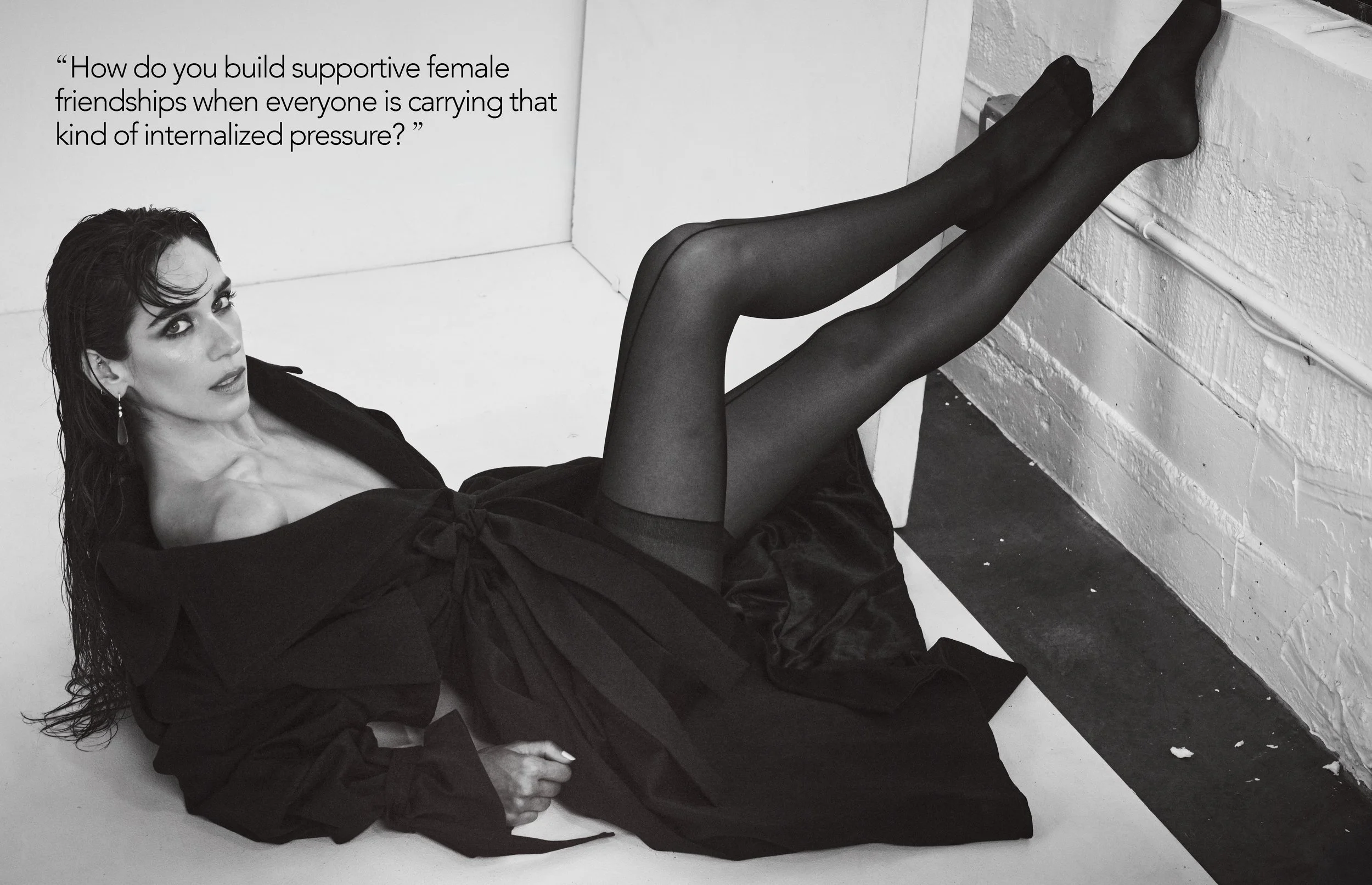
Total look IZAKOVA, earring CHOPARD.
IP __ Honestly I feel that’s just the experience of being a woman. A lot of women can relate to that. Of course, in the film it’s pushed to an extreme and told through a genre lens, so it’s more heightened. But I was really trying to capture the nuance of that experience. It’s this feeling of not always saying something for fear of how it will be received or not wanting to “make it a thing.” There’s this space where, as a woman, you feel something, maybe a shift in energy, maybe a possible threat, or just a weird vibe, but the safest thing often feels like keeping it to yourself. Because once you say it out loud, it becomes something else. It can change the dynamic. It can even make you feel more vulnerable. There’s this psychological layer to it that’s hard to explain. It's very instinctual. I really tried to capture that, especially with Amber’s character [played by Helena Howard], because she’s the one who’s sort of waking up to everything as it unfolds. It’s that state of being, this low-level, constant sense of alertness. And sometimes it’s hard to articulate. It’s just a feeling. A gut feeling.
DG __ I found it interesting that feeling of not being believed, especially by male authority figures, like the police. But it’s not only that. Even within the group of women, there’s tension there. I was expecting more of a natural sense of female camaraderie, but it almost fractures instead. That surprised me. How do you explain it?
IP __ That’s actually such an important part of the film. Some of the female characters are used to brushing things off, or even blaming themselves. It’s an ingrained way of thinking, something they’ve learned to survive. And they end up projecting that onto each other. So it creates this really complicated dynamic. How do you build supportive female friendships when everyone is carrying that kind of internalized pressure? Sometimes they don’t even know how to show up for each other, because they’ve been conditioned not to. And I think that tension between women is one of the most interesting parts of it, because we’re supposed to understand each other instinctively, but sometimes we don’t. Sometimes we’re blocked.
DG __ Before a character speaks, we often learn something about them through what they’re wearing. What conversations were you having about the role clothing would play in defining these women?
IP __ I really wanted it to feel super realistic. I worked closely with our costume designers, Oretta [Corbelli] and David [Page], and we talked a lot about who these girls are. They live in LA, they went to USC so it should have that LA energy. I wanted them to feel like girls who care about fashion, who are unafraid to show skin, and who are confident in their bodies. There’s something really empowering about that. At the same time, I didn’t want to fall into clichés. When people think of girls going to Joshua Tree, they often imagine this very on-the-nose “cowgirl” aesthetic. And I really wanted to avoid that. So it was about grounding it in reality; how my friends and I would actually dress in that situation. It’s still stylized, but in a way that feels lived-in. And also, they’re in this transitional moment as they just graduated college. So we wanted to keep it youthful.
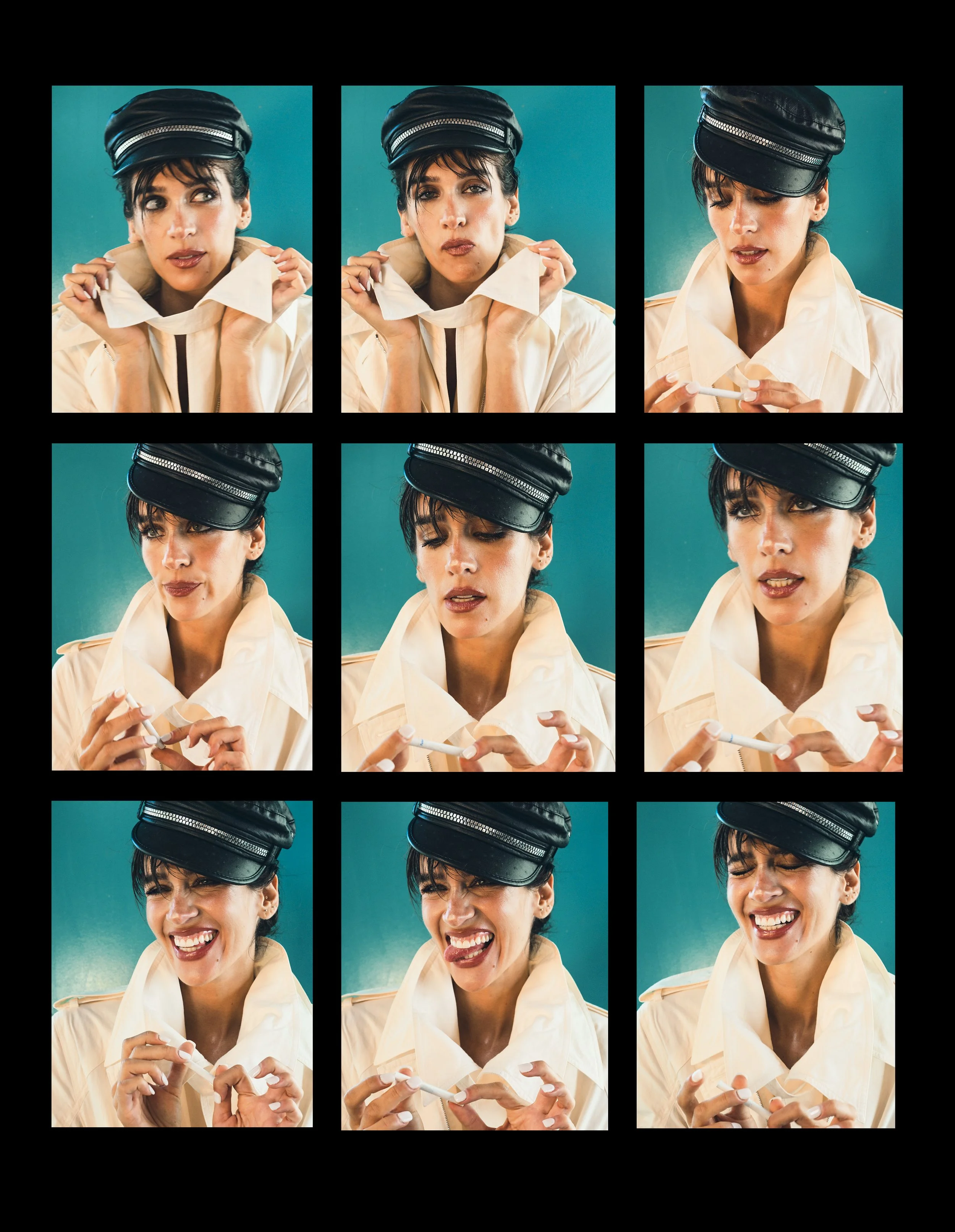
Total look STELLA MCCARTNEY, hat W!LDCH!LD.
Total look DOLCE & GABBANA, earrings CHOPARD.
“ WHEN I LOOK AT OLD VIDEOS OF MYSELF, I'M HOLDING THE CAMERA, MOVING AROUND, NARRATING THE MOVIE OF MY LIFE AS A TEN YEAR OLD.”
Total look COURRÈGES, earrings DE LA PAIX.
Total look STELLA MCCARTNEY, hat W!LDCH!LD.
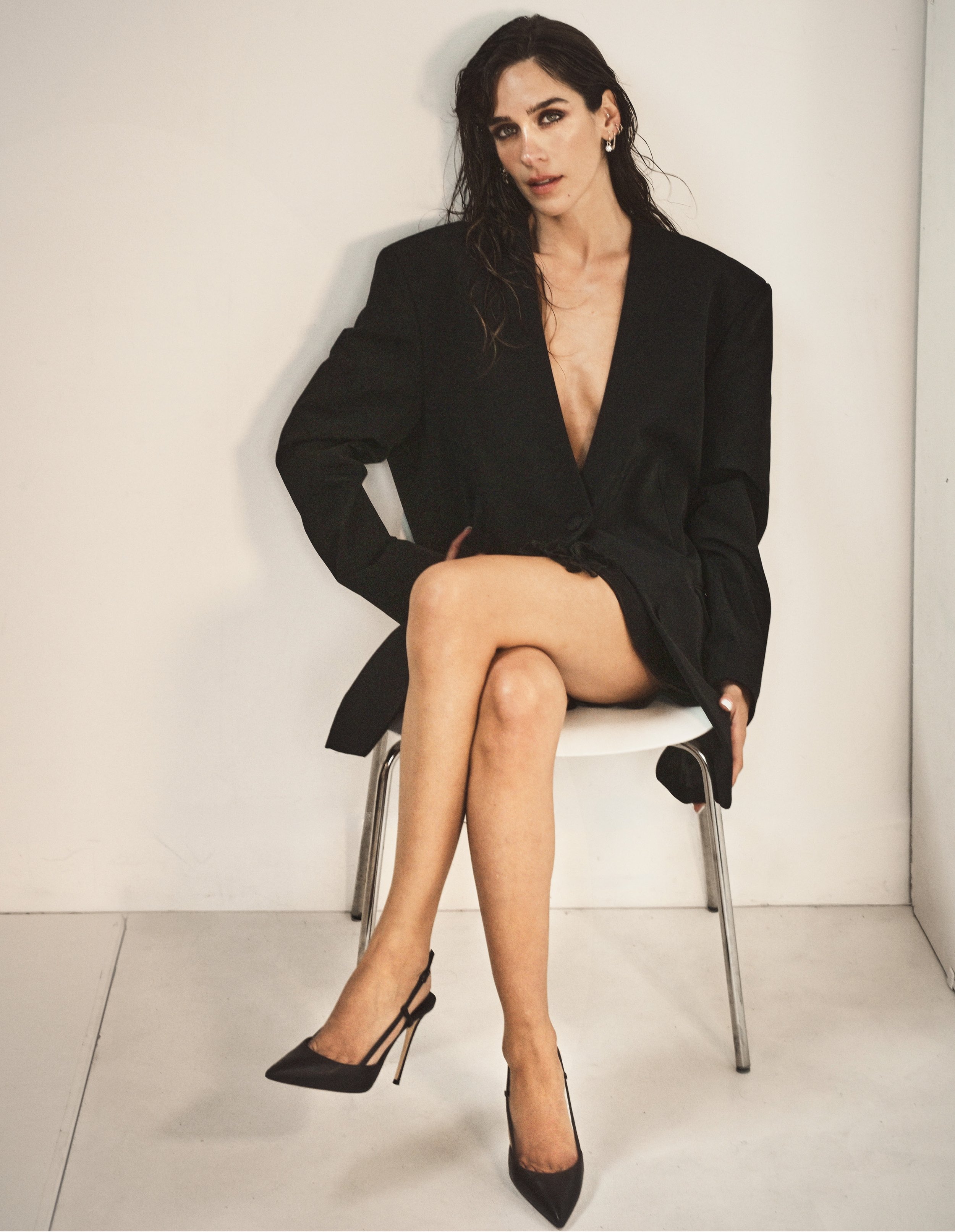
Total look VAILLANT, earrings DE LA PAIX, shoes CASADEI.
DG __ Was there a moment during production when everything felt like it might fall apart? And how did you navigate that?
IP __ There was! We were supposed to shoot the film a year sooner. And then, about a week before, the entire project fell apart. Completely. I was supposed to shoot in New Mexico. I was already there for prep, my crew was there, everything was in place. And then it just collapsed. It was devastating. I remember being really emotional about it for months. I had worked so hard, I really thought we were going to make it happen. At the time, I had always wanted Joshua Tree, but everyone was telling me it wasn’t possible. You have to do it in New Mexico. So I compromised. I said, “Okay, I’ll make it work.” But even when I was there, something didn’t feel right. And then when it all fell apart, it honestly took me a few months to recover from that. But in a way, it became a test. You get knocked down, and you have to decide if you get back up. And when the film eventually got greenlit again in Joshua Tree, it felt like exactly how it was supposed to happen. That was always what I wanted, and it just felt right in my body. There’s no other way to describe it.
DG __ It must have been an intense and exciting moment to experience the journey from beginning to end. What was it like sitting at the premiere and watching an audience experience something that had lived in your head for years?
IP __ It was amazing! It was like an adrenaline high. You know, you dream about things for so long. You set these goals, and for me it was always, “I’m going to make my movie, it’s going to premiere, it’s going to happen.” And for years it’s all hypothetical. Then suddenly it’s real. I was sitting there at Vista Theater, which is such a beautiful theater with so much history, and I just felt completely overwhelmed. It was really emotional. Really a dream come true. But it was also scary in a way, because suddenly your work is out in the world. It’s no longer just yours. It was an emotional rollercoaster, but an incredible one.
DG __ Were you able to sleep after?
IP __ No, I didn’t sleep at all. I was so wired. I couldn’t come down from it. It was just all adrenaline. Honestly, it was one of those really special moments you know you’ll never forget.
DG __ I know you’re working on something new. What kind of story are you working on?
IP __ I can’t say too much, but it is another female-driven story. It’s in the thriller space, and it takes place in Europe.
DG __ Was there someone in your life who taught you how to take risks?
IP __ I've always been a risk-taker. It's just in my bones. I've always done things that don’t feel safe, or that feel bold. I’m willing to put myself out there. I really think I was born that way.
DG __ Okay, give us the recipe. What should people not be afraid of, and how should they push themselves to get comfortable taking risks?
IP __ I think there are two answers. One is: don’t let “no” discourage you. Keep going. If there’s something you want to do, go for it. People will always have opinions, good or bad, but you have to believe in yourself and keep learning and pushing forward. I also think it’s really important to learn from people who already have experience in whatever it is you’re trying to do. Whatever the risk is, you can’t just expect it to come to you. You have to work at it. Take feedback. Build the skill. For me, I didn’t go to film school. I studied writing in college and loved movies, but when I decided to make my own film, I really had to teach myself. I watched hundreds of films. I wrote a short film as a proof of concept, but also just to practice telling the story. I raised money on a smaller scale and made it. I did everything I could to learn by doing. Even before that, I did a test shoot on my iPhone, just low-stakes scenes, to figure out tone and feeling. I took directing classes at UCLA Extension. I just kept working at it in every way I could. So I think that’s important too: not just saying “I’m doing it,” but actually putting in the work to get better while you’re doing it. Also be patient with yourself. Sometimes you see people where it looks like it happens quickly, and it’s easy to think that’s the lesson. But I don’t think it is. It takes time. It took me a long time to make my first film. Maybe it could’ve happened faster, maybe slower. But I’m actually grateful for that time because I learned so much.
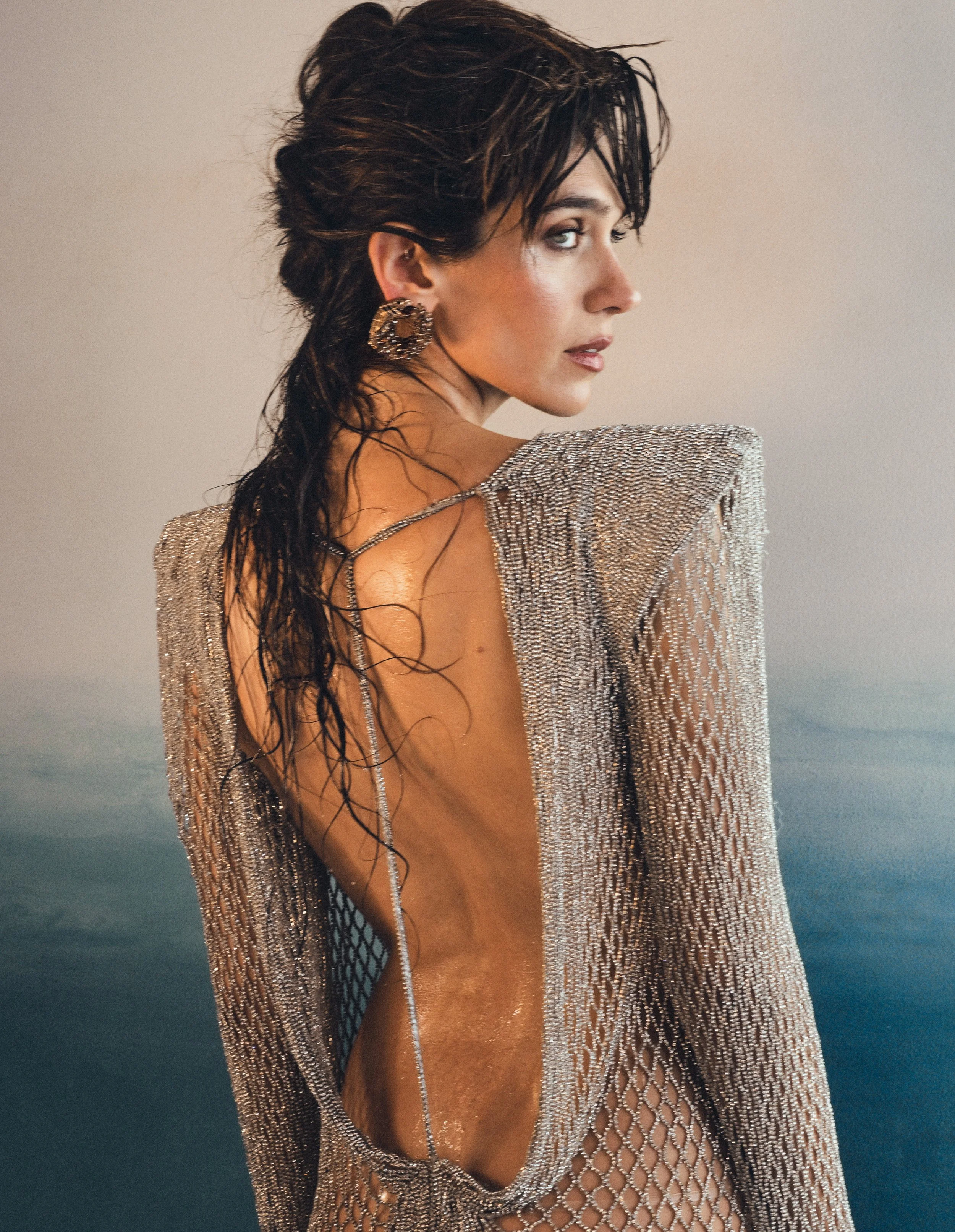
Total look ZULEYHA KURU, earring CHOPARD.
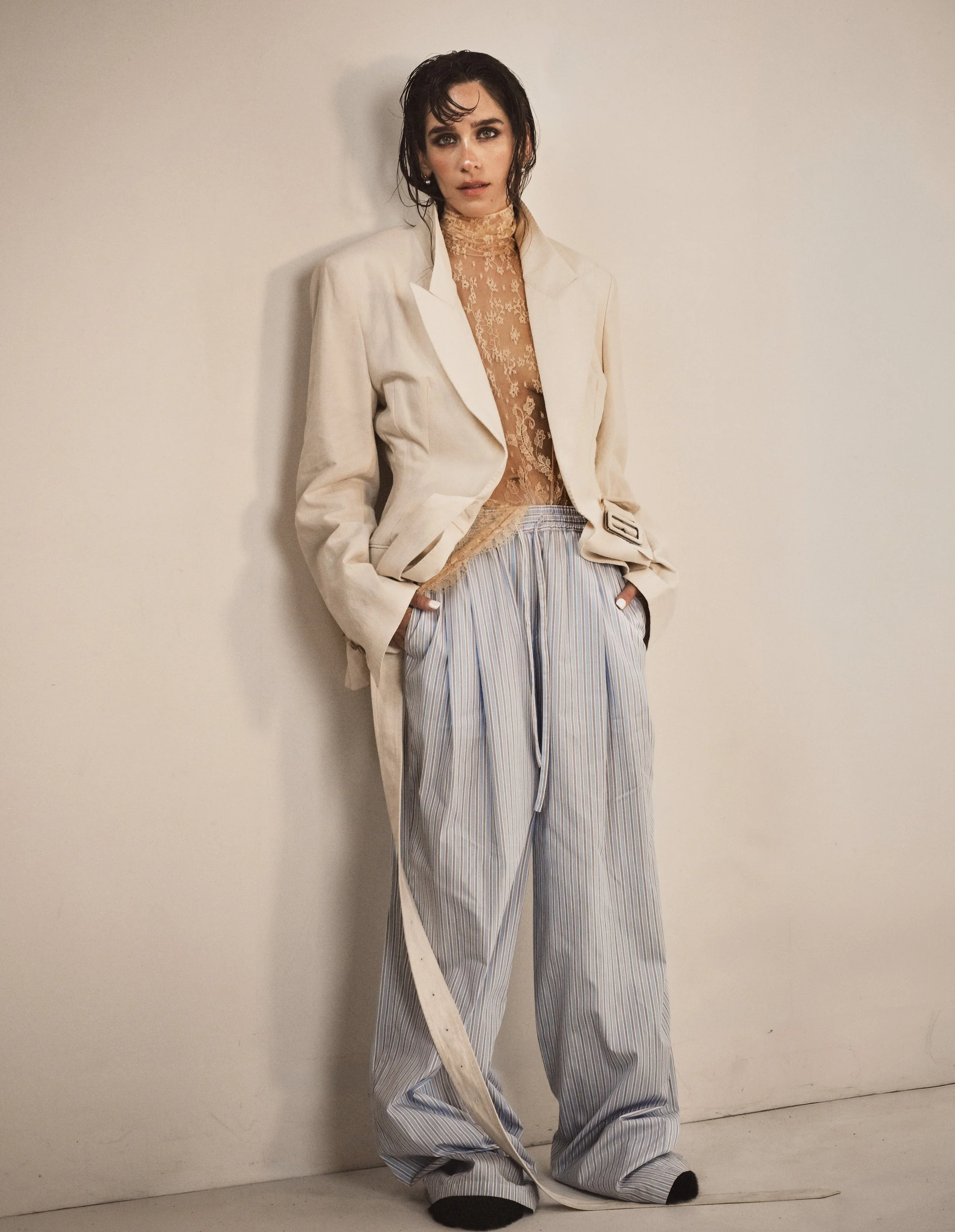
Total look DOLCE & GABBANA, earrings DE LA PAIX.
“ I'VE ALWAYS DONE THINGS THAT DON'T FEEL SAFE, OR THAT FEEL BOLD. I'M WILLING TO PUT MYSELF OUT THERE.”
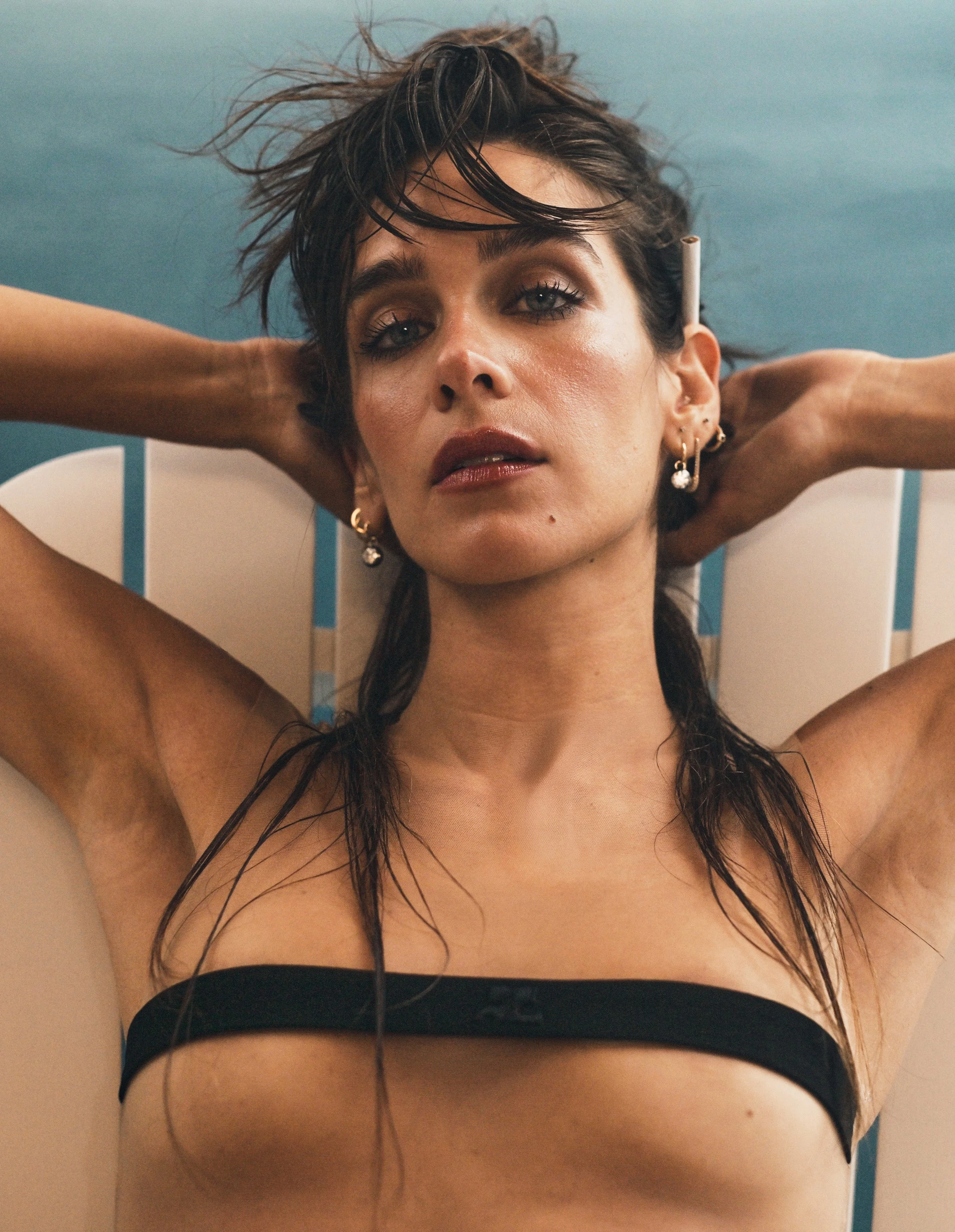
Total look COURRÈGES, earrings DE LA PAIX.
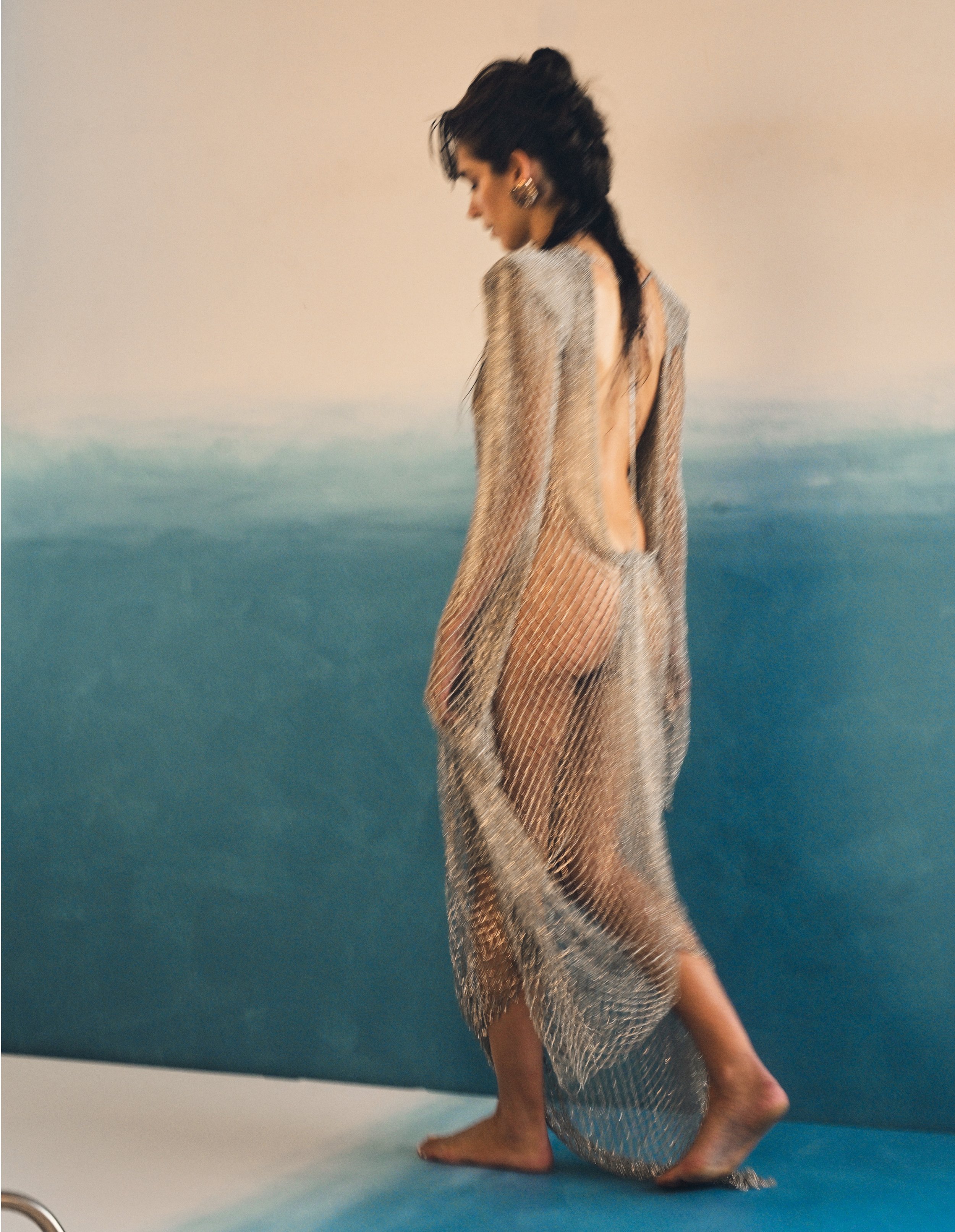
Total look ZULEYHA KURU, earrings CHOPARD.
BEHIND THE STORY For Izabel Pakzad, Find Your Friends began long before the cameras started rolling. Inspired by a frightening real-life encounter during a trip through the California desert, the experience lingered long after the moment had passed. Rather than letting fear have the final word, Izabel transformed it into her debut feature, turning a personal experience into a story about survival and strength.
Editor-in-Chief Kevin Sinclair, Fashion Editor Oretta Corbelli (Honey Artists), Interview David Gargiulo, Hair Virginie Pineda (The Visionaries), Makeup Aimee Twist (A-Frame Agency), Film Director Izabel Pakzad
PROMOTION
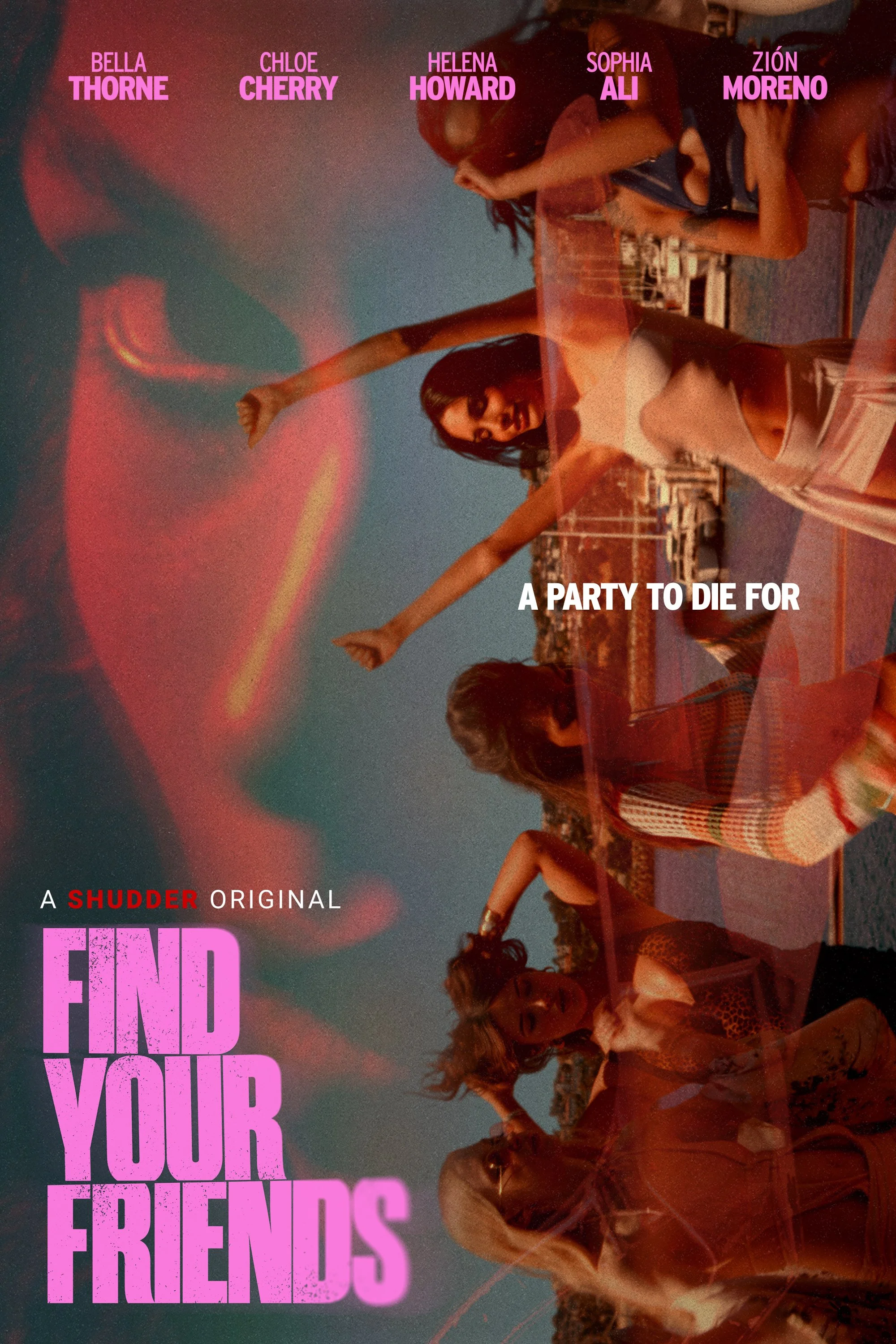
STREAMING ON SHUDDER
