JANUARY 15, 2026
PHOTOGRAPHY JEMIMA MARRIOTT STYLING NATHAN HENRY
INTERVIEW DAVID GARGIULO DOCUMENTED CAFÉ ROYAL HOTEL, LONDON, UK.
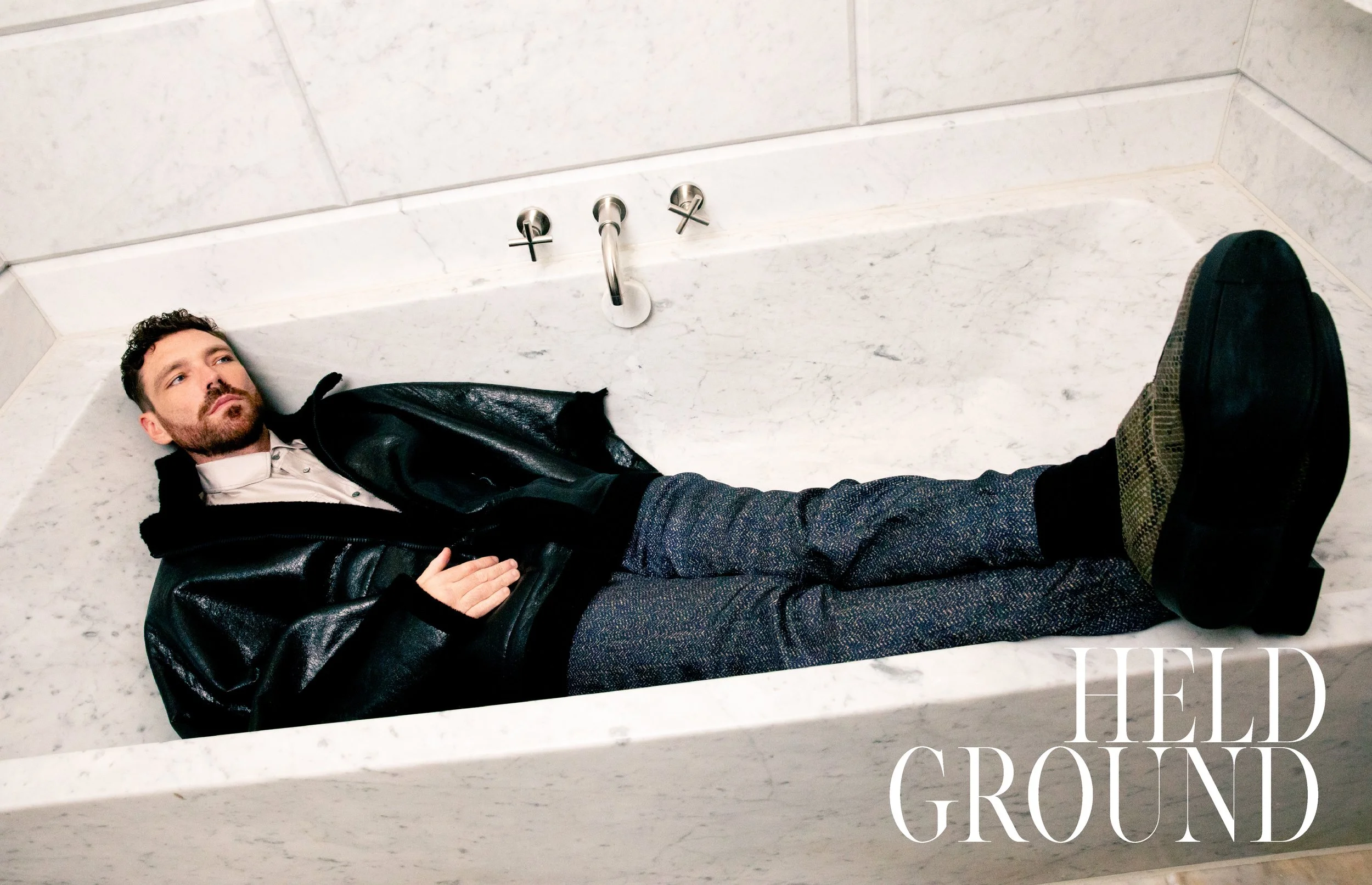
Jacket IM MEN, shirt, trousers, and shoes GIORGIO ARMANI.
“ IF YOU ARE THE SMARTEST PERSON IN THE ROOM, YOU’RE IN THE WRONG ROOM, GO FIND ANOTHER ONE.”
— JAMES NELSON-JOYCE
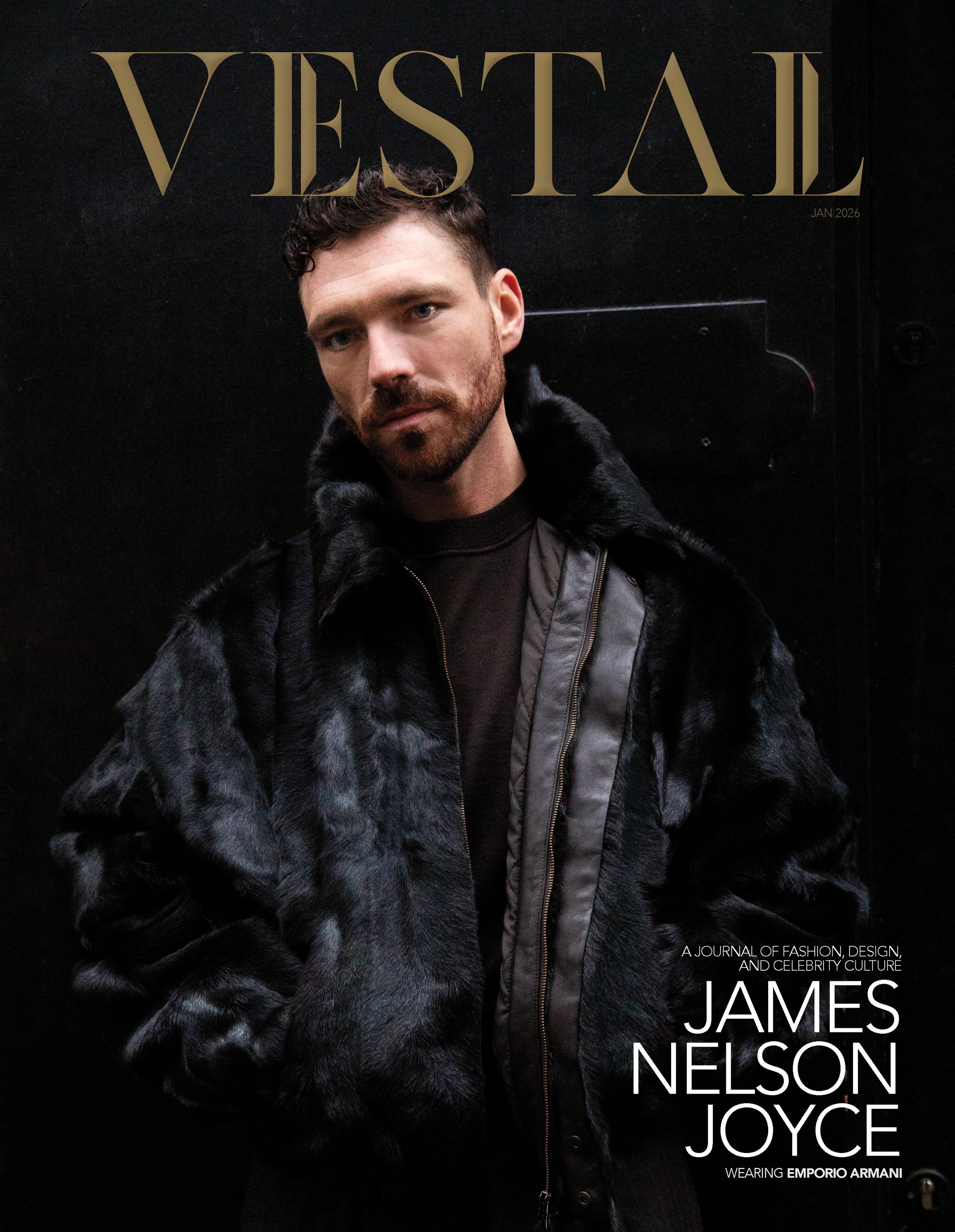
WEARING EMPORIO ARMANI
INTERVIEW WITH JAMES NELSON-JOYCE
James Nelson-Joyce doesn’t just walk onto a set; he brings the weight of Liverpool with him. There’s no performance in his presence, no rehearsed "grit." Instead, he carries the unblinking honesty of a city that values realness over everything else. On screen, he isn't just playing a role; he’s drawing from a life lived close to the bone, where your word is your currency and your community is your anchor.
This lived-in reality grounds his performance in A Thousand Blows. As Edward "Treacle" Goodson, James navigates a landscape where survival and selfhood are one and the same. Every punch thrown and every alliance forged is governed by a raw moral code. Treacle’s story is a slow burn of loss. Once defined by the safety of his brother’s shadow, he is forced to figure out who he is when the family safety net is ripped away. James plays this shift with a quiet and dangerous intensity, showing us that identity isn't just who you are, it's what you have left when you've lost it all. The Victorian bare-knuckle boxing world is a meat grinder of hierarchy and tradition. Within it, Treacle struggles with loyalty, survival, and self-definition in a place where respect is earned and loyalty is expensive. Yet it is precisely within connection that identity is strengthened. In the ring, as in life, it is the people beside you who keep you standing. Resilience isn't a solo act, it is forged in the mud alongside those who refuse to let you fall. For both James and Treacle, identity isn't a solitary pursuit, it’s a foundation built on shared history and a stubborn refusal to go down alone.
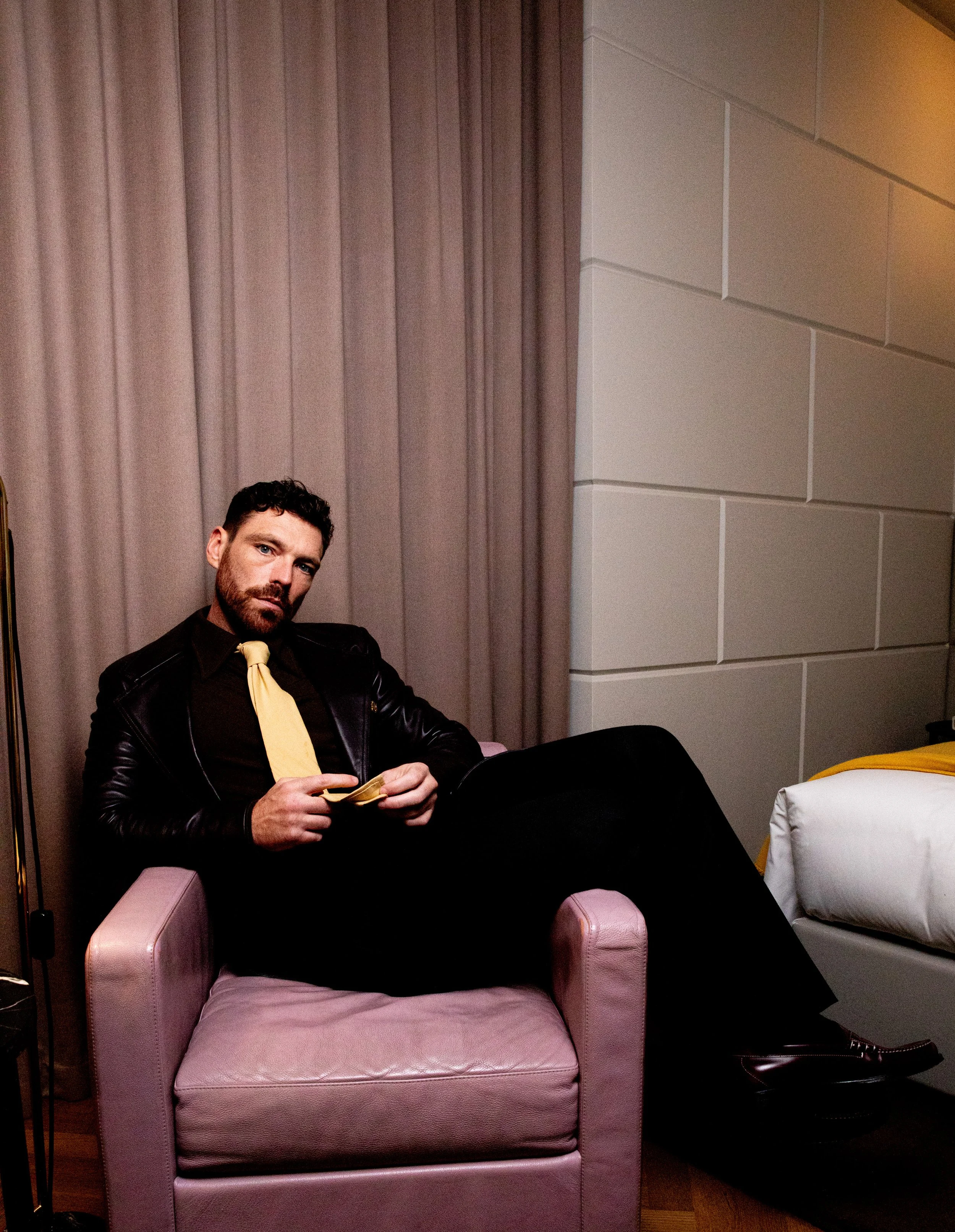
Jacket, tie, and shirt AMIRI, trousers EDWARD SEXTON, shoes GH BASS.
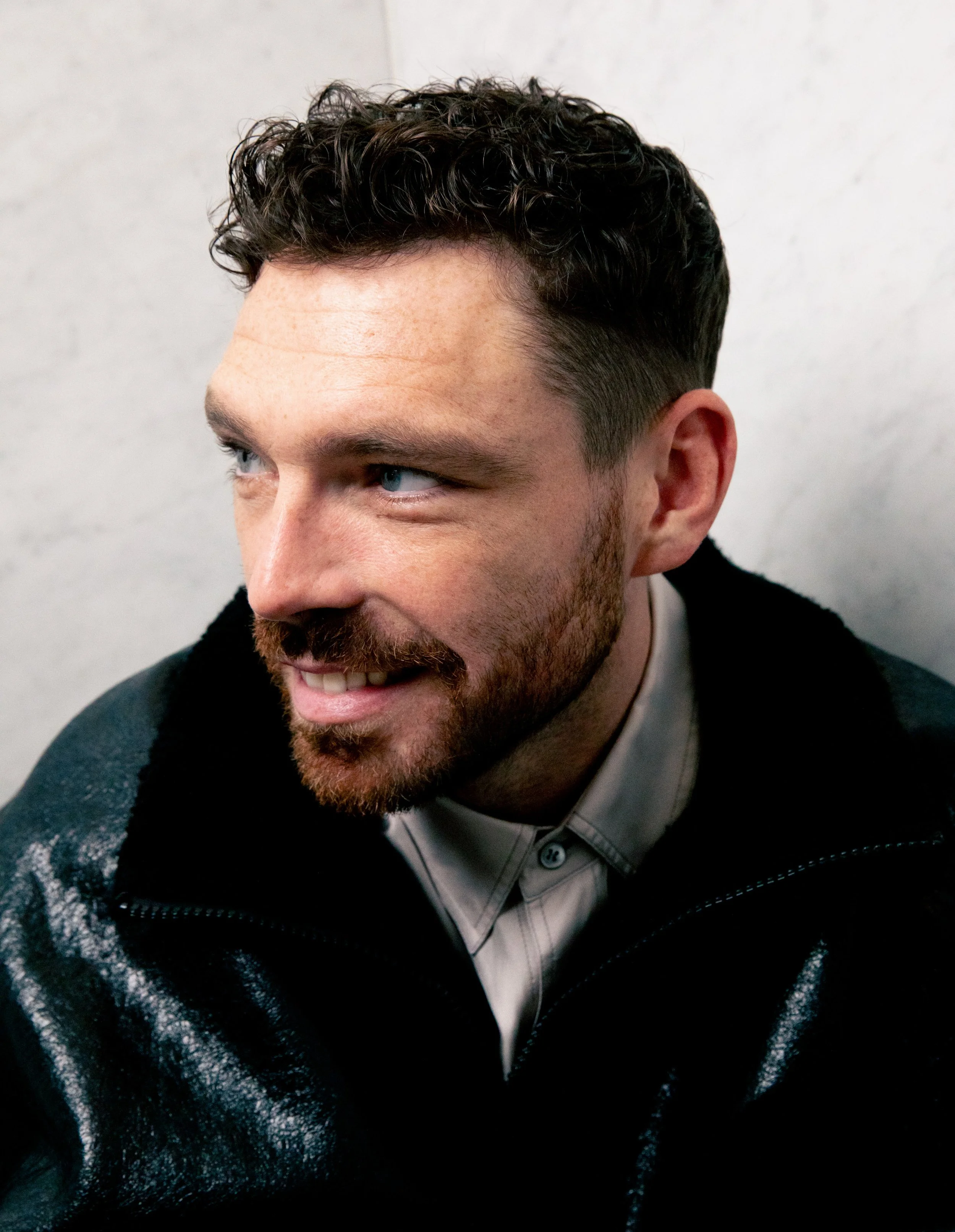
Jacket IM MEN, shirt GIORGIO ARMANI.
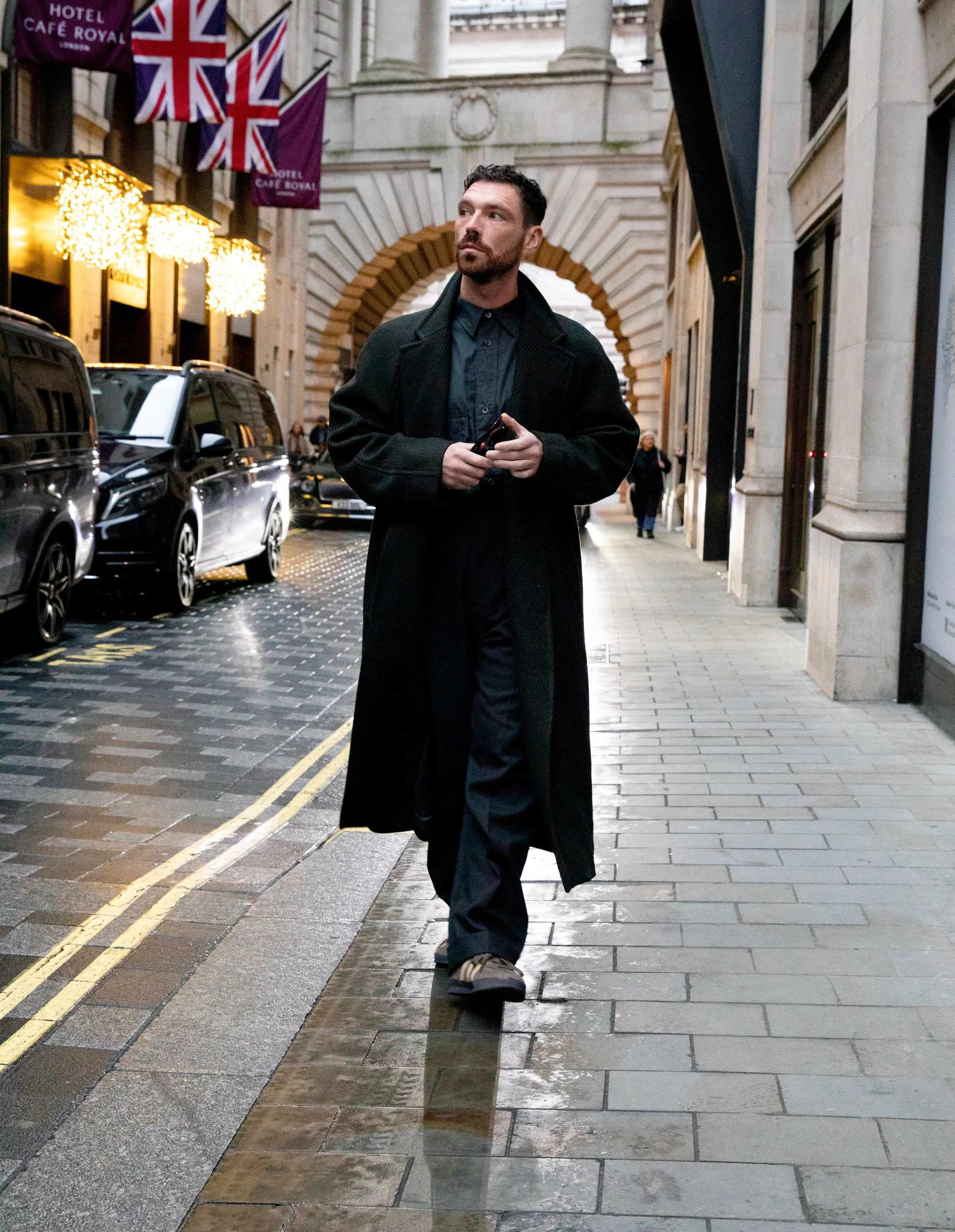
Coat KENZO, shirt and trousers MARGARET HOWELL, shoes ADIDAS ORIGINALS, glasses GUCCI.
David Gargiulo __ Where do I find you today?
James Nelson-Joyce __ At my home in Liverpool. It’s freezing cold and already dark here.
DG __ That’s where you are from, isn’t it?
JNJ __ Yes. Born in Liverpool. It’s the best city, I wouldn’t want to live anywhere else. What makes Liverpool special is the people. We don’t have a lot, but we stick together and we’re very honest. We know where we’re from, we know what we are, and we don’t pretend to be something we’re not. We’re proud of our culture, our history. If you look at Liverpool, it’s amazing for art, the Beatles, incredible actors, writers, football teams, you name it! It’s a port city, looking out to Wales, one of the oldest cities with some of the oldest Chinese and Jewish communities in the UK. It’s a melting pot of cultures, lots of Irish history, and it’s very working-class. Like I said, we don’t have much, but what we do have is honesty, a laugh, and a good time.
DG __ How does your Liverpool background influence the roles you take or how you play them?
JNJ __ For me, it’s always about the script and the story, and finding the humanity in why someone does something. Whatever the role, you have to understand the character. Take This City Is Ours, killing Sean Bean isn’t normal. Most people don’t solve problems that way, so you have to find the why. That’s what I always look for in parts, the motivation. Actions cause reactions, which causes drama, and that’s what we’re making. If there’s something in a script I question, I ask writers, directors, producers. I’m not the smartest person in the room, so there’s no problem asking, “Why does this happen? What’s my motivation?” There’s no ego in it. Asking helps you understand and learn more.
DG __ I often find that the smartest person in the room is the person who thinks they’re not the smartest person in the room.
JNJ __ I think that’s true. And if you are the smartest person in the room, you’re in the wrong room, go find another one.
DG __ So you said you’re going out with your girlfriend afterward, what does an evening in Liverpool look like for you?
JNJ __ I’m going to watch my girlfriend, Olivia. She’s a jazz singer and actress. She’s singing tonight, so once this interview is done, we’ll grab some food, she’ll go perform, then we’ll head to bed. Nothing exciting at all. We barely get time together because we’re filming long days.
DG __ For our readers, can you describe your character in A Thousand Blows, Treacle, and how he evolves in season 2?
JNJ __ At the beginning of season one, Treacle is in awe of his brother [Sugar], who he respects more than anyone. You could say he lives in his brother’s shadow, but he’s glad to be there. There’s a comfort in it. As season one progresses, you see that relationship starts to crumble. By the end of season one, Sugar nearly kills Treacle, and at the start of season two, Treacle has lost that safety blanket in his brother. He’s lost his family because of the danger Sugar brings to their door, and all he’s left with is the Blue Coat Boy pub. The question becomes: how does Treacle survive without all the things that kept him safe? That’s where season two starts with him. It’s a big shift from season one where you see this charismatic, full-of-life, entrepreneurial man with a desire and hunger to better himself. In season two, he’s not living day-to-day, he’s surviving hour-to-hour. He’s lost and lonely.
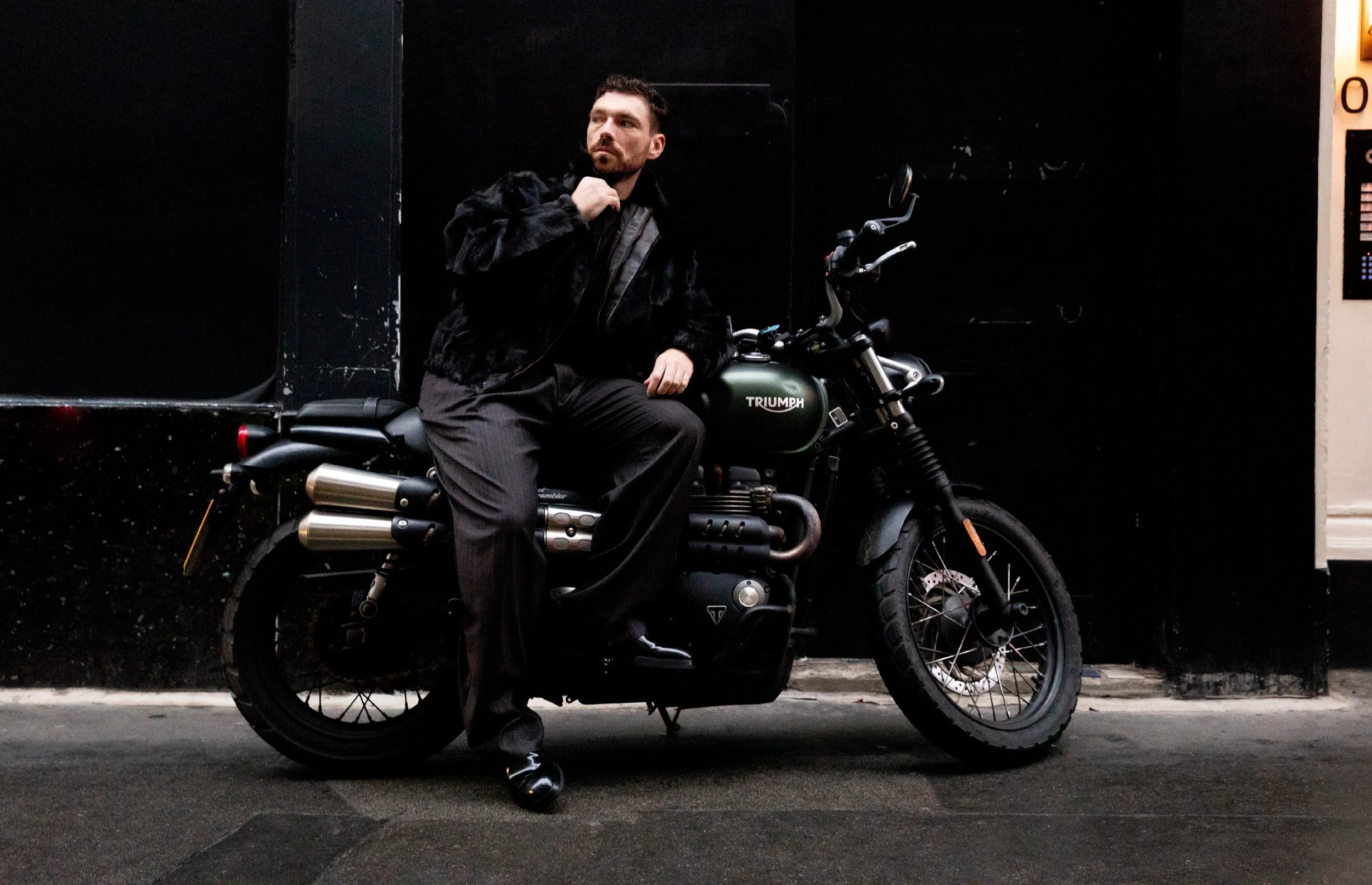
Total look EMPORIO ARMANI.
DG __ Well his brother is a real jerk. [laughs]
JNJ __ Yeah [laughs] and that’s the thing, A Thousand Blows shows community, but also the complicated dynamics between brothers. They’re intertwined in each other’s lives but unable to communicate properly. That’s the problem with most men, isn’t it? We don’t know how to just talk.
DG __ Usually the solution is more listening than talking. Tell me about the boxing scenes. That must have required a lot of physical training. How did you prepare?
JNJ __ I boxed when I was younger, but A Thousand Blows is set a hundred years before modern boxing. Back then, with bare-knuckle fights leading into the Queensberry rules, everything was very stiff and upright.
DG __ The Queensberry rules?
JNJ __ Yes. Established in 1865, the Queensberry rules are the foundation of modern boxing mandating crucial changes like using padded gloves. Before modern boxing, shots were thrown differently than today. We had a boxing coach, a historian, who taught us how they fought back then: the flat-footed stance, the “screwing jab,” all of it. It was strange at first, but it helped us explore our characters physically. For example, Sugar is very violent and wants to get fights over quickly, but he’s also a bit of a showman, playing with the crowd, talking to them. That physicality helped bring that out.
DG __ That’s fascinating. I didn’t realize boxing looked so different back then.
JNJ __ Even the rules were different: rounds could be 5, 15, or 20 minutes. Only in the last 30 to 40 years did it become 12 rounds of three minutes. Styles change over time. Today a lot is about technique. Look at Oleksandr Usyk, a current heavyweight, he’s 15 stone fighting guys 18 stone and winning. Technique evolves, but history matters. In episode one, there’s a scene where I approach Sugar and say, “this is the way forward. We’re fighting in pubs, for pennies. Lord Lonsdale is starting the Queensberry rules with gloves on.” Sugar responds, “Real men don’t fight with gloves.” That’s how the world was back then. Brute force and determination mattered more than technique. These men fought bare-knuckle in pubs or courtyards. The history fascinates me. That’s what I love about Steven’s [Knight] writing, he creates a world grounded in history, so as actors, we immerse ourselves in the research. It brings depth to every movement, every scene.
“ LIFE’S FASTER. PHONES. SOCIAL MEDIA. EVERYONE’S ACCESSIBLE, BUT NO ONE’S REALLY PRESENT. PEOPLE SHOULD PUT THE PHONES DOWN, HAVE A LAUGH, ENJOY EACH OTHER, INSTEAD OF STARING AT INSTAGRAM AND EVERYONE ELSE’S LIVES.”
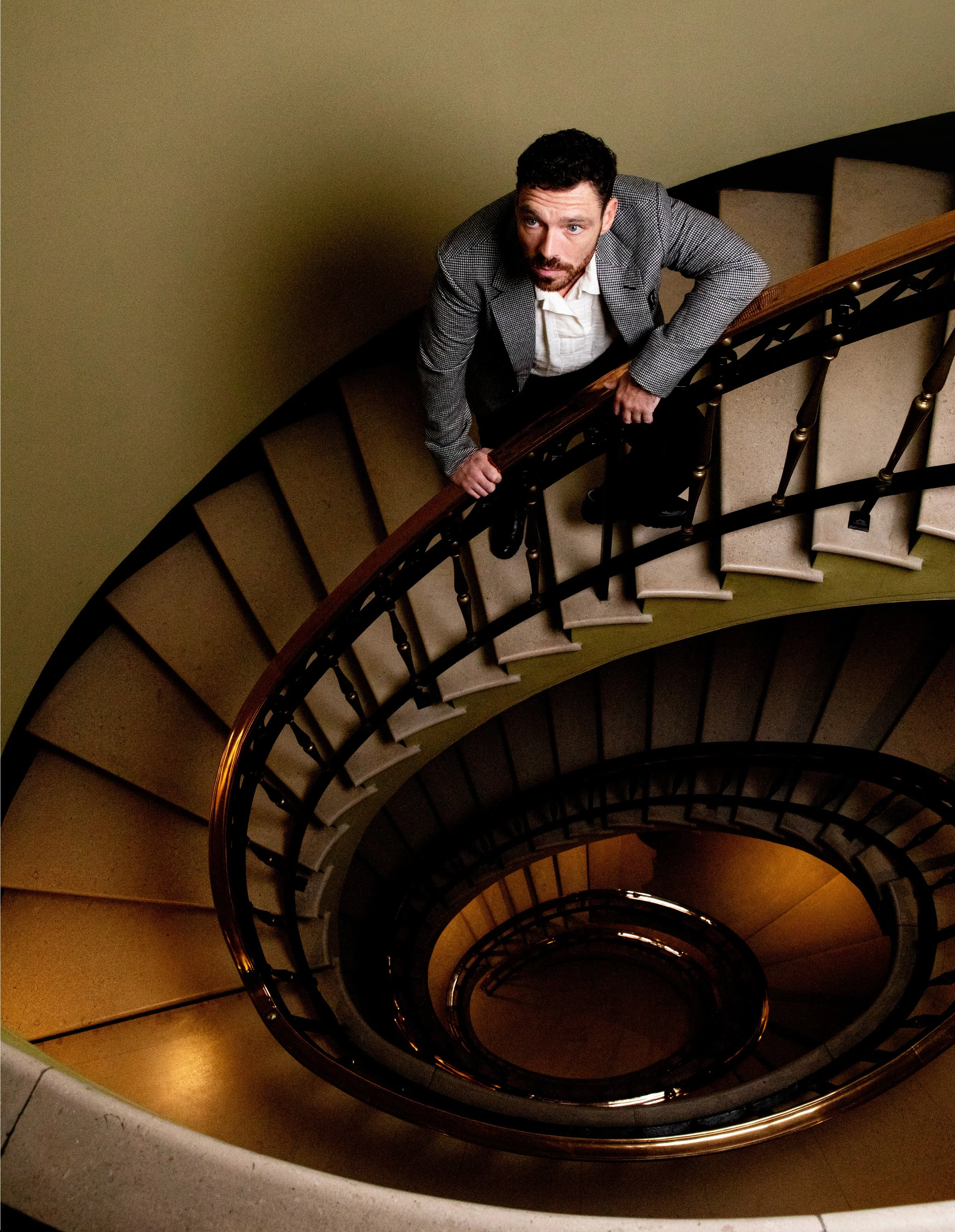
Jacket DUNHILL, shirt RANURA, trousers KENZO, shoes GRENSON.
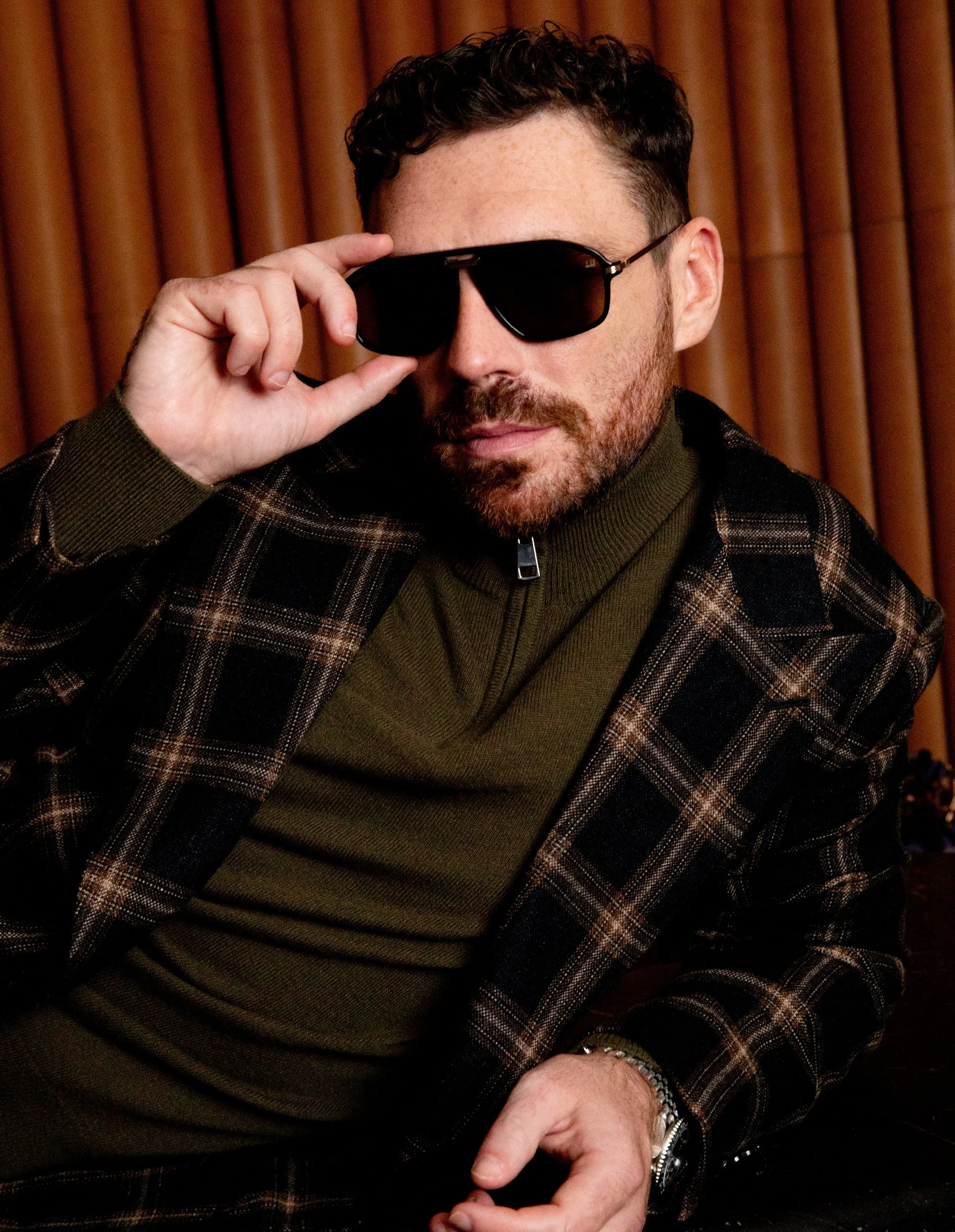
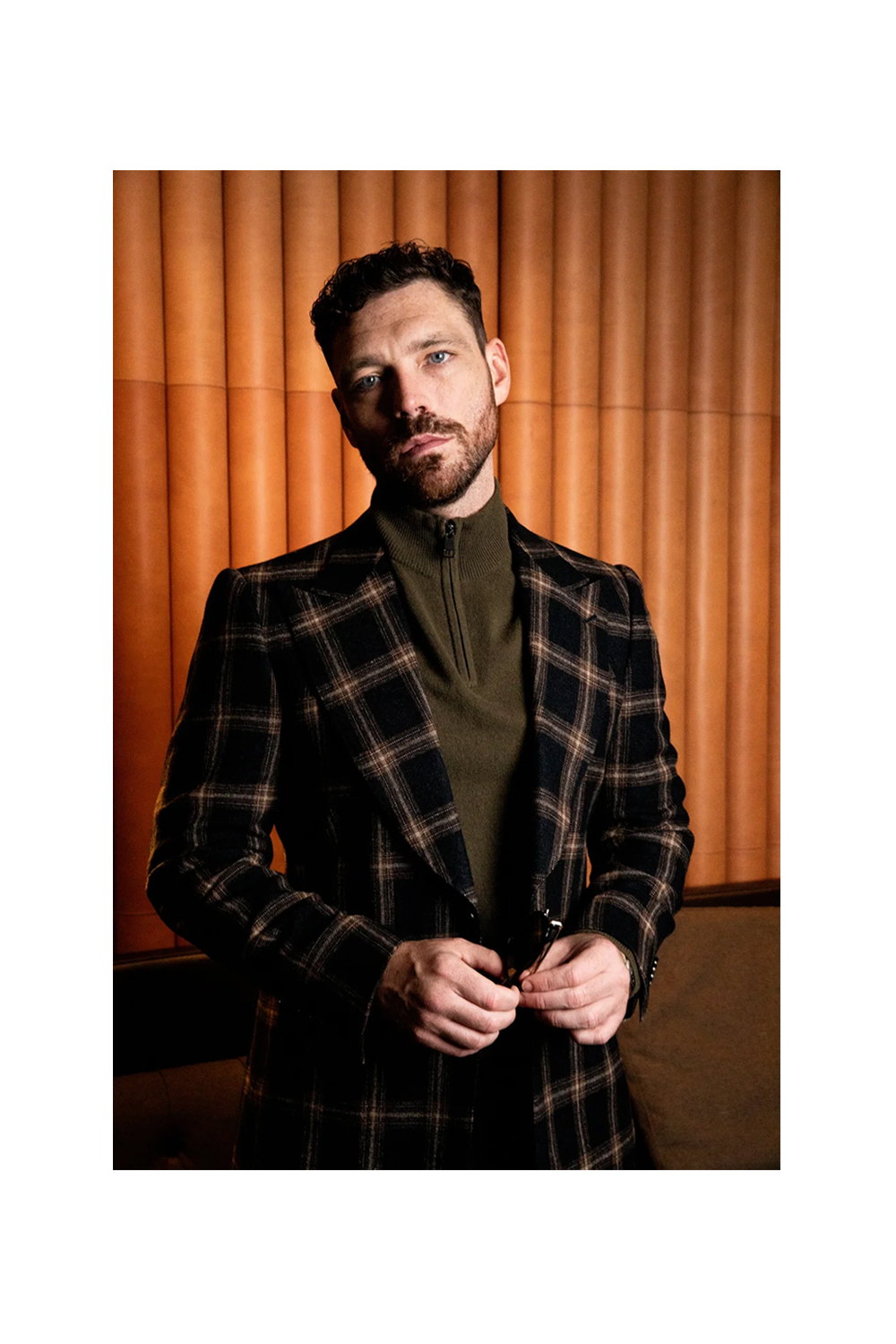
Blazer EDWARD SEXTON, sweater RISE & FALL, glasses DUNHILL.
DG __ Street fighters! [laughs] I’m learning way more about boxing today than I thought I would. For you, is it more boxing or binge-watching? Which are you better at in real life?
JNJ __ Boxing. I’m sports-crazy. I’ve got friends who boxed professionally like Tony Bellew and the four brothers in Liverpool called the Smiths. Football, boxing, pretty much anything sport related. It’s my escape from acting. I also love music, especially Motown. I met Michael B. Jordan to discuss a potential project and we ended up having dinner together. The entire evening turned into a Motown deep dive, Marvin Gaye, Smokey Robinson, Bettye LaVette. I’m a proper Motown nerd. We must’ve spent an hour just talking about music. It’s always special when you meet someone and connect over things that have nothing to do with acting.
DG __ The show deals with violence and social inequality. How do you think these ideas resonate in modern society?
JNJ __ Not much has changed, has it? Especially here in the UK, a lot of people are struggling financially at the moment. When you look at what’s been taken away: youth clubs, community spaces, opportunities for young people to express themselves. It makes a difference. When I was growing up, you had places to go, football programs, training weeks put on by the council. Now a lot of that’s been stripped away from communities. When people don’t have positive outlets, they end up putting their energy into things they probably shouldn’t. But if that same energy was supported and directed somewhere constructive, positive things could come from it. At the moment, it feels like governments aren’t really putting their money where their mouth is when it comes to helping young people. When you see dramas about young people, shows that really highlight these issues, and the whole country connects with them, you realize there is a problem. People relate because it’s real.
DG __ As a matter of fact, I noticed all the characters live in morally gray areas.
JNJ __ And that’s part of the issue, when the people who are meant to inspire us are doing questionable things, it can make those behaviors seem acceptable. I’m not saying anyone’s perfect, but we do need to think about who the right role models are in society. Kids look up to these figures, whether we like it or not.
DG __ Are you saying social media influencers aren’t the right role models? [laughs]
JNJ __ What do you think? [laughs]
DG __ In the show boxing is more than just a sport. It’s about respect, identity, opportunity. How do you see those themes playing out?
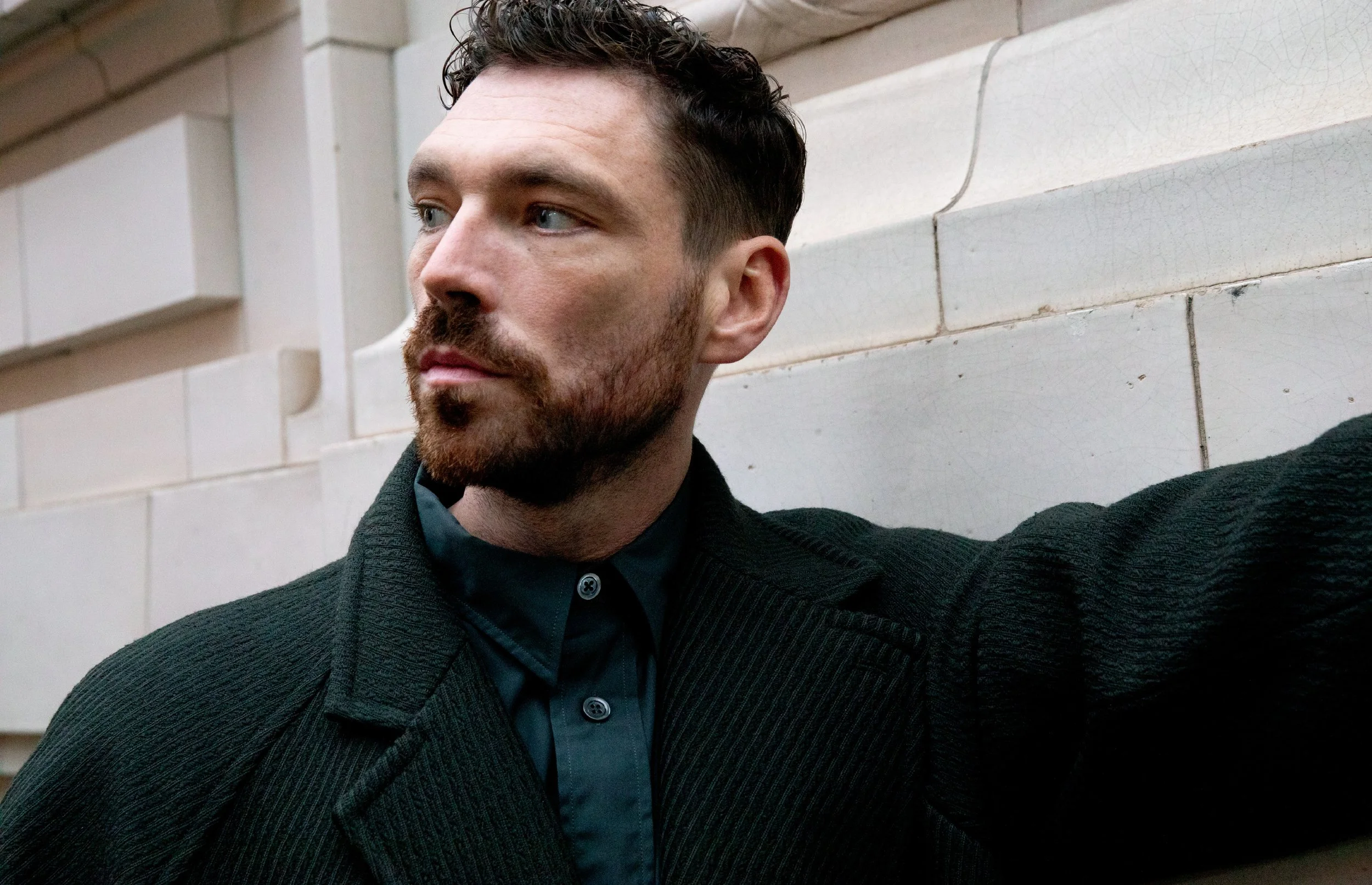
Coat KENZO, shirt MARGARET HOWELL.
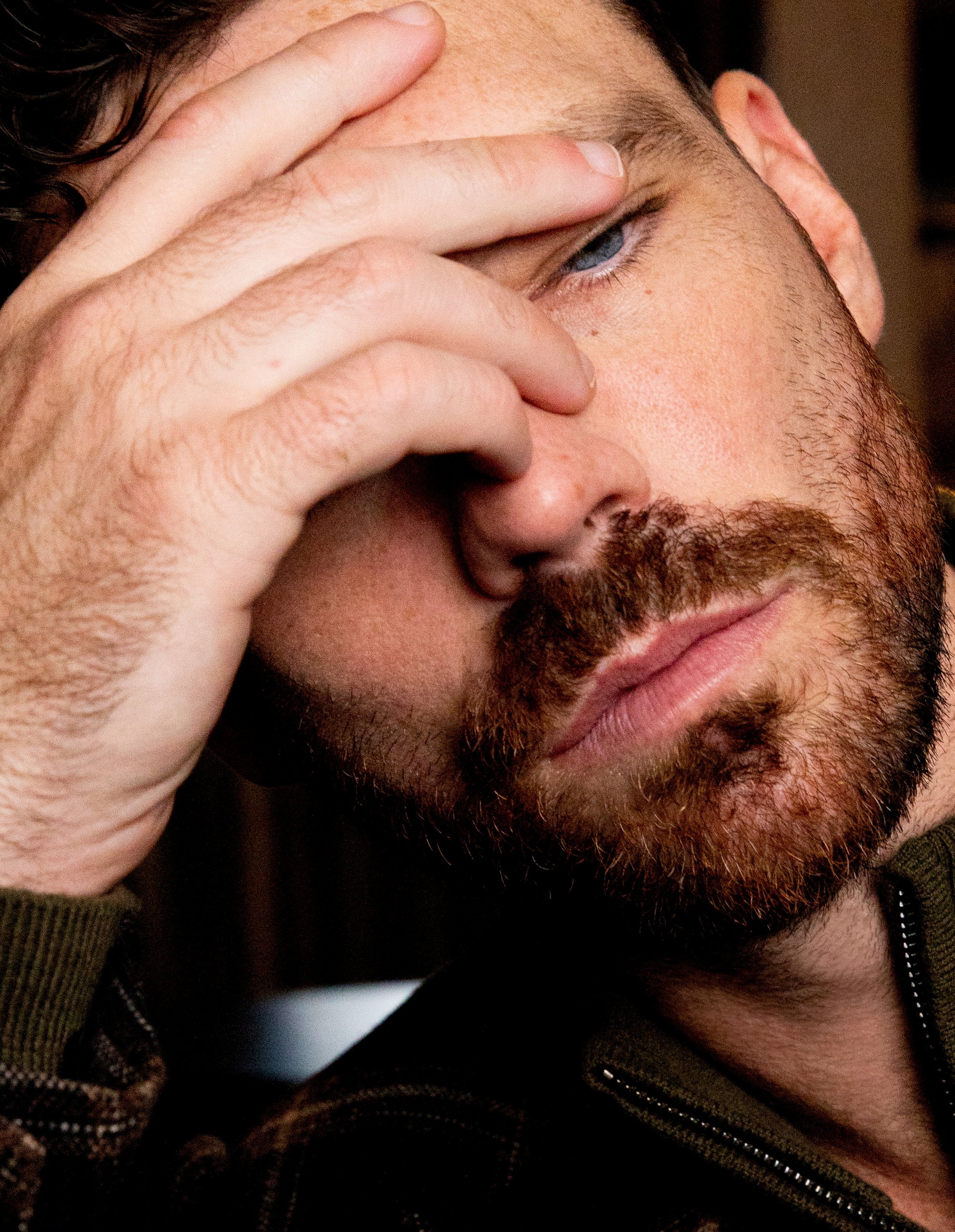
Blazer EDWARD SEXTON, sweater RISE & FALL.
JNJ __ It all comes back to identity, doesn’t it? Sugar’s identity is being the hard man of the East End. That's where his respect comes from. The same with Treacle. And when that’s ripped away from them, the question becomes: what’s your purpose now? That’s something everyone goes through in life. Are you going to be a good parent? A good employee, a good employer, a good person? These are themes you see in most great dramas. Identity and status are always being challenged. That’s what Steven writes so well. You see it with Mary Carr when her identity as the leader of the Forty Elephants is questioned by the end of season one. You see it with Hezekiah coming to London, trying to figure out who he is. If you look across Steven’s work, from Peaky Blinders onward, it’s always about identity and purpose. Sugar at the start of season two is completely broken, an alcoholic, down and out, turning up at the Blue Coat Boy pub. And then there’s Treacle, who despite all the anger and resentment, still feels that human pull “he’s my brother, I have to look after him.” Even though he’s not right himself.
DG __ Fixing someone else so you don’t have to look at yourself.
JNJ __ Exactly.
DG __ The show also touches on marginalized communities and underrepresented voices. How relevant does that feel today?
JNJ __Very relevant. And honestly, the answer is simple: you fix it by creating more opportunities. Sometimes people want long speeches about it, but that’s really it, isn’t it? You give people opportunities.
DG __ From Treacle’s journey, what feels most relevant for audiences today?
JNJ __ Community. In A Thousand Blows, you see people coming together. I think we’ve lost a lot of that. People don’t know their neighbors anymore. You walk into a shop and no one says hello. Good drama makes you question that.
DG __ You’re so right. I barely know anyone in my building. Why do you think that change has happened?
JNJ __ Life’s faster. Phones. Social media. Everyone’s accessible, but no one’s really present. I looked around at Christmas, everyone was on their phones. And I thought, “this is sad.” People should put the phones down, have a laugh, enjoy each other, instead of staring at Instagram and everyone else’s lives. We all compare, don’t we? “This person’s been on that holiday, this person’s done this, this person’s done that.” And meanwhile you should stop and think: “hang on. I had a great week too. I went to a nice restaurant, and I had a lovely walk in the park.” But you forget that, because you’re too busy looking at what other people have. That comparison breeds jealousy, whether we admit it or not.
DG __ Absolutely. It’s negative energy you keep feeding. I was thinking about how cigarettes have warning labels: this is bad for your health. I think smartphones should come with those too.
JNJ __ I agree. Even something as small as comparing yourself to other people. How often do we post a bad photo of ourselves? We don’t. We only post the good ones. We’re all guilty of it. Social media isn’t real life. It’s just the highlights. You never see the everyday stuff.
“I BOXED WHEN I WAS YOUNGER, BUT A THOUSAND BLOWS IS SET A HUNDRED YEARS BEFORE MODERN BOXING.”
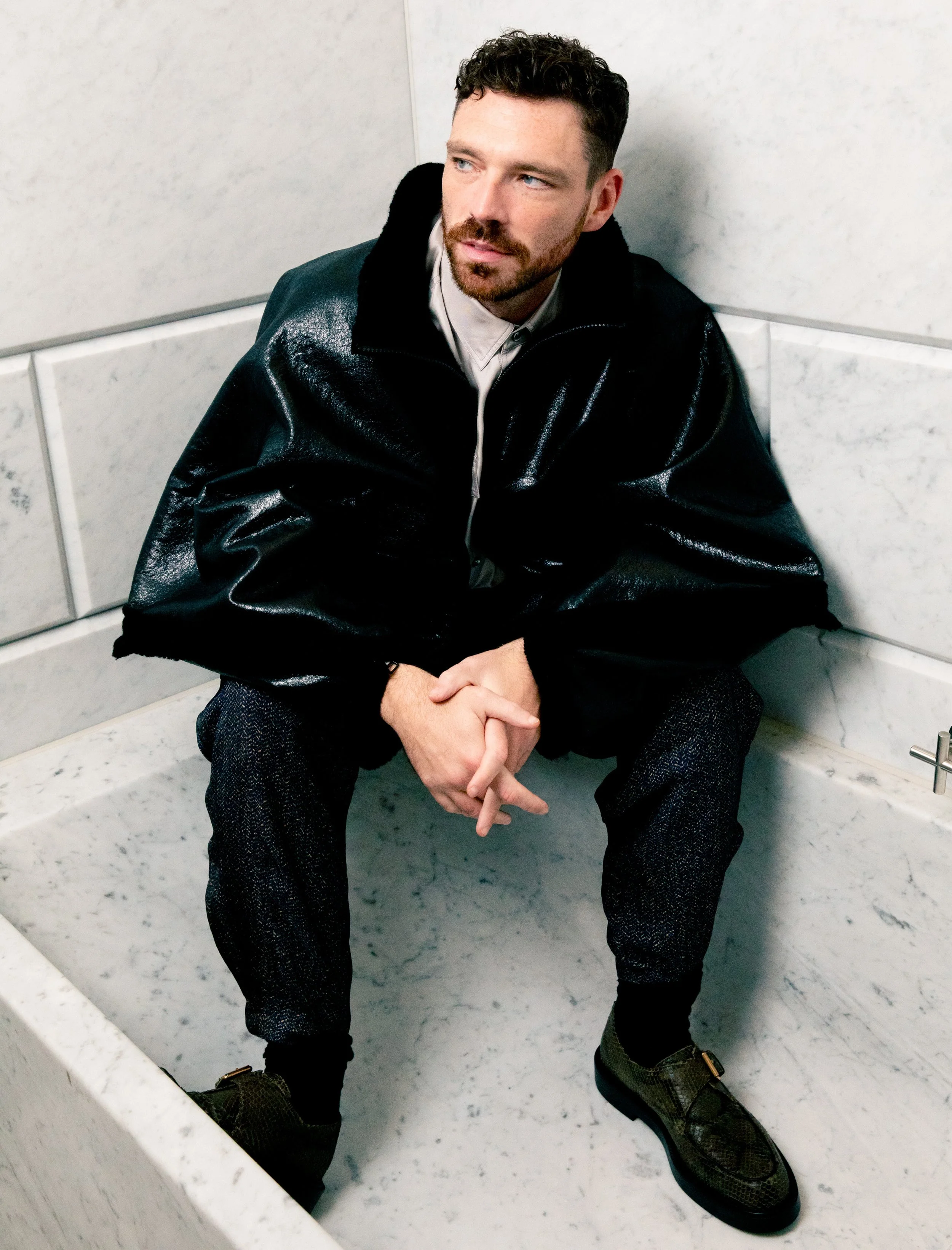
Jacket IM MEN, shirt, trousers, and shoes GIORGIO ARMANI.
DG __ Yeah. For anyone reading this: our lives are as normal as yours. [laughs]
JNJ __ We all brush our teeth in the morning.
DG __ Tell me, was there any scene that made you think, “Okay, I did not sign up for this”?
JNJ __ Never! There were scenes I was nervous about, especially the big fight in season one, but not because I was scared of getting hurt. Fight scenes are like a dance. You’re not actually punching each other, so you’re trying to make it look as real as possible without it being real. Those are the moments where you think, this has to read truthfully. You’re doing everything you can to sell it without making contact. Those scenes always make me pause.
DG __ So how does it work? Do you film it slowly and then speed it up in post production?
JNJ __ No, it’s all in real time. A lot of it is throwing the punch the right way, the other person knowing how to sell it, and the camera being in the right place. You can miss by that much and it’s all about how the camera reads it. There’s a whole science to it. [laughs] You know the scene in season one where Sugar puts Treacle’s head through the glass? That was a sugar glass. My head actually had to go through it. You don’t ease into that, you just commit. But that’s the fun of acting, you get to explore emotions and situations you’d never touch in real life. I don’t think Stephen Graham has ever genuinely wanted to put my head through a window.
DG __ That’s what you tell yourself [laughs]
JNJ __ I guess you never know [laughs]
DG __ Were there any directors or actors on this project who really pushed you in a new way?
JNJ __ All of them. Every day on set is an opportunity to learn from directors, DOPs, camera operators, everyone. Working with people like Stephen Graham, Hannah Walters, Danny Mays, Malachi Kirby, these are top-level actors. So you watch. You pay attention. You ask yourself: “what are they doing that makes them so good?” It’s like any industry, you study the best and you pick up habits.
DG __ Like things you add to your own repertoire.
JNJ __ Always. You can never be the smartest person in the room.
DG __ Otherwise, you need to change the room. See I listen [laughs] If Treacle were alive today, what’s the one piece of advice he’d give you?
JNJ __ In season one, Treacle would probably say, “don’t be scared to dream.” He had aspirations and wanted to move forward. In season two, Treacle puts the past aside to take care of his brother. His advice would probably be, “always take care of your family and give second chances.”
Photographer Jemima Marriott, Stylist Nathan Henry, Interviewer David Gargiulo, Groomer Richard Wynne Ellis, Stylist Assistants Stoyan Chuchuranov, Makenna Bates, Talent James Nelson-Joyce (Satellite414), Location Café Royal Hotel.
STREAMING