

MARCH 27TH, 2026
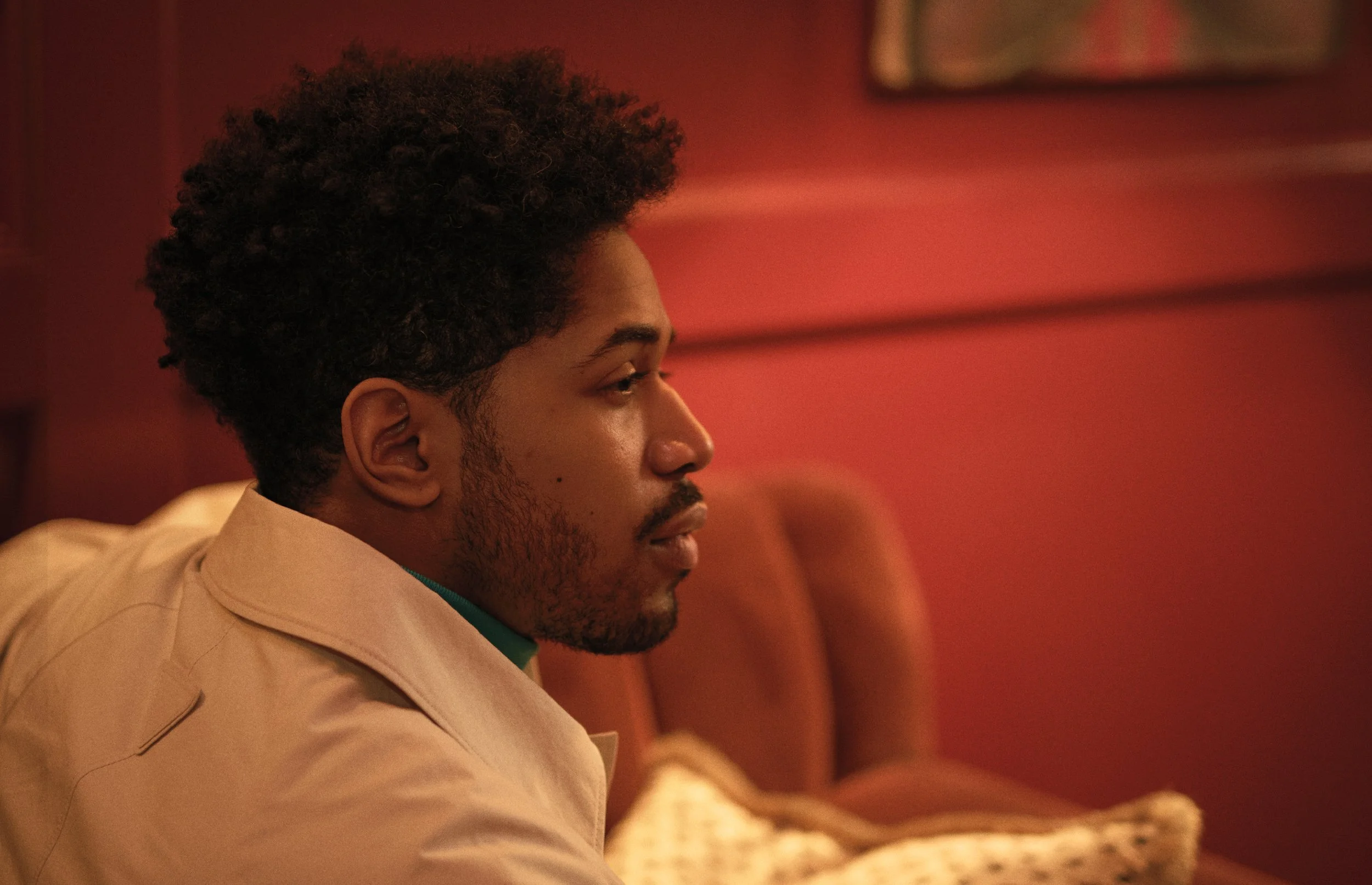
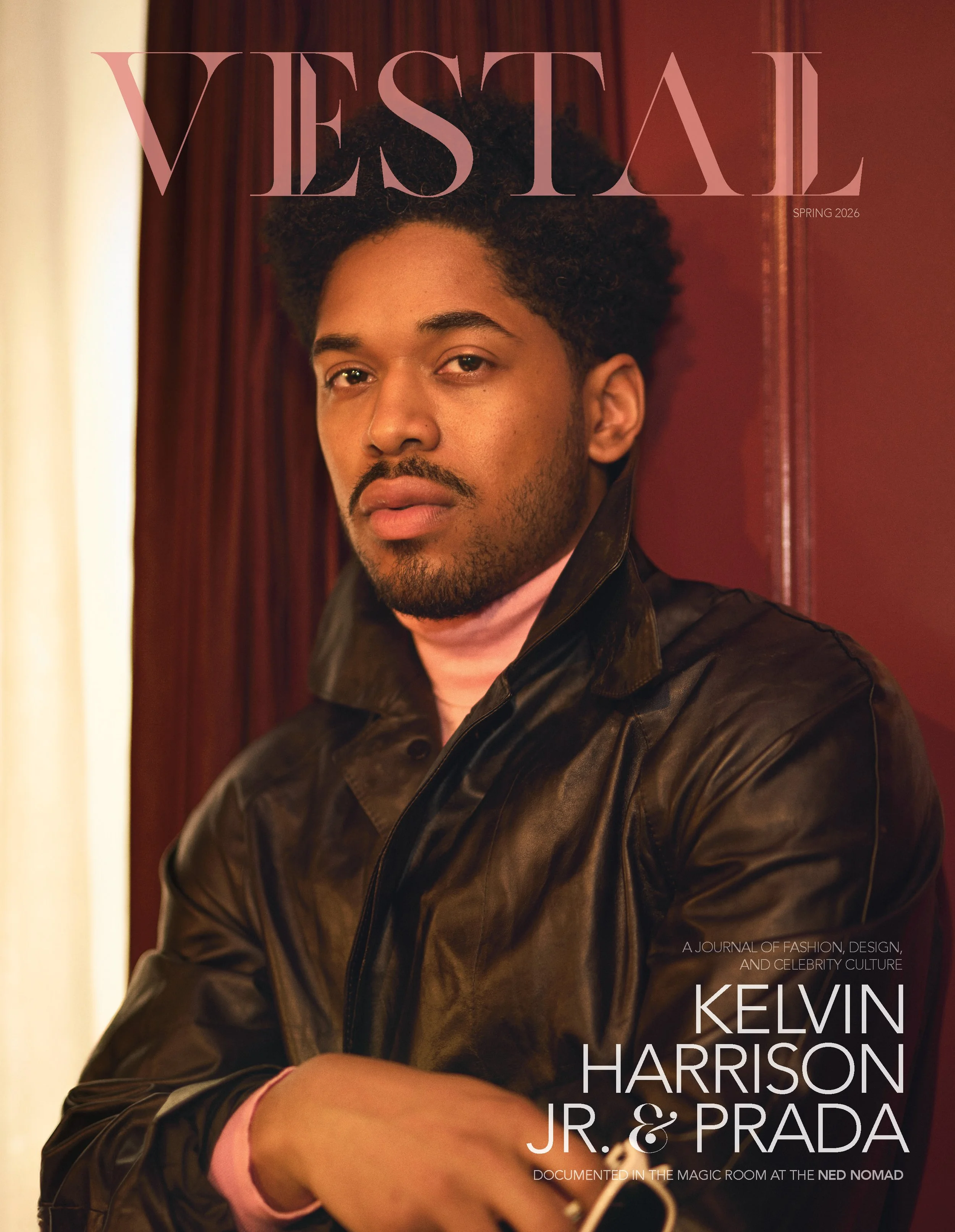
Total look PRADA.
“ PRADA'S ELEGANCE IS BASED IN CRAFTSMANSHIP. I LIKE TO THINK OF MYSELF AS A CRAFTSMAN TOO, CONSTANTLY BUILDING NEW TOOLS.”
— KELVIN HARRISON JR.
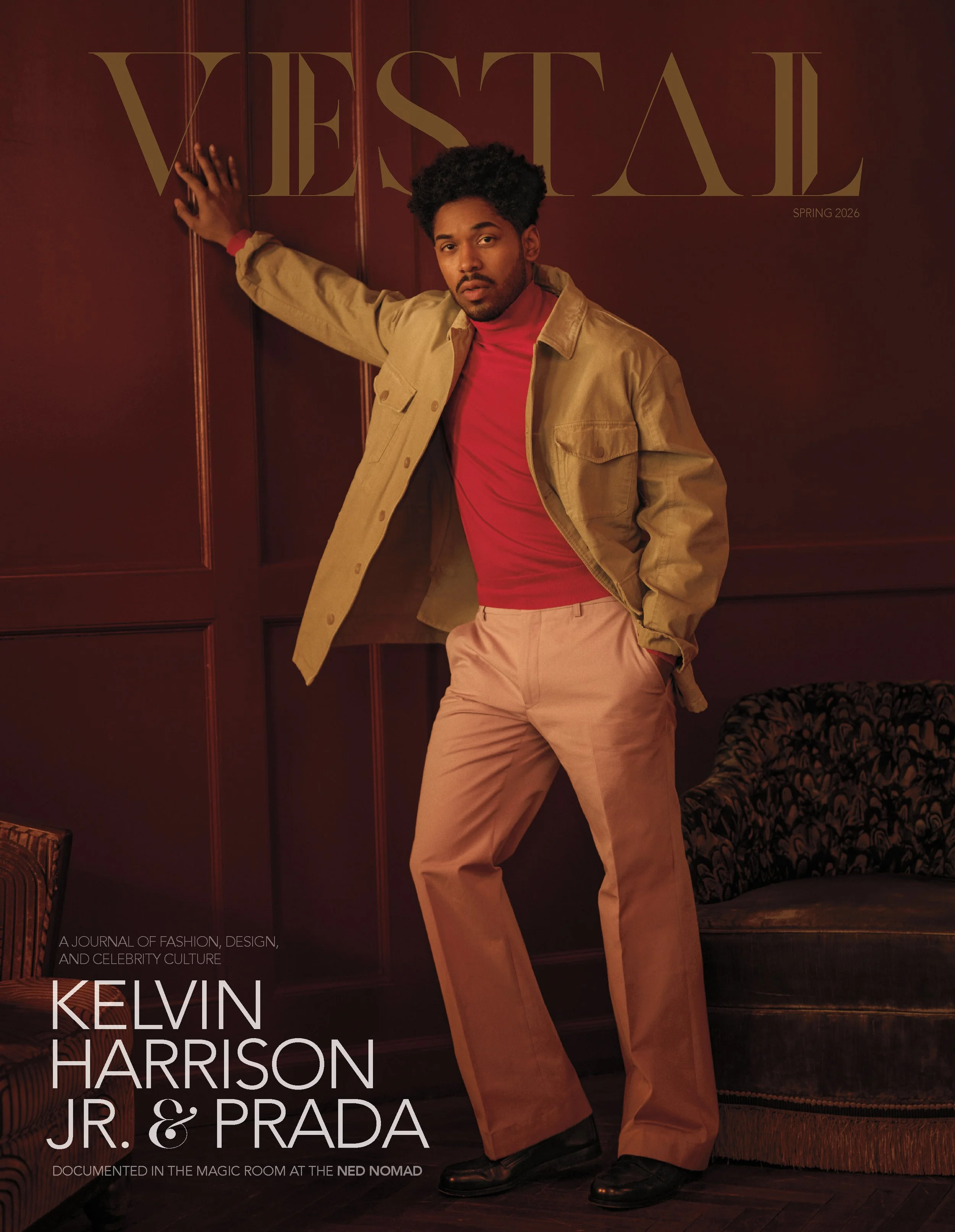
DOCUMENTED IN THE MAGIC ROOM AT THE NED NOMAD
Meeting Kelvin Harrison Jr. feels like catching a rare glimpse of the architect behind the scaffolding. He’s famous for total immersion that leaves very little of himself on the surface once the cameras start rolling. Whether he’s disappearing into the "unapologetic" ghost of Basquiat for the highly anticipated Samo Lives or stepping into the established shoes of a character like Beetee Latier in the upcoming Hunger Games, he doesn't just play a part. He builds it, piece by piece, from a "pot of random influences."
To Kelvin, the world is one giant, chaotic mood board. He’s an intellectual scavenger, mining "genuine slips" of emotion from reality TV and studying the way a young Leonardo DiCaprio handled early press just to build a scaffolding for a character. Even his Instagram is a laboratory; he spent his time as The Disappear’s Raf Night posting shirtless gym selfies and "global movie star" posturing just to see how the persona felt on his skin. It wasn’t exactly a success, he tells me with a laugh, but that’s the point. We meet in a moment of transition; what he calls "practicing continuation." He’s a Prada ambassador who still feels like a "kid from New Orleans," a man who values his privacy but understands that his career is a "sacred moment between me and the mirror." Behind the accolades and the "method" intensity is a person surprisingly preoccupied with the mechanics of trust and the weight of responsibility. As he reflects on fatherhood, his own heritage, and the "razors" that sometimes come with being a true artist, Kelvin reveals that his most compelling role yet might just be the one he’s still learning to play: himself.
INTERVIEW WITH KELVIN HARRISON JR.
“ THEATER BROUGHT ME BACK TO WHAT I LOVE ABOUT ACTING: TAKING THE ORIGINAL CHARACTER AND FIGURING OUT HOW TO FLESH IT OUT.”
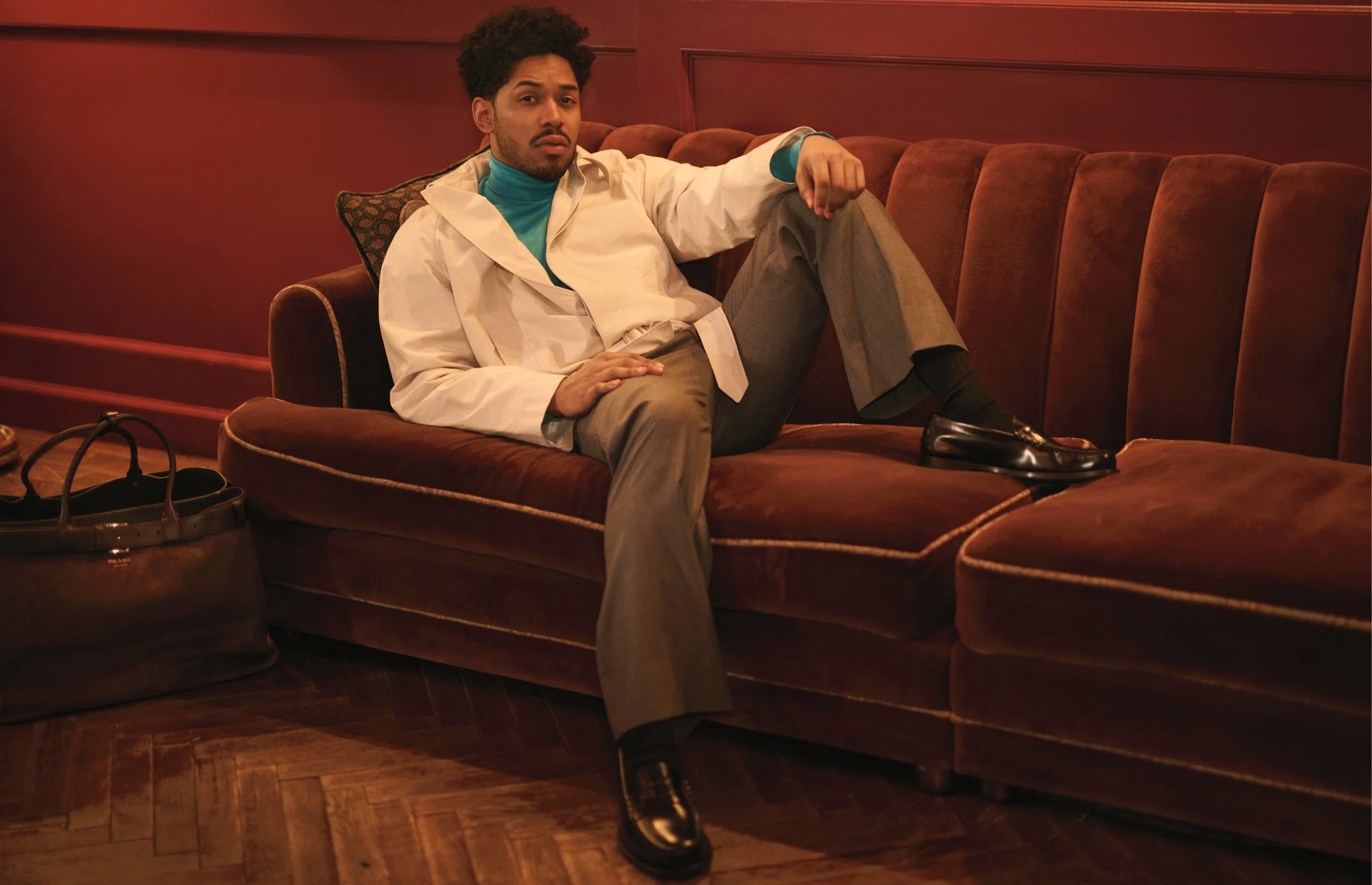
PHOTOGRAPHY KEVIN SINCLAIR STYLING MICHAEL FISHER
INTERVIEW DAVID GARGIULO DOCUMENTED IN THE MAGIC ROOM AT THE NED NOMAD
Total look PRADA. Available in Prada boutiques worldwide.
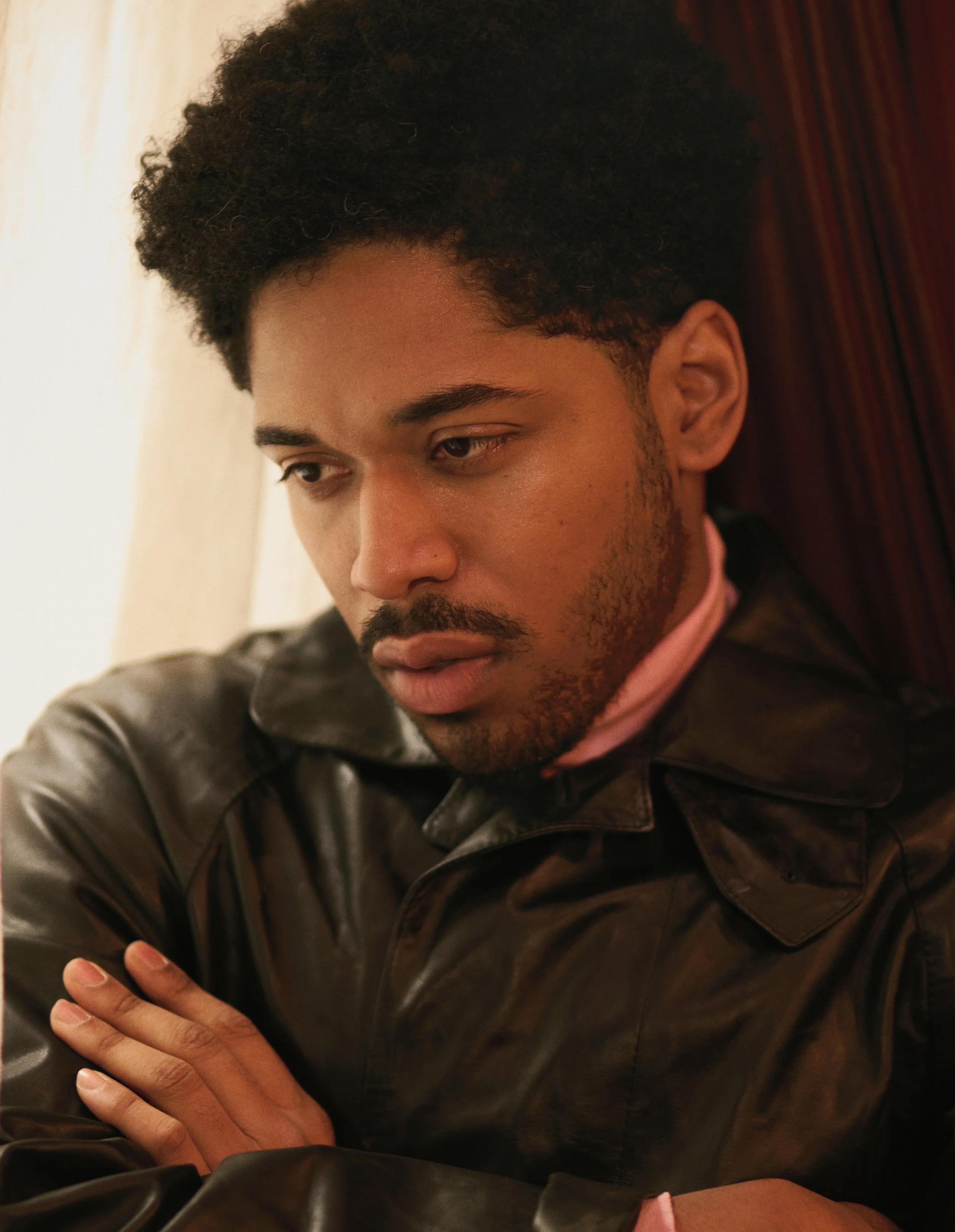
Total look PRADA.
David Gargiulo __ I saw you in The Disappear. If I’m not mistaken this was your stage debut. How has theater life been compared to film?
Kelvin Harrison Jr __ It was interesting seeing the overlap. Last year was a unique year for me in film. I felt like I was really able to collaborate more and explore roles differently than usual. I deliberately chose roles that weren’t necessarily asking me to carry a movie, but to discover new parts of myself, to really be creative in developing a character. I play a lot of real people but it’s never one-to-one. There are parameters so you’re not building from the ground up but you’re connecting to what you see in this person. On stage, it brought me back to what I love about acting: taking the original character and figuring out how to flesh it out. Doing table work, talking with other actors about the story and the structure, asking, “what do things mean?” Exploring language, choices, and understanding how it all sustains the play. That's all very exciting. Another thing is that theater is such a long process. You sit and watch other people work, which is a masterclass in itself because the actors in this play were fantastic. Seeing their discoveries, their wins, their insecurities, it’s like being in acting class again, but in a real production. It’s so great to experience that. Then there’s being on the actual stage, terrified of the audience. On a film set, you have comfort, you work with the director, your scene partner, and there’s a kind of vacuum where you can experiment. In theater, there’s no protection. No guarantee you’ll hit the beats, no guarantee the audience will respond the way you hope. Every night is different. The audience can change, the energy of the room can change, and it forces you to rely on your instincts and ignore the need for validation. Theater is truly about who is on the stage with you and whether you’re connecting in that moment. Being fully present is everything.
DG __ When you mentioned that sometimes a character already exists, I assume you’re referring to the fact that you’ve played a lot of biopics in your career. But I wanted to ask, because sometimes you also play completely new characters, how is that different for you?
KHJ __ It’s actually rare, but that’s why this year was interesting. For example, with The Hunger Games, I’m playing a character that already exists in some way. Jeffrey Wright originated the role, and I’m playing a younger version of that character. So I’m building off something that’s already been established, but there’s still freedom because it’s not like playing someone like Martin Luther King Jr. With someone like Dr. King, the expectations are huge. People have had a relationship with him for generations. From a very young age we all learn about him, so there’s a shared understanding of who he is. That makes it tricky. But with a character that an actor originated, like Jeffrey Wright did, you can take what’s there and still build your own interpretation. Then there are projects where the character is completely original like the upcoming film Alpha Gang or the play, The Disappear. No one has ever played them before. You’re building everything from the ground up. And honestly, that’s really fun. That’s probably why I like acting in the first place. When I’m creating a character, I pull from references everywhere: people I know, things I observe, even the writer’s personality. Sometimes I watch a lot of reality TV. One of the things I like to do when I’m preparing is collect clips of reality TV personalities and study their mannerisms: the way they talk, how they handle conflict, their emotional reactions. Of course, some of it is exaggerated, but every now and then you see something that feels real. As an actor you can tell when someone is performing and when something genuine slips through. Even if it’s not fully authentic, it’s still interesting. And at the end of the day, my job is to entertain. So I ask myself: “Why did that moment catch my attention? What about the human condition was interesting there?” Then I carry pieces of that into the character. Of course, the script is still my structure. Building a character this way is incredibly fun.
DG __ You mentioned pulling inspiration from reality TV and my mind went to Raf Night in The Disappear. Was there anyone specific you drew from for that character?
KHJ __ It was a mix. But interestingly, no reality TV star was a direct reference. Comedy has campiness, and Hamish [Linklater] is brilliant as Ben. Once he set the tone for Ben, I knew my character had to disrupt and create tension for him. I thought about what a young actor looks like as a global movie star. I started with Leonardo DiCaprio, his interviews and how he carried himself, but Raf’s journey was different. He started as a teenager and his rise felt closer to overnight success with a more tumultuous path. So I added little things from actors like Jason Momoa and Matthew McConaughey, not direct copies, but hints for gestures, sex appeal, or youthful naivete. I considered what audiences love in certain movie stars and what could translate into my character. I also drew from characters I saw in shows like The Traitors, someone who is outwardly charming yet secretly scheming. That duality helped inform Raf’s subtle manipulations. It’s basically a pot of random influences.
“ WHEN YOU DON’T HAVE THE MOBILITY TO BLEND IN, YOU’RE FORCED TO DIG DEEP INSIDE YOURSELF TO FIND YOUR OWN HAPPINESS, YOUR OWN PEACE, YOUR OWN SECURITY.”
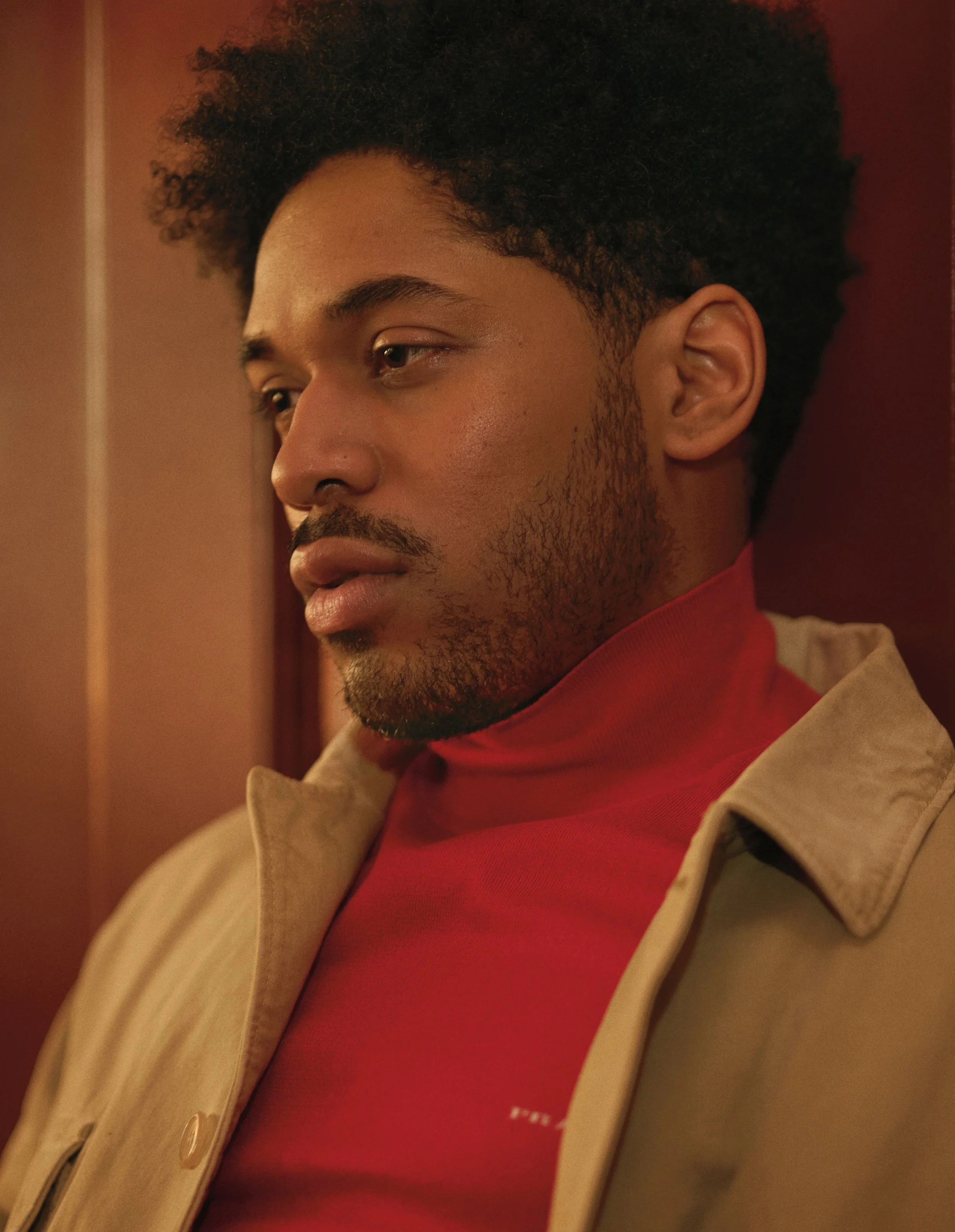
Total look PRADA.
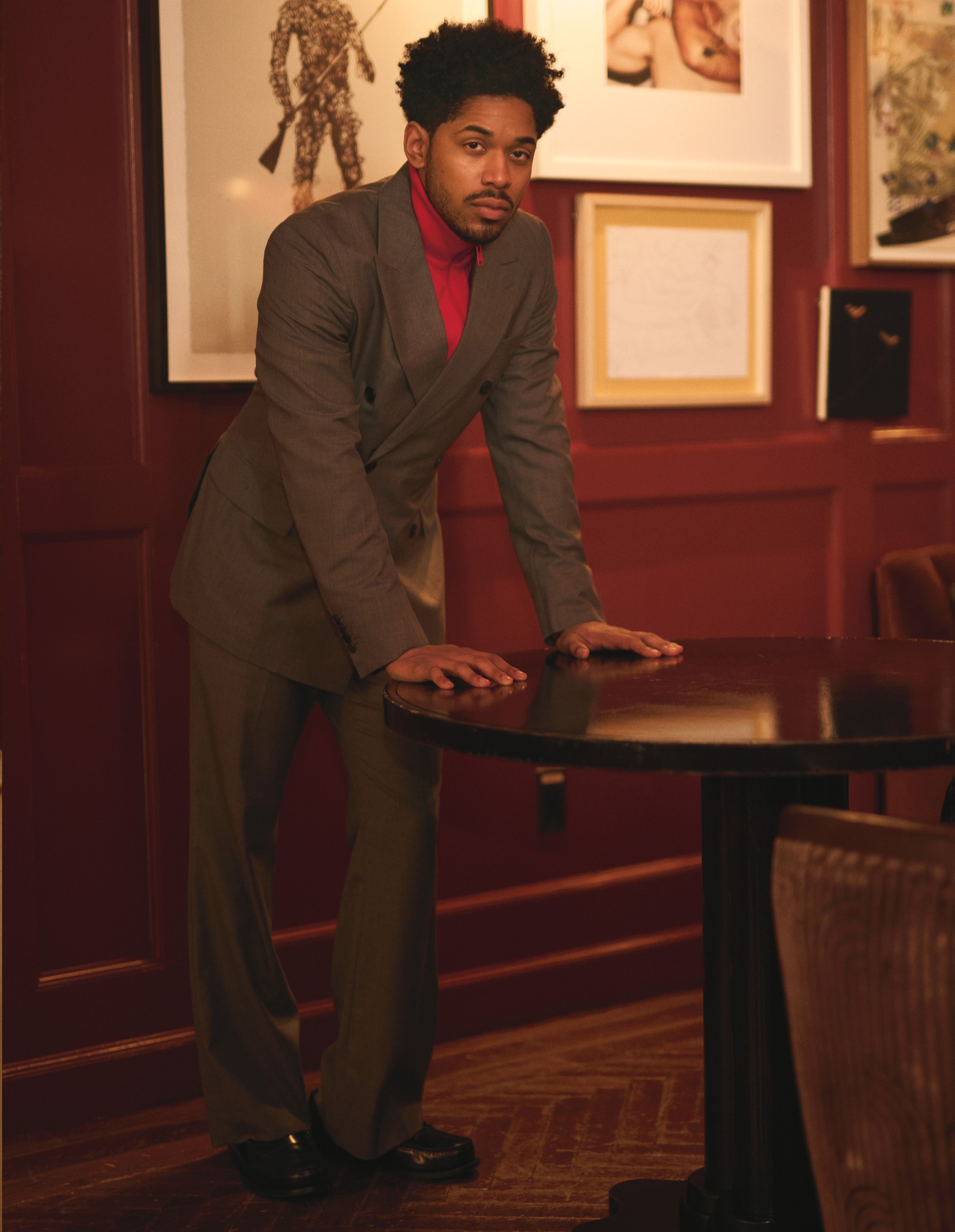
Total look PRADA.
“ WHAT I TRY NOT TO DO IS LOCK MYSELF INTO A SPECIFIC LABEL OR IDEA OF WHO I’M SUPPOSED TO BE. THE ONLY THING I WANT TO REMAIN CONSISTENT ABOUT IS THAT I’M EXPLORING, STAYING CURIOUS.”
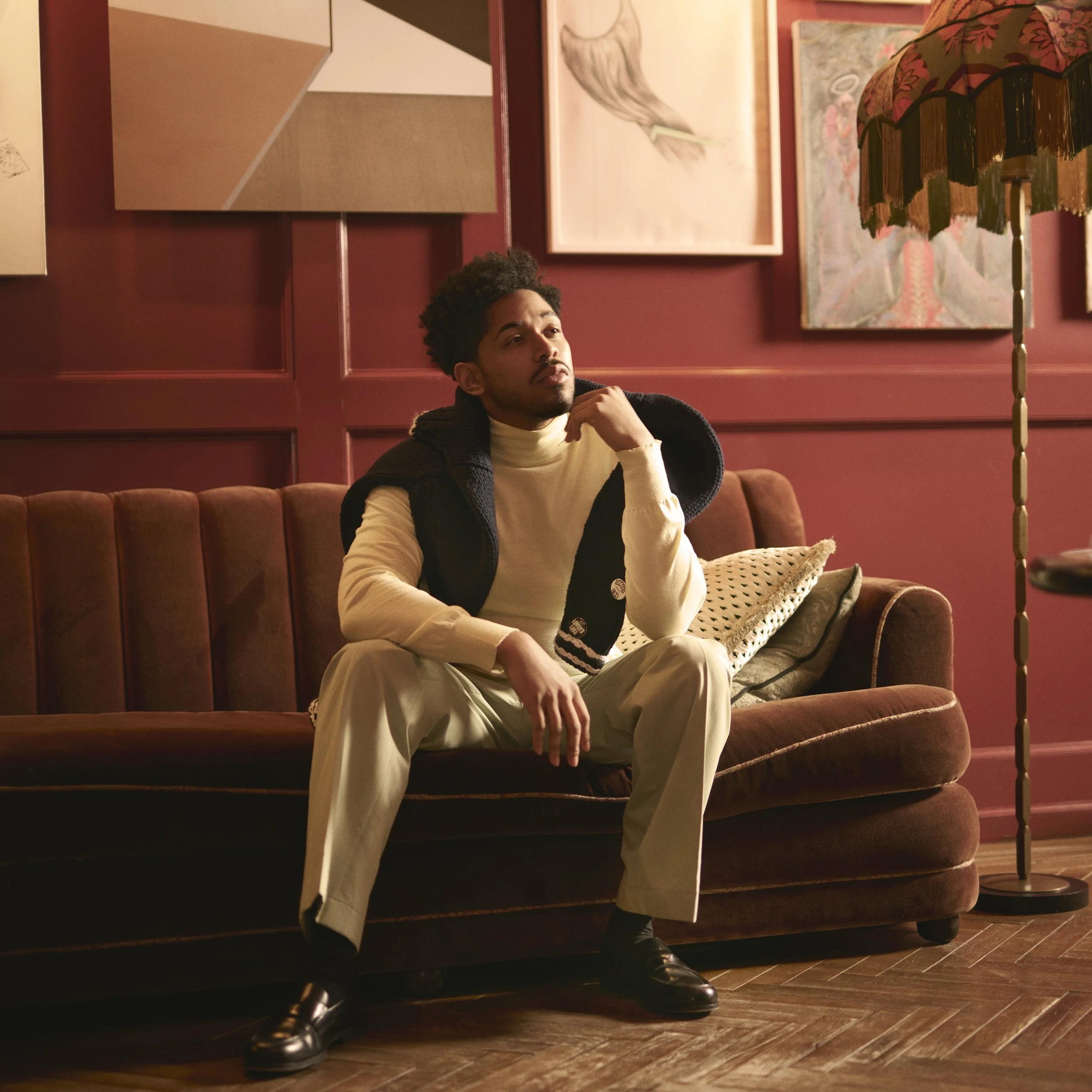
Total look PRADA.
DG __ I thought you did a marvelous job. Ben was so dramatic and your character grounded that energy. I remember from our interview two years ago that you are a method actor meaning you immerse yourself in your character. From your social media, I noticed you did the same for Raf Night. How did that experience differ from your normal presence online?
KHJ __ Social media is a weird nuance of our industry. If I could, I wouldn’t participate at all. But since it’s part of the job, I try to engage in ways that feel safe and thoughtful. I’ve always wrestled with the idea of oversharing. How do you post to a larger audience without revealing too much of yourself? I believe my personal life isn’t as interesting as the work I put out. People follow me because of the projects I’m involved in, or maybe the way I promote a movie. That’s still an extension of entertainment. Years ago, when I did Waves, I created an Instagram page for my character. It was a private page, and only other cast members could see it. Then Lucas [Hedges] had just seen it and he created one, then Alexa Demie and Taylor Russell did one. We interacted through the character accounts, and it was a really fun experiment. We learned a lot about the world of the movie, and some of those interactions even ended up in the movie. With Raf Night, I tried something similar: exploring what a global movie star might post. I have to admit, it didn’t teach me much and it wasn’t particularly successful. [laughs] But it was fun to try. It allowed me to experiment with exaggerated personalities and observe how stars’ online “performances” evolve over time. That’s the part I found fascinating: seeing how social media becomes part of the performance itself, and how a persona like Raf’s might live between the films and the posts.
CA __ I think most people enjoyed that experiment, because Raf was always shirtless, doing push-ups, and all that. [laugh]
KHJ __ [laughs] I mean, I was in character. I don’t even know how to articulate it, it was just part of the experiment.
CA __ You recently wrapped up The Hunger Games: Sunrise on the Reaping. This is a massive production. How did it differ from theater and what can you share about your character?
KHJ __ I had a great time shooting that movie. I’ve always wanted to be part of a project like this but I never found one that truly resonated with me. Growing up, I wasn’t really drawn to mainstream phenomena. If everyone was into Twilight, I was running in the opposite direction. But The Hunger Games always intrigued me. I enjoyed watching the series and the world it created. Francis Lawrence makes films that are fun, visually exciting, and entertaining, and I wanted to be in that space with him, to experience his style of filmmaking. I also had immense respect for Jeffrey’s choices, how he balances commercial films with complex characters. For example, my character, Beetee Latier, was portrayed with mystery, elegance, and pain. I love the story of a father and son. Now, as I think about the next chapter of my life, potentially having kids soon, fatherhood has become a point of interest. Having spent a decade exploring the father-son relationships in my films, I’ve been reflecting on my own relationship with my dad, empathizing, respecting, and appreciating how he raised me. That exploration fed into my work with Beetee. There’s only so much I can say because the story exists in the books and we don’t want to spoil it.
DG __ Absolutely. No spoilers. Let’s talk about the broader themes of the movie, like for instance, inequality and governance. How do you see those themes relating to our society today?
KHJ __ Those elements exist in The Hunger Games, but my reasons for joining weren’t to align with any particular messaging. At the core, my character’s journey is about protecting his son and the young people in the games. That was what intrigued me: what an individual can offer, what sacrifices they make, and how they navigate responsibility.
DG __ Dodging the political question like a pro [laughs]
KHJ __ [laughs] I’m a very private person. I try to focus on the human aspects: the relationships, the stakes, and what my character brings to that world.
DG __ Respect. Shifting to Prada as you are their ambassador. What does representing Prada mean to you beyond fashion?
KHJ __ There’s a specific aesthetic: Danson [Idris] and Letitia [Wright] are also their ambassadors. Their look is unique and beautiful. So, I felt really excited and proud that they included me. It feels meaningful to see a kid from New Orleans representing them. I love how bold Prada is. How they’re willing to take a chance.
DG __ You’re being modest. Kelvin you are a critically acclaimed actor, a true leader, and an example to many people.
KHJ __ I appreciate that. What I hope Prada sees in me is that I care about craft and art. They value people who don’t align with the status quo, who embrace difference, artists who challenge their industry. That mirrors their brand: elegance based in craftsmanship. I like to think of myself as a craftsman too, constantly learning, growing, and building new tools on my journey.
DG __ Speaking of aesthetics. Be honest. How many times have you practiced your red-carpet smile in the mirror?
KHJ __ [laughs] You know, it’s funny, my stylist, Michael Fisher, makes fun of me all the time during fittings. When I’m working on a movie, everyone teases me because I really do need to look in the mirror and convince myself that I make sense in the clothes. When I’m wearing a full Prada look, I need to feel it, I figure out how to put it on in a way that transforms me, how to make the clothes make sense on my body. So yes, it’s a very sacred moment between me and the mirror.
DG __ Let’s talk about another of your highly anticipated films, Samo Lives, where you portray Jean-Michel Basquiat. What do you think draws modern audiences to stories about artists like Basquiat?
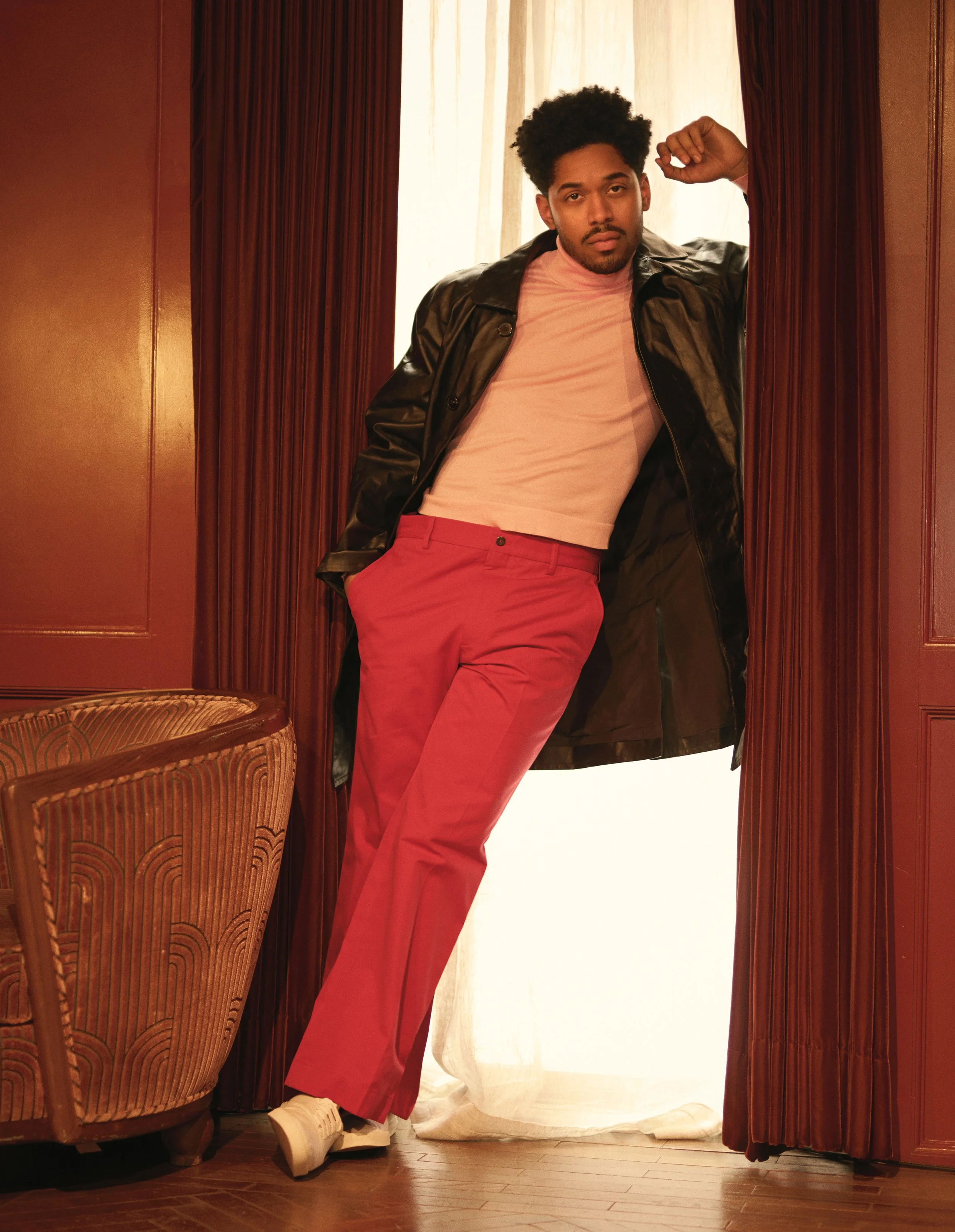
Total look PRADA.
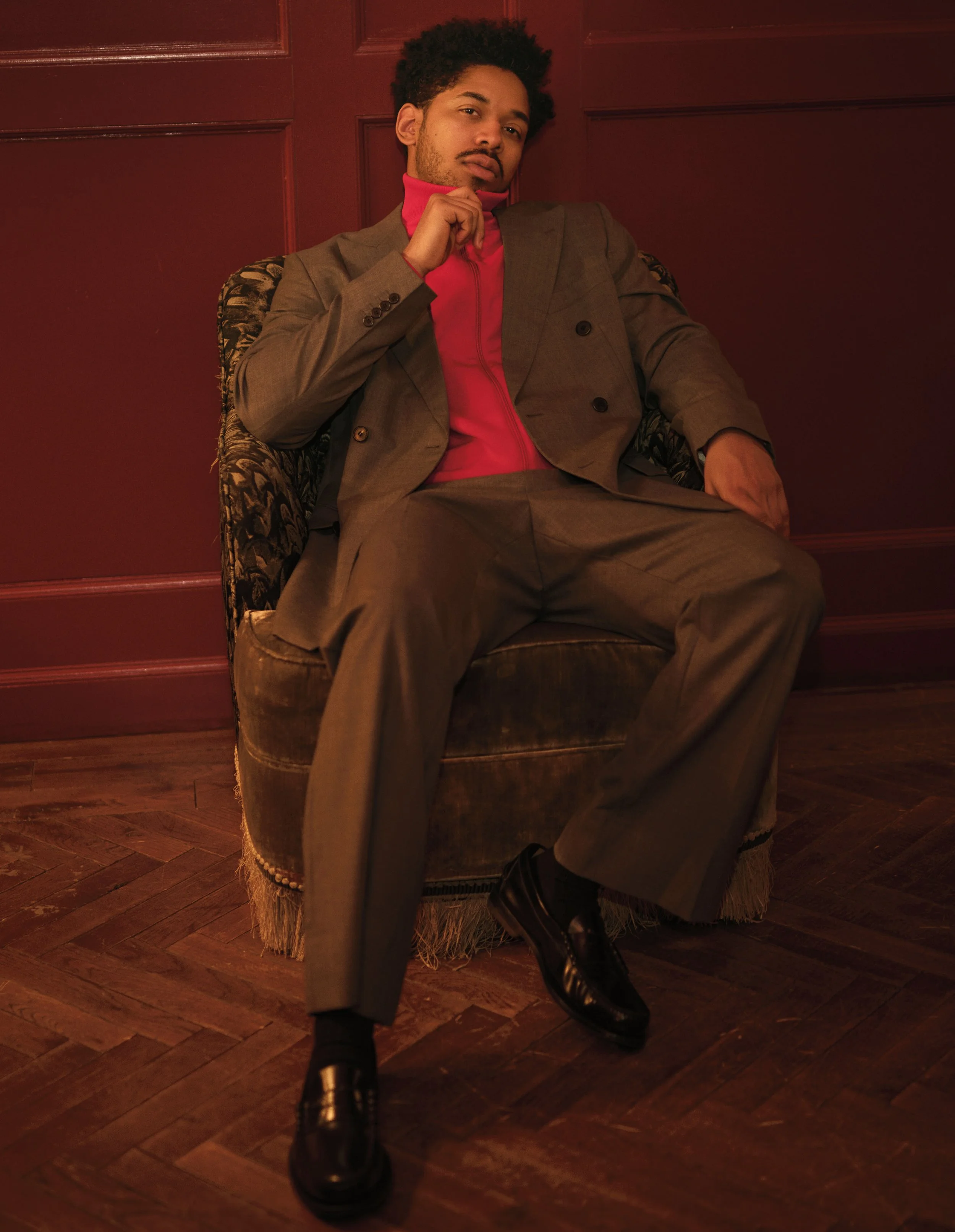
Total look PRADA.
KHJ __ That’s a great question. I think about Jean-Michel a lot. If I had to describe what stands out about him, the word unapologetic comes to mind. He couldn’t help being exactly who he was. And I think when most of us feel that impulse, to be fully ourselves, we often try to suppress it. But when someone reaches a point where they’re confronting the opposition to their uniqueness, that’s when the gift really starts to flourish. What people find in Jean-Michel is inspiration, but also permission. They see the permission he gave himself, the strength to move through the world unapologetically, and they wish they could do the same. In reality, though, sometimes that freedom comes from not having the option to hide. When you don’t have the mobility to blend in, you’re forced to dig deep inside yourself to find your own happiness, your own peace, your own security. And when that truth comes out, it touches people. If you study Jean-Michel, you start asking yourself: “What’s at the bottom of my own well?” If the art he created resonates with you, you begin wondering how you might reach that same depth in your own way. That’s what the best artists do. They touch the bottom of that well, pull everything up, and pour it out. Sometimes what comes out is beautiful, like butterflies. Sometimes it’s sharper, more disruptive, like razors. But even that disruption can be necessary. There’s something profoundly authentic about the way Jean-Michel challenged how we think about society, about class, about Blackness, about queerness, about youth, about color. He kind of threw everything against the wall and said: “You don’t know anything unless it comes from your own point of view.” That’s why acting is so powerful too. What’s exciting isn’t a general idea of a character, it’s a specific point of view. Even villains are compelling when they fully believe in their perspective. Jean-Michel had that kind of conversation with the world, about himself, his parents, being the child of immigrants, his relationships, his identity. And I think people respond to that because, honestly, we love disruption. Monotony is boring.
Total look PRADA.
DG __ Mic drop, Kelvin. [laughs] Such a great answer. Let me ask something more personal. You may not see it this way because you’re modest, but, through who you are and what you represent, you have significant cultural influence. What responsibilities do you feel come with that influence?
KHJ __ You’re right. I don’t necessarily see it that way. But I respect that perspective and appreciate it. The way I try to navigate all of this is by reminding myself to stay responsible. I know that I’m different, not in a good or bad way, just different, like many of us are. And I know I’ve been given a gift. Maybe it’s acting. Maybe it’s the ability to empathize with people. Maybe it’s being able to offer encouragement to those I meet along the way. It could be many different things and I’m not sure I’ve fully identified it yet. What I try not to do is lock myself into a specific label or idea of who I’m supposed to be. The only thing I want to remain consistent about is that I’m exploring, staying curious. And if I have any responsibility, it’s to encourage that exploration in other people. I think it’s important to be quick to listen and slow to speak. There’s real value in observing, paying attention, asking questions, digesting things, and taking time to process before responding. Then, when you do respond, you try to do it in the most truthful way possible and protect your peace. Not everything needs to be said. At the end of the day, I just want to encourage people to try to be healthy participants in society. No matter what’s happening politically, or in entertainment, or anywhere else, if we know how to take care of one another, we can figure out how to survive life together and find peace and joy along the way.
DG __ What are you still learning about yourself as an artist and person?
KHJ __ I’m still learning how not to be so scared. As an artist, I think I’m often terrified of not being where I’m “supposed” to be. You know, those ideas of where you’re supposed to end up, what success is supposed to look like. And sometimes I’m afraid of the present moment, whether it’s the best moment of my life or the worst. When something great happens, I immediately want to plan ten steps ahead. That kind of overthinking can undermine a character. It can kill the spontaneity, the fun, the real X factor of a moment. What I’m learning is to trust myself as Kelvin, to trust that I’ve developed enough tools to have discernment about how I move through the world and who I allow into my life. And even if the choice I make isn’t perfect, it was still the best decision for that moment. That’s how you build instincts. It’s really about finding safety in your own body, as a person and as an artist. When you’re operating from fear or defense, that’s when dishonesty creeps in. When you feel safe, the truth comes out.
DG __ In my experience, the best leaders, and the people who accomplish the most, are often the ones who aren’t afraid to question themselves. That reflection allows them to make better decisions. More importantly, it allows them to look back with grace, recognizing that the choices they made were the best they could with the information they had at the time.
KHJ __Exactly. When you give yourself that space, you develop a healthy relationship with growth. You stop judging every step of the process. Instead of thinking, “I can’t believe I did that,” you recognize that it’s simply part of being human. Too many people are ashamed, but being flawed is part of the human experience. So you just continue. You keep building. And that’s where I am right now. I’m practicing continuation.
Photography/Videography Kevin Sinclair, Styling Michael Fisher (The Wall Group), Interview David Gargiulo, Groomer Vernon François (The Visionaries) using Olaplex, Light Assistant Benjamin Kim, Stylist Assistants Molly Macintosh, Talent Kelvin Harrison Jr. (Presse Public Relations ). Location The Magic Room at The Ned NoMad (Rachel Harrison Communications)
