

KENZO WINTER 2026 COLLECTION INSERT
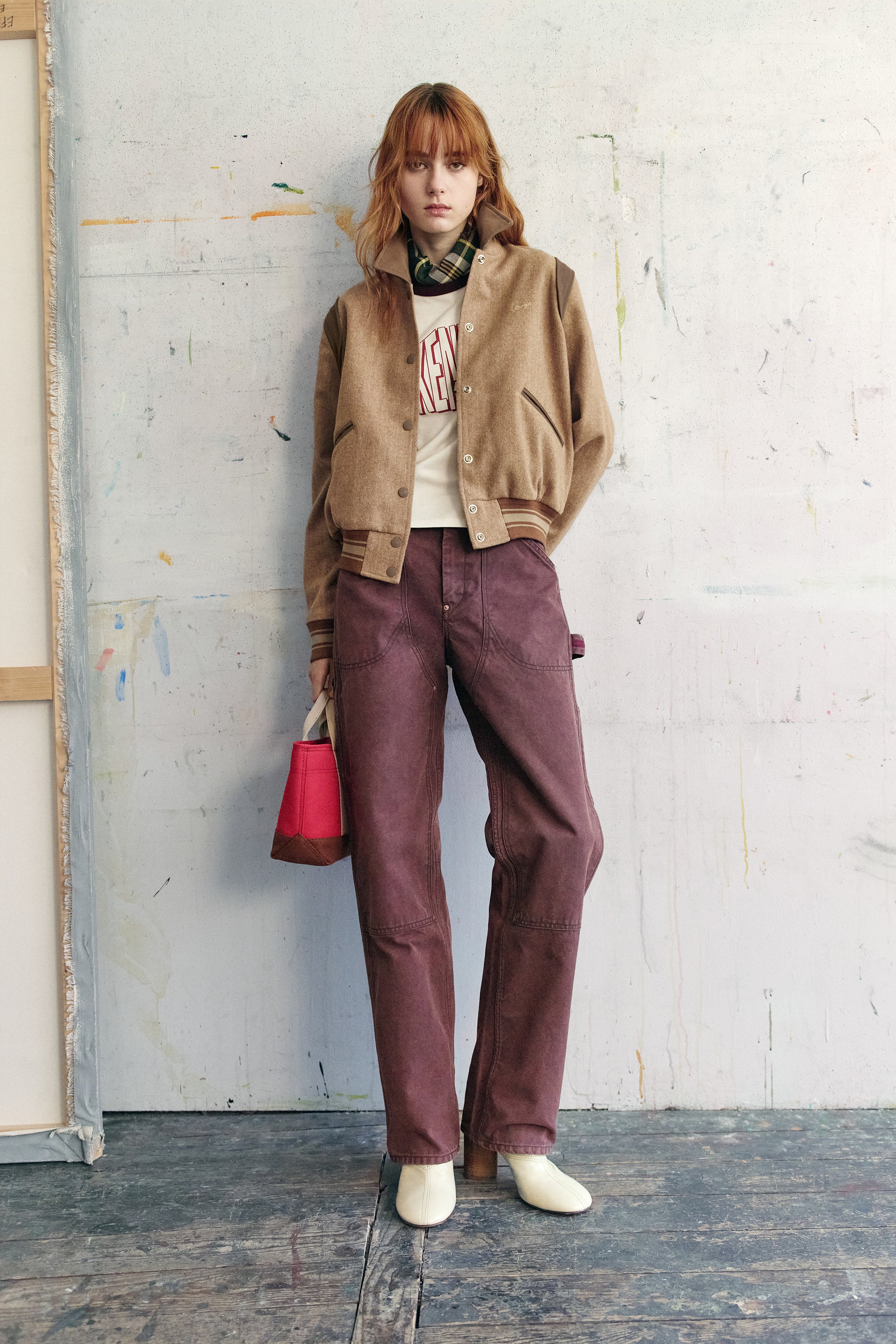
Courtesy of Kenzo VIEW LOOKS
KENZO WINTER 2026: HOME IS A FEELING. FASHION OFTEN SPEAKS ABOUT HERITAGE THROUGH ARCHIVES.
KENZO has always spoken about it through people. For Fall/Winter 2026, Creative Director Nigo returns to the place where the house's story feels most personal: the former Paris residence of Kenzo Takada. Hidden behind the bustle of the Bastille district, the home was more than an address. It was a sanctuary, a gathering place, and a reflection of the founder's belief that creativity flourishes when cultures, ideas, and people are invited to coexist. Presenting the collection there transforms the runway into something far more intimate than a presentation. It becomes a homecoming. That choice says as much about Nigo as it does about the house he now leads. Rather than treating KENZO's history as something to preserve behind glass, he continues to approach it as a living conversation. Since arriving at the Maison, Nigo has resisted the temptation to recreate the past. Instead, he has returned to its original philosophy: the joyful collision of cultures. Kenzo Takada built his career by refusing boundaries.
When he arrived in Paris from Japan, he introduced a way of dressing that blended East and West without asking either to surrender its identity. Prints, tailoring, color, craft, and tradition existed together with remarkable ease. At a time when fashion often sought definition through rules, Kenzo proposed something more generous. His work suggested that identity could be built through openness rather than limitation. That spirit remains the foundation of Fall/Winter 2026. French refinement meets Japanese construction. Americana enters the conversation through varsity jackets and embroidered cowboy shirts. Italian tailoring lends precision, while Chinese pankou closures quietly enrich familiar silhouettes. None of these references compete for attention. Instead, they demonstrate a belief that clothing, much like culture itself, grows stronger through exchange rather than isolation. Nigo has often described himself as a collector. That instinct is evident throughout the collection. Archive pieces return not as reproductions, but as rediscoveries. The iconic Kenzo Jungle tiger reappears with renewed confidence. Historic floral motifs once again find their place within contemporary silhouettes. The letter "K" evolves into a new graphic signature, while the 1986 Kite bag returns with fresh purpose. Each reference acknowledges the past without becoming confined by it. There is an honesty to that approach. Fashion frequently mistakes nostalgia for heritage. Nigo understands the difference. Heritage is not about repeating yesterday. It is about understanding why certain ideas continue to resonate and allowing them to evolve alongside the present. Perhaps that is why the collection feels remarkably optimistic. There is freedom in its construction. Japanese denim carries the softened character of garments that have been worn and lived in. Kimono-inspired tailoring introduces ease to structured dressing. Indoor slippers become shoes intended for the street, quietly dissolving the boundary between private and public life. Even the house itself becomes part of the collection's vocabulary, reminding us that the places we inhabit inevitably shape the clothes we create. Color, too, plays an essential role. KENZO has never approached color as decoration alone. It has always been an expression of optimism. Throughout Fall/Winter 2026, vivid graphics, archival florals, and playful contrasts reinforce the sense of joy that defined Kenzo Takada's original vision. They remind us that elegance need not be restrained to be sophisticated. That philosophy feels increasingly relevant today. At a time when fashion often searches for novelty, Nigo looks instead toward continuity. He understands that the strongest houses are not those that reinvent themselves every season, but those capable of rediscovering their own essence from new perspectives. For KENZO, that essence has always been remarkably simple. Freedom. Color. Joy. Three ideas introduced by Kenzo Takada decades ago, now carried forward by a creative director who understands that the most meaningful tribute is not imitation, but evolution. Fall/Winter 2026 does not ask where KENZO has been. It asks where its founding spirit can take it next. In returning home, Nigo reminds us that the most enduring legacies are never fixed. They continue to grow with every generation willing to inherit them, reinterpret them, and ultimately make them their own.