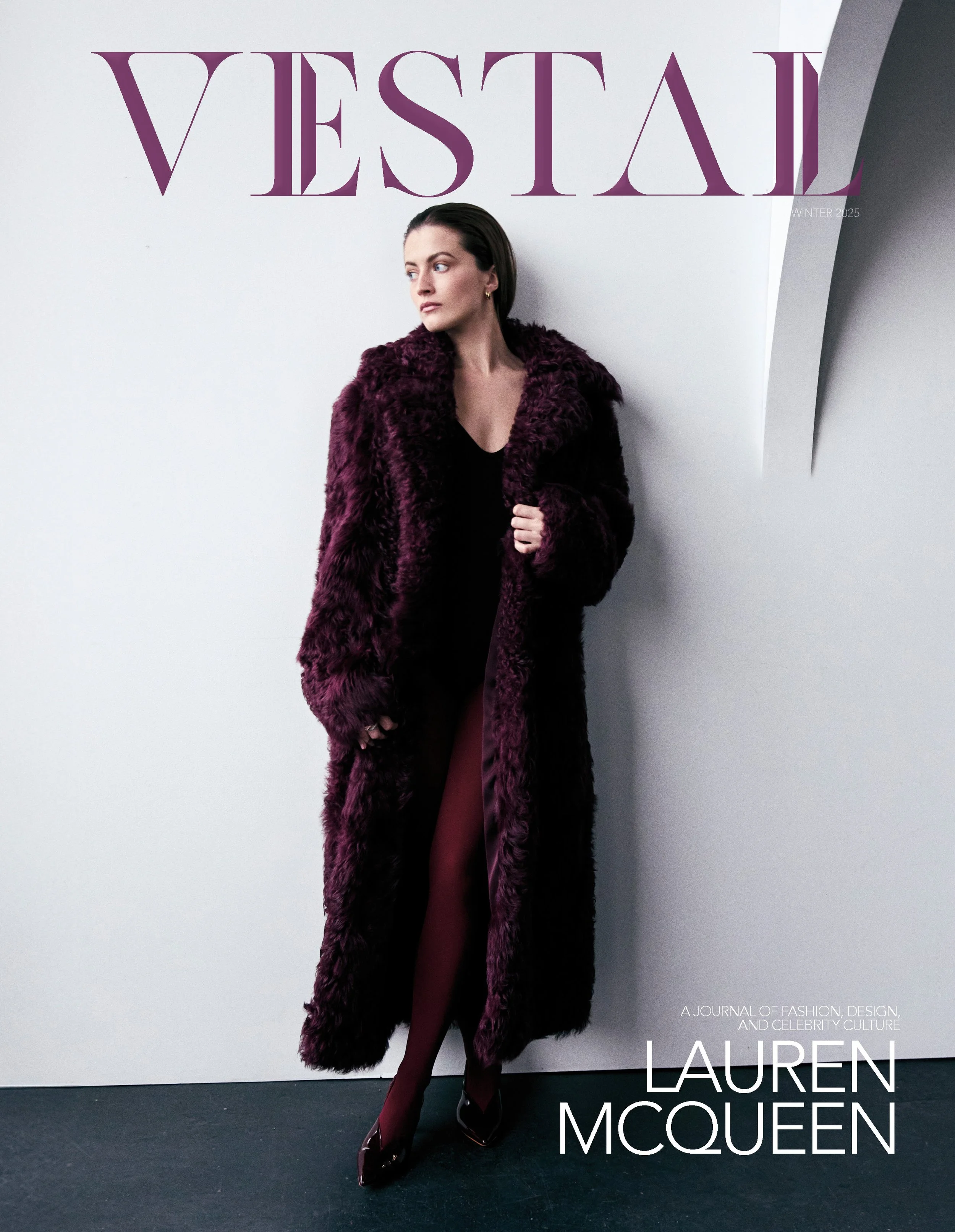
DECEMBER 8, 2025
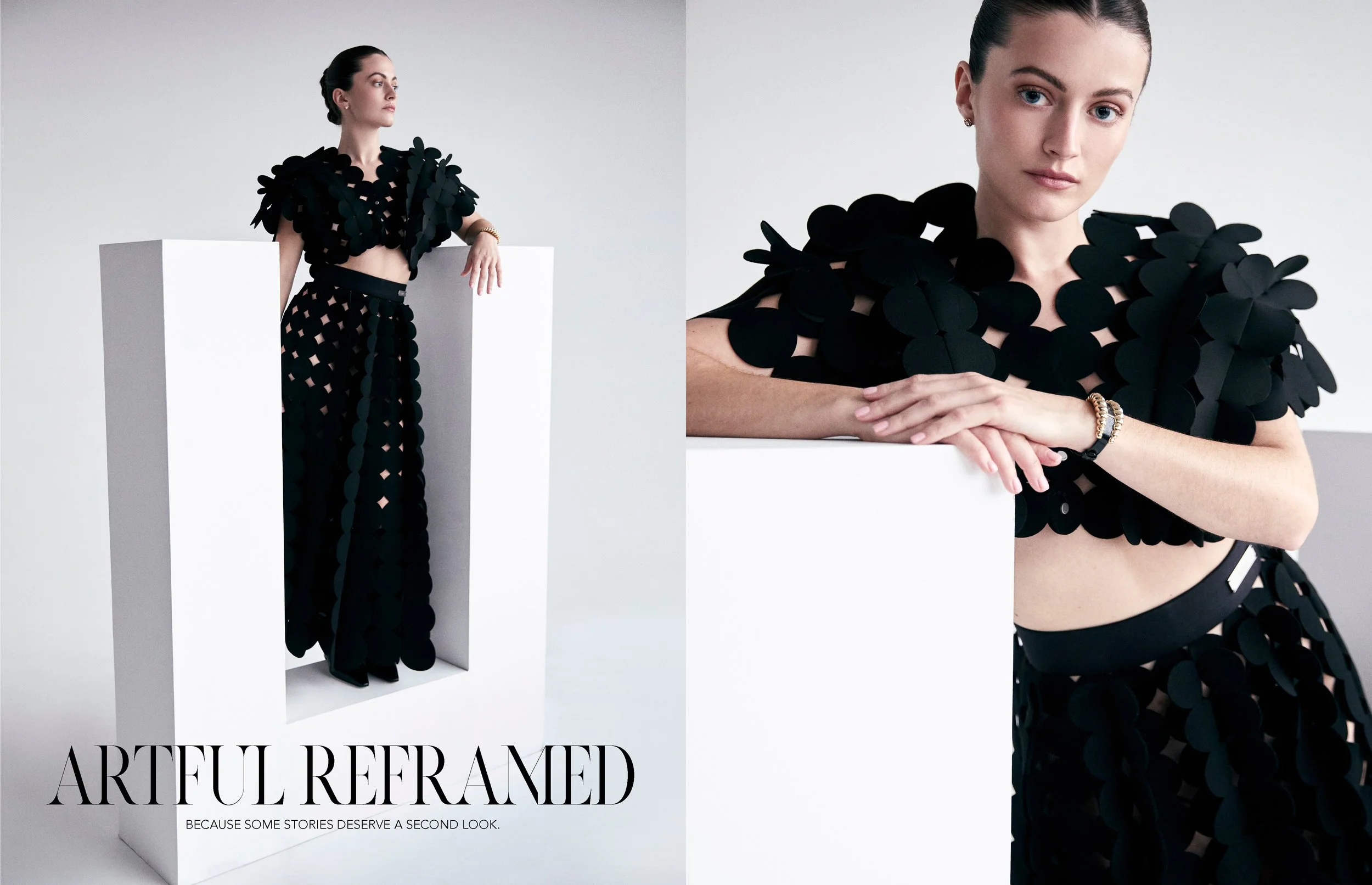
Top and skirt A JANE, watch and earrings CARTIER, boots MANOLO BLAHNIK.
“THE WRITERS, JONATHAN ENGLISH AND JOHN GLENN, DIDN’T WANT TO WRITE MARIAN AS A VICTIM AND I DIDN’T WANT TO PLAY HER AS ONE EITHER.”
— LAUREN MCQUEEN ON ROBIN HOOD
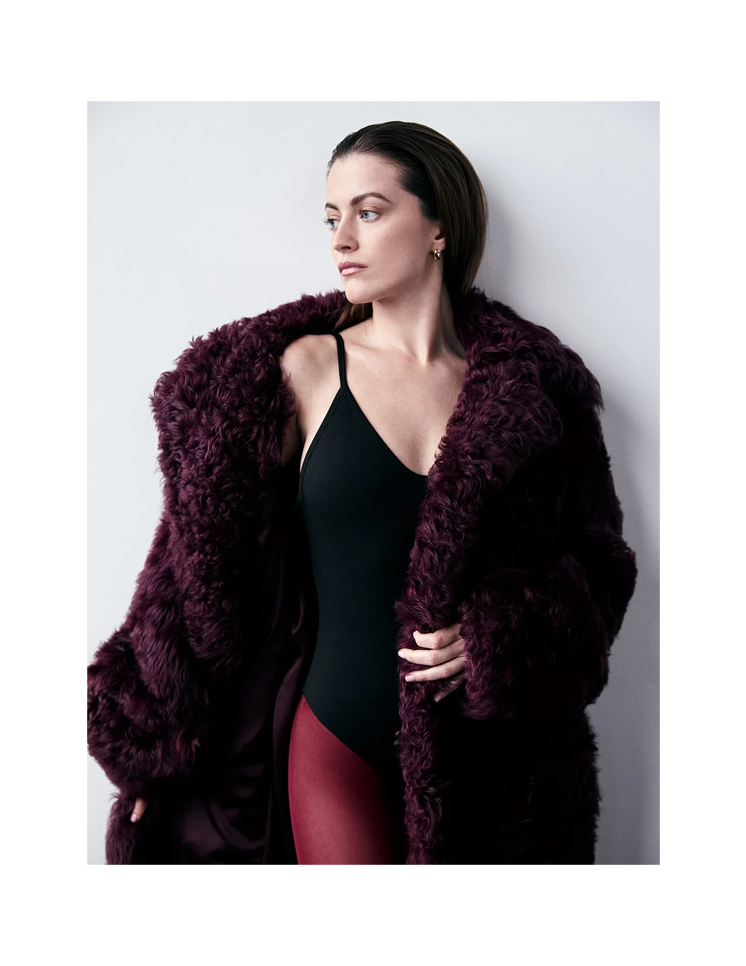
Coat PORTS 1961, bodysuit KENZO, tights HEIST, shoes PLEIADES, jewelry CARTIER.
Photography DAVID REISS , Styling ABIGAIL WHITE, Interview DAVID GARGIULO
INTERVIEW WITH LAUREN MCQUEEN
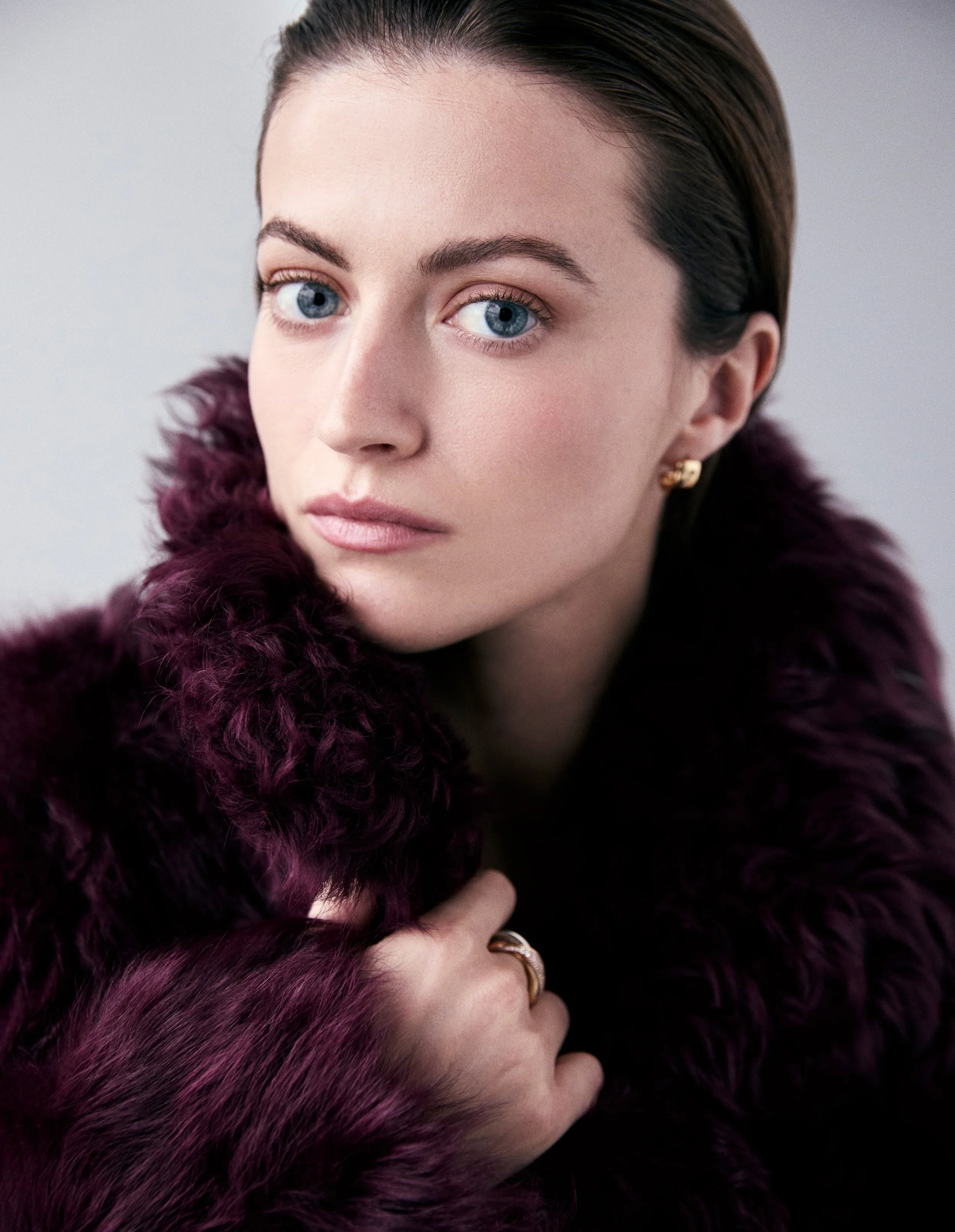
Coat PORTS 1961, jewelry CARTIER.
Robin Hood, one of the world’s most enduring myths, has been adapted countless times, yet MGM+’s latest iteration reminds us why revisiting these stories is vital: to ensure they remain alive, urgent, and meaningful.
In this series, Maid Marian, portrayed by Lauren McQueen, is no longer a secondary figure; she is central to the story, a young woman finding her voice amid rigid hierarchies, inherited prejudice, and the weight of expectation. Marian’s journey, from sheltered daughter to independent force, reflects not only the challenges of her 12th century world but also echoes our contemporary moment. Stories, like societies, must evolve. They must wrestle with questions of power, justice, and freedom, and illuminate what it means to resist, adapt, and grow. Through McQueen’s portrayal, Marian becomes both a product of her era and a mirror for ours: a character who confronts inherited systems, discovers her own voice, and asserts her moral and emotional agency in ways that resonate far beyond legend. This adaptation is a reminder that myths are not static: they are living, breathing tools for understanding ourselves and the world around us. By reinterpreting Marian, the series demonstrates why stories must shift and expand, why legends must adapt, and why new generations must be allowed to see themselves reflected in the characters they inherit. It is in this evolution that Robin Hood finds its enduring power, and it is through McQueen’s performance that Marian takes her place as a heroine for our time.
David Gargiulo __ What’s something in your personal life right now that’s been making you feel grounded or happy?
Lauren McQueen __ Well, I’ve just bought a house in Liverpool.
DG __ Congratulations!
LMQ __ Thank you! Liverpool will always be home for me. So after going to Serbia for six months to film Robin Hood, and then doing the premieres in LA and London, it feels really grounding to come back home. Having a bit of normality, being with family and friends, and having a house here just makes me really happy.
DG __ Nice. How was the premiere in LA?
LMQ __ It was amazing. I went to LA nine years ago, and at that time I’d only done one independent film. I was so new, had no real experience, and was going into meetings with casting directors and management. Coming back nine years later to show what we’d been up to for six months is something I’m really proud of. It was just incredible. Being involved in a period drama like Robin Hood has always been a dream, and it felt like a full-circle moment.
DG __ When you first read the role of Marian in the new adaptation of Robin Hood, what surprised you most about how this series reimagined her?
LMQ __ When I read the brief about the series, I was really excited that they were bringing this modern energy into the story. Obviously, we’ve had many adaptations before, but in this one, all the characters have their own clearly defined journeys. When I read that Marian was described as this daring and courageous woman, that immediately appealed to me, especially as a character living in the 12th century. Then, reading the first episode and learning more about her personal life, her childhood, and her relationship with her father, I was really drawn in. In the past, people have mostly known Marian just as Rob’s love interest. So I was really excited to explore her as an individual. And it was empowering and inspiring to see how all the women in the series are written. For example, when Marian meets Queen Eleanor later in the series, she really brings out her power. Marian finally finds her own voice and makes choices on her own terms. That journey from an inexperienced young woman, someone who hasn’t had many interactions outside her home or the forest, to the person she becomes is amazing to play.
DG __ When I watched the series, I realized how Marian evolves from a character who, in the books, is more of a supporting love interest, to someone who really becomes central, a hero in her own right.
“MODERN ADAPTATIONS RESONATE WITH MY GENERATION AND WILL CONTINUE TO CONNECT WITH FUTURE ONES.”
— LAUREN MCQUEEN ON ROBIN HOOD
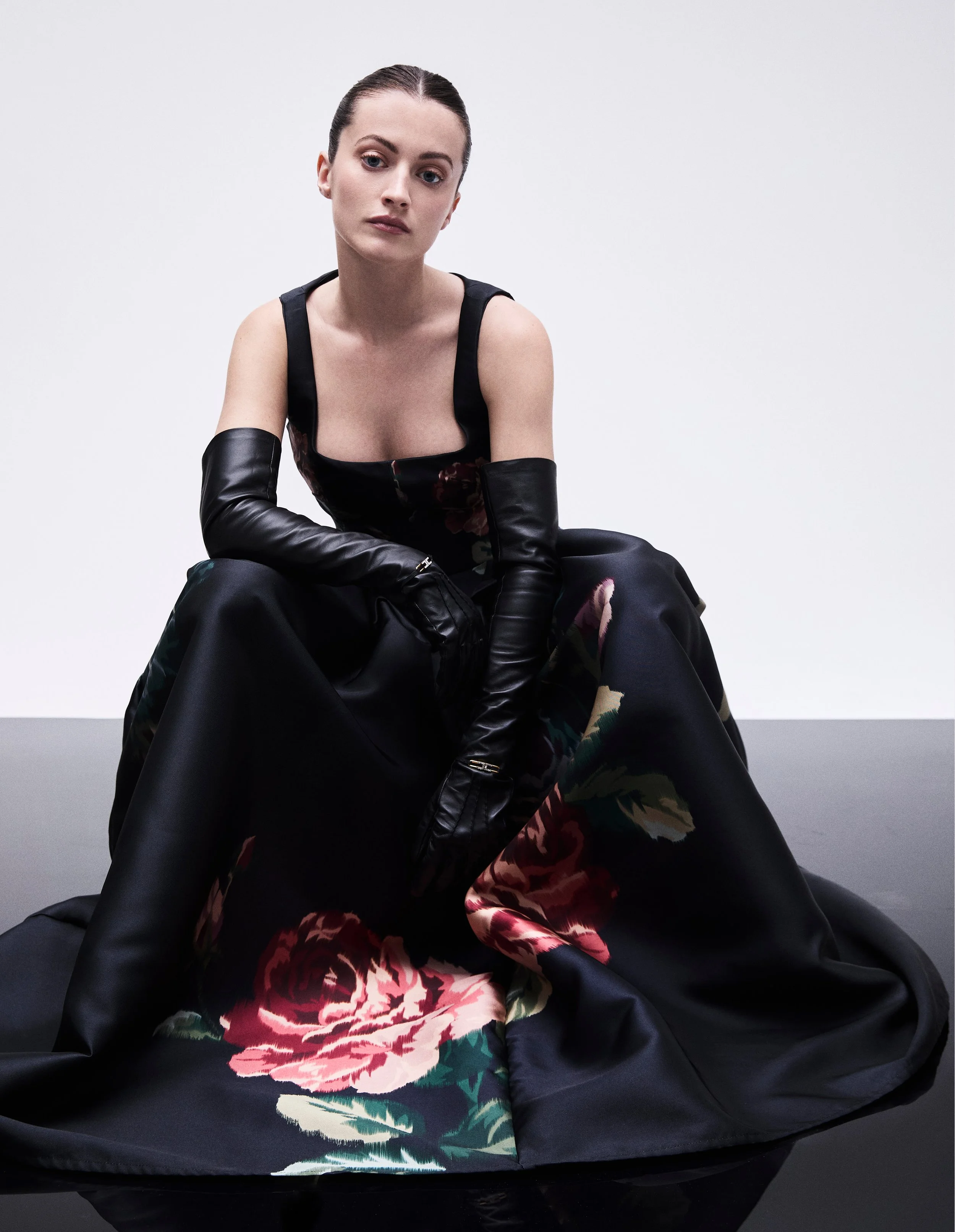
Dress MARQUES ALMEIDA, gloves ELISABETTA FRANCHI.
LMQ __ Exactly. Even though the writers, Jonathan English and John Glenn, show that she’s had a sheltered life and faced abuse from her father, that doesn’t stop her from finding her own power and voice. I loved that. They didn’t want to write her as a victim, and I didn’t want to play her as one either. It would have been easy to fall into that trap, but instead, she picks herself up, remains ambitious, and grows. I also loved how the Queen teaches her to harness her power.
DG __ I thought the same thing. The best thing that could have happened to her was actually being sent away by her father. What he thought was punishing her, ended up being what pushed her to grow and find herself.
LMQ __ Definitively!
DG __ How did you feel about the responsibility of portraying Marian in such a different light?
LMQ __ I hadn’t actually seen any of the previous Robin Hood adaptations, so I didn’t really know how other actors had approached Marian. I just knew I wanted to put my own stamp on her. For preparation, I focused on the scripts, especially the first few episodes. I also had really good discussions with the writers, Jonathan [English] and John [Glenn], about the direction we wanted for Marian and what aspects of her character to highlight. The inner strength, that fire inside her, was something I really wanted the audience to see. Of course, there’s always pressure playing a leading role which is something I’ve wanted to do for a long time. I’ve done period dramas before, which were the perfect stepping stones to land this role.
DG __ I think that was a smart move. By not watching prior performances, you could really make Marian your own. So, how did the costume design shape your sense of Marian? Did it transform the way you carried yourself?
LMQ __ Absolutely. This was the first role where the costumes really reflected the character’s journey. At the beginning, when Marian is inexperienced and sheltered, her costumes are light blue, simple, country-style, and they reflect the forest as her happy place. As she grows, gaining independence and confidence, the colors shift to darker blue, showing her maturity. Even though we shot out of order, the costumes really helped me understand where she was on her journey. I also had these huge platform shoes under my dresses. At first, Marian was nervous and intimidated by [Queen] Eleanor, but the lift from the shoes helped me walk in a way that conveyed her growing confidence.
DG __ You filmed in Serbia; did the location influence your performance at all?
LMQ __ Absolutely. I shot a lot of my scenes in the studio, and the team was incredible. They built the inside of Westminster from scratch, the stained glass, the stone walls, and walking onto that set for the first time felt almost real. My reaction as Marian was very natural in that moment, because seeing it for the first time was just… wow. Nottingham Castle and the village were also built from scratch, and having all the supporting artists in authentic costumes made it feel completely immersive. The whole world transported me into the 12th century. Later in the season, filming in the forests and at Loxley Manor, where Marian lives, was also stunning. You really felt like you were in England, the countryside, the forests, and when the light glistened through the trees, it was just magical.
DG __ That’s beautiful. And you got to do some horse riding too, right?
LMQ __ Yes! I couldn’t wait for that. I’d wanted to play a role on horseback for a long time, so about a year before I got this role, I took horse-riding lessons in Liverpool just to prepare. Luckily, Marian’s script required riding, so once I got the part, we had more lessons in Serbia. Our teacher was incredible, hardcore but amazing, and she really helped us feel confident. It’s tricky, because you’re thinking about your lines, your scene, and a hundred more things about the horse. Horses don’t always move the way you want them to, so you have to make everything look natural.
DG __ What was the most unexpectedly challenging scene to shoot?
LMQ __ I think the biggest challenge was that Jack and I didn’t film together for the first two or three months. I was mostly in palace scenes, and he was in the forest with the outlaws. Coming together later and hoping that the chemistry from our chemistry read would still be there was nerve-wracking. Thankfully, it came naturally when we finally had our scenes together, but that was an unexpected challenge we didn’t anticipate when we first looked at the schedule.
DG __ Robin Hood has always been a story about power and the people who have too much of it. When you look at the world right now , politically and socially, what aspects of Marian’s fight feel uncomfortably familiar?
LMQ __ I think, generally, the themes in Robin Hood, like the Normans and Saxons, reflect ideas that are still present in today’s world. Even though Marian is a Norman and technically has different beliefs from Rob, she’s very open-minded and doesn’t form opinions based on what everyone else thinks, like her father does. So when Marian and Rob meet, she doesn’t judge him. She’s open to his beliefs, and he’s open to hers. I think that’s one reason why the story resonates with audiences. Robin Hood is about one man dealing with these larger societal themes, and it mirrors what we see today: wars, extreme poverty, class divisions. As the series develops, it’s like a big chess game. People are very careful in how they make decisions, politically and personally, and everyone is waiting to make their next move. That tension, and how each character navigates it, really reflects the world we live in today.
“MARIAN HAS ALWAYS BEEN SEEN AS ROB’S LOVE INTEREST, SO EXPLORING HER AS AN INDIVIDUAL FELT EMPOWERING.”
— LAUREN MCQUEEN ON ROBIN HOOD
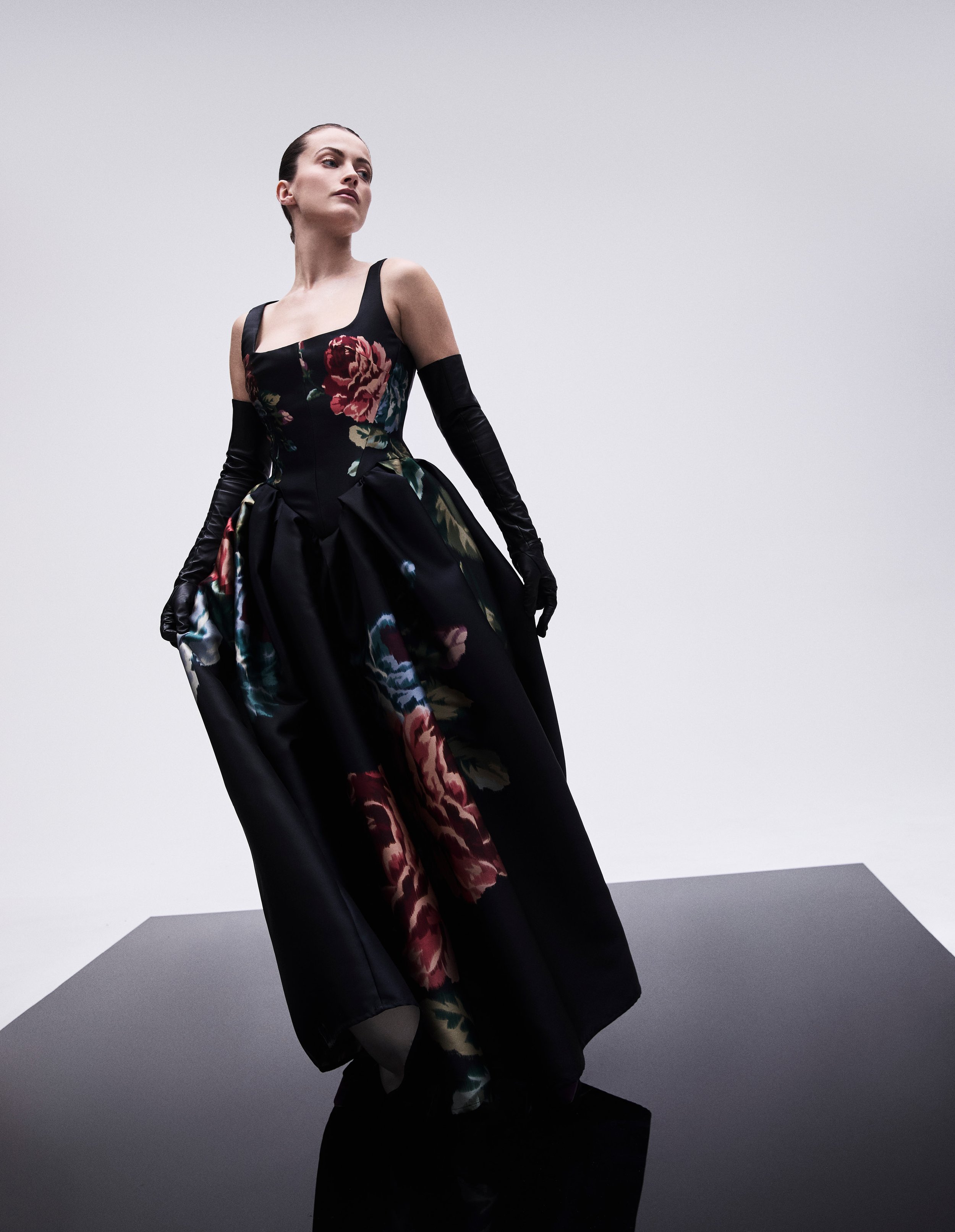
Dress MARQUES ALMEIDA, gloves ELISABETTA FRANCHI.
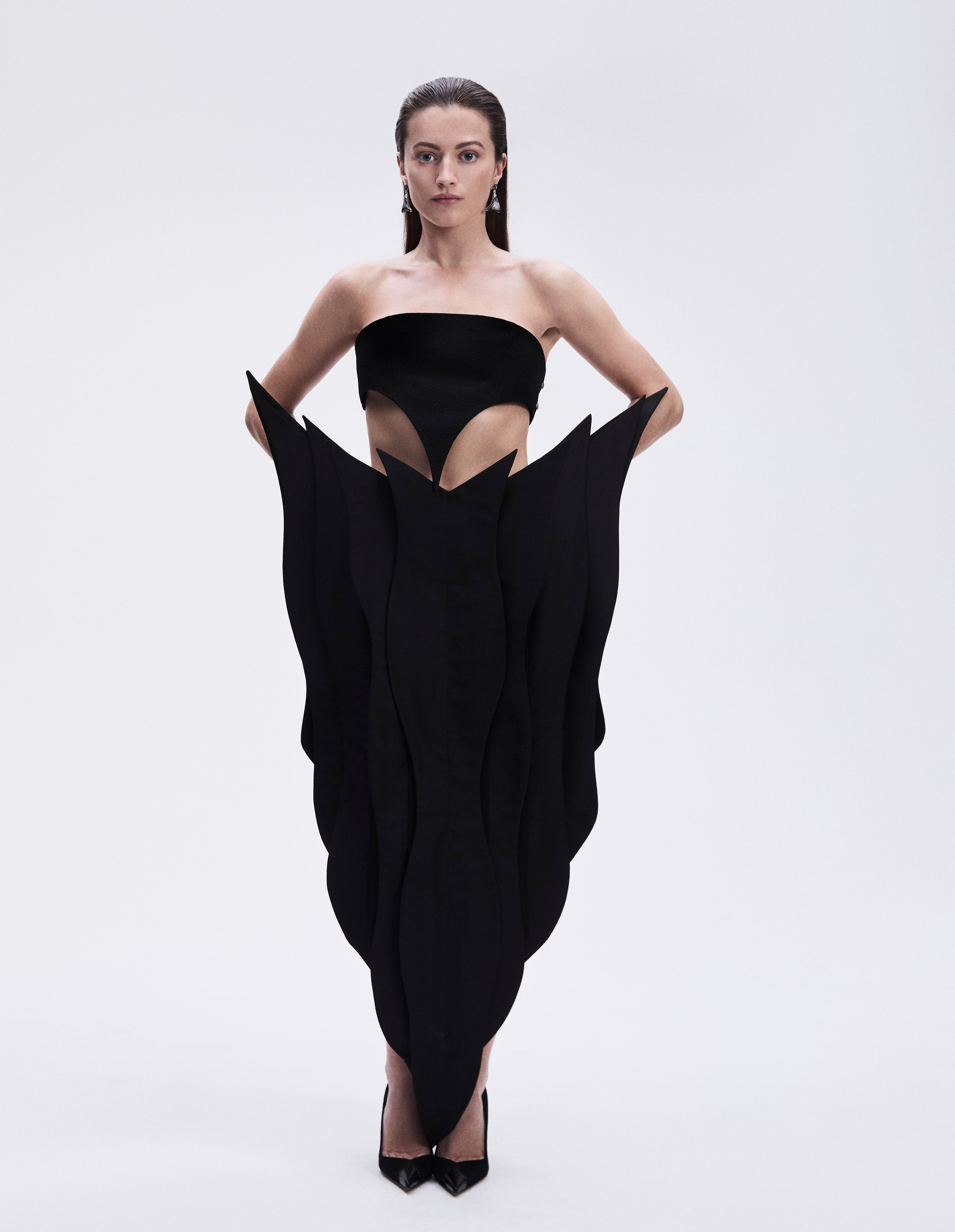
Top and skirt A JANE, shoes ELISABETTA FRANCHI, earrings DINOSAUR DESIGN,
DG __ The show explores resistance. The love story between Rob and Marian also feels like a kind of resistance, almost a political act. Do you think love can be a form of resistance too?
LMQ __ Yes, they’re going against cultural expectations. They fall deeply in love, and it’s not necessarily about ideology. It’s that spark and connection that brings them together. When they first meet, Marian is intrigued by him, not because he’s a Saxon, but because she admires the Saxons’ sense of community and love. She’s grown up hearing her father’s prejudices, but she forms her own views. It’s only later, as the season progresses, that they come together to fight against the injustices committed by the Sheriff and work for peace in the land. That’s when their union takes on a larger purpose.
DG __ Can you explain a little about the relationship between the Normans and the Saxons?
LMQ __ It’s shown from the beginning, even when Rob and Marian meet as children. Rob is very opinionated about the fact that Marian comes from the Normans and took what was, in his eyes, his childhood home. The audience is thrown into that conflict straight away and can understand the roots of the rivalry between Loxley and Huntington.
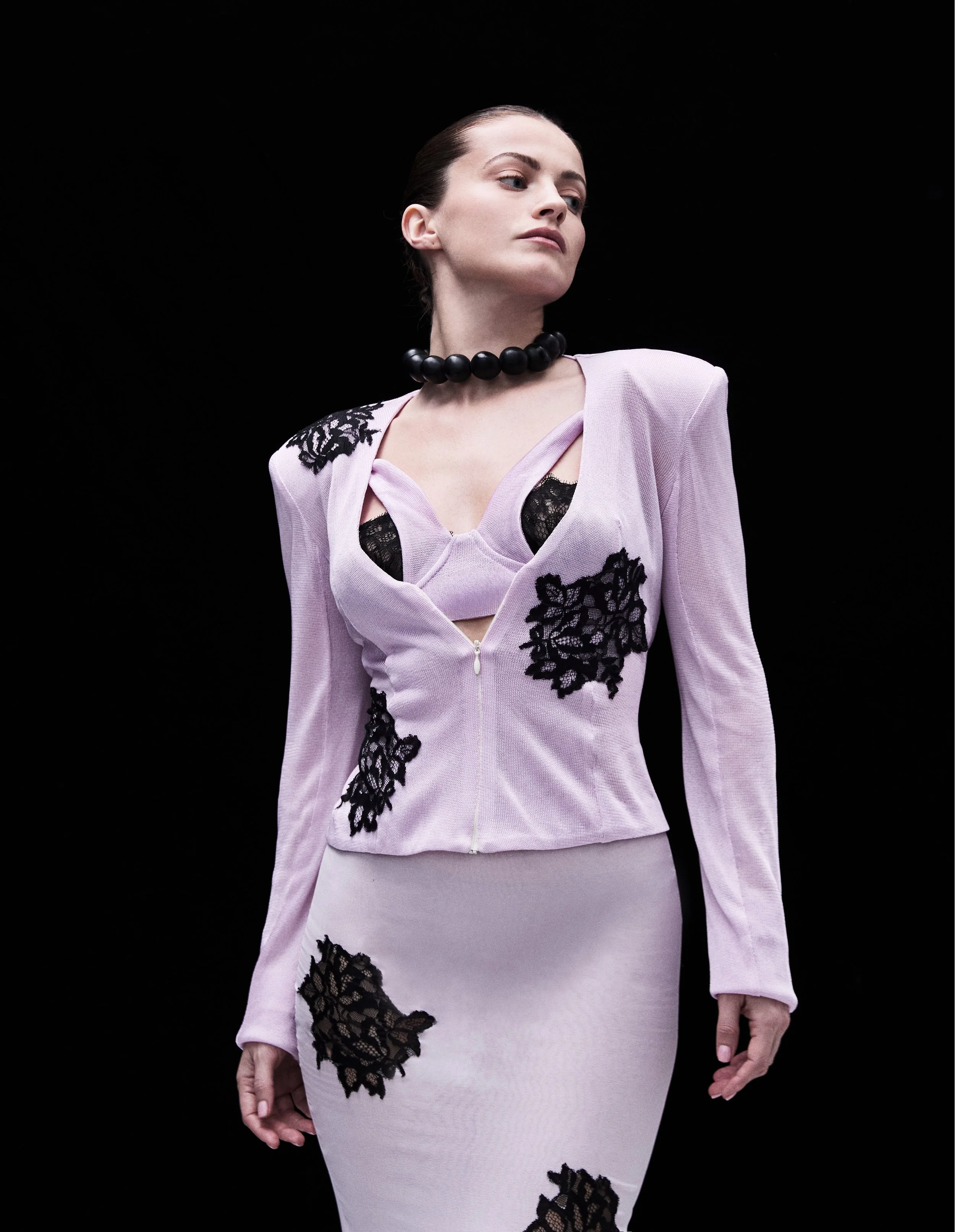
Total look MILO MARIA, necklace DINOSAUR DESIGNS.
DG __ Some people believe rewriting myths keeps them alive; others believe it strays too far from tradition. What’s your take?
LMQ __ I think modern adaptations are interesting because they resonate with my generation and will continue to connect with future generations.
DG __ You worked with Sean Bean, who plays the Sheriff. What did you learn from sharing scenes with someone so experienced and respected in the industry?
LMQ __ When I found out Sean was playing the Sheriff, I couldn’t wait to meet him. I’ve always been blown away by his performances in other dramas. I really admire him as a person. He’s so down-to-earth and treats everyone the same. I wish I’d had more one-on-one scenes with him, but even in the group scenes, it was an amazing opportunity to be on set with him. Watching his work on the monitor was incredible. He’s so subtle, but every little thing is interesting. I learned that you don’t need big gestures or expressions; it’s all in the eyes. That subtlety tells a much bigger story, and you just can’t take your eyes off him when he’s on screen.
DG __ And in your case, when you prepared for the role, did you do a lot of preparation, or do you prefer to improv and just feel the scene?
LMQ __ I definitely did a lot of preparation. I thought a lot about Marian’s different relationships, especially with her father, because that shapes her as a person. I had really good discussions with Steve Waddington about why his character is so cruel, and where all that pain and emotion comes from. That was really helpful, especially for scenes in the mother’s bedroom, where I built a backstory for Marian and considered what her life was like with her mother. I also worked on the accent. My RP accent has always been strong, but I worked closely with my dialect coach each week in Serbia and did Zoom sessions with my acting teacher since we didn’t have much rehearsal time on set. So a lot of the work happens off-camera: finishing filming and then continuing to think through scenes, choices, and options for when you’re on set.
DG __ That sounds like a lot: horse riding, the accent, learning your lines, developing the romantic relationship, and jumping between scenes out of sequence. How do you keep it all together?
LMQ __ You really have to stay present. You never know what the other actors will bring to a scene, so you have to be ready to react naturally to whatever they give you. I love that part of it, it keeps things spontaneous and more real. I felt really lucky to work with people like Sean Bean and Connie Nielsen. Connie brought so much knowledge about Eleanor’s character, and I loved watching her process. Being surrounded by people like that made me feel fortunate, and I just want to keep learning and improving.
DG __ When you’re not on set or promoting a project, what part of life do you gravitate towards?
LMQ __ I love to sing. It’s kind of my outlet for releasing stress or emotions. It's like an escape. It really makes me feel good. I also love to travel as much as I can and being by the sea; it’s very calming. But as much as I love to travel, I really enjoy being at home in Liverpool.
DG __ Are you a good singer?
LMQ __ Yeah, I’d like to think so!
DG __ So no embarrassment at karaoke nights? (laughs)
LMQ __ Well, it’s kind of funny. If you can really sing, karaoke can be awkward because everyone wants to sing badly. Nobody wants to hear an amazing singer at karaoke! (laughs)
DG __ Alright, then I’ll win karaoke night! (laughs) I’m a terrible singer, so I’ll definitely entertain everyone else.
Photography David Reiss, Styling Abigail White (Stella Creative), Makeup Jenny Coombs, Hair Elvire Roux (Carol Hayes Management), Interview David Gargiulo, Talent Lauren McQueen (Tapestry London)
STREAMING