

FEBRUARY 19TH, 2026
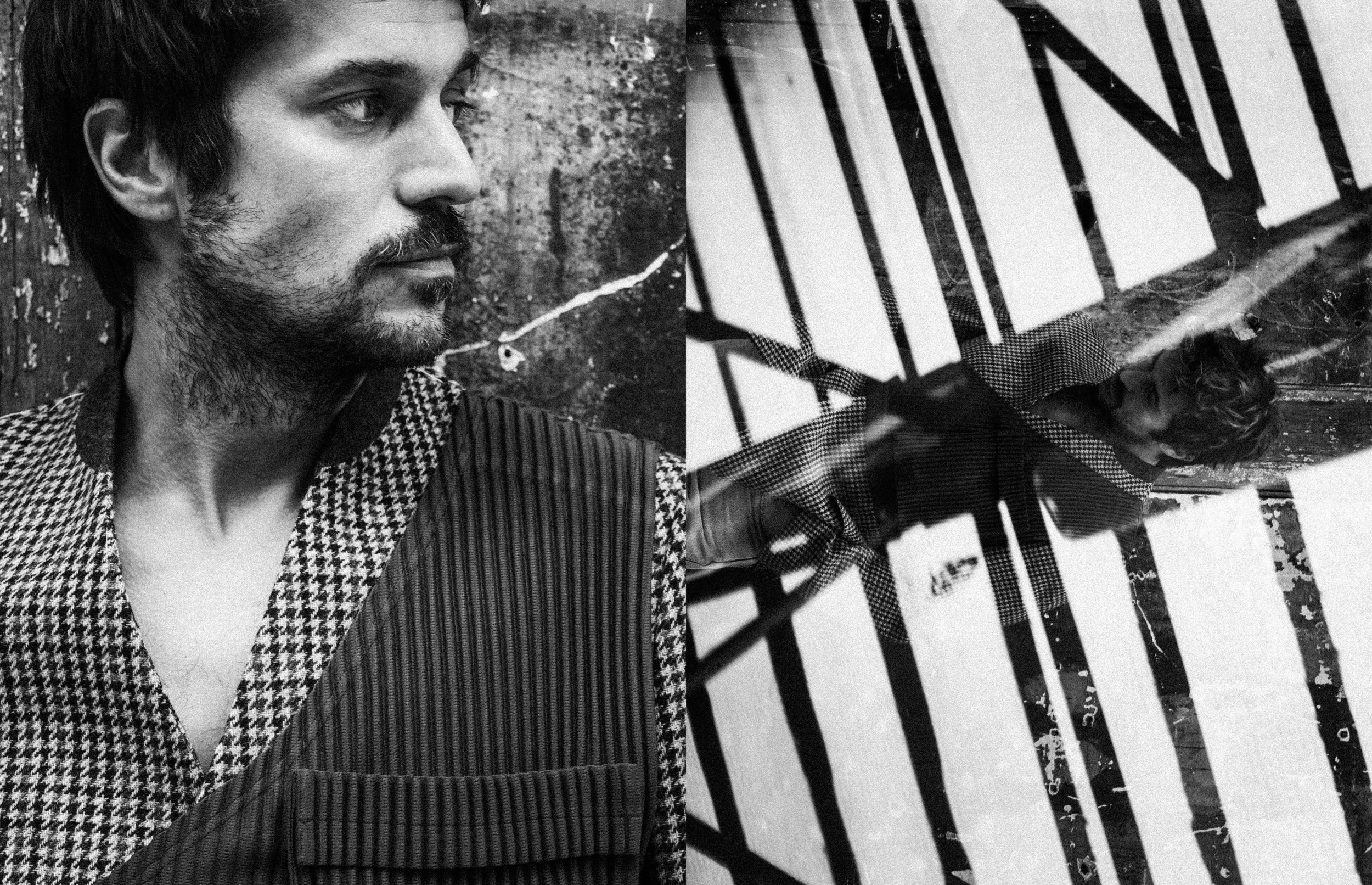
Jacket MAISON MARGIELA, top ISSEY MIYAKE.
“ YOU CAN BE SHY AND STILL BE AN ACTOR. ACTING IS A WAY TO BE SEEN WITHOUT FULLY EXPOSING YOURSELF.”
— LUCAS BRAVO
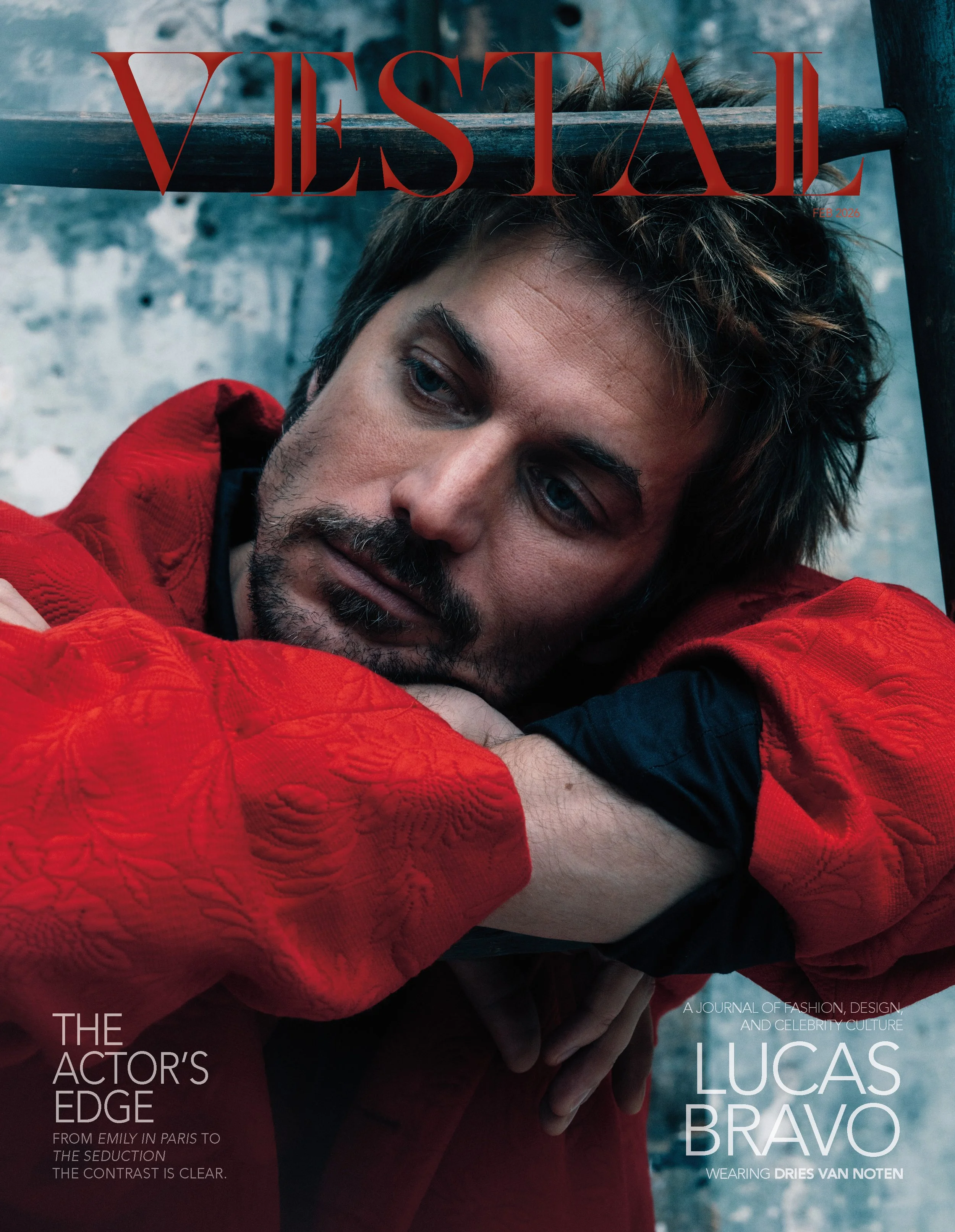
WEARING DRIES VAN NOTEN.
INTERVIEW WITH LUCAS BRAVO
We all carry more than one world inside us, but only some know how to navigate them. Lucas Bravo is one of those people. One moment, he’s Gabriel in Emily in Paris: playful, charming, effortlessly magnetic. The next, he’s Comte de Gercourt in The Seduction: cold, composed, and dangerous; a calm that unsettles. Two extremes. Two sides of the same coin. And somehow, he inhabits both fully.
Talk to him, and you realize duality isn’t just acting. It’s life. Confidence versus shyness. Lightness versus darkness. Desire versus restraint. Public persona versus private life. He navigates all of it. And in that navigation, there’s honesty and a curiosity about who he is, what he wants, what he’s capable of. Playing these characters isn’t just about performance; it’s a way to explore his own edges, his own shadows, and his own growth. What stands out is how much his characters reflect opposite aspects of human nature: one flirty, idealistic, almost innocent in his pursuit of connection, the other morally ambiguous, menacing, fully untethered from concern for others. And in Lucas’s hands, both feel alive, both feel real. They show us that desire, ambition, and fear aren’t tidy. They’re messy, they’re complicated, they’re dual. And perhaps, in some way, that’s what Lucas is drawn to: the spaces where light meets shadow, where joy meets pain, where confidence meets vulnerability.
Living between Paris and Hollywood, moving from city to city, set to set, he’s constantly negotiating himself, and yet there’s a groundedness beneath it all: a sense of calm, of observation, of curiosity. Whether he’s exploring a street in Paris or stepping onto a set in a centuries-old chateau, he’s noticing, absorbing, thinking about the spaces he occupies and the roles he inhabits. There’s a mindfulness to it, a desire not just to perform, but to understand. In his characters, you see extremes. In him, you see integration. The playfulness of Gabriel, the danger of Gercourt, the shadow and the light; they all feel like parts of the same story. And talking to him, you see that story isn’t just on-screen. It’s ongoing, personal, evolving. And maybe that’s the thing about duality: it’s not a problem to solve, but a terrain to explore, and Lucas Bravo is navigating it with curiosity, courage, and, above all, heart.
“ WE ALL HAVE DARKNESS INSIDE US. I’M TRYING TO INTEGRATE IT SO IT DOESN’T EXPLODE LATER.”
PHOTOGRAPHY THÉO GOSSELIN STYLING CLÉMENT LOMELLINI INTERVIEW DAVID GARGIULO
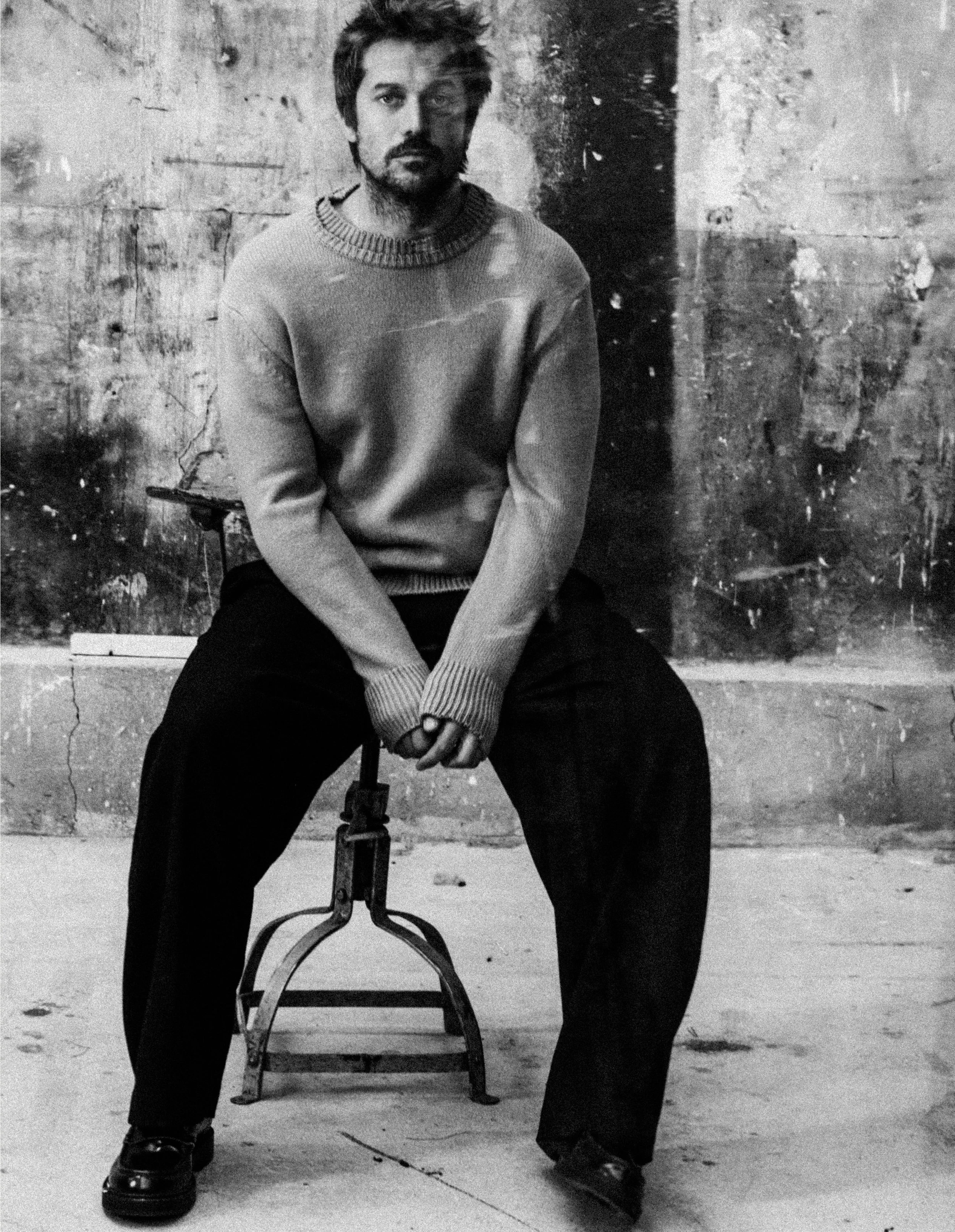
Sweater and shoes MAISON MARGIELA, pants SYSTÈME.
David Gargiulo __ How is life in Paris? Do you have any favorite spots you’ve been visiting lately?
Lucas Bravo __ After traveling so much, I realized Paris is where I want to be. The more I travel, the more I understand how lucky I am to live here. Life is sweet in Paris. It’s easy, mindful. There’s a sense of consciousness, nuance, intention in everything, in the mentality, in the culture. You have nature, you have art, exhibitions, shows. It’s always alive, culturally stimulating, but also peaceful. When you look at the state of the world today, it feels reassuring to be in a place that still seems guided by reason.
DG __ What’s a guilty pleasure or little ritual that helps you unwind between projects?
LB __ Between projects, you go from very high stimulation to a period of calm, almost a kind of void. So you have to accept the void. For me, it starts with accepting that it’s okay to be nothing for a moment, and that it’s enough. When you’re working, you have to be the best version of yourself all the time: intellectually sharp, aesthetically at your best, constantly present. And then suddenly everything stops. Your body still searches for stimulation, which is natural. But it’s really a phase of acceptance, returning to normal life, not being stuck in appointments or the question of “what’s next?” So I reconnect with the present: seeing family and friends, walking in the park, going to exhibitions, concerts, restaurants. Simple things, but things you actually have time to enjoy and reflect on, instead of always rushing toward the next thing.
DG __ Gabriel has been one of the most magnetic characters on Emily in Paris. How has your approach to him evolved for Season 5?
LB __ In Season 5, I wanted him to feel lighter. More playful, more curious, a little wiser. The previous season was very heavy emotionally, so I wanted to bring back that sense of lightness. It’s a show that’s also about aesthetics and pleasure, so I wanted Gabriel to feel cheeky again, fun, almost mischievous. I tried to be in the best shape possible, emotionally and physically, and to keep the interactions in the scenes simple and fluid. The show is meant to be entertaining, almost escapist, so I tried to move away from the weight of the problems and bring back something more joyful.
DG __ We can also see a shift in Gabriel’s style this season. Did the costumes play a role in that evolution?
LB __ Yes, definitely. I talked with the costume designers and we were like, “Let’s bring sexy back.” Gabriel was the only one who wasn’t as stylish as the others as he was always stuck in the restaurant world. And we thought, okay, it’s Season 5 now. Let’s have fun. Let’s make him sexy like the rest of the group. They agreed, and it felt like the right moment.
DG __ Speaking of fun… give me a French pickup line that would make Emily swoon.
LB __ [laughs] I have zero of those. I’m sorry. I have absolutely no game. I’ve never used a pickup line in my life. I’m really shy. I’ve always felt like I was disturbing people when I approached them. I wish I could give you one but I genuinely have no game.
DG __ [laughs] It’s so interesting you are shy, especially considering that you’re constantly in front of the camera. How does that work?
LB __ It’s very different. When I’m acting, I’m hiding behind a character. I’m given a blueprint: how he moves, how he speaks, how he dresses. It’s not me. In a way, it’s the opposite of putting myself out there. You can be shy and still be an actor. There’s a difference between being seen and being the center of attention. As a shy person, you still want to be seen. Your inner child wants recognition. Acting is a way to be seen without fully exposing yourself. If that makes sense.
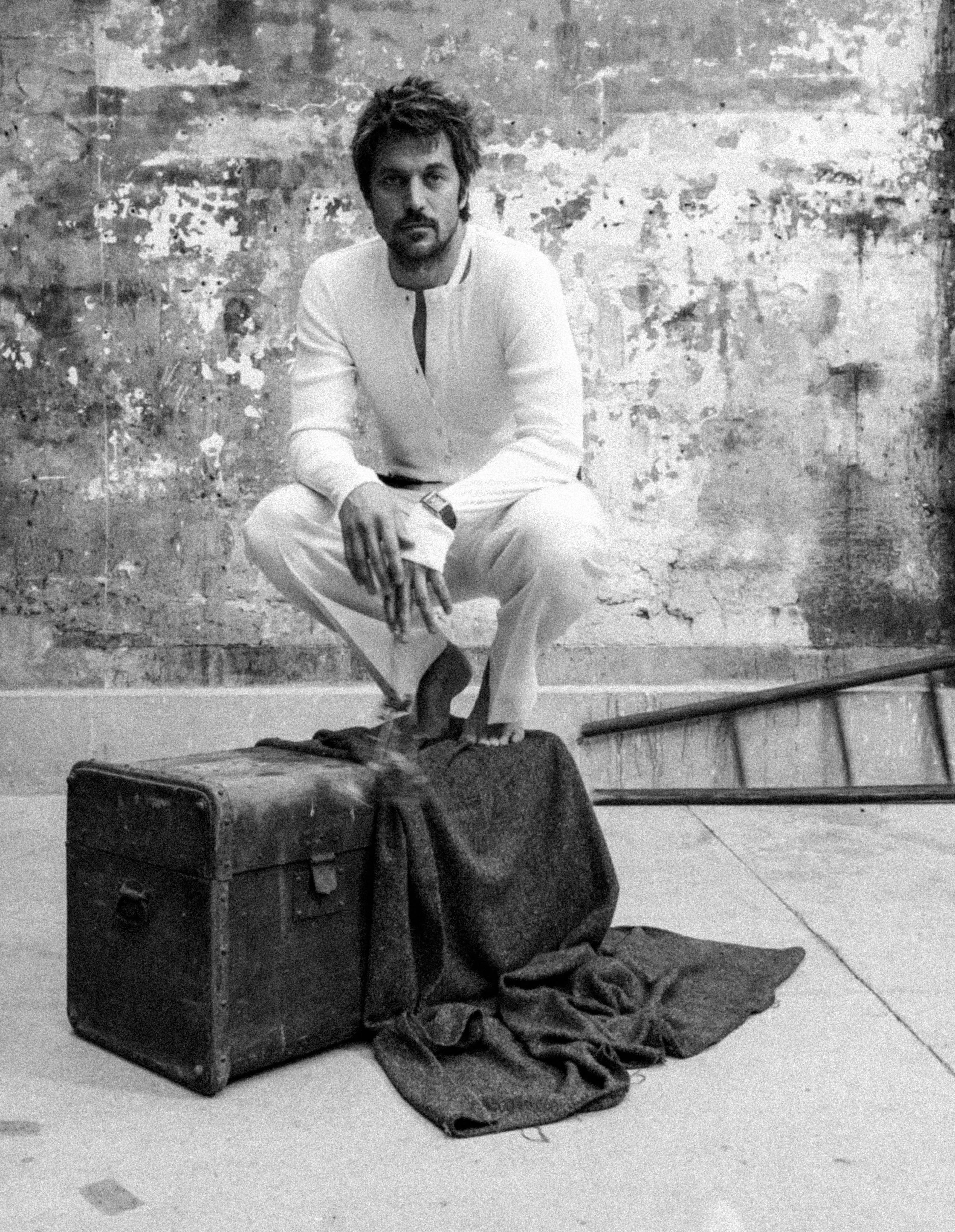
Top LOUIS GABRIEL NOUCHI, pants AMI, scarf worn as belt MAISON MARGIELA, watch JAGER LECOULTRE.
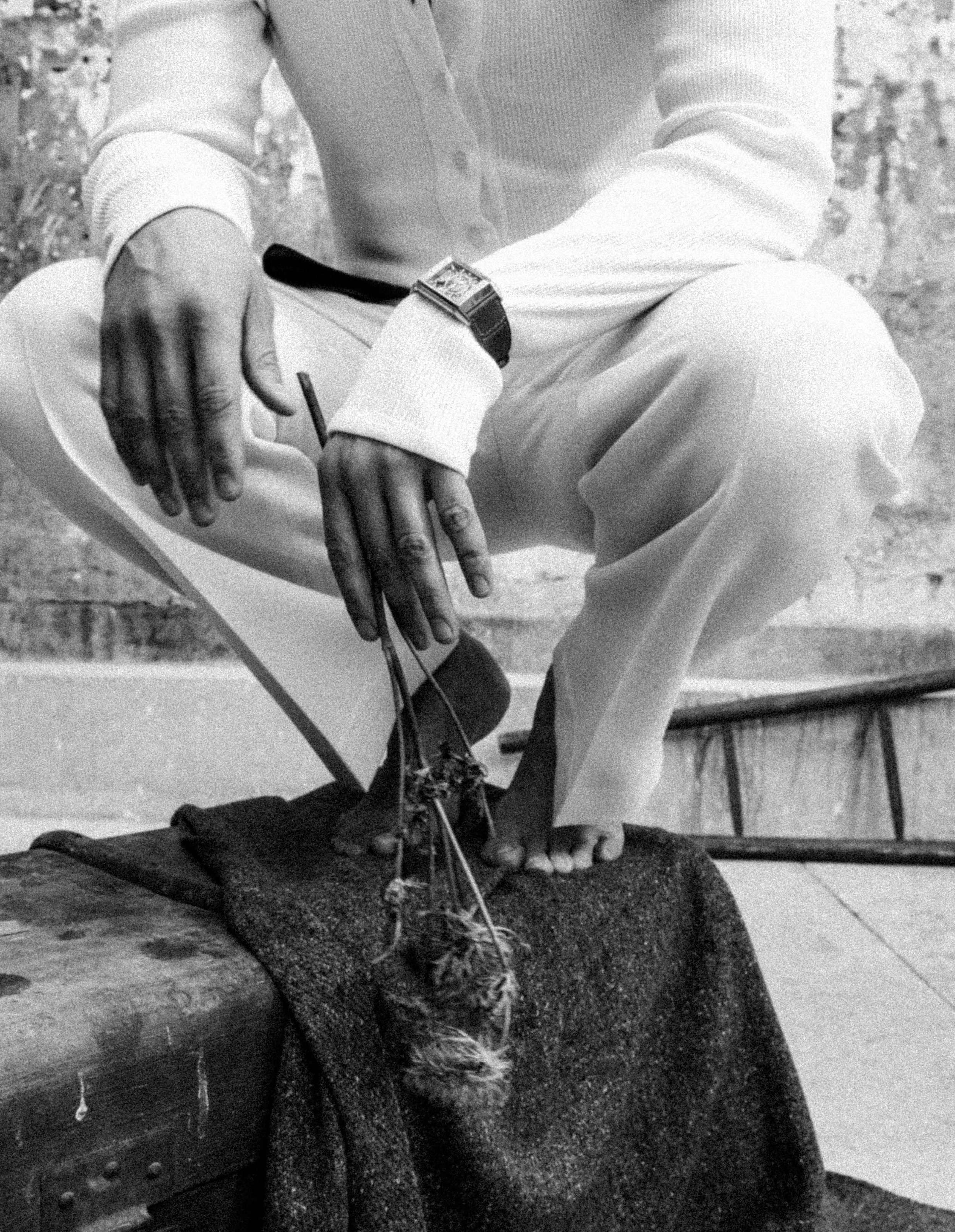
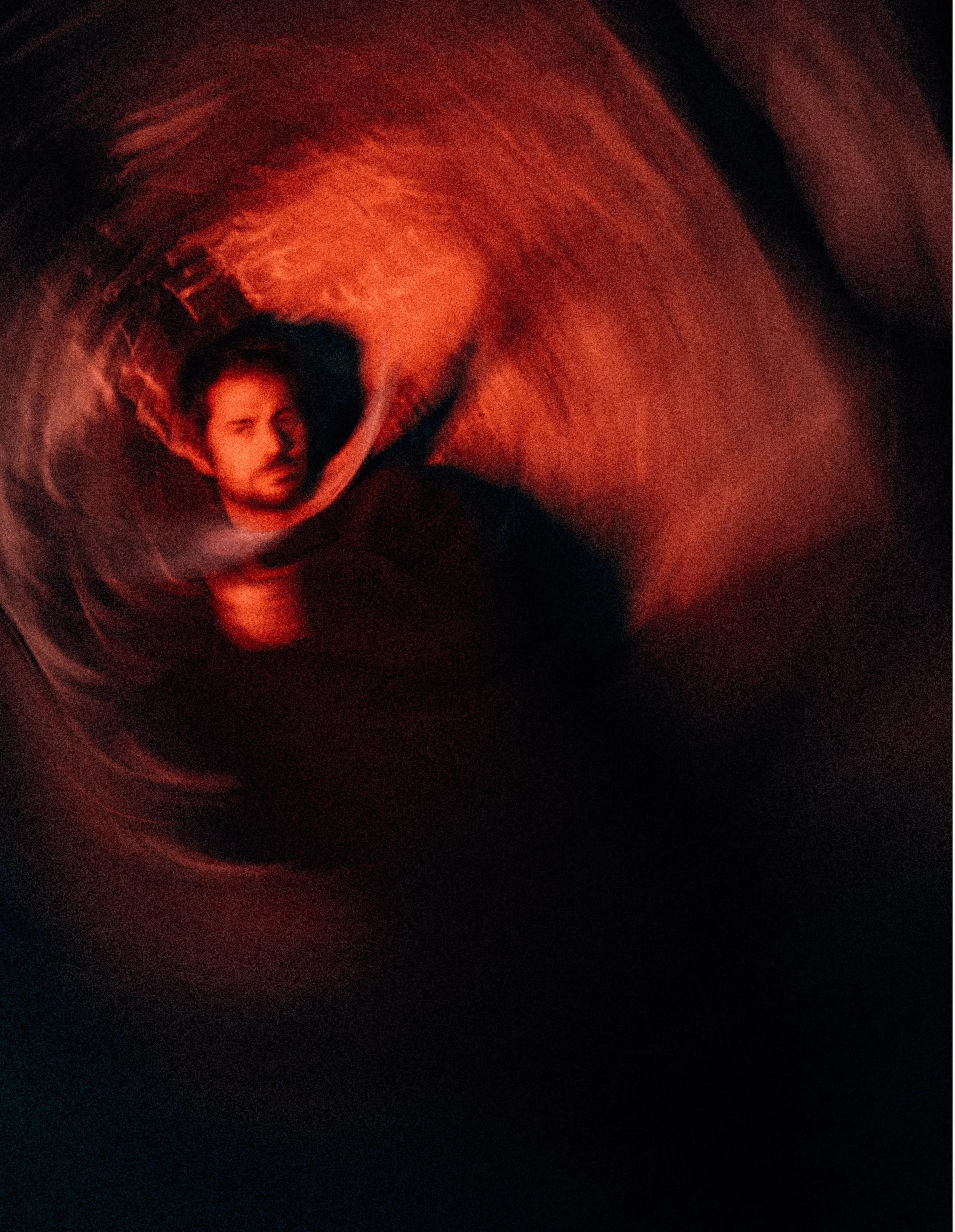
Total look EGON LAB.
DG __ At the same time, many of the characters you play are very confident. Doesn’t that confidence ever rub off on you, even a little?
LB __ I think so. I’m starting to understand that confidence is really about accepting that you belong, that you’re as legitimate as anyone else on this earth to claim your space. I feel like I’m becoming more confident as I understand the characters I play. But I want that confidence to come from the right place. I don’t want to be presumptuous; I want to be considerate. I’m very mindful of other people’s space and realities. So it’s hard for me to claim space without feeling like I’m taking someone else’s. It’s a balance you have to find.
DG __ When you were talking about space and confidence, it made me think about your character in The Seduction, Comte de Gercourt. He’s someone who takes up a lot of space, unapologetically. How did you prepare for that role?
LB __ It’s funny, because I don’t think I would have been able to play a role like Comte de Gercourt a few years ago. When I approached the character, I thought: he’s the big villain of the story. If the show is going to work, he has to be believable as this kind of king of the night, dangerous, excessive, almost predatory. I wanted him to be scary, but not in an obvious way. I think there’s nothing scarier than someone who is very calm, composed, with danger in his eyes. So I worked a lot on his gaze, the way he looks at people. And I asked myself: who would I be if I were the opposite of everything that makes me shy? Who would I be if I didn’t consider other people? If I felt superior? If I believed everything belonged to me? I leaned into that mindset. It was hard, but once I did, everything changed, the physicality and the energy. And it was fun. The further a character is from who you are, the more exciting it becomes. It’s probably one of the most fun characters I’ve ever played.
DG __ I loved what you said about intimidation, that sometimes it comes simply from the way someone looks at you. Did you have to tap into a darker side of yourself to portray him?
LB __ We all have darkness inside us. I’m at a point in my life where, instead of pushing that darkness away and trying to live only in the light, I’m allowing it to exist. I’m trying to integrate it into my life, so it doesn’t explode later. We’re made of dualities. So this role was very therapeutic in a way. I gave a lot of my darkness to the character. What makes us good or bad people is not the darkness itself, but what we choose to do with it. I chose to use mine as a tool for my work, so it wouldn’t hurt anyone. I know what it means to be disruptive, dangerous, to have the power to hurt people; we all do. But we don’t use it because we have a conscience. This character was about imagining who I would be if I had zero concern for other people’s well-being.
DG __ I’m trying to draw a parallel between Gercourt and Gabriel. Gabriel is flirty, romantic, almost idealistic, while the other is dark and morally ambiguous. How do you think these two characters reflect different aspects of desire and ambition today? Is either of them “doing it right”?
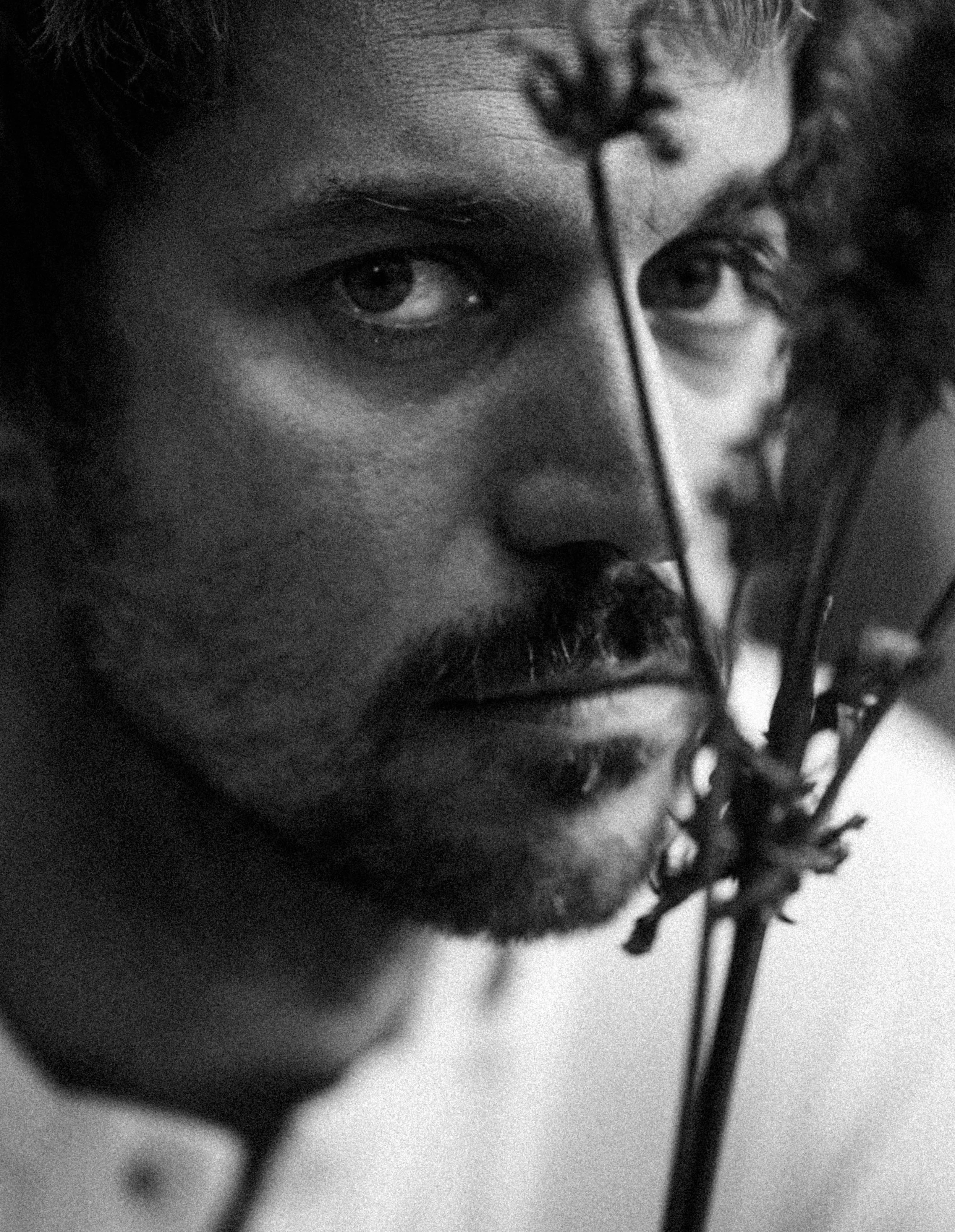
Top LOUIS GABRIEL NOUCHI.
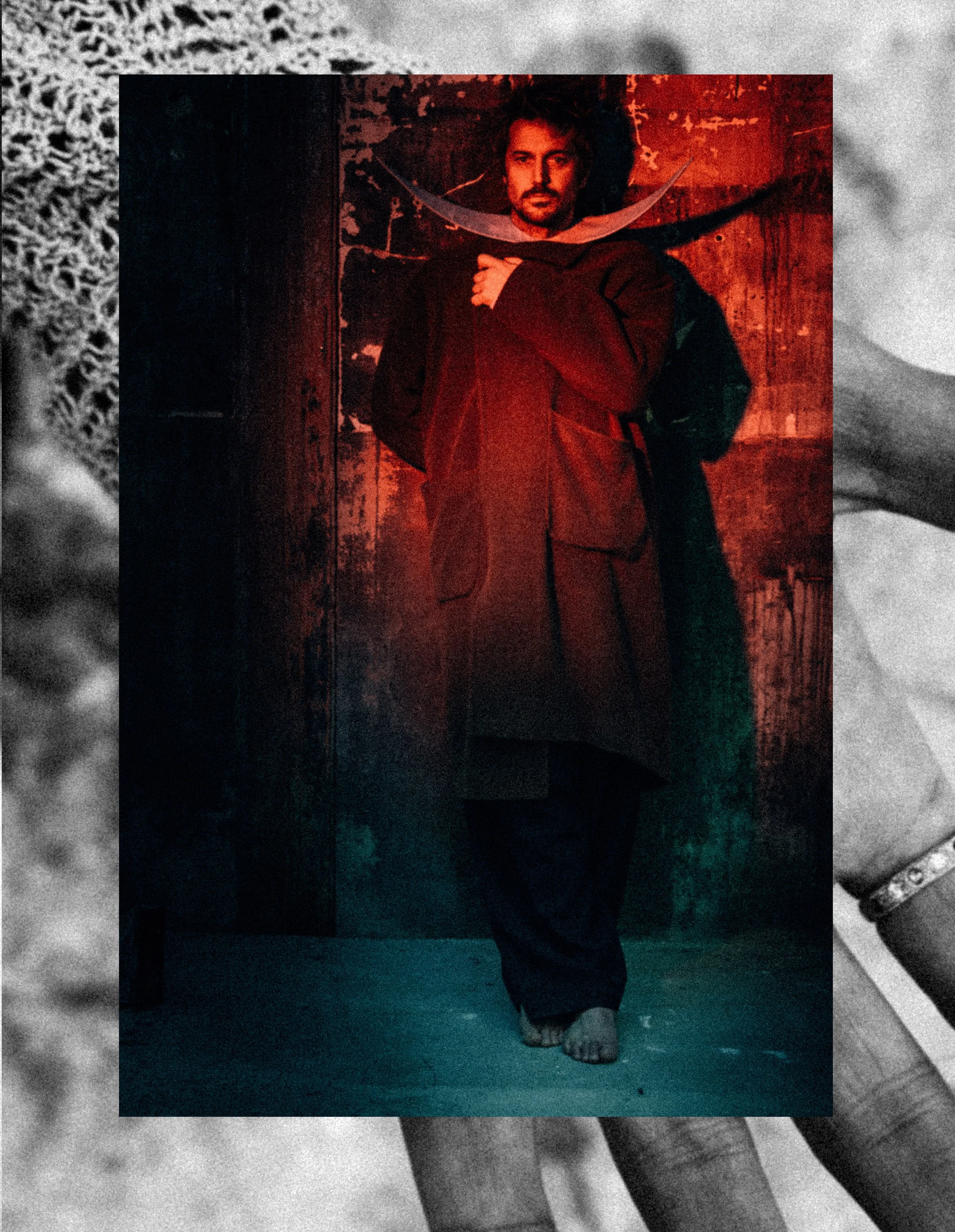
Total look EGON LAB.
“ CONFIDENCE IS REALLY ABOUT ACCEPTING THAT YOU BELONG, THAT YOU’RE AS LEGITIMATE AS ANYONE ELSE TO CLAIM YOUR SPACE.”
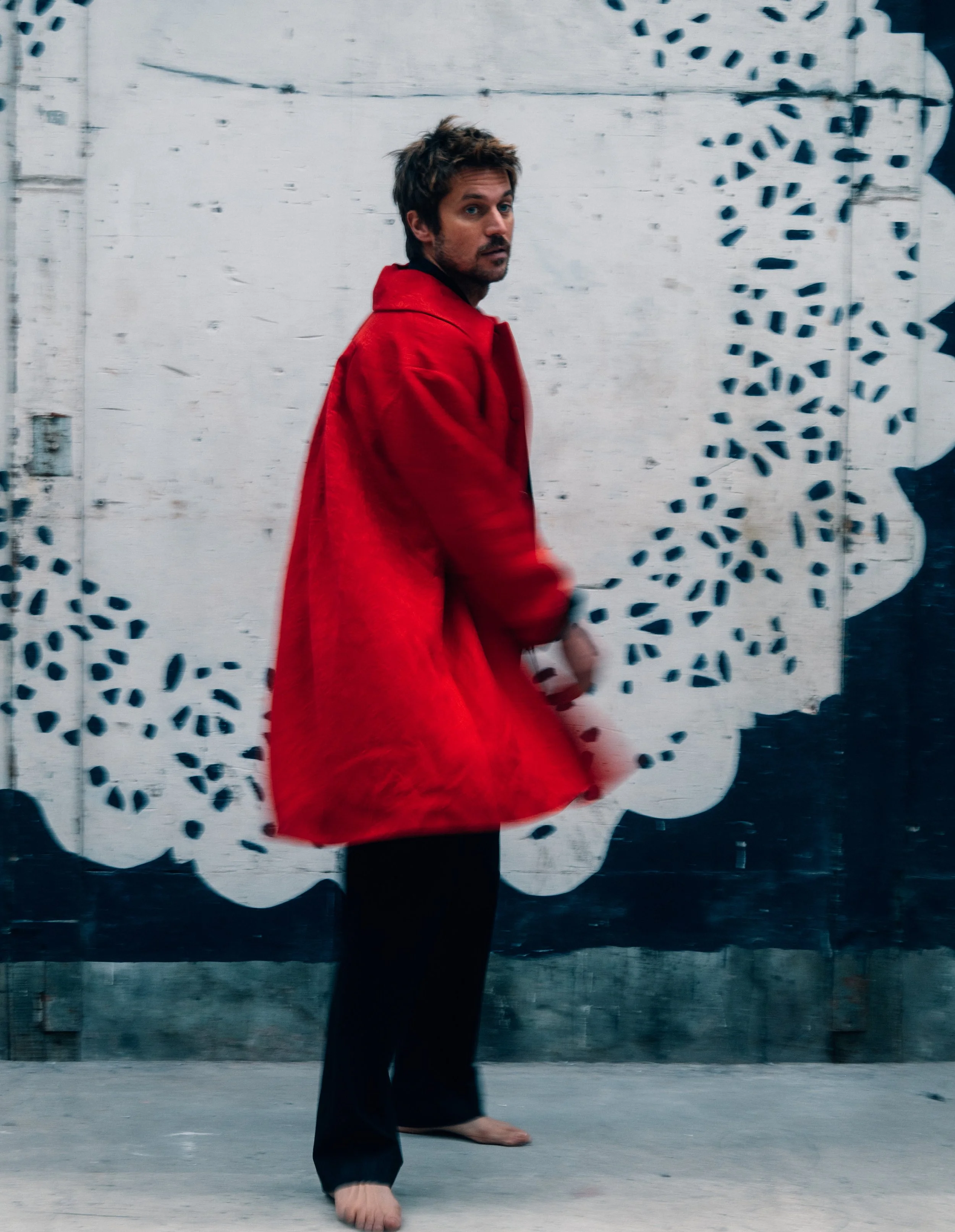
Coat DRIES VAN NOTEN, pants MAISON MARGIELA.
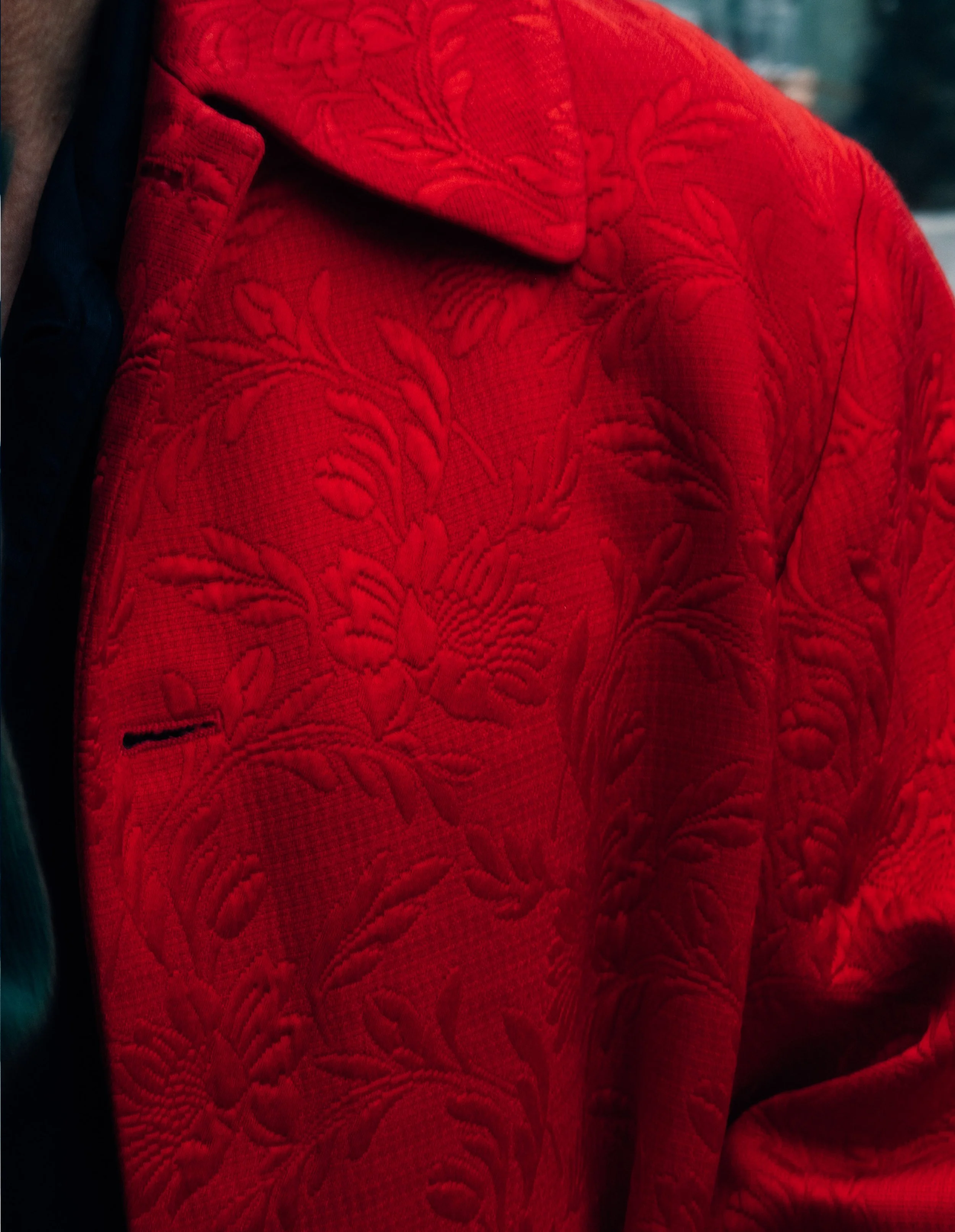
Detail MAISON MARGIELA.
“ DESIRE DRIVES EVERYTHING. IT CAN BE PURE, ELEGANT, AND BRAVE, BUT IT CAN ALSO BE DESTRUCTIVE IF MISUSED.”
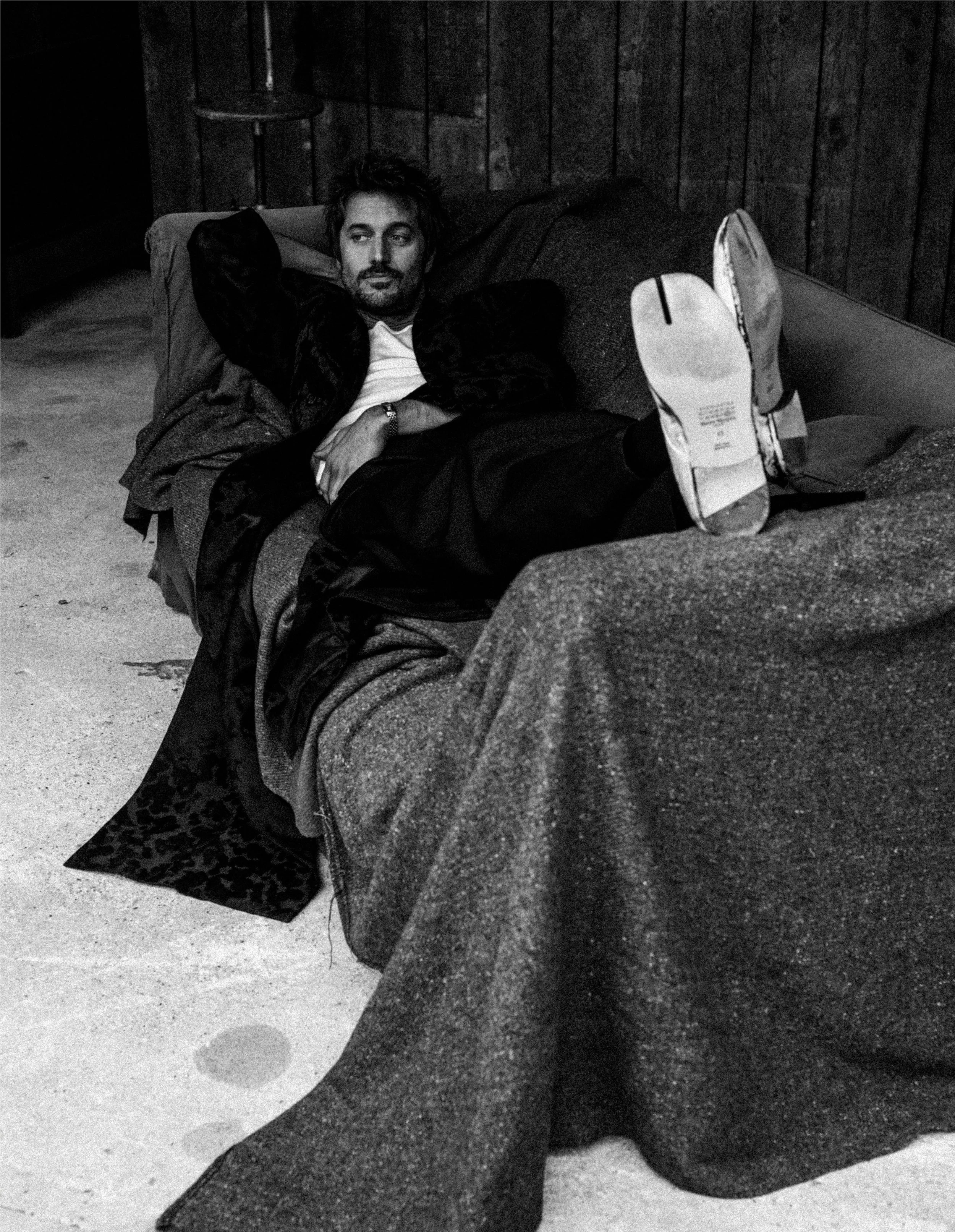
Tank top RON DORFF, coat LOUIS GABRIEL NOUCHI, pants and shoes MAISON MARGIELA, watch JAGER LECOULTRE.
LB __ I don’t think either of them is doing it right. But I think one of them is trying. Gabriel is trying, maybe even too hard. And Gercourt simply doesn’t care. There’s always karma. At some point, the one who doesn’t care will hit a wall. I don’t know when, but the fall will be big. Gabriel is just trying to be a good human being. But sometimes, being good is seen as weak or boring. That says a lot about the society we live in.
DG __ Do you think they share the same ambitions but pursue them in different ways?
LB __ What really defines you in life? I think life is what you make of it. When people ask, “What is the meaning of life?” The meaning is whatever you decide it is. It depends on your desires. Gercourt wants to dominate. He wants to be on top of everything and everyone. He wants to conquer the world because there’s an emotional void inside him. Maybe his parents didn’t care enough, maybe he wasn't loved unconditionally. So he’s taking revenge on life, and that’s how it comes out. Gabriel is different. I feel like Gabriel was loved. His desire isn’t about conquest; it’s about peace. He wants quiet, simplicity, a kind of honest love. So they’re opposites: one is broken and trying to fill a huge void, and the other is still trying to understand himself through relationships.
DG __ Personally, I think Gercourt is the more fragile one even if he seems more confident.
LB __ I think you are right.
DG __ Looking back at both projects, is there a particular scene that really challenged you as an actor?
LB __ I loved the sword-fighting scenes because it was the first time I had the opportunity to do that. I don’t know if it pushed me emotionally as an actor, but it made me realize how much work it requires. We rehearsed for two months. It’s an extremely precise choreography, and if you want to bring your own signature to it, you have to know every movement by heart, down to the millimeter. Only then can you start adding small gestures, nuances, and personality. You’re given a basic structure, and then you build your character on top of it. That part was really exciting. Then there were the more psychologically demanding scenes. It’s challenging to arrive on set in the morning, being kind, respectful, shy; and then suddenly, “Action,” and you have to perform very intense, dark, or violent moments with co-stars like Diane Kruger or Anamaria [Vartolomei]. You really have to remind yourself: this is my job, I’m an actor, this is a character. You can’t judge yourself for what you’re portraying. Those were definitely the most difficult moments.
DG __ Does the performance ever affect the relationships on set?
LB __ Not really. Everyone is very professional. We all understand the difference between the character and the person. Nothing negative carries over. It’s part of the job. Diane, for example, was always kind and supportive after every scene. We talked through it beforehand, and while we were shooting, she was the one encouraging me. She said, “Struggle me for real. Go at it. Be scary.” I was like, “Are you sure?” and she said, “Yeah, really. You can take my neck, go for it.” It was impressive and intense. You have to go with it, trust each other, and know it’s acting.
DG __ Living between Paris and Hollywood, does your environment influence your work and daily life?
LB __ Not really. There’s a bit of everything everywhere. Everything is what you make of it. I lived in LA for five years, and when I’m there, I stick to the simple things: Silver Lake, Los Feliz, concerts, the beach, friends. Everything is a lens. You can be anywhere and have a completely different experience, depending on how you perceive things and what you’re looking for.
DG __ The Seduction explores manipulation, privilege, and social hierarchy. Are there lessons or warnings from that story that feel relevant in today’s world?
LB __ Absolutely. That story has been adapted many times since the 1800s, because desire is always at the center of everything. It drives why we wake up in the morning, what fuels us to push ourselves. In the story, desire is a tool for seduction, for love, for power, for money. Back then and today, desire remains central. I think the lesson is this: it’s important to have desire to reach your goals, but always be mindful of others. Don’t use desire as a weapon to manipulate or exploit. Desire can be pure, elegant, and brave, but it can also be destructive if misused.
DG __ If your friends had to describe you in three words, what do you think they would say?
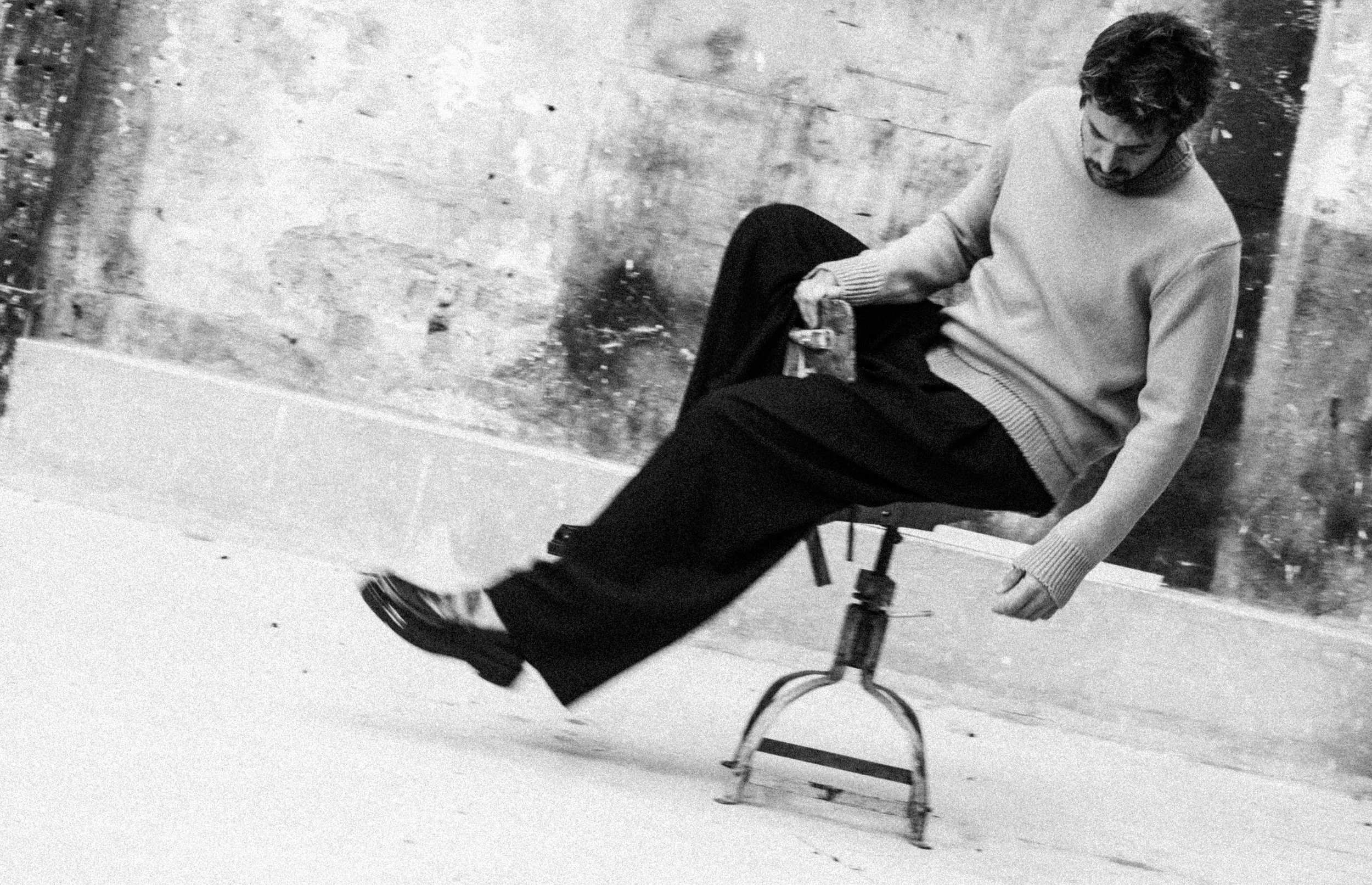
Sweater and shoes MAISON MARGIELA, pants SYSTÈME.
LB __ Generous, kind, and funny.
DG __ All very good ones!
LB __ I’m not going to give you the bad ones. [laughs]
DG __ [laughs] Fair! If your life right now were a film, what would this chapter be called and why?
LB __ I’d call it “Turning Patterns into Strength.” Lately, I’ve been understanding a lot about myself, the things that have guided me, my inner voice, patterns from childhood. There’s been a shift where I’m learning to recognize those patterns and turn them into strength.
DG __ Can you give an example?
LB __ Sure. For a long time, I was afraid of not being validated, accepted, or loved. I would people-please, go the extra mile, and ignore my own desires. Eventually, I resented others for not acknowledging the sacrifices I made. Now, I know how to say no, set boundaries, and verbalize my desires without fear of losing love or acceptance. The secret was learning to love myself. Once I did, I didn’t need anyone else’s validation. I’m turning those old fears into strength.
DG __ That’s so powerful. I think that’s the key, isn’t it? Realizing that the love and validation we seek from others are really reflections of what we give ourselves. Any other patterns you’re transforming?
LB __ I’d say compassion. I used to feel like an imposter, like I didn’t deserve attention, no matter how hard I worked. Now, I understand I need to give myself compassion, to appreciate the beautiful things in my life, and recognize that I deserve them because I work hard and pour my heart and soul into making people feel seen and cared for. Now, I give myself compassion, and I don’t feel ashamed of being a good human being.
DG __ That’s such a beautiful perspective, Lucas. Thank you for sharing. It's a reminder for our readers that strength and kindness often go hand in hand.
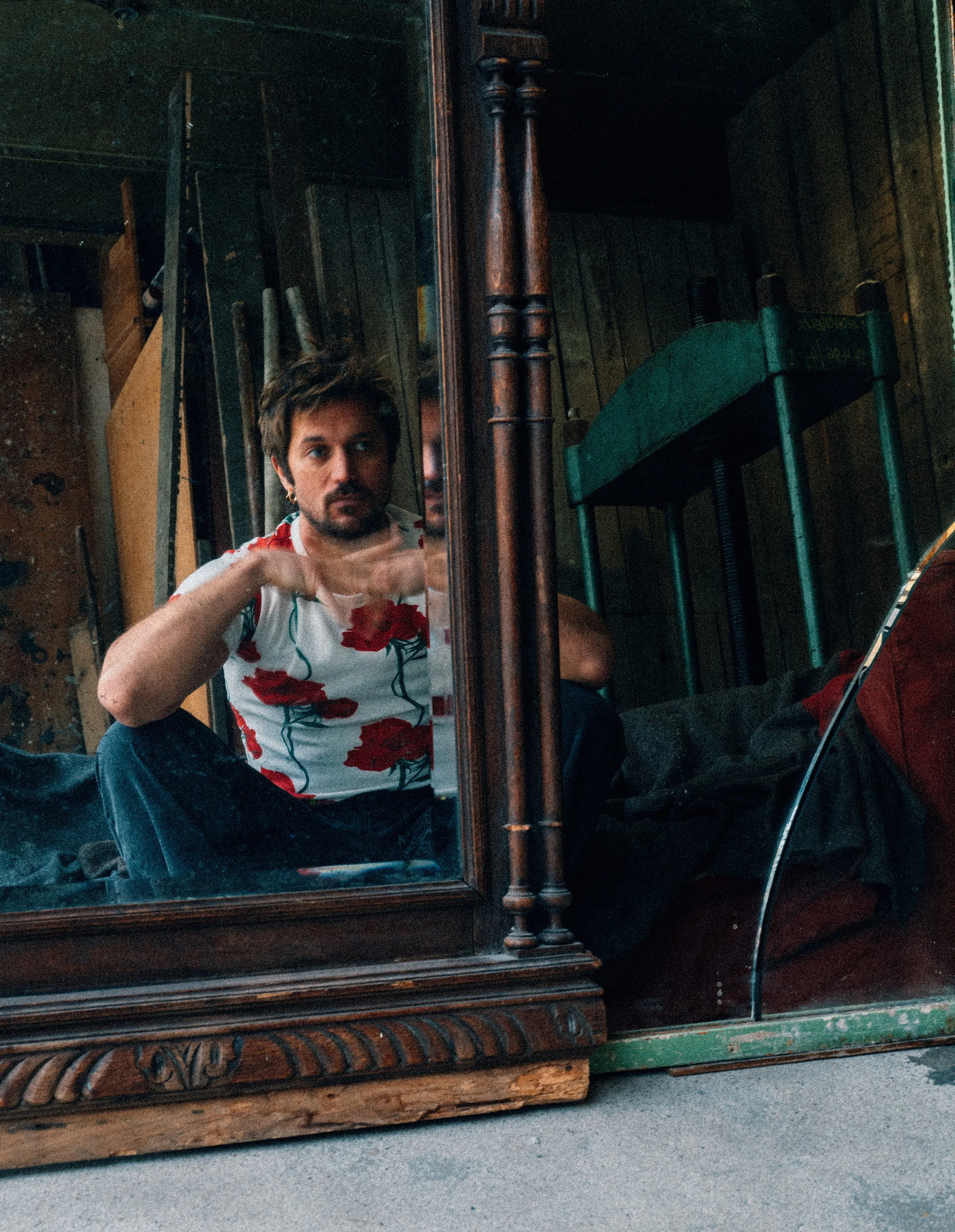
Top KENZO, pants THE FRANKIE SHOP, earring MAZARIN.
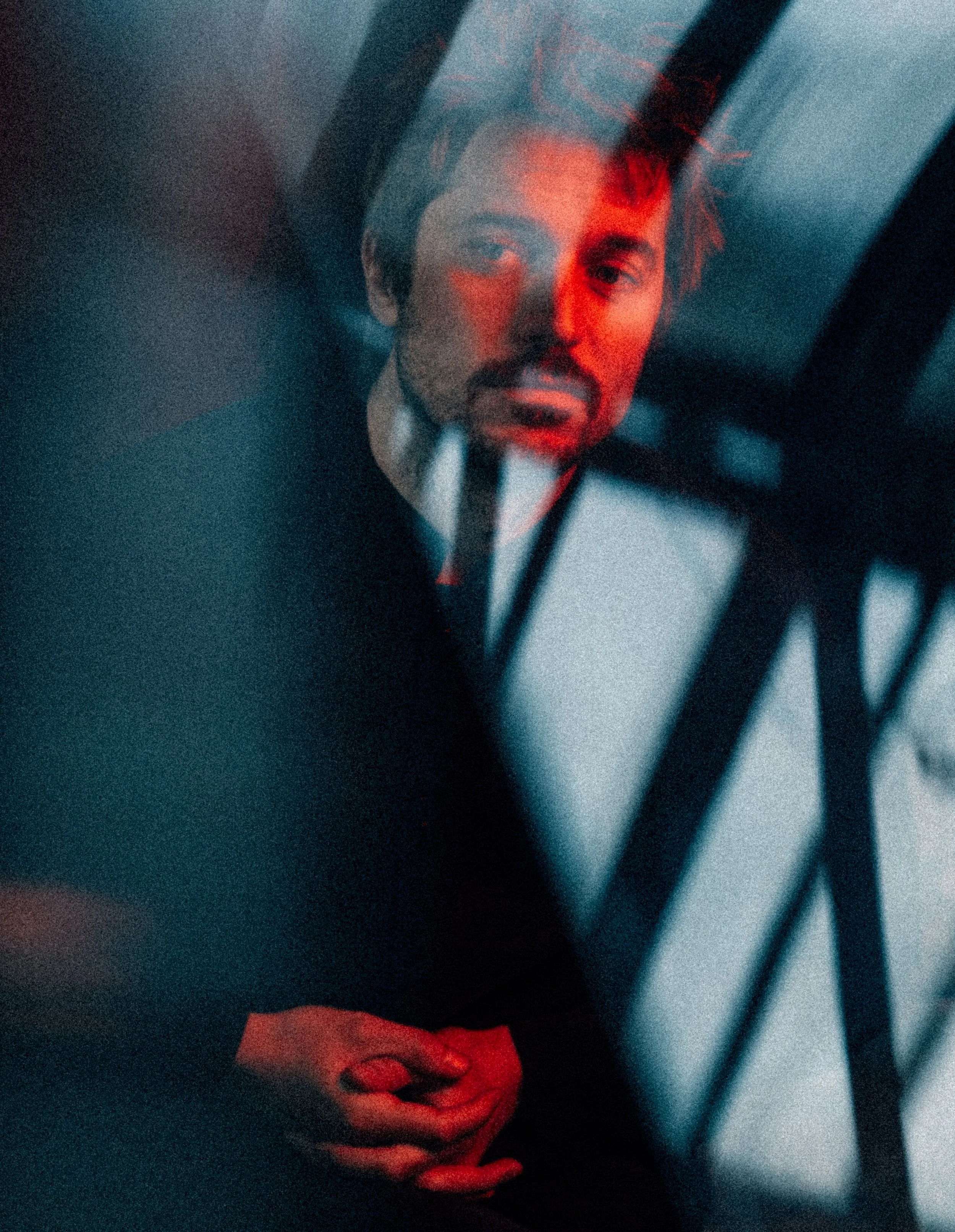
Shirt OFFICINE GÉNÉRAL.
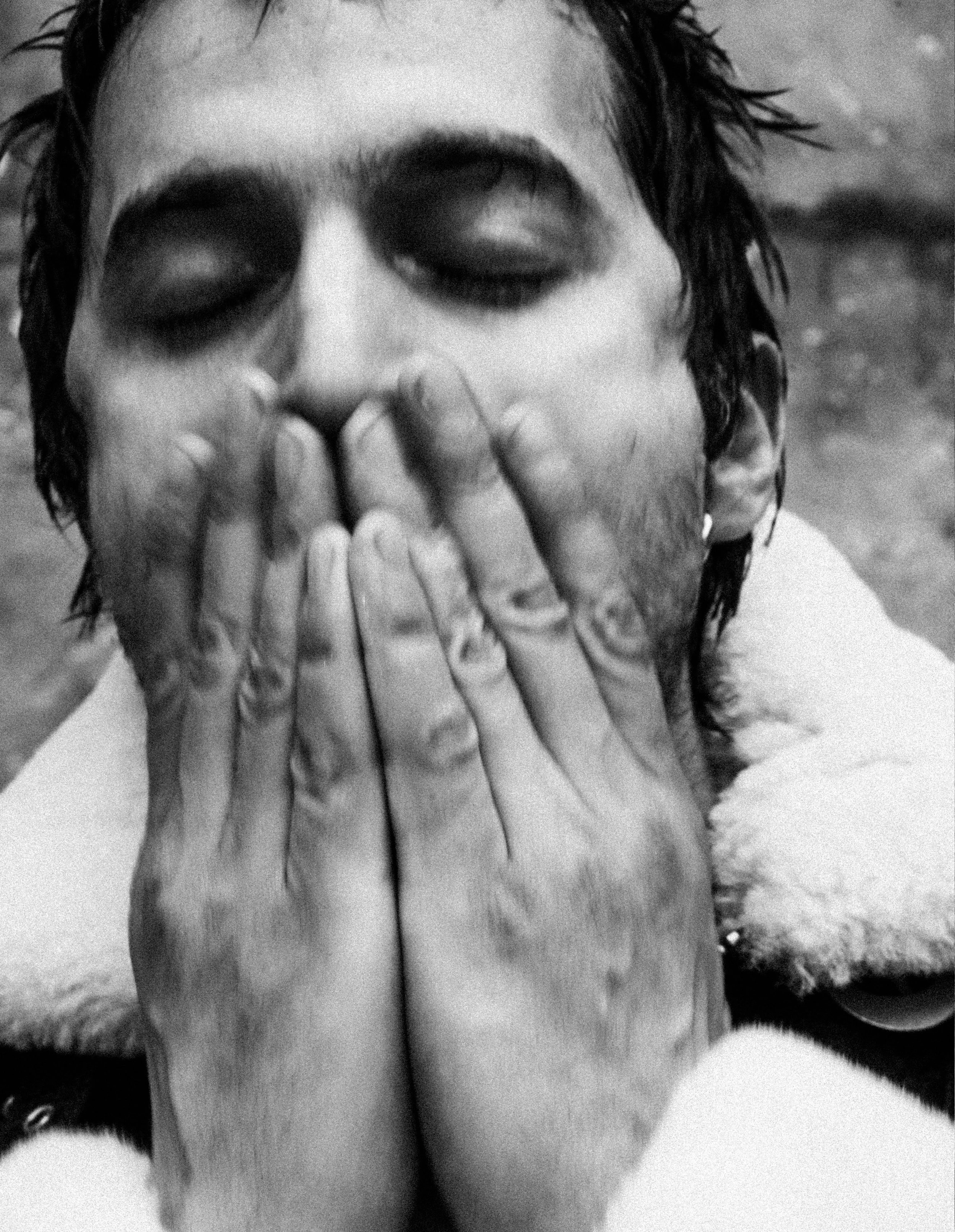
Jacket SCHOTT, tank top RON DORFF.

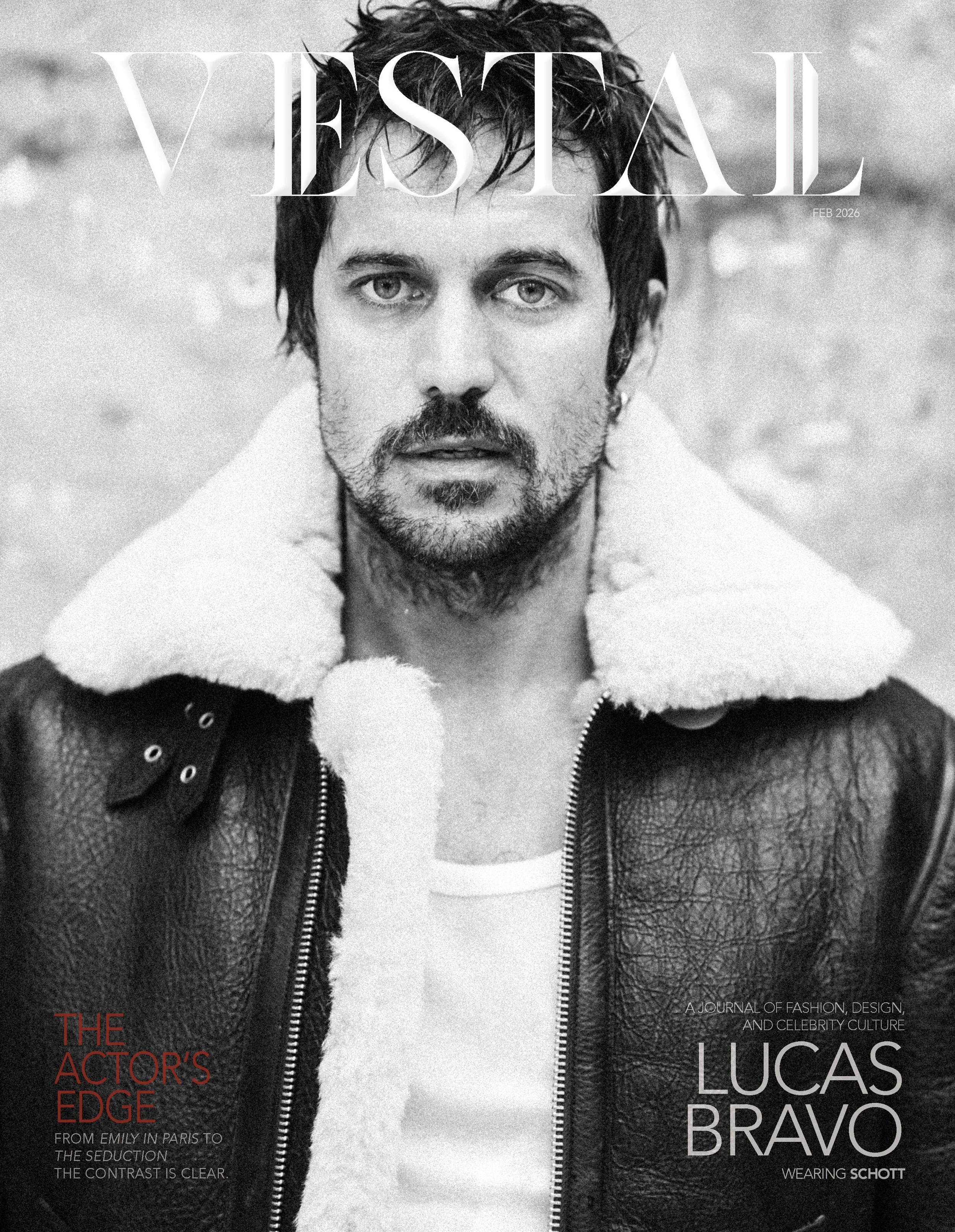
WEARING SCHOTT
Photography Théo Gosselin (LGA Management), Styling Clément Lomellini, Producer Clara Pandolfi (LGA Management), Interview David Gargiulo, Groomer Kelly McClain (A-Frame Agency) using Tatcha on skin, Digital Technician Anthony Parisey, Light Assistant William Nothin, Stylist Assistant Alice Gilbert, Talent Lucas Bravo (Narrative PR), Location Artefact studio - Atelier Eiffel
