

DECEMBER 2025, THE GOOD LIFE FACTOR
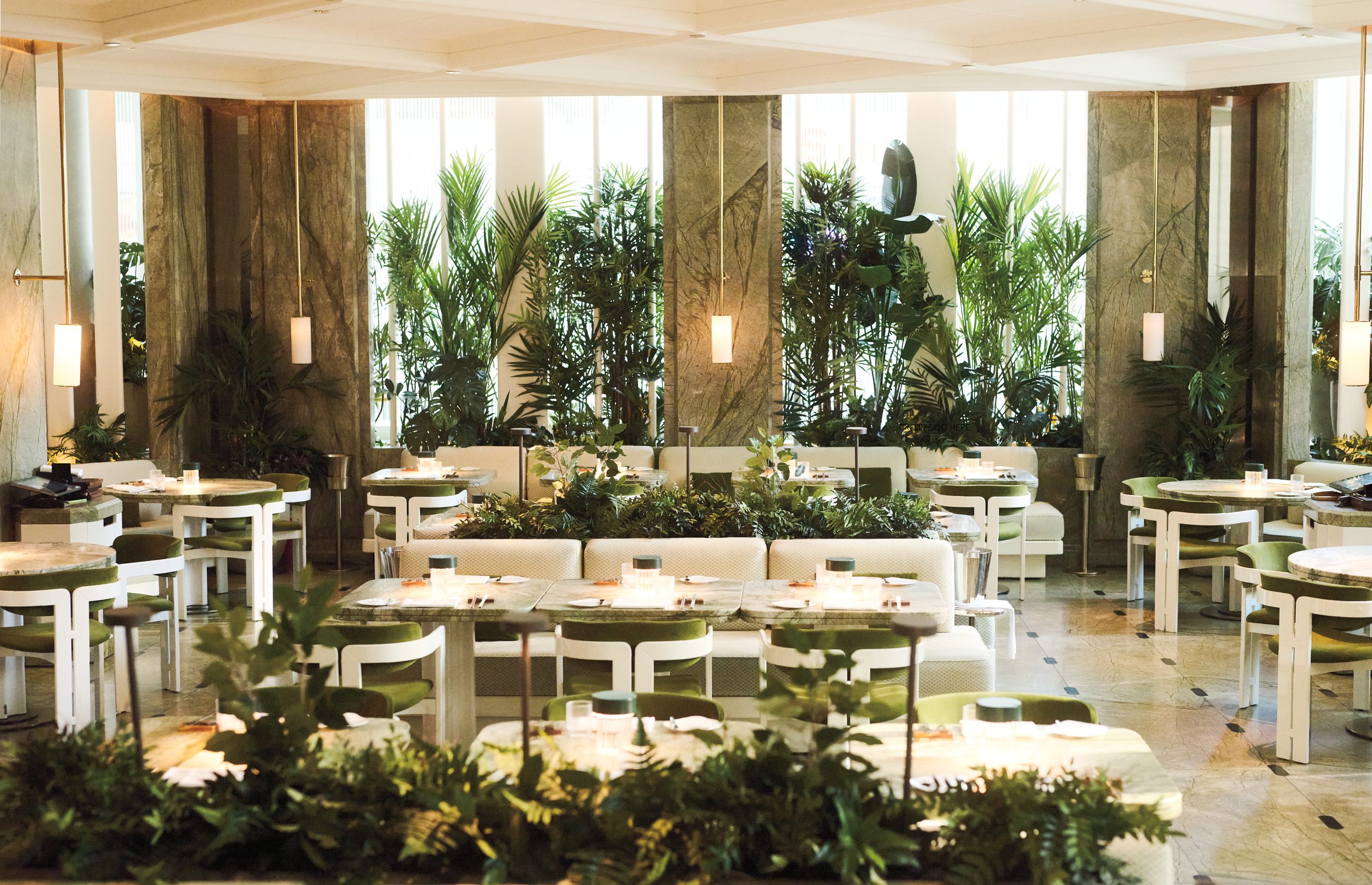
610 LEXINGTON AVE. NEW YORK, NY
“FOR ME, THE FEELING I WANT GUESTS TO LEAVE WITH IS CALMNESS. A FEELING OF PEACE, WHERE EVERY DETAIL HAS A REASON.”
— ALAIN VERZEROLI
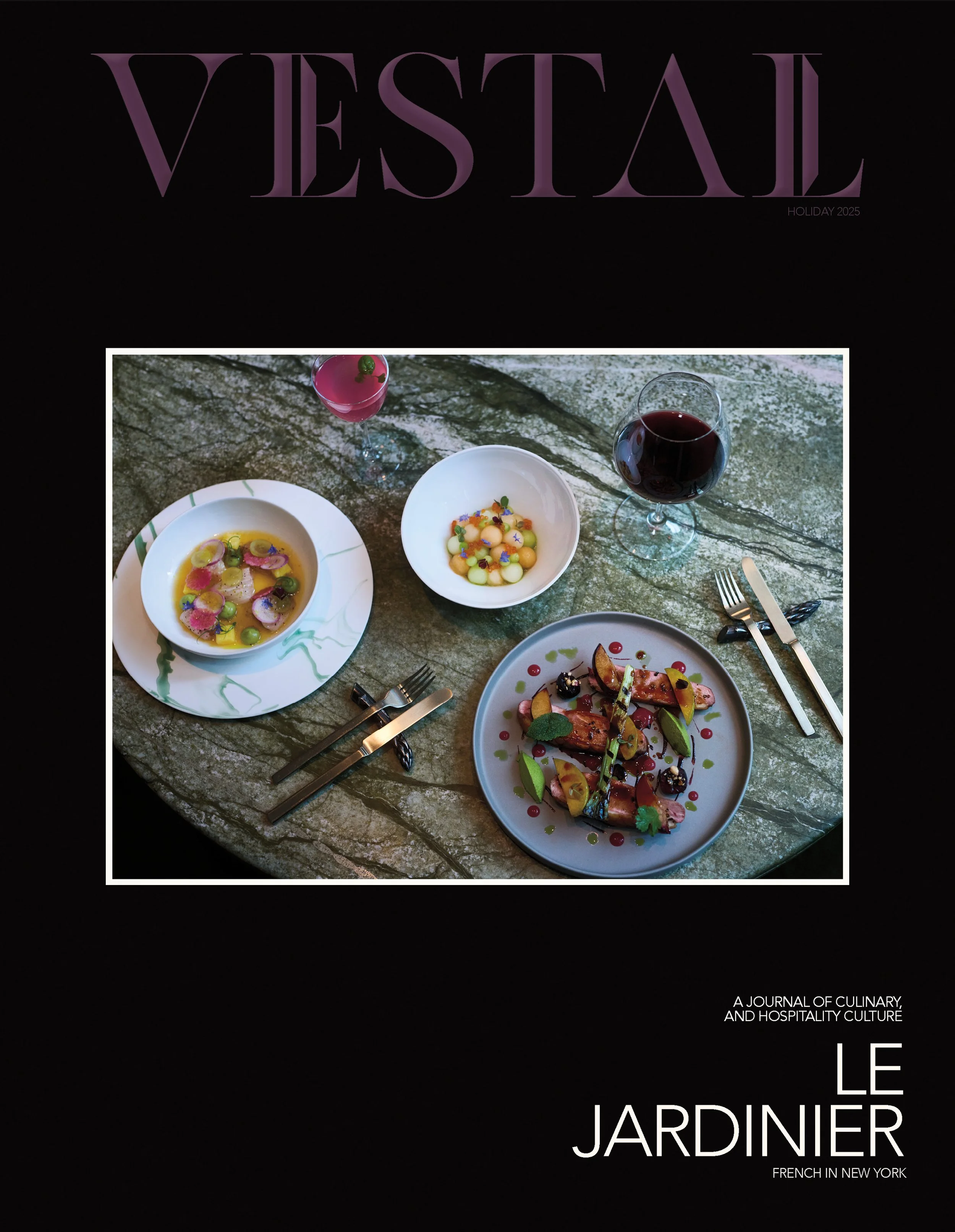
UPSCALE DINING
Dish EXECUTIVE PASTRY.
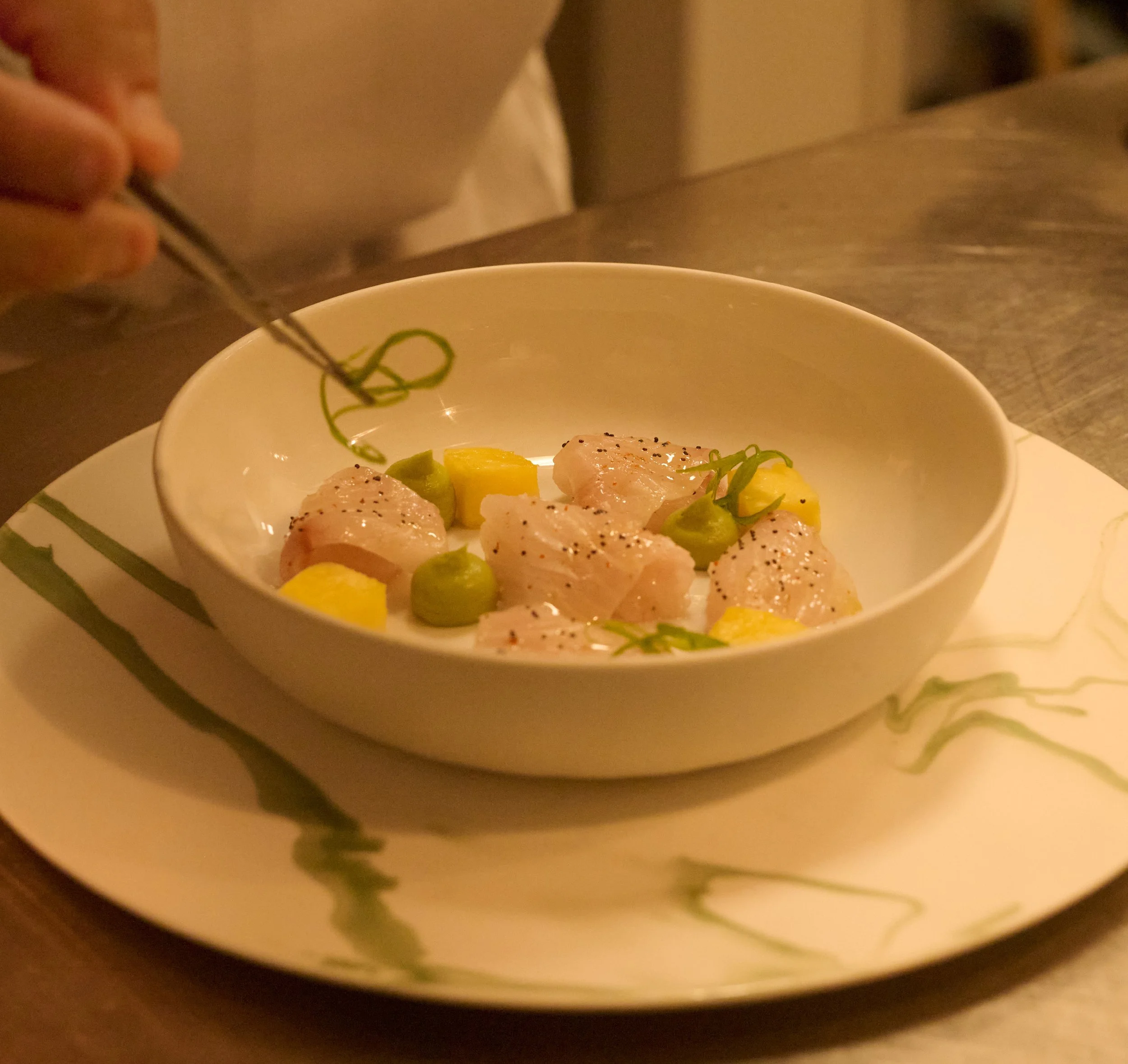
Dish EXECUTIVE PASTRY.
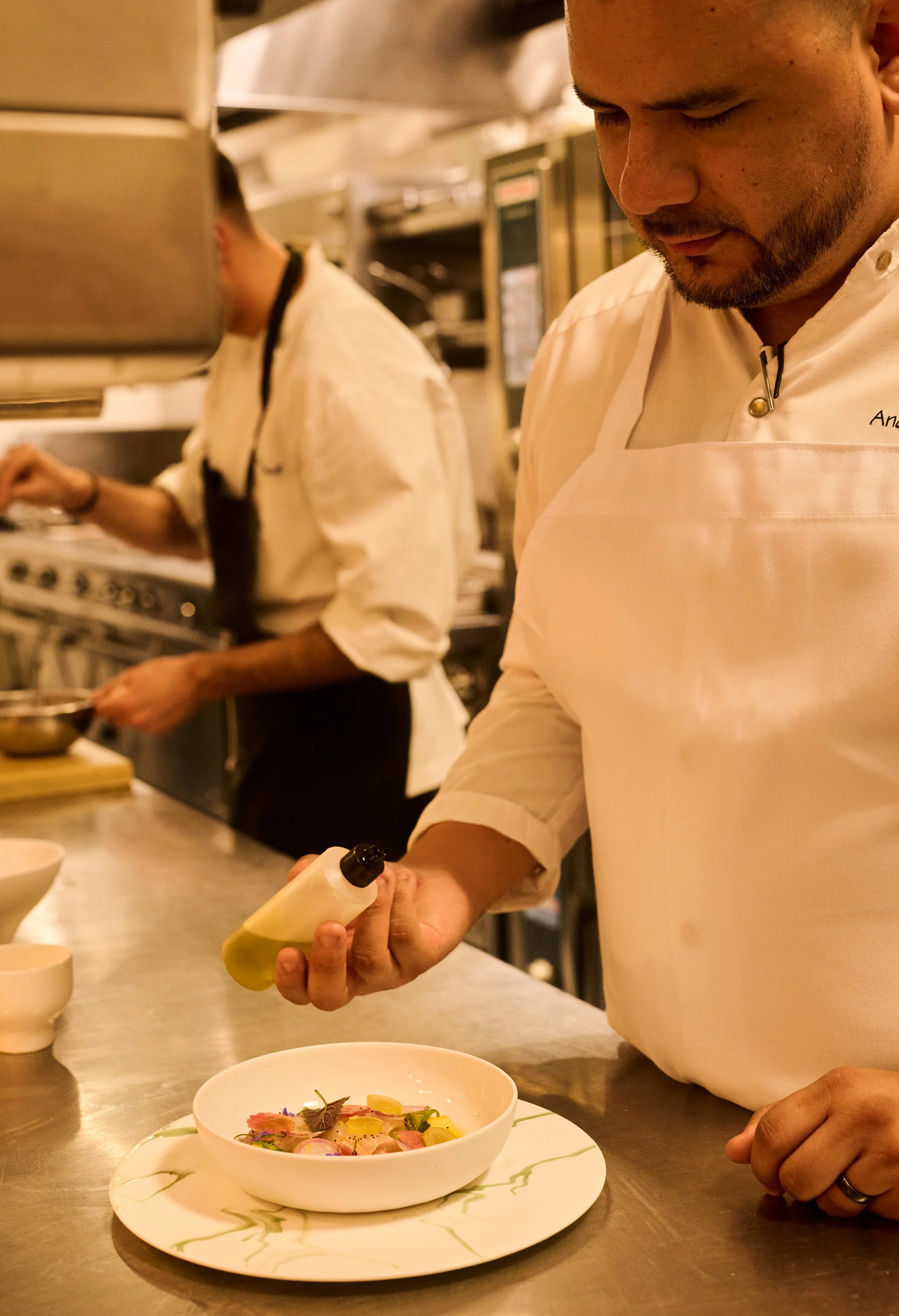
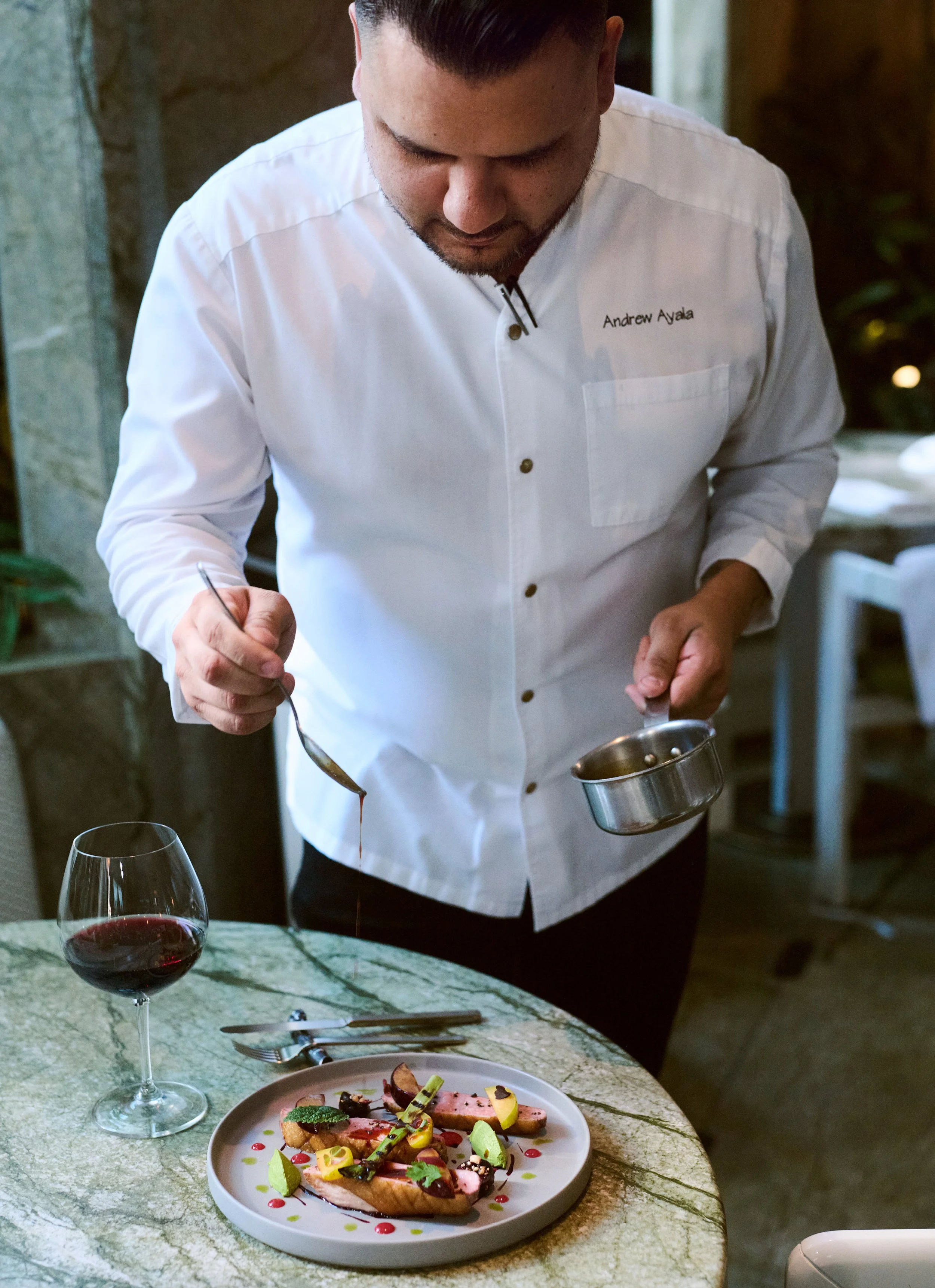
Vestal had the chance to step inside the kitchen of Le Jardinier with Executive Chef Andrew Ayala. Watching him work was like seeing the restaurant’s heartbeat up close. There was confidence and focus in every small motion. Ingredients came together in ways that felt easy but considered. Seeing the experience made everything feel flavorful. It reminded us that behind all the beauty prepared for us in the kitchen are chefs who connect with what they are making, and invite you to connect with it too.
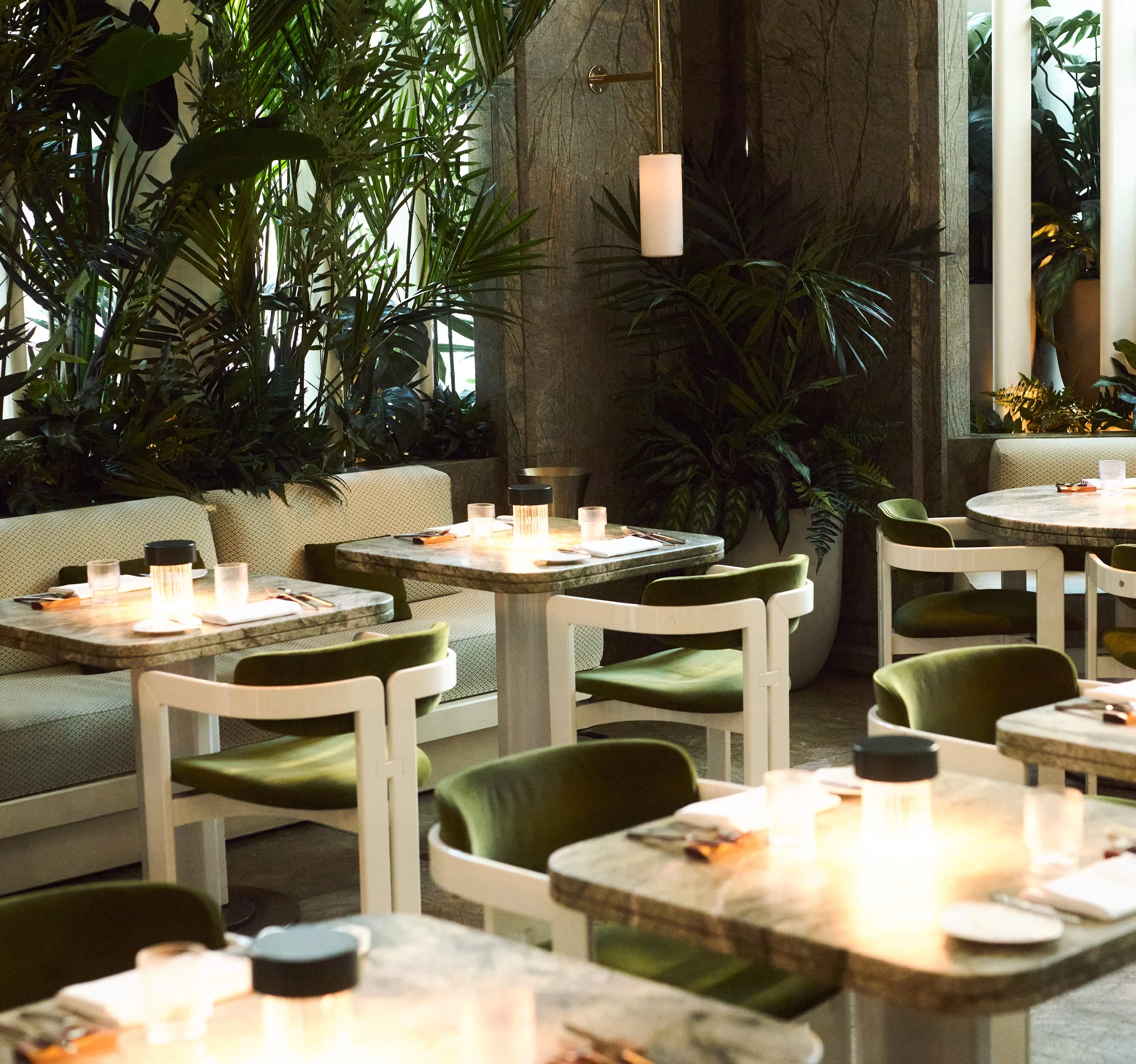
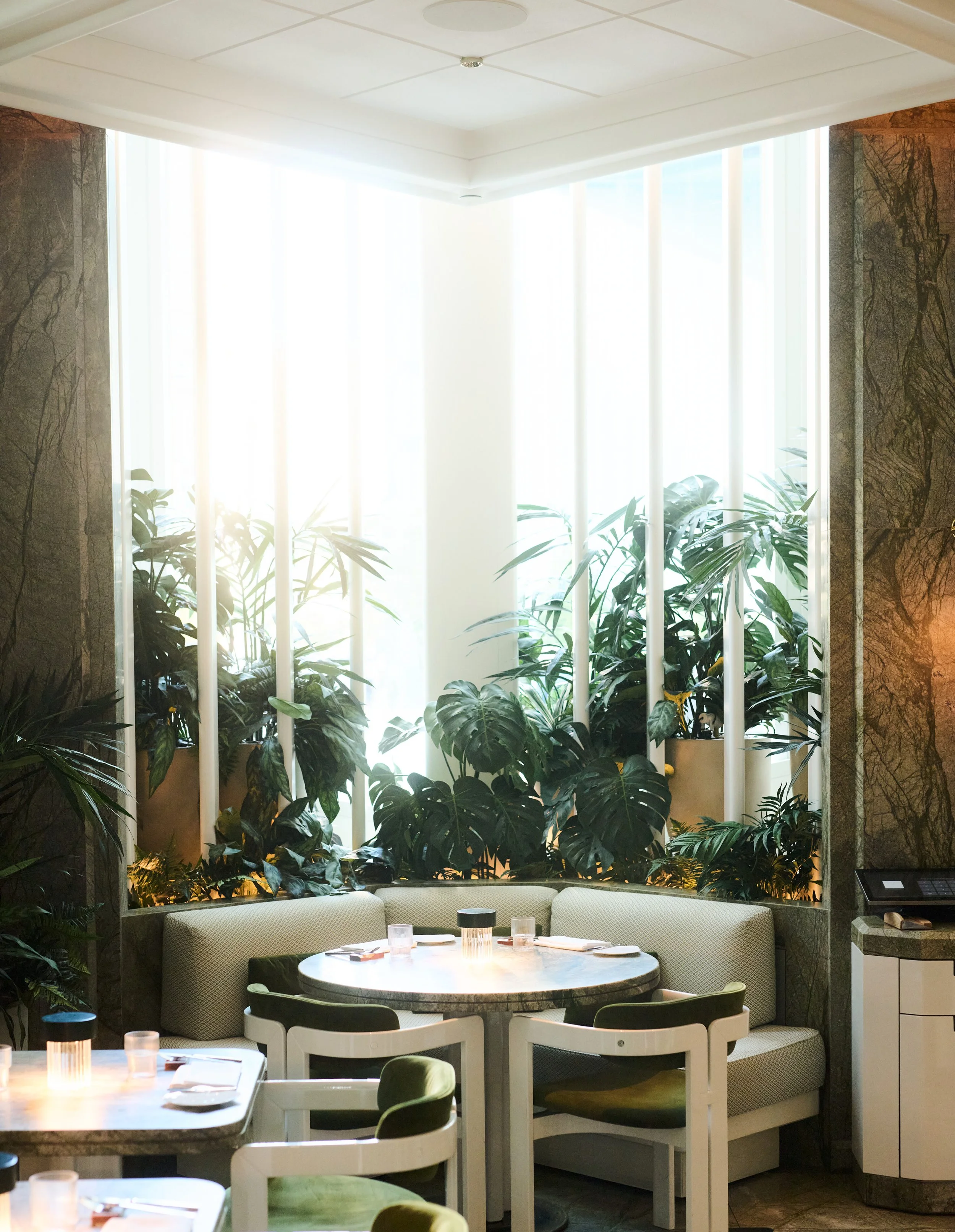
In the heart of Midtown Manhattan, amid the city's buzz, lies Le Jardinier, a serene green oasis where technique, thoughtful design, and a respect for ingredients converge. Here, French culinary tradition meets modern sensibilities, and vegetables take center stage. Every dish is a study in balance and intention, every detail of the space, from the rounded marble tables to the vertical slits drawing the eye toward sunlight, carefully curated to complement the dining experience. At the helm are Culinary Director Alain Verzeroli
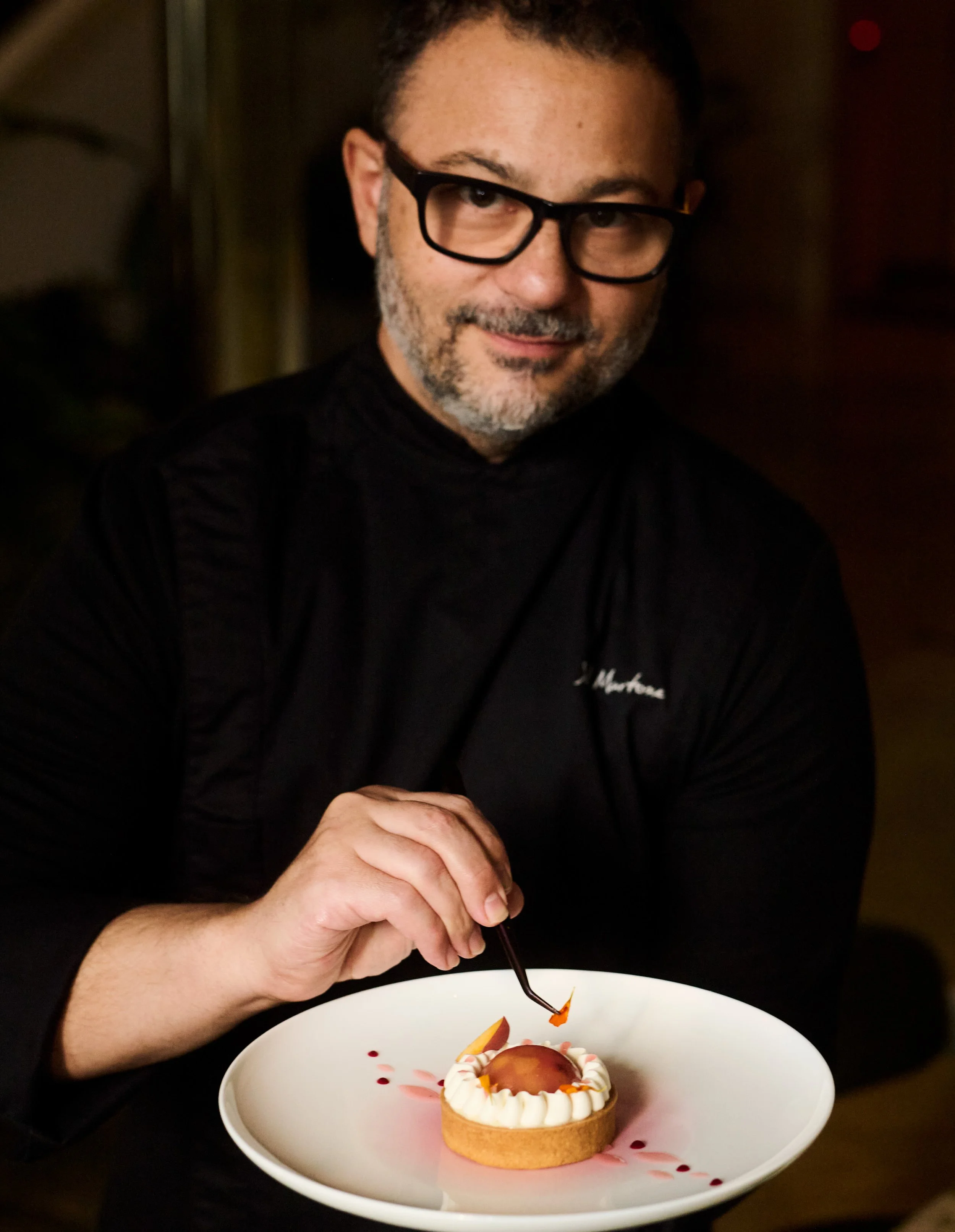
and Executive Pastry Chef Salvatore Martone, students of the late, celebrated Monsieur Joël Robuchon. For them, cuisine is both art and science, a medium through which memory, seasonality, and technique intertwine. A carrot amuse bouche may evoke the soft light of a misty morning, while a pear tart can summon the warmth of a sunset. Ingredients are treated with reverence: apples caramelized until translucent, strawberries layered to highlight their natural sweetness and acidity, and fish infused with fragrant oils to extract every subtle note. The goal is always clarity, depth, and surprise; flavors that feel both familiar and unexpectedly vibrant. Yet Le Jardinier is just one expression of a broader vision. Across the Le Bastion Collection, Verzeroli and Martone bring the same philosophy to a variety of spaces, from the inventive Bar Moon in Houston to the seasonal explorations of L'Atelier Robuchon in Geneva. Each location has its own character, yet all share the same values: a respect for local terroir, an acute awareness of seasonality, and a commitment to crafting experiences that are both sophisticated and welcoming. The approach is holistic: the atmosphere, the plating, the lighting, and even the verticality of Joseph Dirand's design all contribute to a sense of harmony that elevates the culinary experience. Across continents, Verzeroli and Martone shape worlds where design, flavor, and refined taste merge. In their hands, cuisine becomes a form of storytelling, and every restaurant is a chapter in a much larger narrative: one that celebrates nature, honors memory, and elevates the everyday through what can only be described as The Good Life Factor.
PHOTOS BY KEVIN SINCLAIR INTERVIEW DANIELA HERNANDEZ
CULINARY DIRECTOR, THE BASTION ALAIN VERZEROLI EXECUTIVE PASTRY CHEF, THE BASTION SALVATORE MARTONE
Dish EXECUTIVE PASTRY.
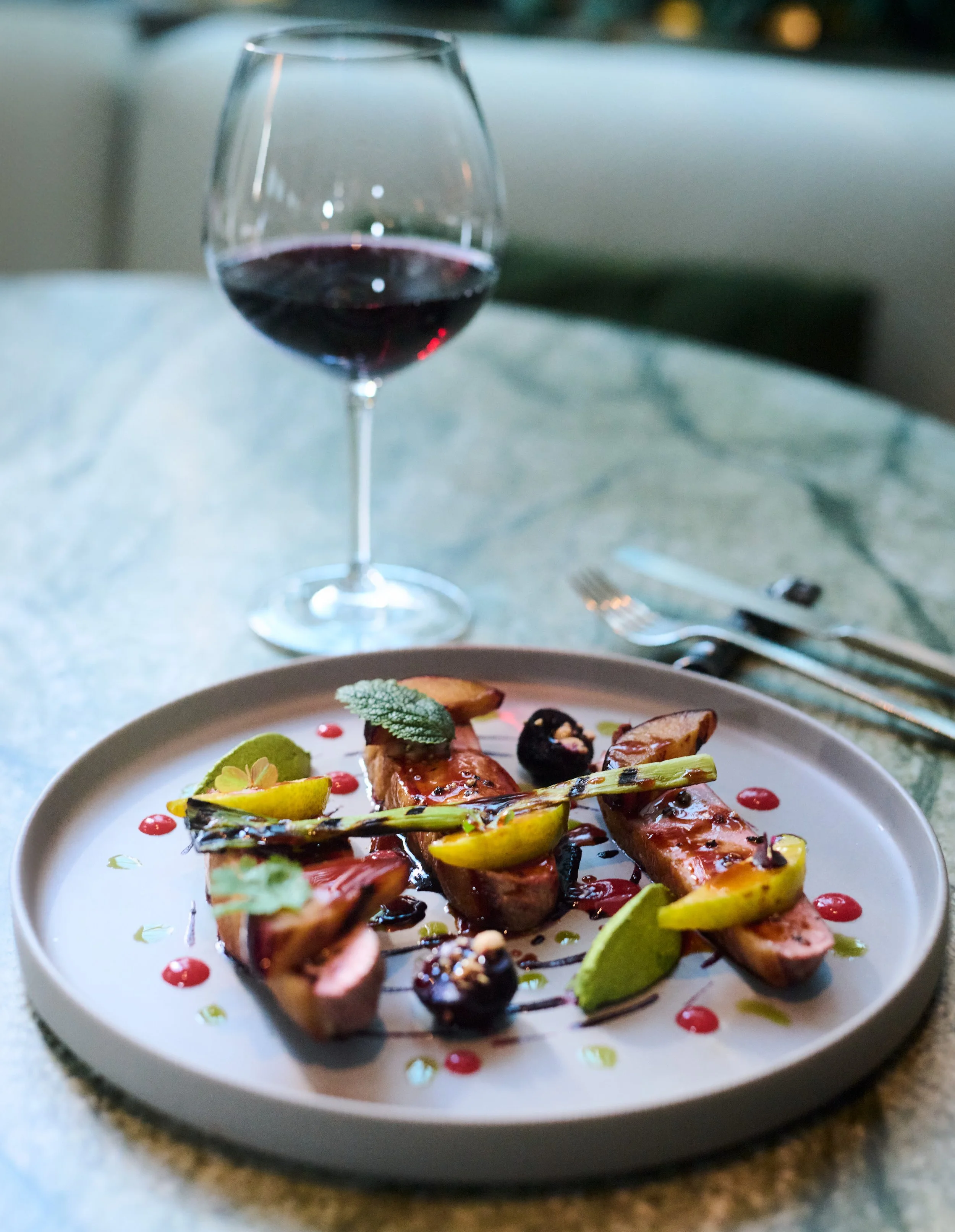
Le Jardinier Executive Chef Andrew Ayala prepares a signature dish. In this moment, he artfully drizzles
a rich sauce over a perfectly cooked duck, enhancing its flavor profile with a delicate touch. A beautiful example of culinary precision and creativity, showcases expertise in flavor pairing and presentation.
Daniela Hernandez __ I got to see the space before it filled up with people. There was a stark contrast between very sharp edges and rounded curves in everything from the furniture to the wall of mirrors at the entrance, and even in the dishes themselves. You spent a lot of time in Japan, where that is a key architectural style. Was that part of the inspiration?
Alain Verzeroli __ Yeah, the interior designer achieved something very special. For me, it’s very interesting because most of the material is marble, which is very cold. At the same time, the details, like the rounded table and rounded [marble] pin tile on the flooring, make everything feel really warm. The presence of all the greenery does that as well. I think it's very inviting. It's really quite a serene atmosphere.
Daniela Hernandez __ My meal was very colorful. It reminded me of the different tones of light I might experience throughout the day. The amuse bouche, a carrot cake, was bright yellow, like a misty morning sun. The pear tart I had for dessert looked like a sunset on a plate. Is that intentional?
Alain Verzeroli __ Yes. Some dishes belong more to the atmosphere of the evening or more to the atmosphere of the day because of the saturation or lack of color. At Le Jardinier in New York, the restaurant is filled with natural light, which is very nice. But at night you really experience a different restaurant because the light is more subtle. It's more sexy; it's more dim. We’re also playing off the energy of our customers. At lunch, you sense this kind of energy floating in the air, as people stream in and out from all the offices around us. At night, people have more time. They're more relaxed. That also translates into how we design our dishes.
Salvatore Martone __ A hundred percent. For lunch, it can't be extremely filling because people need to go back to work. They also expect speed. But dinner can be more indulgent and take more time even to prepare the dishes.
Daniela Hernandez __ I found some of the dishes to be pleasantly surprising. For example, the port-poached pears in my salad visually reminded me of plums and my brain had a hard time adjusting to that. That was surprising. Do you enjoy playing with diners’ expectations?
Salvatore Martone __ I like to surprise guests! I like to give you something unexpected and more wonderful than what you might have imagined from reading the description on the menu.
Alain Verzeroli __ Yeah, I think it's not always intentional like disguising or camouflaging ingredients. Sometimes, because of the techniques we're applying, food may not look like you expect or reveal unexpected layers and subtleties. That’s the beauty of it, the technique allows the ingredient to shine. For us, cuisine begins with respecting the ingredient, choosing the right technique, the right cut, the right seasoning, so that the ingredient can truly express itself.
Daniela Hernandez __ Can you give me an example?
Salvatore Martone __ When you caramelize apples, you want the apple to be completely translucent. You want beautiful amber colors. So, you steam them first and then you caramelize. If you try to caramelize directly, the apples will look opaque and have an ugly color. But the customer is probably not aware of this. Of course, if they ask, you can explain it. But normally, customers judge from the aesthetic, and most importantly, the flavor.
Daniela Hernandez __ I had that kind of sensory experience with the golden truffle cocktail. I’d never tasted anything like it. It felt like putting my face into a bag of fungi in the best possible way. Alessandro Fagorzi, your director of restaurants, was kind enough to explain how the bar used a “fat wash” to infuse the liquor. He said that drew the aromatics out and made the flavor more intense. It certainly felt that way.
Alain Verzeroli __ I really want to try it! I’ll be in New York next week, and this will definitely be at the top of my list. These days, creativity extends far beyond the kitchen or pastry department. Our bartenders like exploring! Very recently, Salvatore and I were in Houston to open Bar Moon, which is also part of the Bastion Collection. We witnessed our team of mixologists prepare all their ingredients: the syrups, bitters, and extractions. It felt like I was discovering a new world. I was really astonished by the extraction of flavors. It was an eye-opening experience.
Salvatore Martone __ It is a science mixed with a little bit of art. [laughes]
“I LIKE TO SURPRISE GUESTS WITH SOMETHING UNEXPECTED AND MORE WONDERFUL THAN WHAT THEY IMAGINED FROM THE MENU.”
— SALVATORE MARTONE
Dish EXECUTIVE PASTRY.
Daniela Hernandez __ So across bars, restaurants and geographies, how do you keep a sense of cohesion?
Alain Verzeroli __ What is very important for me is to respect the terroir. Every restaurant belongs to a surrounding terroir, and we are really willing to explore the natural bounty around us. That means you need to have awareness about seasonality and what people are growing around you. It's almost snowing already here in Geneva, but Miami is still hot, right? So, of course, it will affect the dishes and the ingredients we use. So for me, the essence of Le Jardinier is the respect for the slow evolution of each season. There are way more than only four seasons. Mastering those subtle changes is exciting. I lived in Japan for 18 years. Japanese people are very close
to nature. They praise and celebrate it. Their palate, their sensitivity, allows them to recognize subtle shifts. For example, with a single type of fish, they can taste the transition from one season to the next; the way the fish becomes slightly fattier as it prepares for colder waters. They really master these small, delicate changes in ingredients, which is fascinating to witness. For me it’s important that the chefs I mentor know my ethos, values, and how important it is to respect nature. Salvatore Martone __ Both Chef Alain and I are students of Monsieur Robuchon. One thing he always emphasized was this: if I make a strawberry dessert and I have to tell you it’s a strawberry dessert, then I’ve failed. You should recognize it instantly. So the philosophy I carry, especially in pastry, is to express the true flavor of the main ingredient. If the dessert is about strawberries, I want you to taste real strawberries. Maybe as a sauce, a mousse, fresh slices. I want to bring it forward in multiple ways so the flavor is powerful and unmistakable. Of course, sweetness is inevitable. It’s a dessert; it will be sweet. But you also need something that pops. For me, that comes from acidity or bitterness or even salt. Sugar must be there, but only as much as needed. It should never dominate. If a dessert doesn’t have a bright pop of acidity, like strawberry, passion fruit, or lemon, then you need another dimension: the bitterness of caramel, chocolate, coffee, or roasted nuts. You need that contrast to make the flavor come alive. It’s about layering flavors to create something more complex. Whether it’s a fruit-based dessert or something creamy or chocolatey, my goal is always the same: find the balance. For example, if you’re working with hazelnuts, which are high in fat, and you don’t use enough sugar, the fat becomes overwhelming. Everything must be in harmony.
Daniela Hernandez __ For your favorite dish you’ve ever created, what were the sensations you were really trying to highlight? And can you tell me what that dish was as well?
Salvatore Martone __ I think a dessert needs to have a pop; something that immediately catches your attention when you taste it. One of my favorite signature desserts is the Butterfly. It’s built around raspberry and yuzu. Even though yuzu has that lime-like brightness and is technically the star, the raspberry actually comes through even stronger. That’s the pop. Then the yuzu adds this fresh, almost floral note. I like layering those sensations. There’s a sweet raspberry jam that is intentionally a touch too sweet, but it’s balanced by a yuzu mousse that has almost no sweetness. They counter each other. Then I add pistachio, which brings a warm, grounding note. I love combining all these elements. In terms of flavor, I work within traditions. I create combinations people can recognize, but I present them in a way that isn’t traditional. I want every dessert to have something familiar and something surprising. That’s the balance I’m always looking for.
Alain Verzeroli __ For me, one dish stands out from a few years back when I was in Japan. Whenever Monsieur Robuchon visited our three-star restaurant in Tokyo, I loved presenting new creations to him. He only came three or four times a year, so I couldn’t wait for his visits to test ideas. There was one dish I created that he loved so much it ended up being served in every restaurant that carried his name. It was a sea bass dish with lemongrass, turmeric oil, and a lemongrass cream sauce, along with leeks and confit tomatoes. The flavor was very light yet incredibly powerful. The technique behind it was essential. I discovered that if I infused the oil with turmeric and fresh lemongrass, both the green tops and the roots, for exactly two hours at a gentle temperature, I could extract both the spice and the herbal notes in perfect balance. With that fragrant oil, I cooked
Dish EXECUTIVE PASTRY.
the fish very slowly, constantly basting it. The fish was essentially confit in the oil, without any harsh heat. It wasn’t pan-fried; it was gently permeated by the aromatic oil, which infused the flesh with flavor. The oil and the cream worked beautifully not only with fish but with scallops, lobster, even certain poultry. It became almost a universal sauce for us. It’s exciting to see that even today the legacy of that dish, and its technique, still appears in different preparations across our restaurants.
Daniela Hernandez __ I really enjoyed the bouillabaisse because it reminded me of a fish stew my mom used to make. I didn't expect to feel homey in Midtown Manhattan, which is perhaps the least homey place in the world. It brought back good memories. What memories have inspired you in the kitchen?
Salvatore Martone __ When I was a kid, I used to eat this mint ice cream with a stick of licorice in it. It was real licorice. I used to love it. At one point, I thought, ‘I should try to make a dessert with this.’ But I asked some people in the kitchen to taste it. Nobody liked it because nobody had this reference of licorice with mint. There are flavors that are particular to a person because of some memory. It didn't work out that time but I always wanted to use flavors like anise and licorice because they are very nostalgic to me. I used to be a bartender. So, a lot of time I make some pre-dessert or other things with alcohol because I like the combination. Eventually, I made this full dish with caramelized apples. I paired it with a chartreuse mousse that is predominantly anise-flavored. When you mix the chartreuse and this anise flavor with cream, it takes a different note. It becomes a little bit more floral and together with the deep caramel flavors results in a beautiful marriage and people like that. I don't understand why they didn't like the licorice with the mint, but they do like the apple and chartreuse a lot. So even if it's not exactly what I had as a kid, those flavors are coming back one way or another and influence my choice.
Alain Verzeroli __ You point out something very interesting about memories linked to a dish. I think for most of us, those memories tend to be tied to something more homey, warm, genuine and simple. I can’t name a favorite dish from my life because I’ve had so many experiences. But if I had to point out something today, it would not be in the category of very precise, high-level cuisine with a caviar entree and so on. My mother was Vietnamese and she made pho at home. It was so delicious. What is important when you're making pho is the broth. That makes the whole flavor of the dish. I remember my mother used to put a lot of fresh herbs and ginger and star anise into it. For me, my fondest memories are around this beautiful, very humble broth base to make the pho. To the point that nowadays, across all the restaurants, when making a chicken stock, I always ask to add some ginger roots and star anise. I think it really gives an extra layer to the intensity of the flavor of the broth, of the stock, which is the base of many sauces. So for me, the dishes I hold closest are the humble ones, and not something from a fancy French-style restaurant, but something more homey and that brings forth fond memories of childhood.
Daniela Hernandez __ If your preference is the more homey style of cooking, why do you choose professionally to cook in a more technical way?
Alain Verzeroli __ For the exploration of the techniques. It's all about exploring, mastering, and above all understanding. Going into the culinary world, it was going into a totally unknown territory. Little by little, you find your footing. You learn, you push yourself harder and your knowledge grows. Of course, you will never be able to master all the techniques because it's endless. But little by little, you build your taste and you have confidence. Nowadays, I wish to pass this confidence and this approach to the next generation working with me. It's about mentoring.
Salvatore Martone __ For me, one of the most challenging things is that a lot of people don't have a blueprint when they create new dishes or new desserts. I'm not trying to shock people by putting some crazy ingredients together just because it sounds interesting on paper. For me, it is knowing the ingredients deeply, the way they taste together and their interactions. And that's what I wish to showcase.
Creative Director Kevin Sinclair, Interview Daniela Hernandez, Production David Gargiulo, Culinary Director The Bestion Collection Alain Verzeroli, Executive Pastry Chef The Bastion Collection Salvator Martone, Executive Chef Le Jardinier Andrew Ayala, Location Le Jardinier, Public Relations The Bacchus Agency
Alain Verzeroli __ Yes. Every step in a kitchen should be intentional. Everything we do, and that Sal does, has intention and logic behind. There is a logic for the taste, a logic for the end result. That's why I always try to explain to the cooks, to the chefs that you need to truly understand what you are doing not only for yourself but also for others. You have to be able to teach them why they should be doing things a certain way, why a certain technique is wrong, why you don't take shortcuts. If you peel a carrot and you cut the carrot straight, it will develop a certain flavor. But if you cut the same carrot a little bit on the slant, the flavor will be different and more intense. You have to know this. You have to be able to understand the way things work. Intention is key in our culinary world.
Daniela Hernandez __ Why does the flavor change if you cut it just vertically down versus at a slant?
Alain Verzeroli __ Because of the fibers. It creates more surface area when cooking, so the flavor will be more intense. Similarly, there’s a reason why in Italy the Parma ham is paper thin. If you slice the Parma ham with more thickness, the flavor will be less intense. In every step, in every detail, there is a reason.
Salvatore Martone __ In pastry, it’s similar. For example, we have different jelly agents from agar, classic gelatin, iota, and xanthan gum. The difference is the temperature they melt at. So gelatin is great because it melts at the body temperature. So when you put it in your mouth, the release of the flavor is immediate. But agar melts at 25 degrees higher than gelatin. When you put it in your mouth, it doesn't release the flavor right away. It takes longer. So the intensity of the flavor is not the same. So that's why a lot of the time, gelatin is preferred unless you're vegan.
Daniela Hernandez __ That's fascinating. For somebody going into one of your restaurants for the first time, what kind of feeling do you want them to come away with?
Alain Verzeroli __ For me, it's a sense of calmness. A feeling of peace, where every detail has a reason. Each space is really different from New York to Houston, Miami and Geneva. Yet they all share the same values: the culinary philosophy, of course, but also the calming colors and warmth. They all share a common sense of harmony.
Daniela Hernandez __ I definitely felt that. I also kept looking either sideways towards the vertical slits by the windows or up towards the ceiling, which reminded me of clouds and sunrays.
Alain Verzeroli __ I found, always, that there is more energy and there is more dynamism in verticality. If you look at the horizon, it brings a sense of peacefulness, whether it’s a horizon in the seaside or countryside. It calms your mind. Verticality has a kind of energy that elevates you. It’s the trees, the rays of the sun, everything that goes high. You noticed that as well, maybe subconsciously. Your eye is drawn to those lines because you sense that energy. It’s about finding a natural balance.
AFTER HOURS
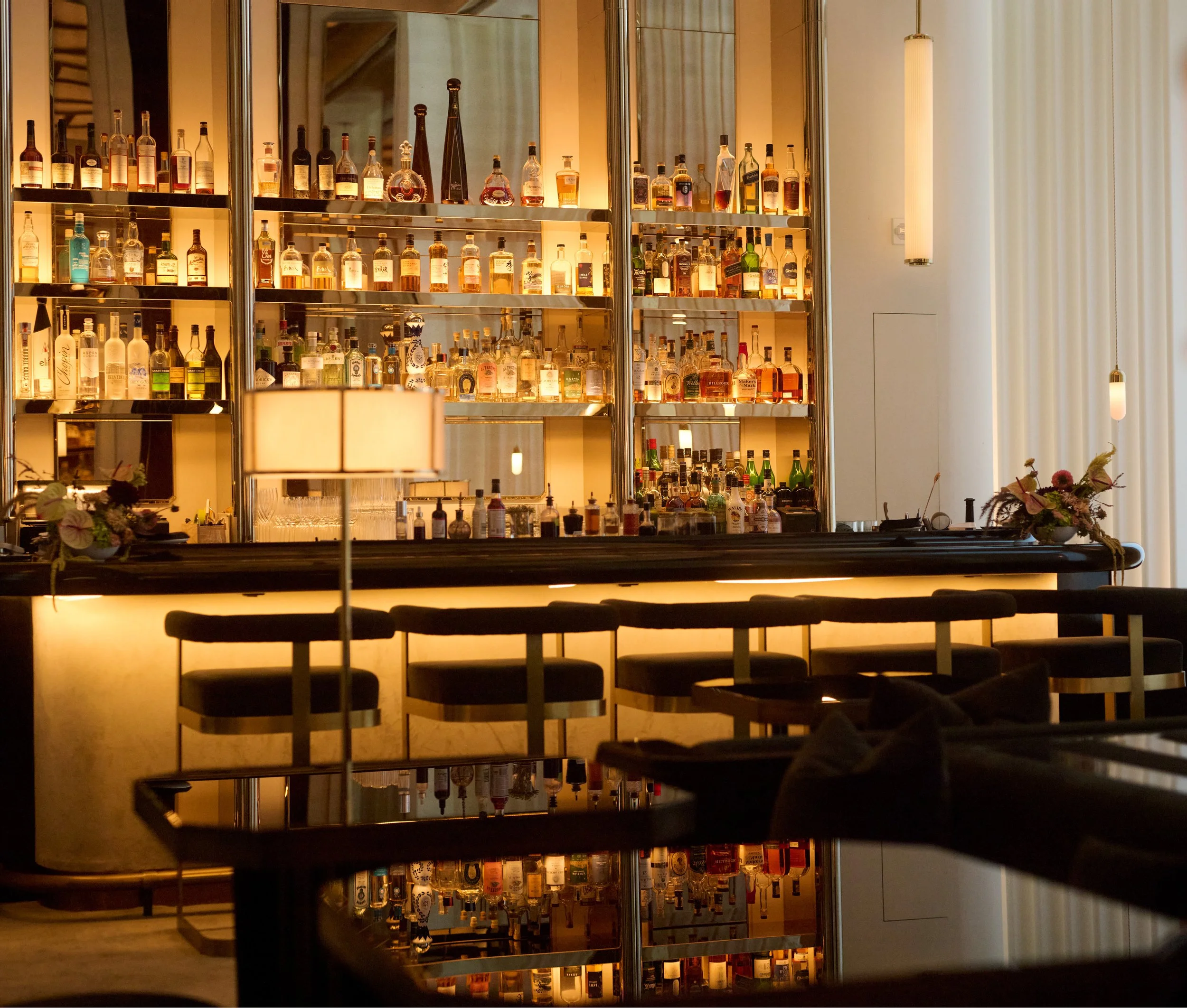
BAR BASTION
Tucked away just above the fine-dining sanctuary Le Jardinier, in the heart of New York City, sits Bar Bastion. A luxury cocktail lounge that feels like a well-kept secret for those in the know. The moment you walk up the sleek marble staircase of Le Jardinier, you sense a shift. The hum of the city fades, replaced by a soft glow, reflective surfaces, and the hush of plush velvet. With just 38 seats, Bar Bastion doesn’t shout, it whispers. It invites you to sink into a low banquette, raise your glass, and move at your own pace.
READ MORE
