

INSERT ALAÏA WINTER 2026
THERE’S TENSION, NOTHING FALLS AWAY, AND AND THE PRESSURE REMAINS
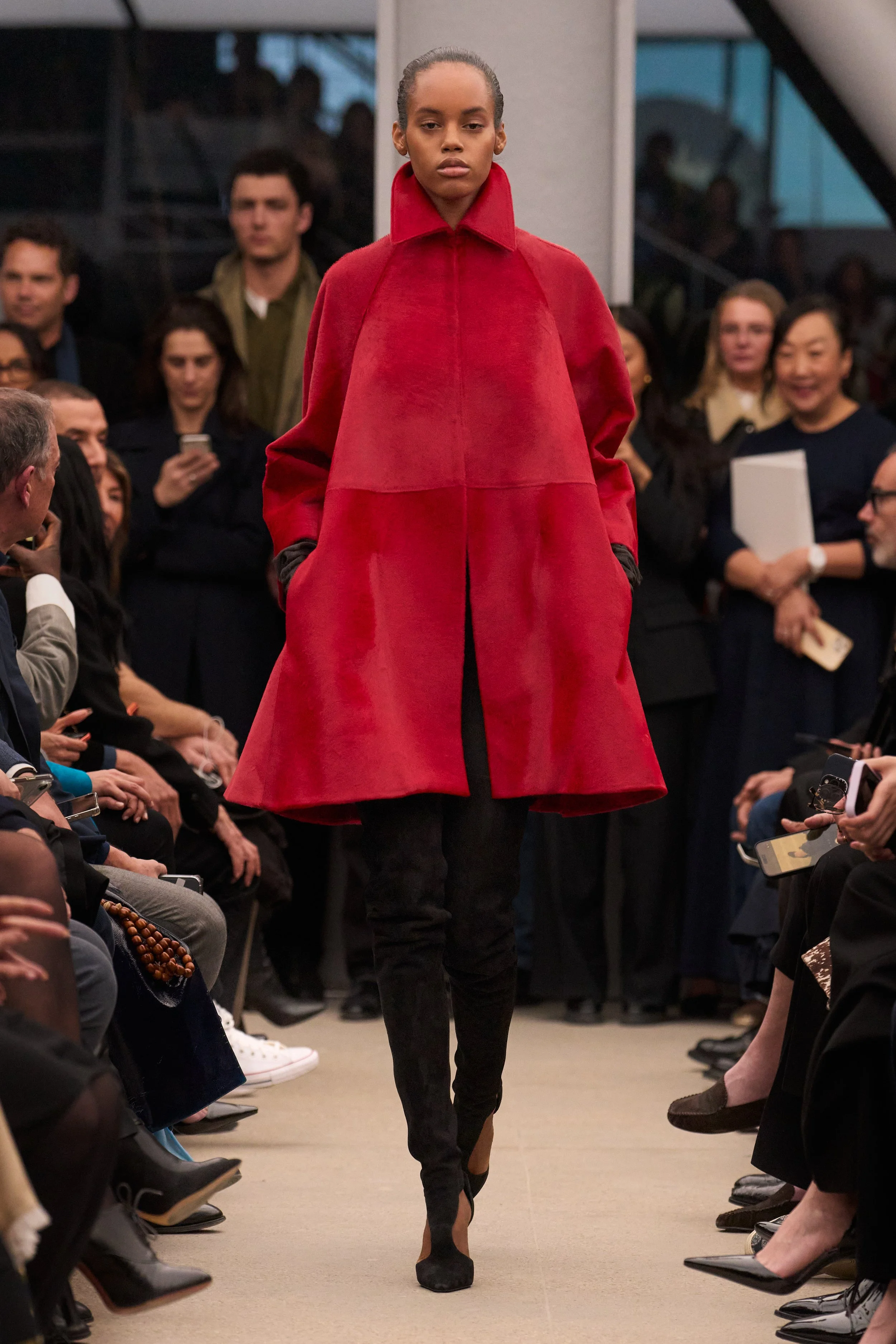
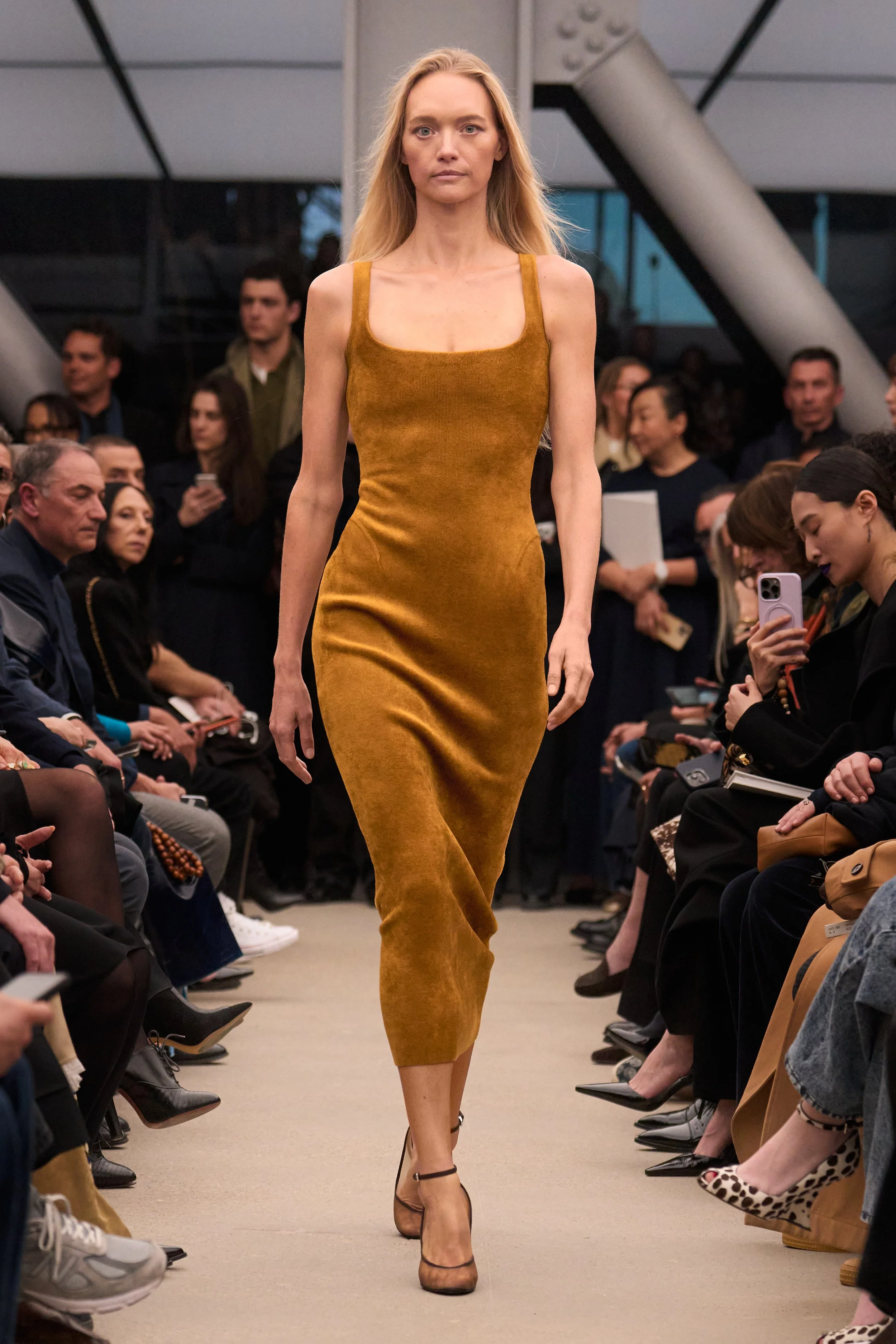
Presented during Paris Fashion Week Fall/Winter 2026, Alaïa under Pieter Mulier continues to set a tone built on sculptural and bodily proximity. The collection does not step away from the house vocabulary. Instead, it pulls it in, reducing the silhouette to its essential dialogue between skin, fabric, and construction. The opening establishes this immediately. Garments lock in close to the body, not as constraint, but as calibration. Knit constructions and engineered fabrics follow anatomical lines, creating silhouettes that feel drawn. There is no space between form and wearer. The body is not referenced; it is structured into the garment itself. Clothing is held between opposing forces: compression and release, softness and control, exposure and containment. Nothing fully settles. Instead, each look holds a reined-in push-and-pull. Fabric becomes the primary language of this system. Stretch knits behave like a second skin, absorbing movement while maintaining clarity of outline. Heavier materials introduce resistance, but never rigidity. Even at its most structured, the collection maintains a sense of flexibility, as if the garments are engineered to respond rather than dictate.
Courtesy of Alaïa.
Velvet appears throughout the collection as a recurring structural surface. It absorbs light rather than reflecting it, sharpening the silhouette and accentuating the body’s outline. Velvet functions less as texture and more as compression, a way of controlling visual depth while reinforcing form. As the collection progresses, volume is introduced sparingly and with intent. Coats expand outward in measured gestures, while body-skimming dresses contract inward, reinforcing the oscillation between expansion and restraint. Marking Pieter Mulier’s final season at Alaïa, the collection settles into refinement, with a clarity that says more than sentiment ever could. Mulier describes this directly: “There is a tension in the performance of the show… and a literal tension, a torsion, in the clothes.” That idea runs through the collection as a constant condition. Garments feel held between forces, never fully released, always slightly compressed into their own architecture. What defines this season is not reinvention, but intensification. Alaïa does not move away from its identity; it narrows it until it becomes almost internal. Silhouette is not expanded into a statement but reduced to structure. In this context, the collection becomes less about garments as objects and more about garments as conditions, systems that exist only through proximity to the body. What stays is not the image, but the pressure. A sense that nothing is fully released, yet nothing is held still.