
WHAT REMAINS OF THE SEASON FW26

ARTICLE APRIL 16, 2026
BY TINA DIMKOVSKA
Fashion month promises constant novelty. Every city hints at reinvention, every runway declares a new direction. Yet once the cycle ends, fashion reveals a different truth: only a handful of ideas possess enough conviction to survive beyond the runway.
FW26 was a season shaped by that sorting process in unusually visible ways, not just in the clothes, but in the industry itself. Rarely has a single season carried quite so many creative director transitions. The shuffling of chairs that had been building across 2025 delivered its full consequences: debuts, homecomings, sophomore collections, and houses still searching for their new language. To understand what FW26 said, it helps first to understand who was saying it, and more specifically, what they chose to say about the institutions they were inheriting.
Several major houses presented new creative leadership at Milan alone: Gucci, where Demna staged his first runway; Fendi, where Maria Grazia Chiuri presented her debut vision; and Marni, where Meryll Rogge took the reins. In Paris, Pierpaolo Piccioli and Matthieu Blazy were each settling into their second womenswear collections at Balenciaga and Chanel, respectively, while Jonathan Anderson was deepening his hold on Dior. The broader reshuffle also brought Louise Trotter to Bottega Veneta, Grace Wales Bonner to Hermès menswear, and Rachel Scott to Proenza Schouler. What united nearly all of them was a conspicuous lack of the tabula rasa instinct, the urge to wipe a house clean and start over. Chiuri had spent a formative decade at Fendi before her years at Dior; Rogge approached Marni as someone who had grown up loving it, her collection traded spectacle for something grounded: clothes that feel lived-in, personal, and slightly offbeat in the way only Marni can. Chiuri's Fendi debut, titled Less I, More Us, centered on shared creation and the sisters who had been her mentors. Both debuts registered as confident pointing in the same direction: toward the house rather than the individual. This meta-narrative ran underneath everything else at FW26, giving the season a coherence beyond aesthetic: these were collections by designers who had thought carefully about what they were inheriting.
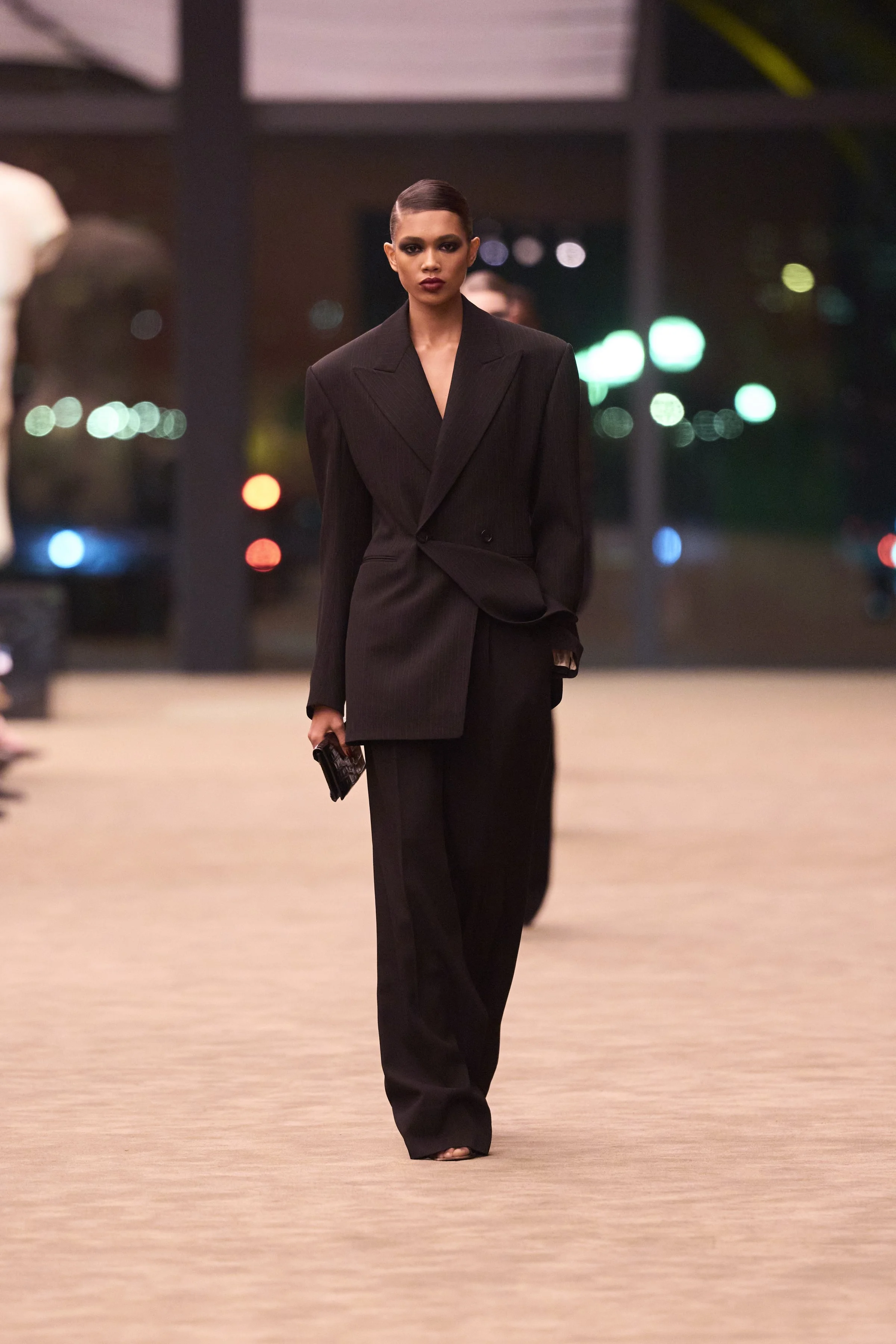
Power dressing has moved beyond its status as a trend to become a permanent expression of authority. This season, that reinterpretation arrived through assertive shoulders, elongated lines, and silhouettes that projected control without rigidity. Tailoring avoided both sterile minimalism and corporate severity. Instead, designers pursued something sharper and more psychologically charged. At Saint Laurent, Anthony Vaccarello adapted Le Smoking into slouchier, more relaxed variants that maintained their edge. Fourteen iterations of the black suit moved down the runway, single and double breasted, subtly tweaked in lapel and button placement. All vaguely alluding to the '70s and '80s without being overt enough to drag them out of a contemporary viewpoint, they were slouchy and relaxed, offering a sense of ease and freedom in a traditionally more rigid silhouette. The second act delivered the counter-punch: oversized faux-fur coats secured at the hips with satin ribbons, silicone trench coats, and sheer lace straight skirts paired with tiny camisoles. The whole runway oscillated between austerity and something far more charged. It felt simultaneously vintage and distinctly now.
ARTICLE WHAT REMAINS OF THE SEASON FW26
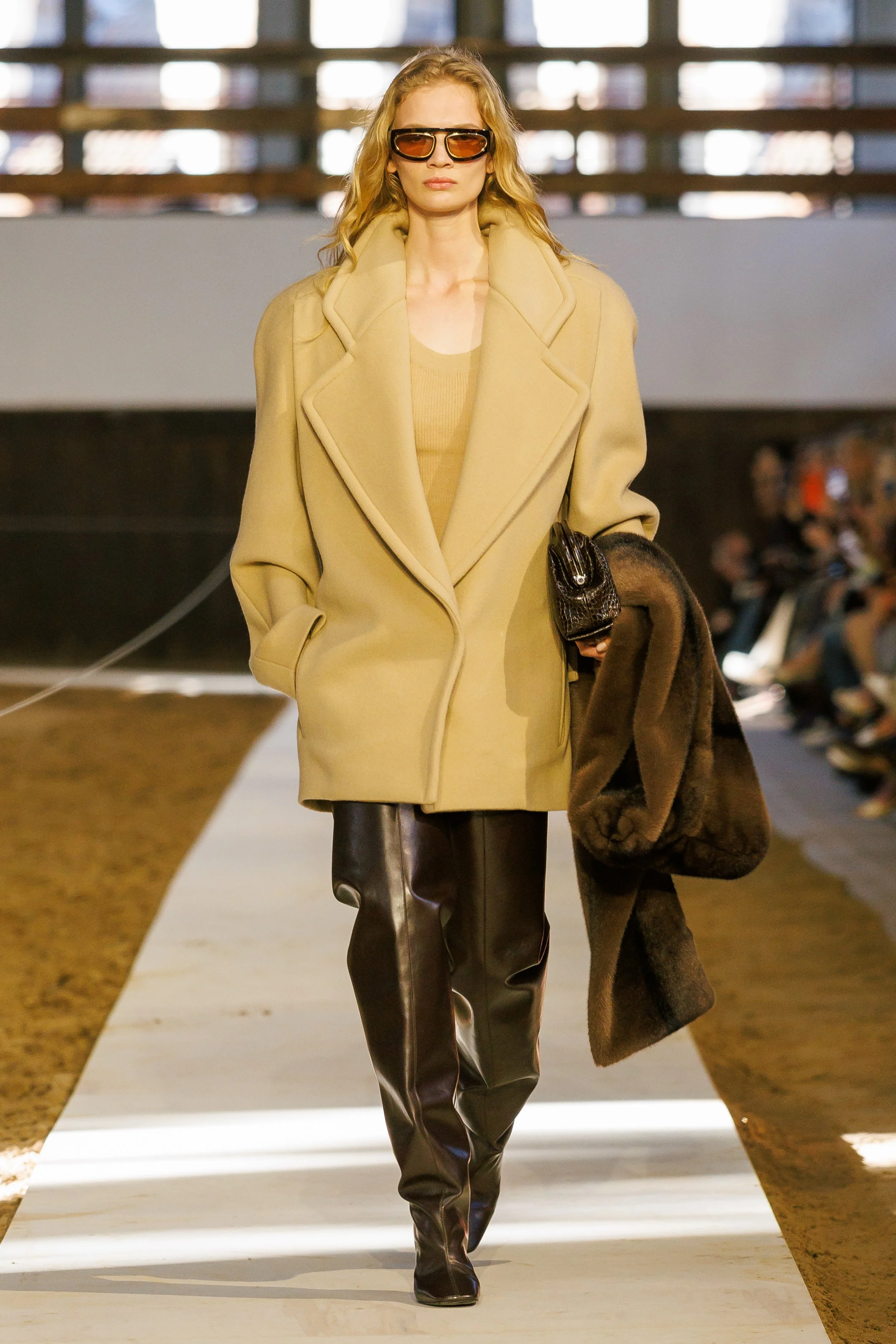
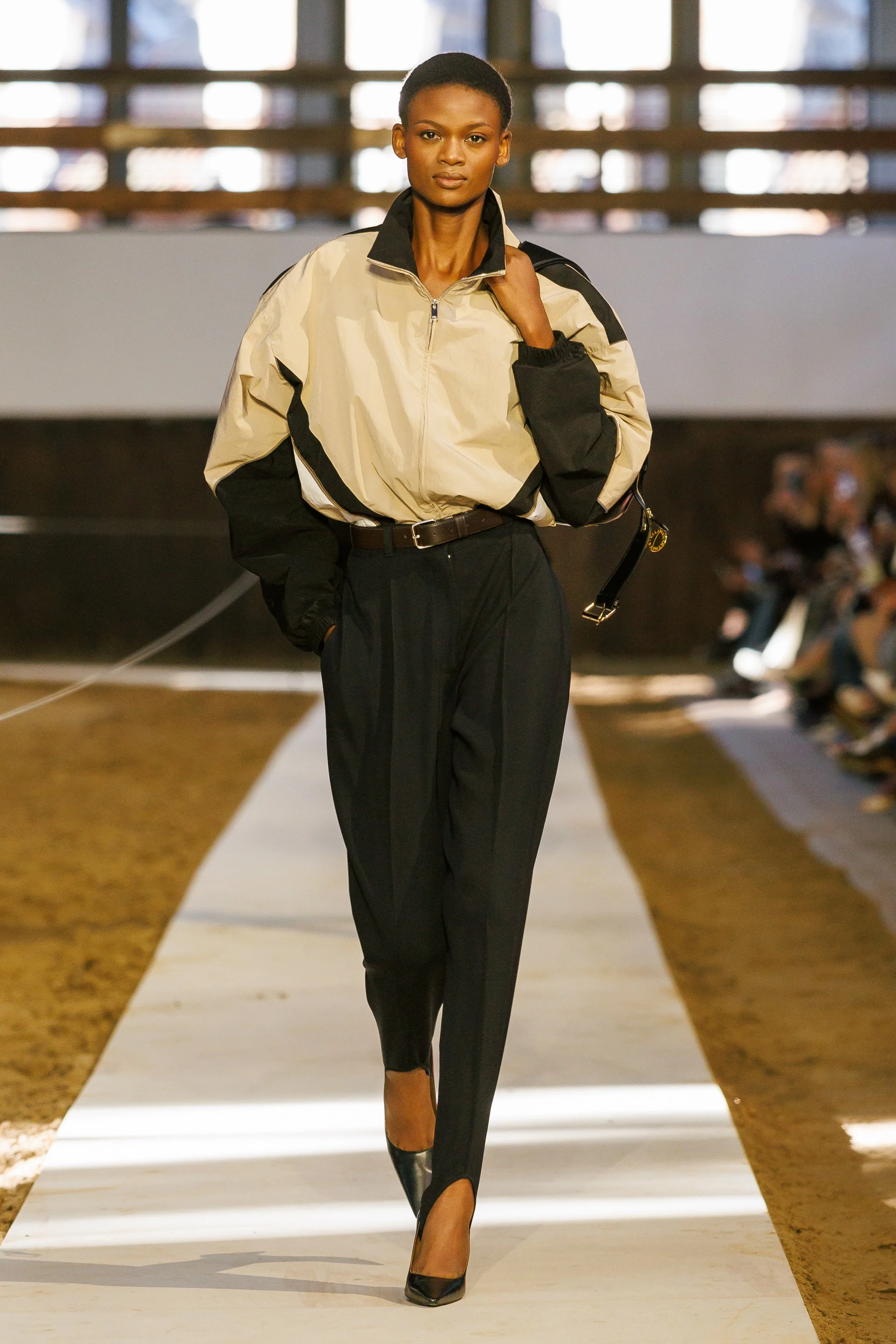
At Stella McCartney, tailoring proposed a different form of power, and also a different set of values entirely. Single and double-breasted jackets in responsible wool were cut with strong shoulders and defined waists, while fisherman-rib knits introduced texture and lightness through padded constructions and semi-sheer blends. The collection riffed on the full arc of McCartney's biography: Scottish childhood, 1980s extravagance, Savile Row training under Edward Sexton, presented against the backdrop of a dozen horses cantering in formation, a reminder that her refusal to use leather, fur, or skins since 2001 has never been a constraint but a creative position. Precise proportions communicated confidence, while the materials themselves made an argument we’d love to see more in the luxury circuit.
ARTICLE WHAT REMAINS OF THE SEASON FW26
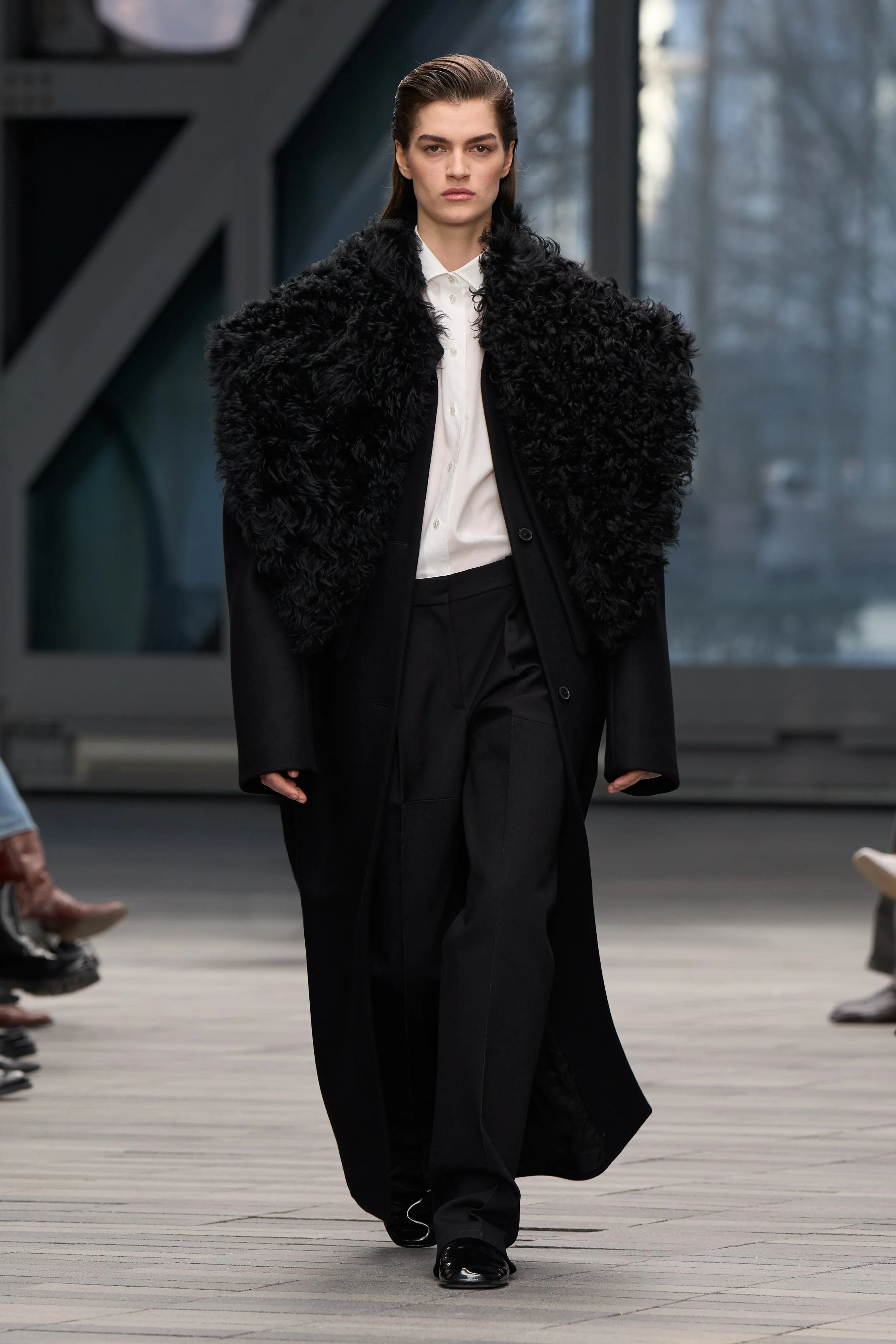
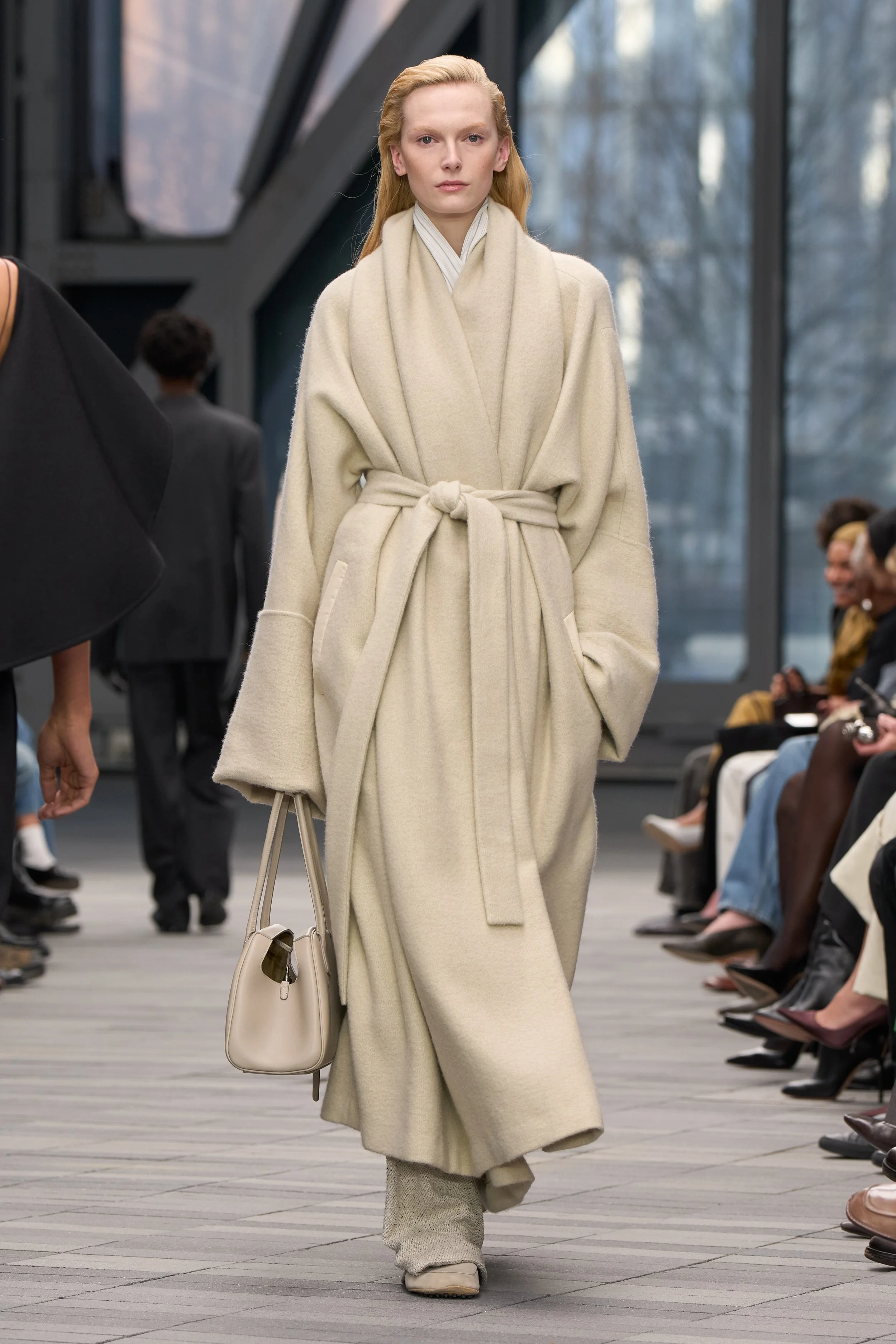
Veronica Leoni at Calvin Klein moved well beyond the minimalist reset of her debut. Her mood boards for FW26 were filled with Calvin Klein ad campaigns from the late '70s and early '80s. A deliberate dive into the brand's pivotal years, before Brooke Shields, before CK Jeans, when Klein was defining American fashion through an obsessive, almost dangerous focus on the body. Sexy suiting accentuated different parts of the body, faux-fur collars were magnified to opulent proportions, and a reductionist lens heightened the geometry of every line. She revisited early Calvin Klein denim, reconstructing archival jean codes through outerwear and tailoring. A gesture that suggests the brand’s founding instincts still hold. Her FW26 collection made simplicity feel monumental, using engineered constructions and invisible seams to turn archival 1970s silhouettes into a modern vocabulary of control.
The season's power conversation extended well beyond Paris. At Mugler, Miguel Castro Freitas built silhouettes from basic geometric shapes: triangles, squares, and trapezoids, taken to extreme lengths, some softened with feminine details, others deliberately boxy and almost confrontational. The result was armor that didn't announce itself as such: a pale grey wool jersey column dress anchored by a jeweled plastron that seemed to float on the fabric, held in place by clever internal rigging. Freitas made a compelling argument about intentionality: power dressing functions not when it is imposed, but when it is chosen. Together, these approaches proved that power can be severe, quiet, or sensual, but at its best, it must always communicate intention.
If silhouette gave the season structure, texture gave it depth. Fashion likes to insist it has no rules, but it undeniably depends on those subtle details elevating a look from attractive to memorable. Texture is one of those details. It gives garments depth, tension, and personality. Lace continued its evolution, not as nostalgia but as transformation. At Saint Laurent, lace appeared layered and manipulated, ranging from subtle lining details to fully abstract evening silhouettes. Louise Trotter at Bottega Veneta produced textures that made garments look alive. Her sophomore collection overflowed with pile, shearling, fringe, and plush surfaces, each surface chosen not for decoration but for tactile conviction.
ARTICLE WHAT REMAINS OF THE SEASON FW26
Courtesy of Chanel.
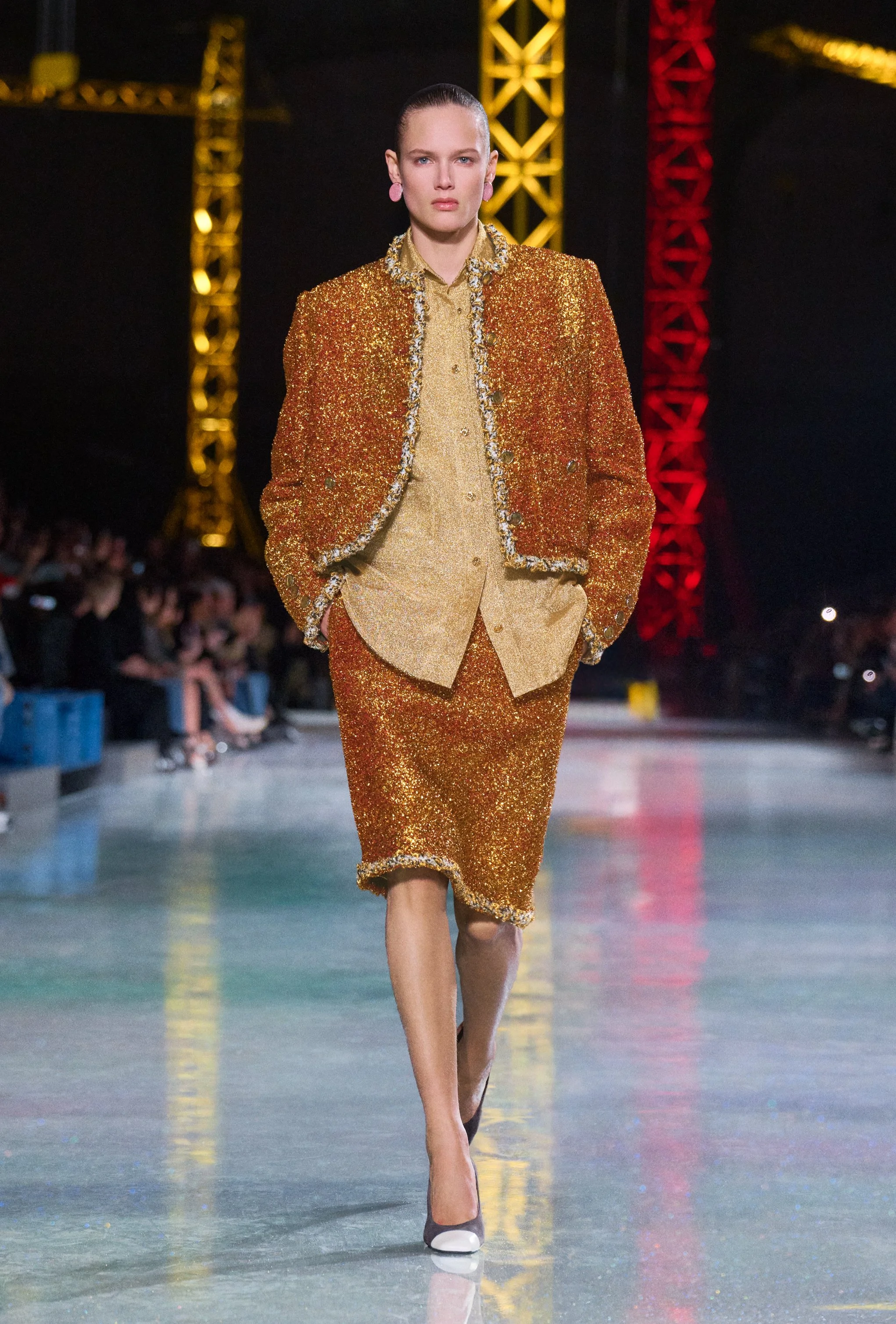
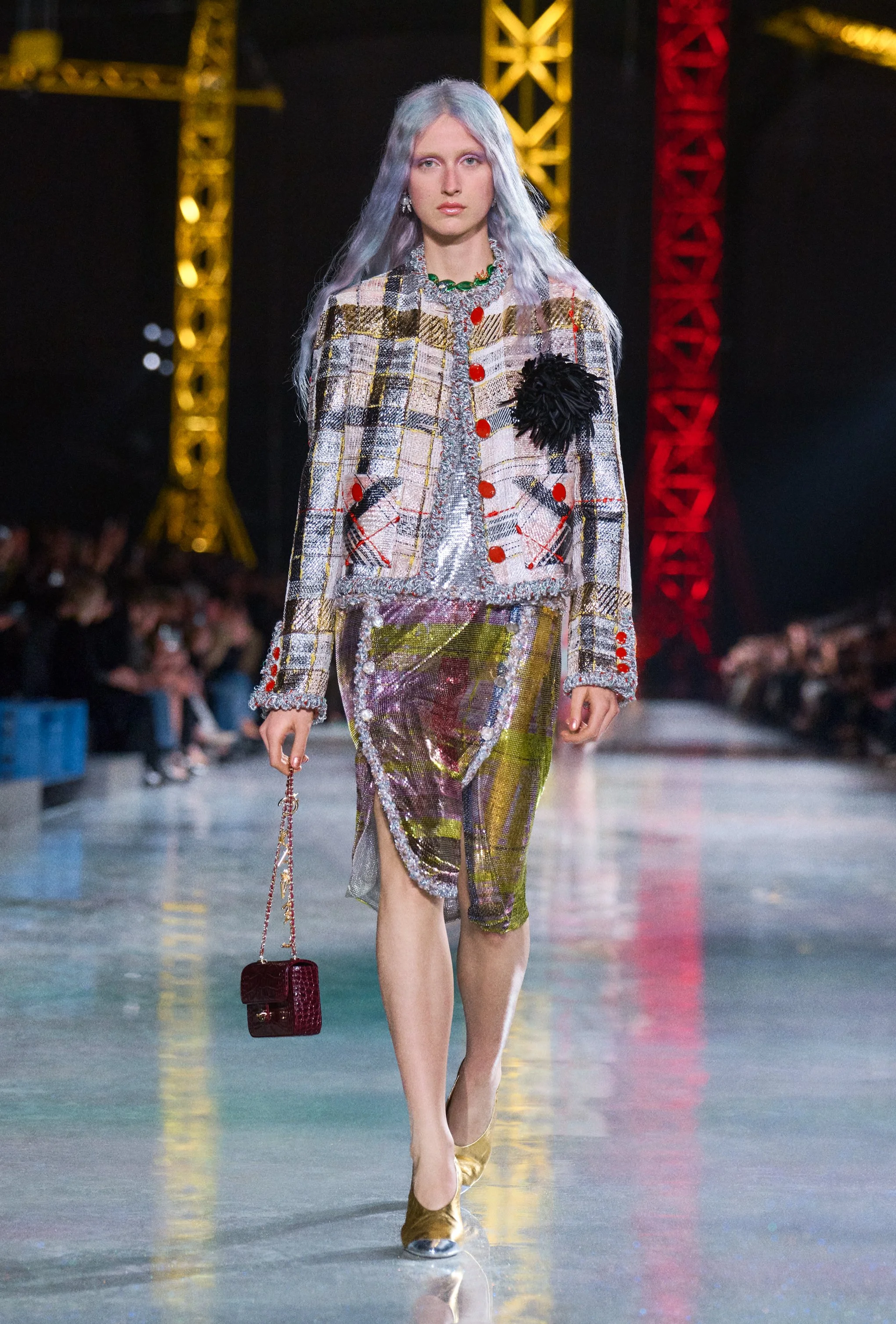
Matthieu Blazy at Chanel built his collection around a single Coco Chanel maxim: that fashion needs dresses that crawl and dresses that fly. The show unfolded along that axis. Early looks are grounded in the house's pragmatic heritage, with ribbed knits, bouclé tweed work shirts, and blouson jackets reshaping the codes of the Chanel suit—silhouettes drifting through the decades from the dropped waists of the '20s to the sharper lines of the '50s and '60s, worn untucked and relaxed. Then, as the collection progressed toward evening, it took flight entirely. Dazzling sequined plaid suits, beaded coats glowing with star-chart embroidery, and metallic mesh woven to mimic traditional tweed motifs took over the runway—fabric flowers, trailing ribbons, and lace appliqués transforming the garments into fluid, kinetic works of art. The show closed with a final nod to Coco's most enduring invention: a little black dress cut in simple jersey, seemingly plain from the front, but when turned around, a camellia appeared between the shoulder blades. Quiet and unpretentious after everything that had preceded it, which made it, in context, the most powerful gesture of the show.
ARTICLE WHAT REMAINS OF THE SEASON FW26
Courtesy of Alaïa.
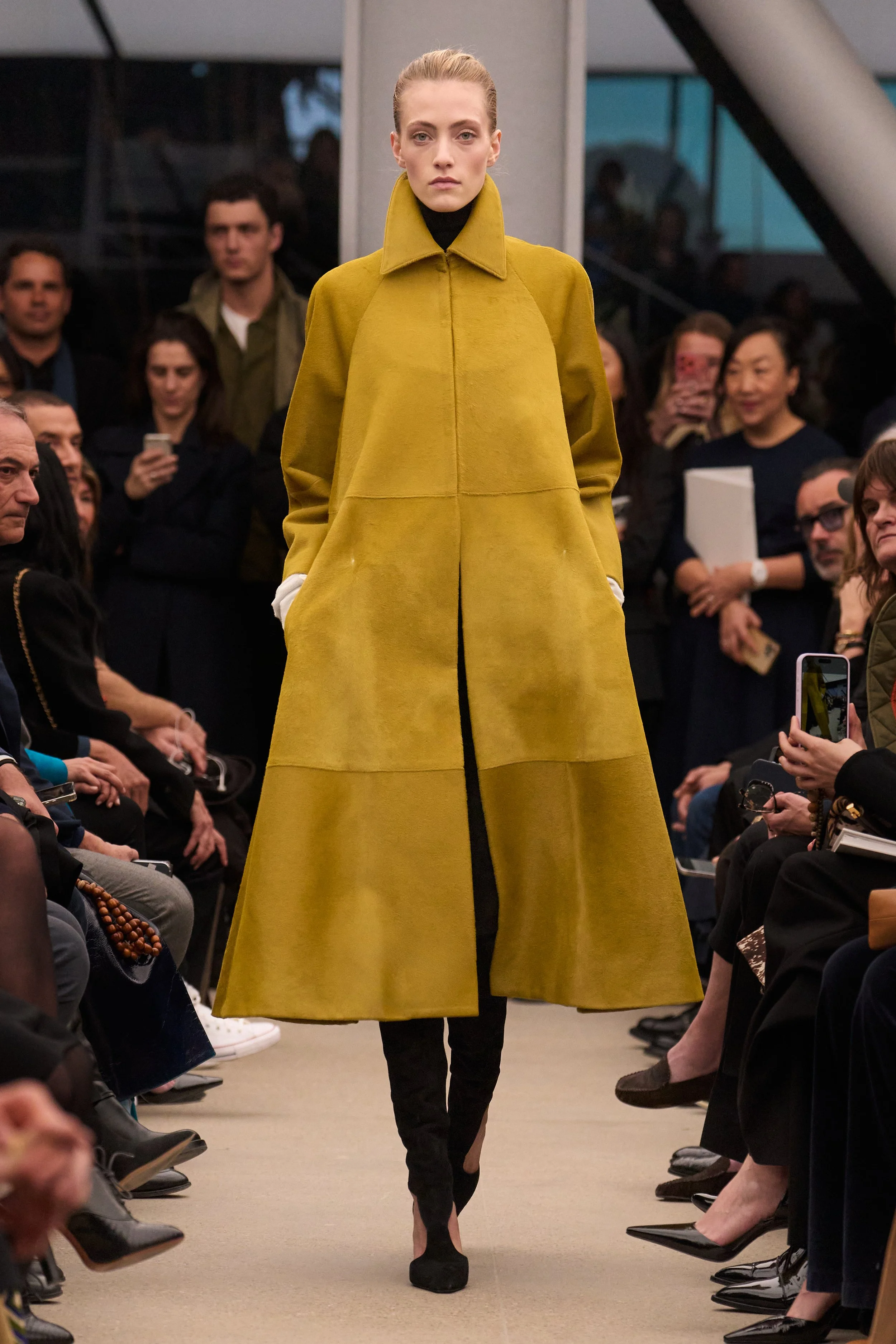
Velvet also made a calculated return to the runway, yet in a sleeker, more city-appropriate take. At Alaïa, this was Pieter Mulier's final collection, and he chose to spend it not on spectacle but on reduction. Velvet was cut into amazing pantsuits and deployed as the ultra-chic evening equation of a long column skirt with a matching jacket. Form-hugging velvet suits gave way to gently flaring calfskin coats and the densely ruffled skirts that brought the show to its crescendo. "I doubted for a long time to go as strict, as reduced to the essence," Mulier admitted. "Because I thought, maybe it's not enough for the fashion world, but I think it should be." It was enough. The room gave him a standing ovation. His velvet suits remain the season's clearest signal that even the most traditional fabrics can be weaponized with a new, sharper romanticism, and that real luxury, as he put it, is the perfect cut jacket.
The material conversation deepened elsewhere. At Lemaire, fabrics were chosen for their deceptive qualities: crushed velvet taking on a metallic glisten, lacquered denim mimicking the deep sheen of aged leather. The effect was a kind of optical richness, texture functioning as an illusion, surfaces resisting the eye's first interpretation. Houses such as Loro Piana took a more straightforward route, emphasizing quiet luxury through refined brocades and textured wools, often layered together to create tactile depth: richness without heaviness. Across all of these approaches, the underlying conviction was the same: that what a garment feels like is inseparable from what it means.
Color, meanwhile, functioned as its own argument. The season's dominant palette was anchored in deep neutrals: burgundy, chocolate brown, charcoal, inky black, but what made it interesting was the conviction with which black in particular was deployed, rather than merely defaulted to. At Comme des Garçons, Kawakubo turned black's relevance and power into the explicit subject of her collection, titled Ultimately Black, opening with sixteen sculptural, architectural all-black ensembles before a brief interlude of six saccharine-pink looks arrived as a deliberate antithesis, and then returning to darkness for a final act. Her statement in the show notes was characteristically precise: "I have come to realize that, after all, black is the colour for me. It's just the strongest, the best for creation, and the colour that embodies the rebellious spirit."
Against that philosophical declaration, the season's most forceful counter-move was crimson. Prada sent a caped trench down the runway in crimson; Balenciaga used it for an overcoat; Valentino saved a head-to-toe crimson look for the grand finale to deliver maximum impact. Electric blue and primary yellow provided further punctuation at Mugler and Loewe respectively, asserting that, even within the season’s controlled shapes, the mood retained a sense of levity.
Alongside the season's precision and tactility, a broader shift in mood also emerged. Whether fashion mirrors the world or resists it remains an open question, yet FW26 leaned unmistakably toward dark romance. In London, Erdem explored historic melancholy through brocades, ribbons, and collaged surfaces that felt emotionally layered. This season Erdem collaborated with British painter Kaye Donachie, presenting ethereal organza dresses adorned with soft-hued portraits, creating a striking contrast between delicate femininity and artistic expression. Simone Rocha's dark romance felt earthy, feral, and lived-in. Her collection was infused with a gothic fairytale sensibility, featuring sheer cocktail dresses, daring negligees, and moto jackets with puffed sleeves, accessorized with satin bags shaped like hares and turtles and faux-fur backpacks resembling rhesus monkeys. It was whimsical without being frivolous, strange without being alienating.
ARTICLE WHAT REMAINS OF THE SEASON FW26
Courtesy of Zimmermann.
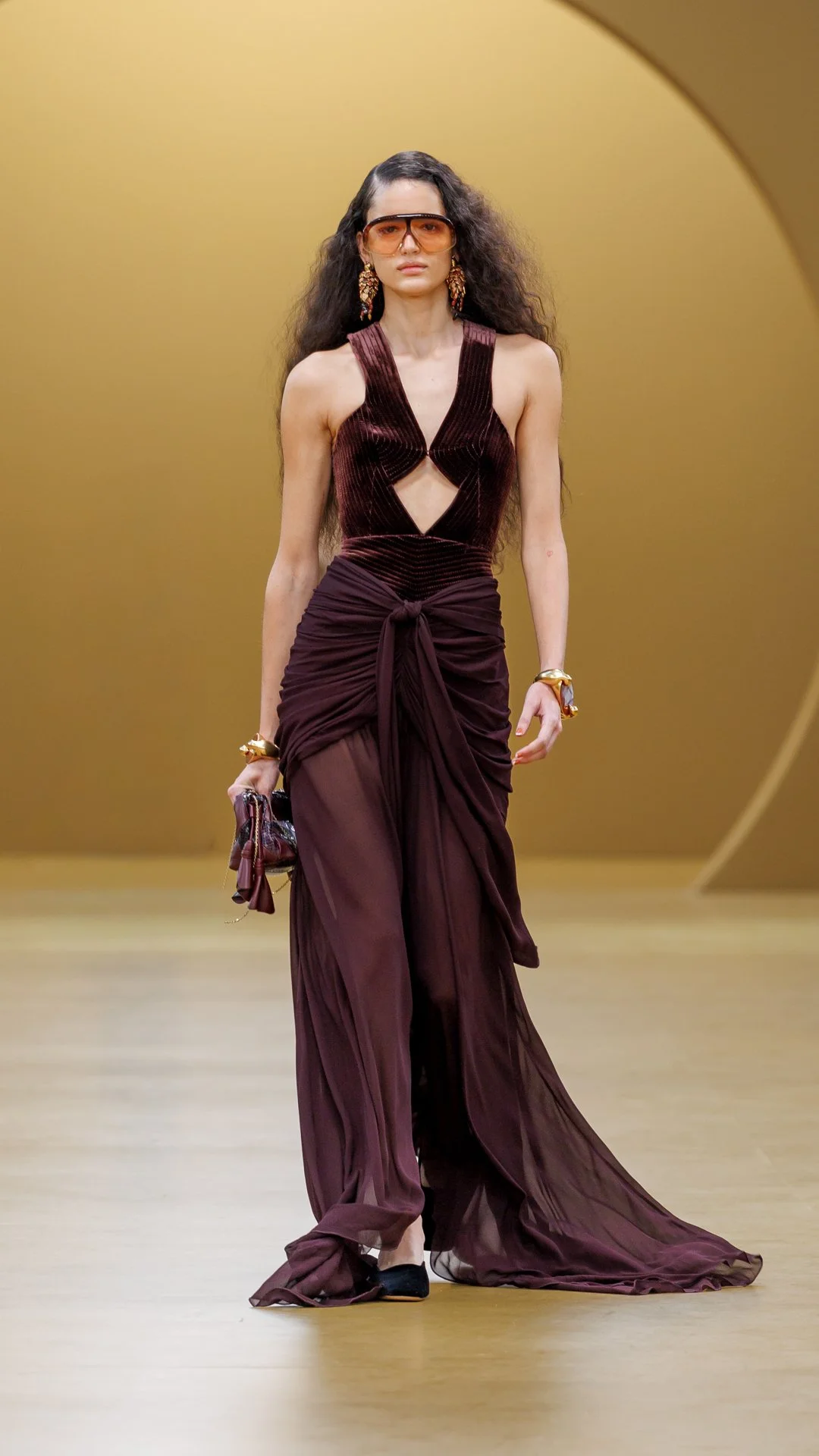
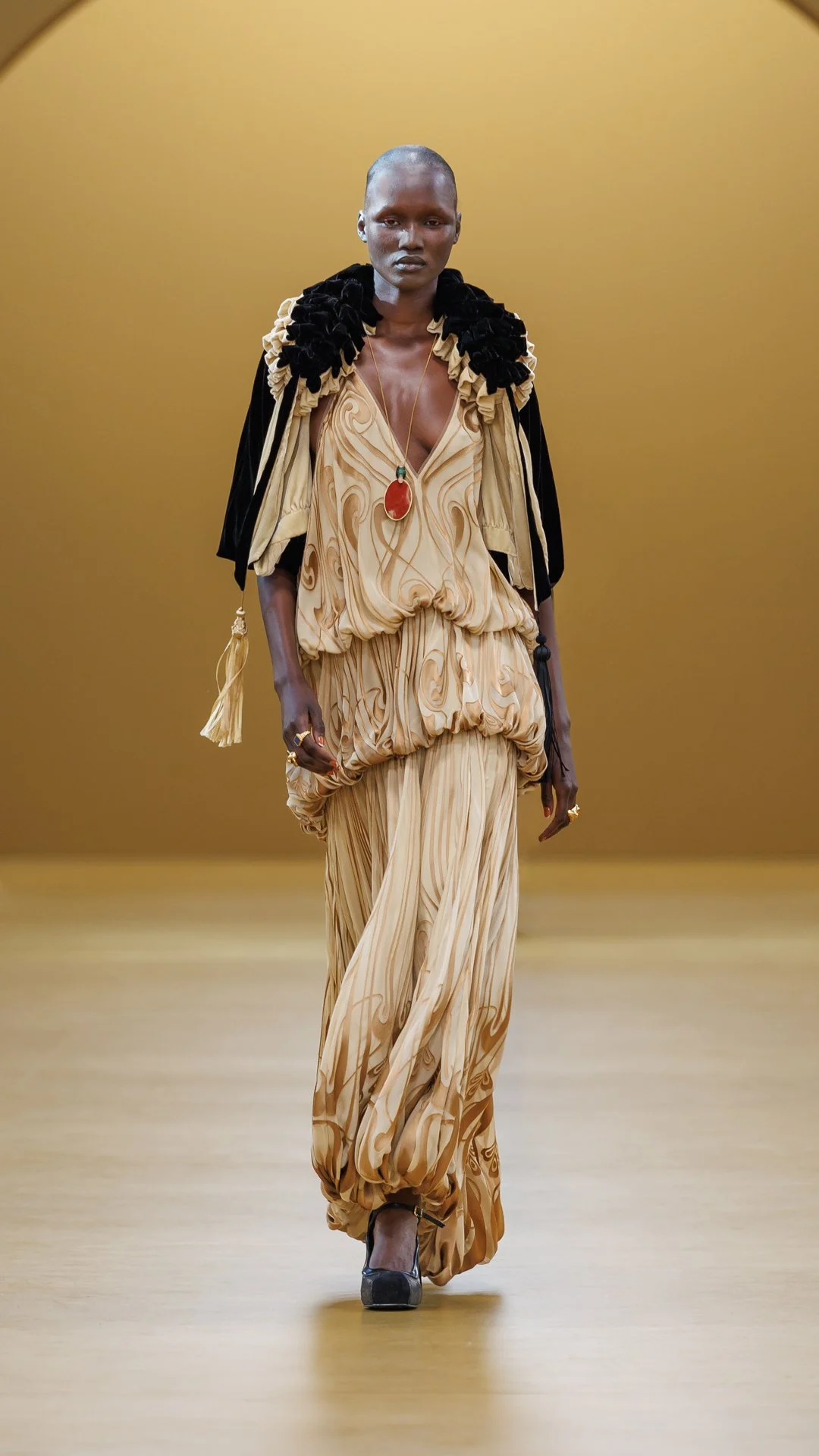
At Zimmermann, romance felt lighter but never passive. Nicky Zimmermann drew inspiration from trailblazing women of the 1920s. Among them was her own grandmother, who trained as a lifesaver at a time when women were not permitted to do so. That intrepid spirit fed directly into the clothes. Feminine silhouettes played with masculine references in fluid dresses crafted from men's silk scarves, lace-trimmed suiting, and lingerie worn as outerwear, rewriting the dress code rather than simply decorating it. Tailoring came spliced with panels of lingerie lace, while evening gowns had an Art Deco flavour, stitched velvet bodices and graphic chevron stripes grounding the romanticism in something with real structure and history. The femininity here was rooted in confidence, which made it feel more contemporary than almost anything else in the romance conversation.
ARTICLE WHAT REMAINS OF THE SEASON FW26
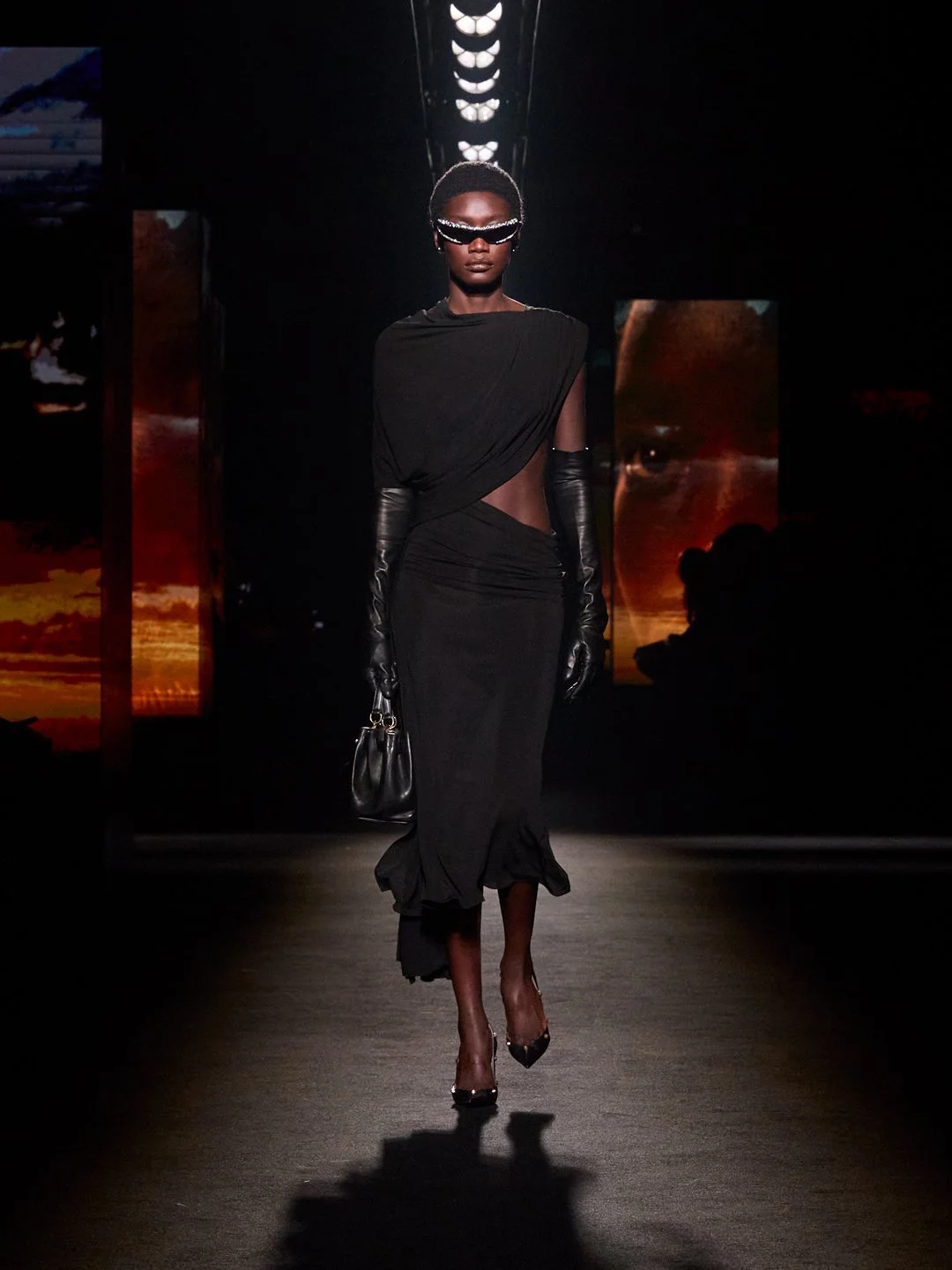
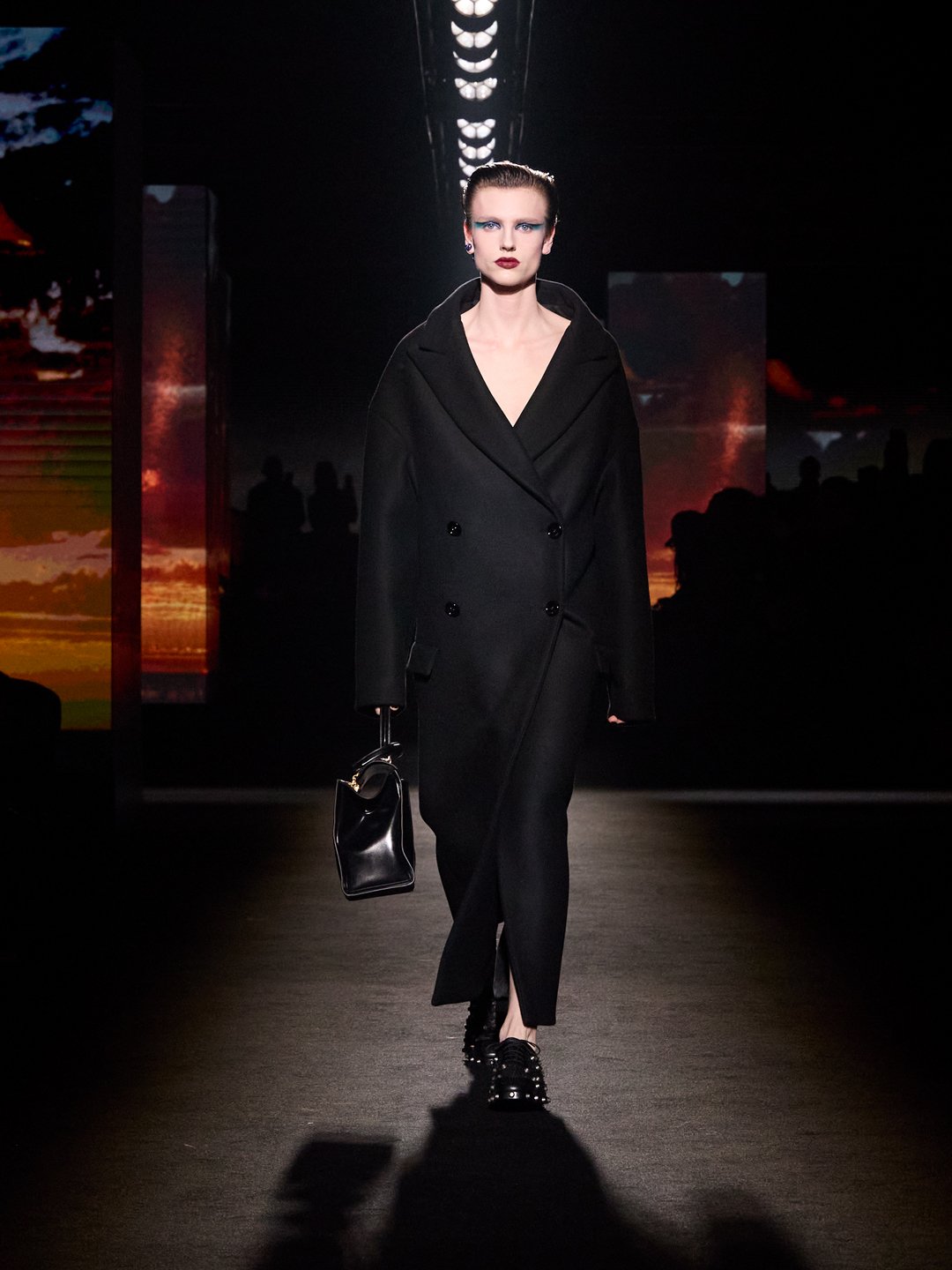
In Paris, Pierpaolo Piccioli at Balenciaga translated romance into something more architectural and charged. Titled ClairObscur, a reference to the chiaroscuro technique of using light and shadow to define volume. The show opened in a vast darkened space on the Champs-Élysées with a voluptuous bubble-shaped leather bomber jacket, then a sculptural peacoat with a collar rising like a calla lily, then an imposing officer coat with collar and lapels standing up and away from slightly hunched shoulders. Between the coats came draped jersey dresses cut with minimal seams, high-waisted denim, and streamlined tailoring — restraint as counterweight to all that architectural mass. The show was developed in collaboration with Euphoria creator Sam Levinson, whose video monitors played California landscapes, wolves, and portrait-like close-ups of cast members across the surrounding screens. "He has a very particular sensitivity to find the light in the darkness," Piccioli said of Levinson. "It's very metaphorical, given the moment we are all living now."
ARTICLE WHAT REMAINS OF THE SEASON FW26
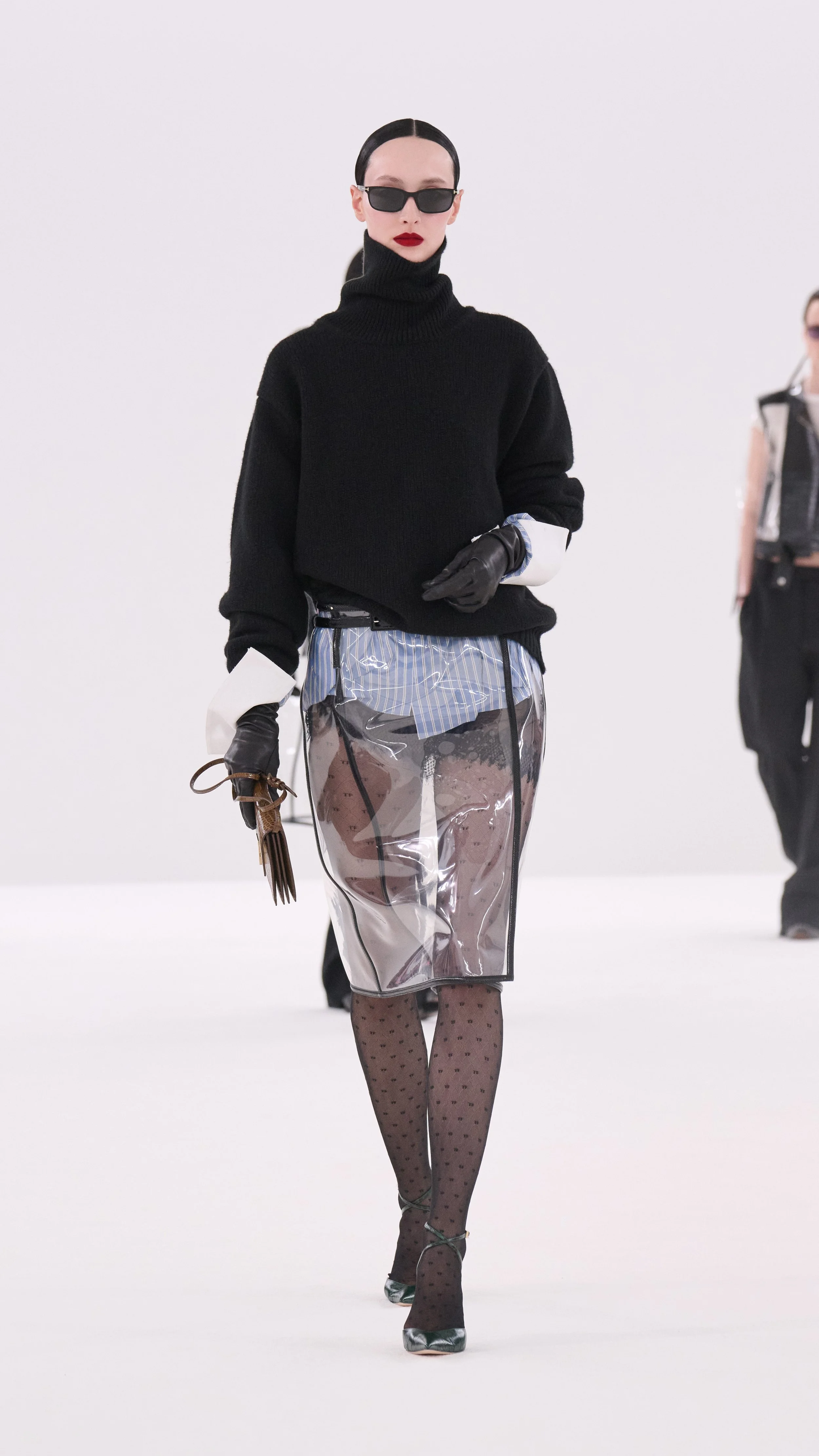
Haider Ackermann at Tom Ford reframed glamour as something colder and more calculated. Pinstripes, white shirts, and military-flecked tailoring filled the collection, with Ackermann describing it as a response to the times: "It's about standing straight in life, facing everything that's happening in this world." The show opened with all-black and all-white tailored looks in a white box lit so bright it took on a clinical appeal. Languid silhouettes and considered elegance meeting Tom Ford's signature sex-forward opulence. The tension was the point: the perfect suit, twisted, tailoring standing remarkably straight and rigid on the runway, yet carrying the palpable trembling rigor of a protagonist who has just flirted with absolute debauchery. Ackermann layered transparent plastic raincoats over many of those suits. Perhaps his answer to dismal weather, or a sign that people need as much protection as they can get. The eveningwear, by contrast, was deliberately restrained: a black gown edged with fluttery fabric shaped like bat wings. A nod, as Ackermann put it, to these dark days. The result, across many Paris houses, was a romanticism rooted in tension, darkness, and emotional weight.
That instinct to go deeper into what a house already is rather than overturn it surfaced repeatedly in the season's treatment of historical reference. The 1970s and 1980s hovered across collections as frameworks, not as nostalgia but as a shared visual vocabulary that designers were fluent enough in to push past imitation. The 1970s resurfaced through ease, sensuality, flared silhouettes, and a certain louche confidence, while the 1980s returned through glamour and structured authority. At Coach, Stuart Vevers explored flared silhouettes and cinched waists that echoed 1970s ease, while Area embraced 1980s lamé and ruffles with an excess and polish that proved these references still hold meaning in contemporary dressing. The decade-mining extended further and with more complexity at other houses. At Gucci, Demna's debut moved away from the oversized silhouettes that defined his Balenciaga tenure toward sensual minimalism and pragmatic products that balanced Tom Ford-era sexiness with classic Florentine luxury, a deliberate excavation of the house's 1990s archive that drew some of the loudest critical argument of the season. Whether one read it as revival or reduction, the conversation it generated was itself the point: Demna's Gucci forced fashion to decide what Gucci is actually for. At Jil Sander, Simone Bellotti introduced grit and imperfection into the brand's typically clean aesthetic, drawing on Anders Petersen's photography of Hamburg's Café Lehmitz to arrive at a minimalism that felt genuinely lived in rather than curated. A navy blue suit with a blazer cut especially long, worn with one collar tucked and one untucked, captured the essence of it: minimalism done excitingly, which is to say, minimalism done imperfectly. These references did not feel like nostalgia. Rather, they functioned as a visual vocabulary, allowing designers to revisit past decades in order to express something immediate about the present.
The season's most practical lesson was also its most aesthetic: the art of layering. Shirts under sweaters, turtlenecks tucked beneath button-downs, coats piled over knitwear, belts worn over outerwear: dressing became an act of accumulation. Prada offered the definitive expression of this idea, presenting looks that evolved through the subtraction of layers, using only fifteen models to reveal sixty transformations. A structural study in how a woman moves through her day, reshaped by her clothes. Tailored outerwear appeared intentionally distressed at the edges, exposing hidden fabric layers beneath; sheer tulle was draped over heavy zip-up sweaters, creating a striking contrast between ethereal lightness and grounded utility. As the outer layers were peeled away, entirely new realities emerged: sparkling crystal embellishments over minimalist tops, kitten heels adorned with sequins, vibrant feathers stitched onto boots. At Missoni, coats, bombers, cardigans, and blazers were piled on with ease, while statement scarves gave the looks their final emphasis. Elsewhere in London, Toga's Yasuko Furuta offered deconstructed, button-up knitwear layered over the torso for texture and dimension, while Emilia Wickstead layered suiting with denim jackets and collared shirts, a more everyday proposition that carried the same architectural logic. In that sense, layering became more than a trend. It functioned as the connective tissue of the season, building complexity without abandoning wearability.
What united all of these observations was a shift that the season never quite named for itself: a fracture in quiet luxury's hold on fashion's dominance. For several seasons, restraint had been the safe answer, muted palettes, unmarked garments, the studied removal of anything that might read as effort. FW26 didn't dissolve that consensus so much as force it to declare itself. Hermès, The Row, and Calvin Klein continued to make the case for precision and restraint. But elsewhere, designers found ways to inject risk back into clothes without reverting to noise. Chanel's metallic shimmer, Bottega Veneta's shaggy exuberance, Comme des Garçons' operatic blackness, Loewe's chromatic boldness, these were not quiet gestures. They were declarations. What the season revealed, ultimately, was that restraint and expressiveness are no longer opposite poles. The most compelling collections understood that conviction can be whispered just as forcefully as it can be announced.
FW26 was less concerned with novelty and more invested in something harder to name: the courage to go deeper rather than further. Designers returned to fundamentals: silhouette, proportion, archive, house code, but treated them with enough friction to keep them from feeling familiar. The season's most interesting tension was between two equally valid responses to the same moment: those who doubled down on restraint and those who reached for expressiveness. What united the collections across cities, from New York to Paris, was the conviction that a garment's authority comes not from novelty but from understanding what it is, where it comes from, and what it still has left to say. The clothes that endured this season were not the loudest or the most radical. They were the ones who understood exactly what they wanted to say, and had the confidence to say it without excess.
