

INSERT BALENCIAGA WINTER 2026
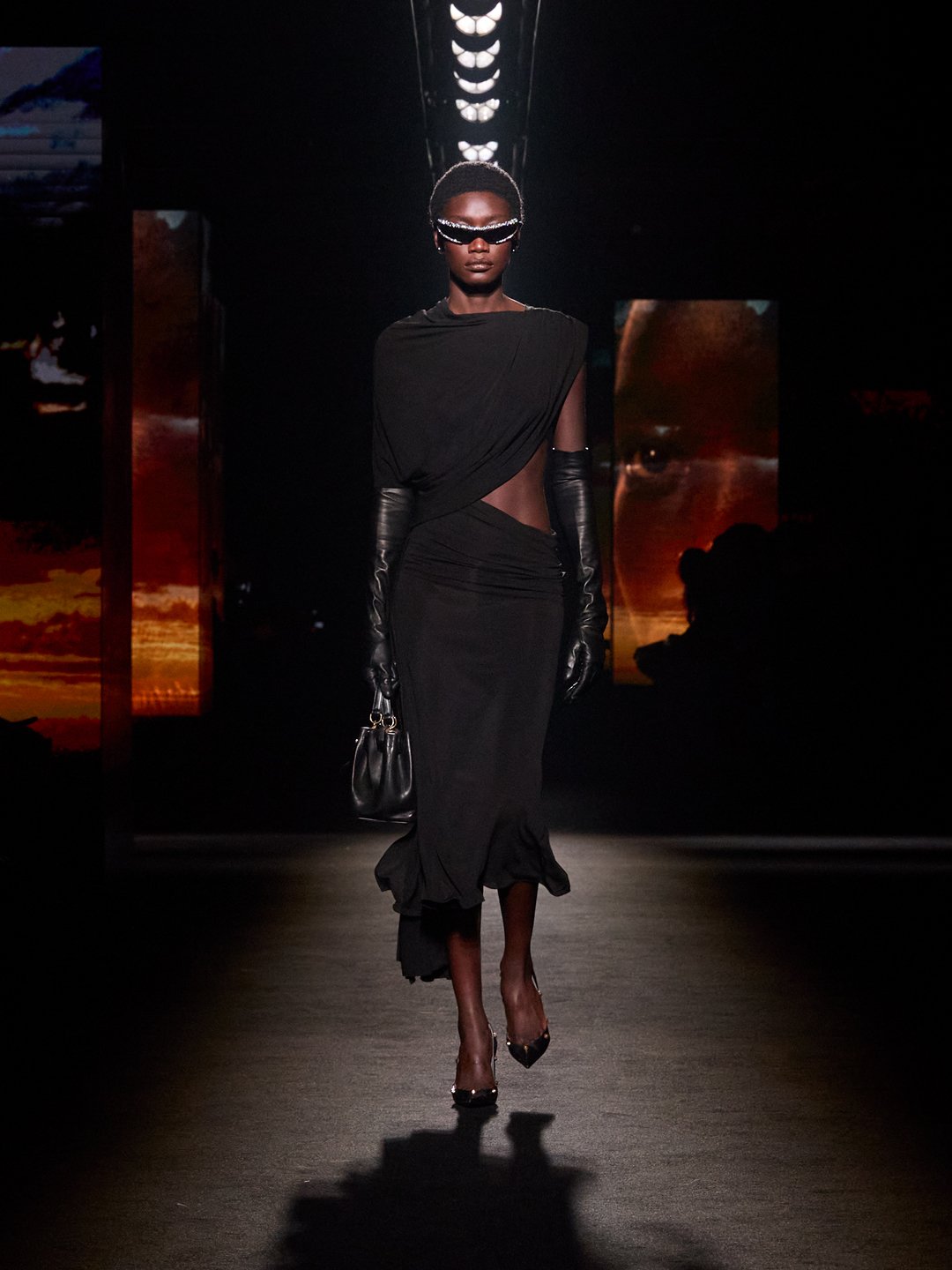
THIS SEASON AT BALENCIAGA IS ABOUT THE BODY AS STRUCTURE, AND HOW DISCIPLINE CAN BE USED TO REFRAME SILHOUETTE THROUGH CONTROLLED EASE.
The Balenciaga show this season felt less like a fashion event and more like participating in a collective exhale. For the better part of a decade, the house has functioned as a mirror for our collective anxiety; a relentless parade of dystopian silhouettes and "internet-breaking" moments that seemed to treat the human body as a necessary, if somewhat inconvenient, hanger for a meme. It was brilliant, yes, but it was also exhausting. Then Pierpaolo Piccioli walked in and turned the lights on.
The Fall/Winter 2026 collection marks what can only be described as a seismic realignment. If Demna’s era was defined by a scream, Piccioli’s debut is a conversation, hushed, articulate, and deeply personal. The "excess" has been reframed; in its place, Piccioli has staged a revolution built on the idea that clothes should actually care about the “person inside them.” The opening look established the shift with the force of a gavel strike: a charcoal bomber jacket that framed the shoulder with a cinematic precision. There was no internal padding to create a caricature, no bonded fabric to force a shape. Instead, the structure emerged from the "internal logic" of the cut itself. The opening look seems to generate its form from within, as though the construction is responding to the body; the jacket does not stiffen or distort. It follows.
Piccioli brought a much-needed touch of Roman romanticism. The silks didn’t just hang; they possessed a heavy, liquid weight that felt like something pulled from a 1970s noir film, moody, expensive, and a little bit dangerous. There was a grit to the fluidity, a sense that these were clothes intended for a life lived after midnight in a Lower Manhattan jazz club. The new creative director didn't completely abandon volume. This is still Balenciaga, after all. But he refined it. Coats fell away from the spine with a grace that suggested protection. There is this subtle romanticism at work, but it is not decorative. It is structural.
Backstage, Piccioli noted that "the centrality of the body is the structure." It sounds like a simple thesis, but in the context of Balenciaga’s recent history, it’s a total subversion. By stripping away the irony, he has exposed the craft. He has replaced tension with coherence and replaced the digital "rupture" with a sense of continuity. As the final looks drifted past—a series of sweeping evening gowns that moved with the effortless ease of a shadow—the sentiment in the room was undeniable: Balenciaga finally feels ready to live in the real world again. It is no longer a brand you look at; it is a brand you wear.