

INSERT KENZO RESORT 2027
KENZO RESORT 2027: HOME IS A FEELING.
Some places hold memories long after the people who lived there have gone. For Resort 2027, Nigo returns to one of them. The former Paris home of Kenzo Takada is more than a setting for the collection. It is where the house's story feels most personal. Hidden behind the bustle of the Bastille district, the residence was never just an address. It was a gathering place where friends, artists, musicians, and designers crossed paths. Creativity was lived as much as it was practiced. Presenting the collection here transforms the occasion into something far more intimate than a presentation. It feels like a homecoming. That choice says as much about Nigo as it does about the house he now leads. Rather than treating Kenzo's history as something to preserve behind glass, he has returned to the generosity that always defined Kenzo.
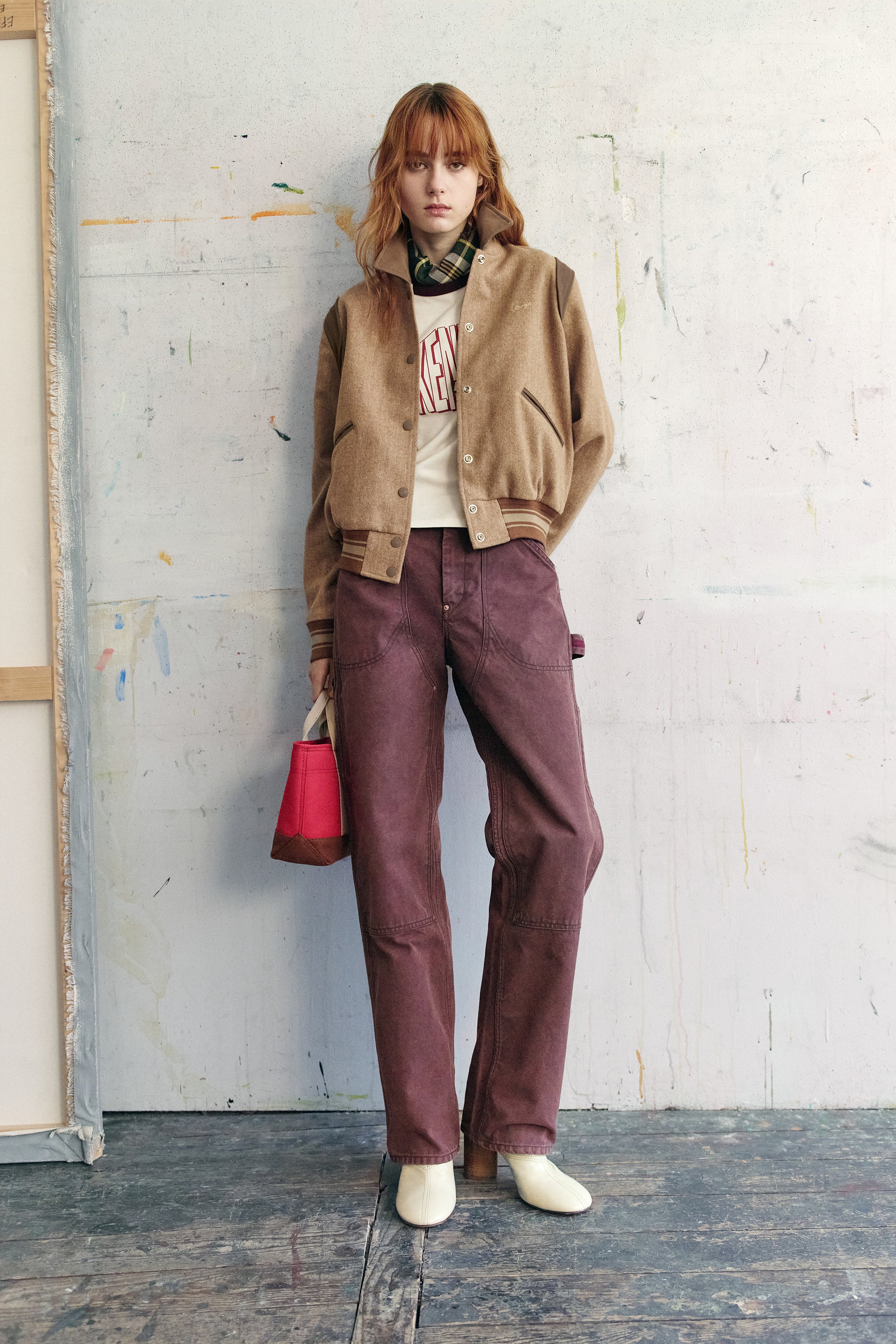
When Kenzo Takada arrived in Paris from Japan in 1965, he brought with him a different way of seeing fashion. His collections would come to blend East and West without asking either to surrender its identity. Prints, tailoring, color, craft, and tradition; the idea was simple: different influences could belong together. Americana appears through varsity jackets and embroidered cowboy shirts. Italian tailoring meets Chinese pankou closures with the same sense of curiosity that shaped Kenzo Takada's original vision. Nigo has often described himself as a collector, and that instinct runs throughout the collection. Archive pieces return without feeling archival. The iconic Kenzo Jungle tiger reappears with renewed sharpness. Historic floral motifs once again find their place within contemporary pieces. The letter "K" evolves into a new graphic signature, while the 1986 Kite bag returns with fresh purpose. Each reference respects the past without becoming trapped by it.
Heritage is not about repeating yesterday. It is about understanding why certain ideas continue to resonate and allowing them to evolve alongside the present. Perhaps that is why the collection feels so wearable. Japanese denim carries the softened character of garments that have been worn and lived in. Kimono-inspired tailoring introduces ease to structured dressing. Indoor slippers become street shoes, blurring the boundary between private and public life. Even the house itself becomes part of the collection's vocabulary, reminding us that the places we inhabit shape the clothes we create. Color, too, plays an essential role. In the end, the setting says as much as the collection itself. Returning to Kenzo Takada's home was never about looking back. It was about understanding where the house began, and carrying that spirit forward.