

AUGUST 10, 2026•ZIMMERMANN FALL 26 RTW CAMPAIGN
ZIMMERMANN: TRAILBLAZER
There is a point in the life of a fashion house when momentum becomes something more substantial. The clothes get sharper, the vision gets clearer, and the audience gets bigger without the identity getting lost. For Zimmermann, that moment feels very much like now. Founded in Sydney in 1991 by sisters Nicky and Simone Zimmermann, the house has spent more than three decades developing a language of its own, rooted in Australian culture, craftsmanship, movement and a confident approach to the way women dress. What began with Nicky making clothes and selling them through Sydney’s Paddington markets has grown into an international fashion house with a distinct point of view and a presence that now reaches far beyond its Australian beginnings. The next chapter carries a different kind of weight. Zimmermann’s place within the Fédération de la Haute Couture et de la Mode marks an important step for the house, bringing an Australian label with a deeply established identity into one of fashion’s most recognized institutions. It is a significant acknowledgment of how far the company has come. Still, more importantly, it reflects a house that has continued to expand without having to compromise the character that made it stand out in the first place.
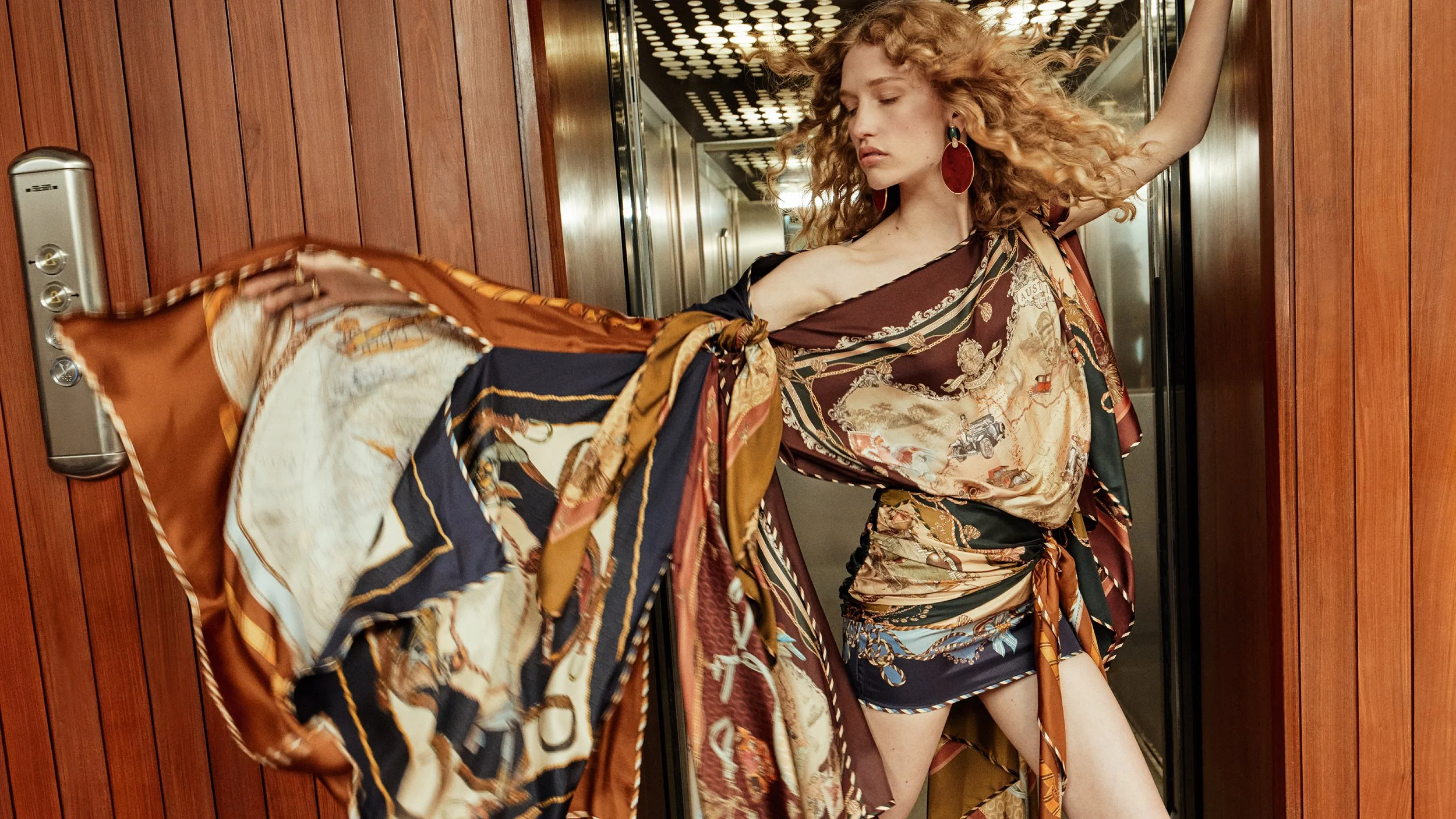
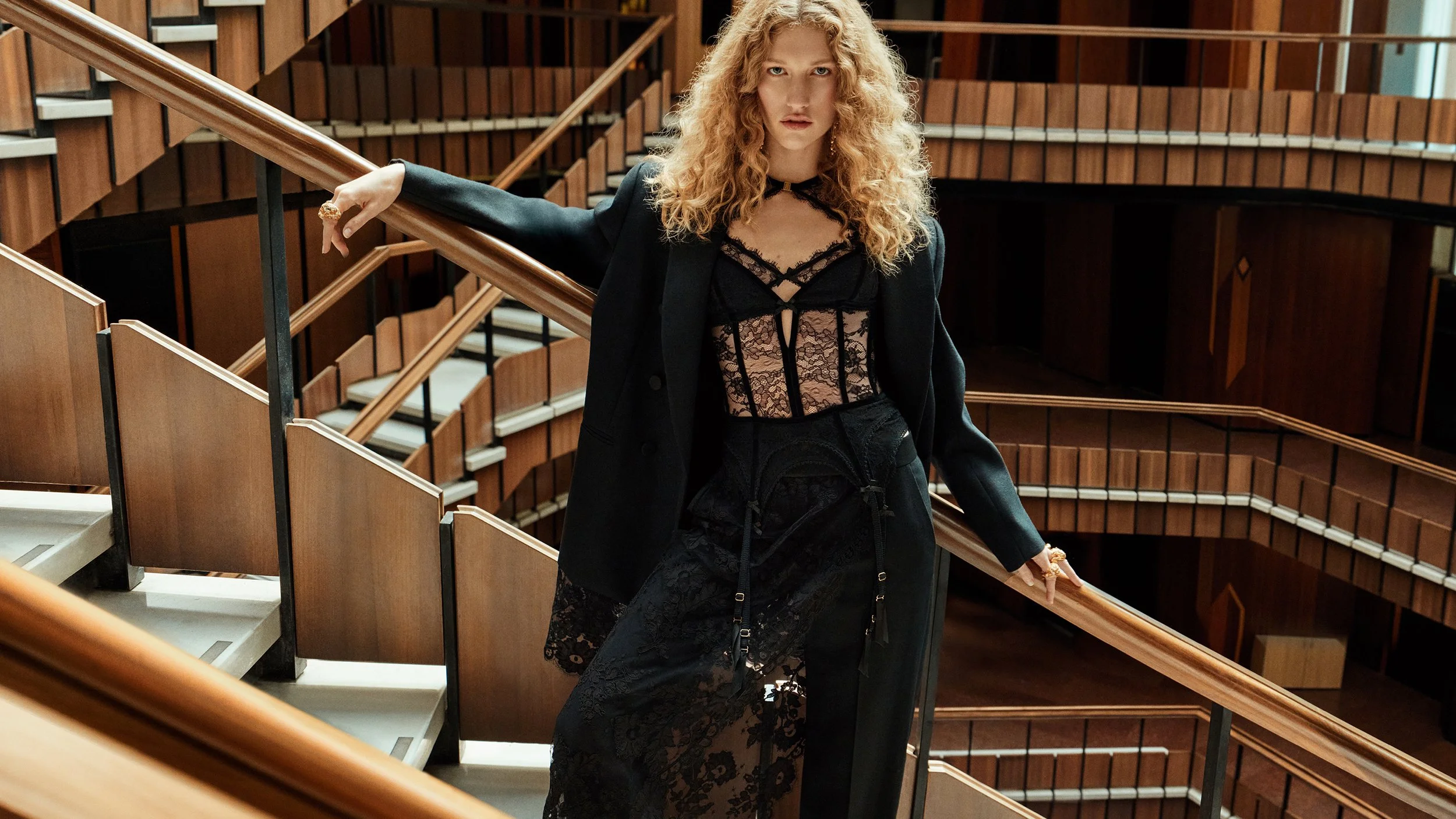
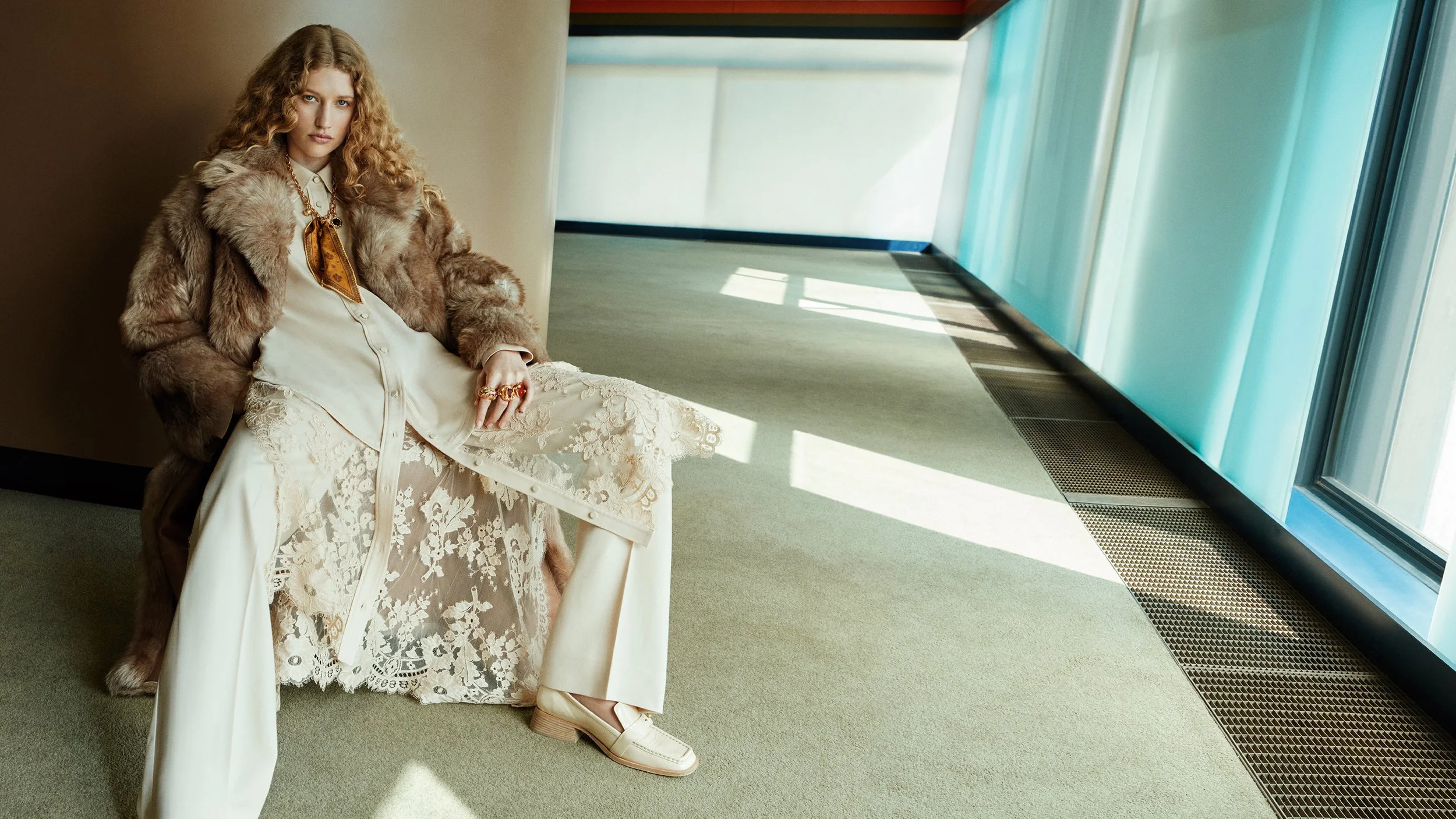
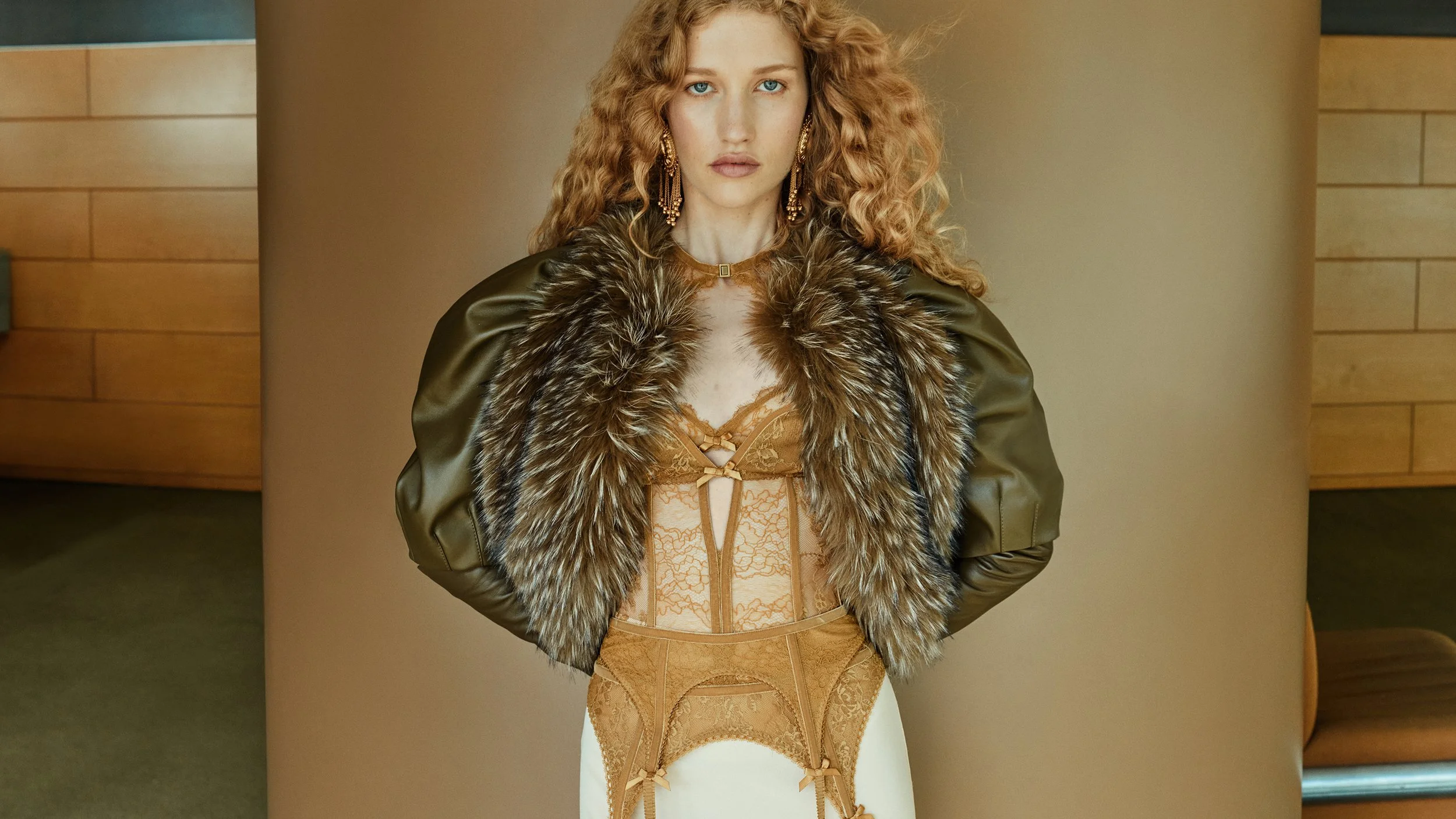
For the Fall RTW 2026 campaign, Nicky Zimmermann looks back to Australia in the 1920s and to women who challenged the limitations of their time. The collection, titled Trailblazer, draws from figures including Australian author Miles Franklin, early motorists Kathleen Howell and Jean Robertson, and the first women’s cricket teams. These references are not treated as historical costume. They become a foundation for attitude. That distinction is important because the collection is ultimately less interested in recreating the past than in capturing the confidence, independence, humor and grit of the women who lived it. Zimmermann translates those qualities through clothes that move between masculine and feminine codes. Leather and sharply tailored suiting establish a harder framework, while lingerie-inspired pieces, silk, lace and fluid silhouettes bring an entirely different energy into the same conversation. Silk scarves illustrated with aviation and sporting imagery are transformed into skirts and dresses, while the crisp language of cricket whites is translated into cream wool suiting. An aviator-inspired denim jacket becomes sculptural, tonal chartreuse drill brings utility into a more refined space, creating a powerful continuous silhouette. Tuxedo suiting is sharpened with Japanese lace and paired with intricate lingerie, allowing traditional tailoring to move into something more intimate and unexpected. There is a clear sense of construction behind everything. Each piece contributes to a larger vocabulary, and the collection feels strongest when Zimmermann allows those ideas to collide. The Art Deco references add another layer, appearing through geometric silhouettes, hand-drawn motifs, burnout silk, velvet gowns and architectural cutouts. It is a collection that wants to move, and that movement gives the clothes their character.
What makes Trailblazer particularly compelling is that the collection never feels like Zimmermann is trying to become something it is not. The house understands its own history and uses it as leverage. Australian identity remains present, but it is not treated as a marketing device. The references to sport, aviation, driving and the women who helped shape Australian culture give the collection an attitude that feels specific; there is grit in the precision and in the tailoring. That balance has become increasingly important to the identity of the house. The company has reached a point where its international stature is impossible to separate from the originality of its Australian foundation. Its recognition by the Fédération de la Haute Couture et de la Mode adds another layer to that evolution, but the clothes themselves remain the clearest argument. Trailblazer does not feel like a collection designed to announce that Zimmermann has arrived. It feels like the work of a house that knows exactly where it stands and is prepared to keep pushing forward. For the Fall 2026 campaign, the message is direct: the past provides the attitude, but the future is where Zimmermann is headed.
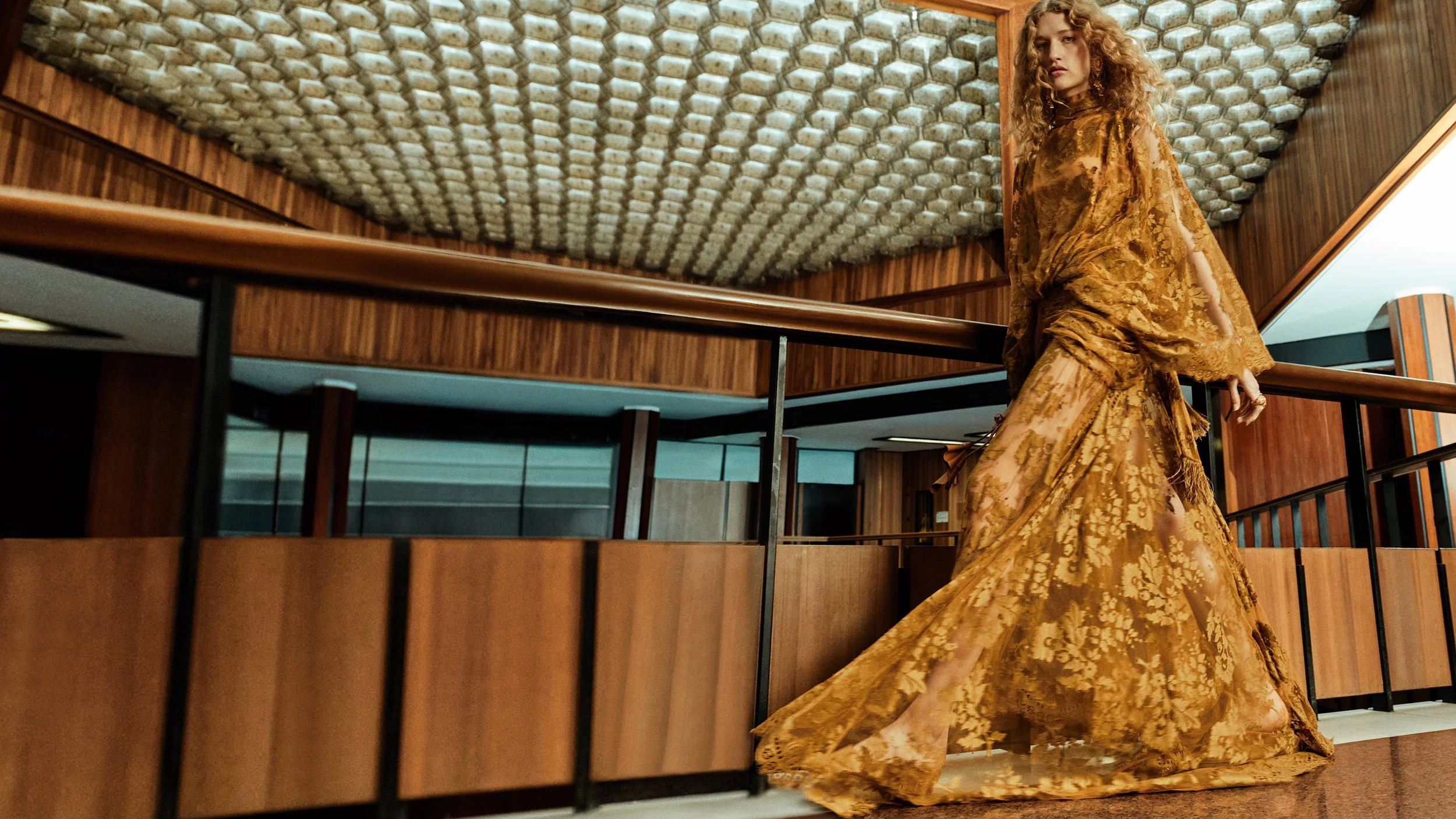
Courtesy of Zimmermann
When fashion and architecture meet at the right moment, the image becomes something more.
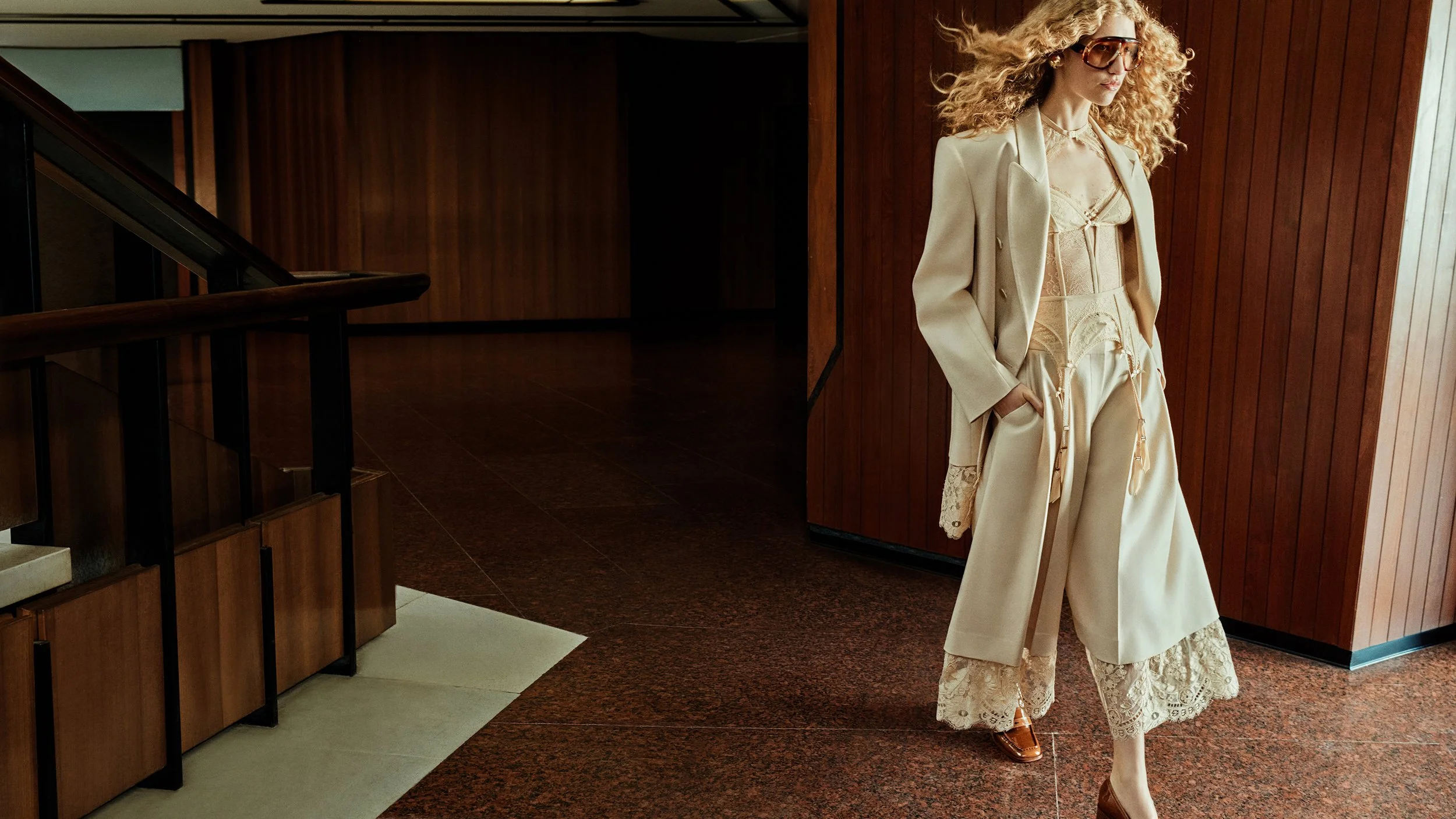
Courtesy of Zimmermann
There’s confidence in knowing exactly how to walk into a room.
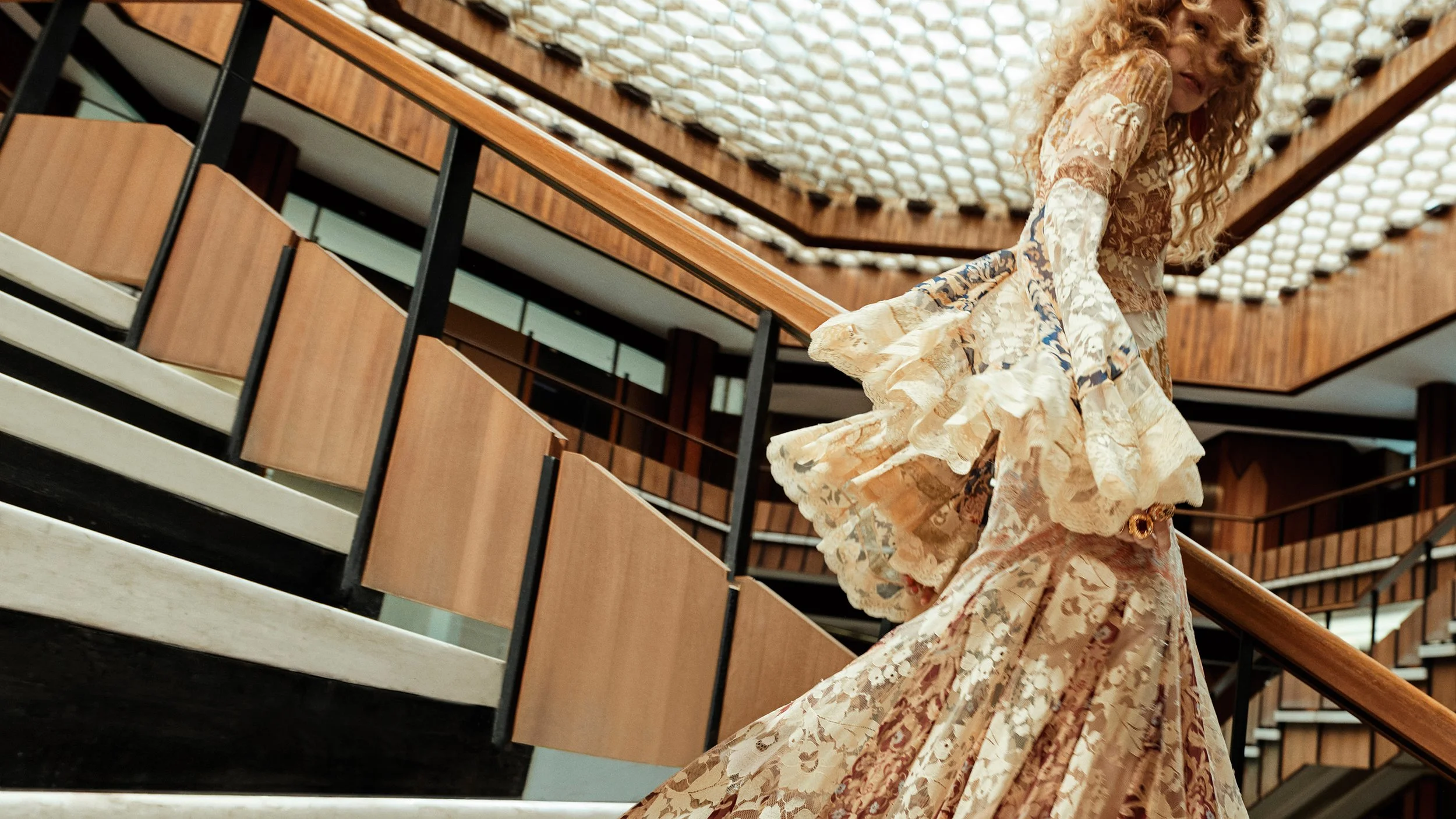
Courtesy of Zimmermann
Somewhere between movement and stillness, the clothes find their own rhythm.
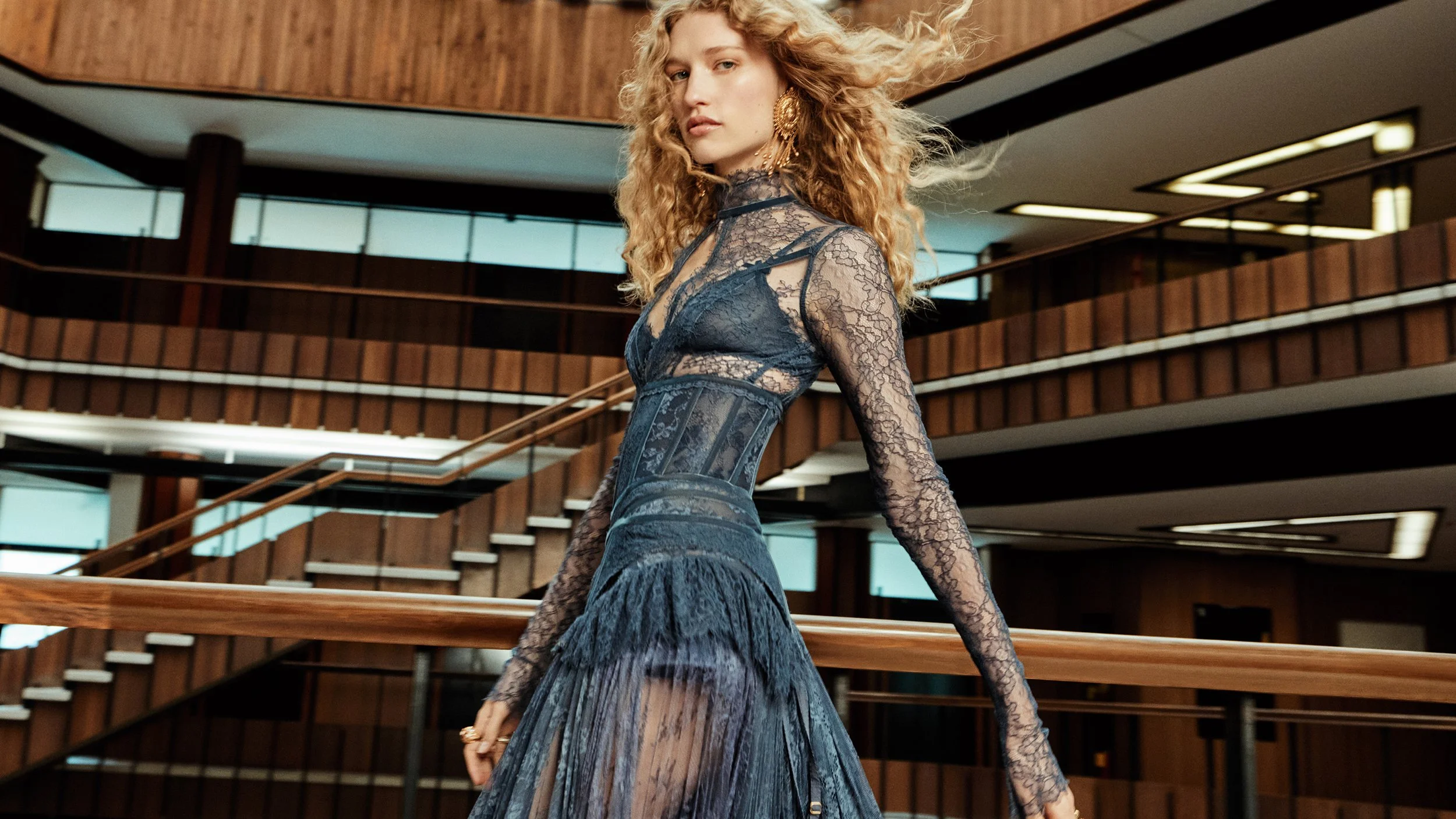
Courtesy of Zimmermann
Strength doesn’t always arrive with force. Sometimes it moves with a little lace, a sharp silhouette, and complete control.
Courtesy of Zimmermann
This is where ZIMMERMANN lets the rules go. Silk takes over, the prints collide, and the whole look moves with its own kind of attitude.
Courtesy of Zimmermann
Tailoring takes the lead, while lace brings the edge. Elegance doesn’t always have to play by the rules.
Courtesy of Zimmermann
Softness, structure, and a little bit of attitude. Sometimes the strongest look is the one that makes itself completely at home.
Courtesy of Zimmermann
Romance takes a more provocative turn, with lingerie, leather, and a gaze that stays with you.
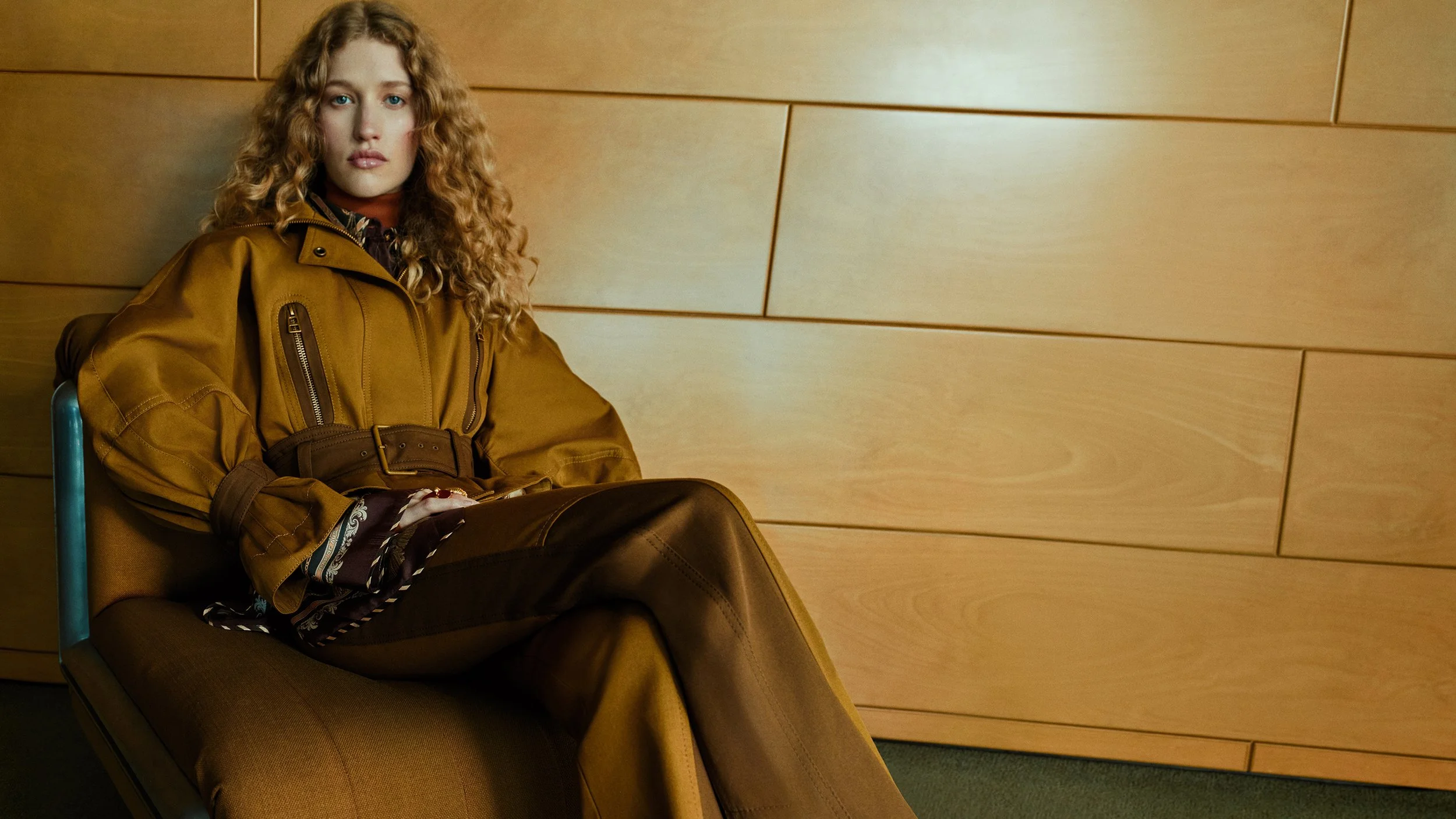
Courtesy of Zimmermann
Utility, attitude, and a silhouette that knows exactly what it’s doing. There’s nothing delicate about this one.
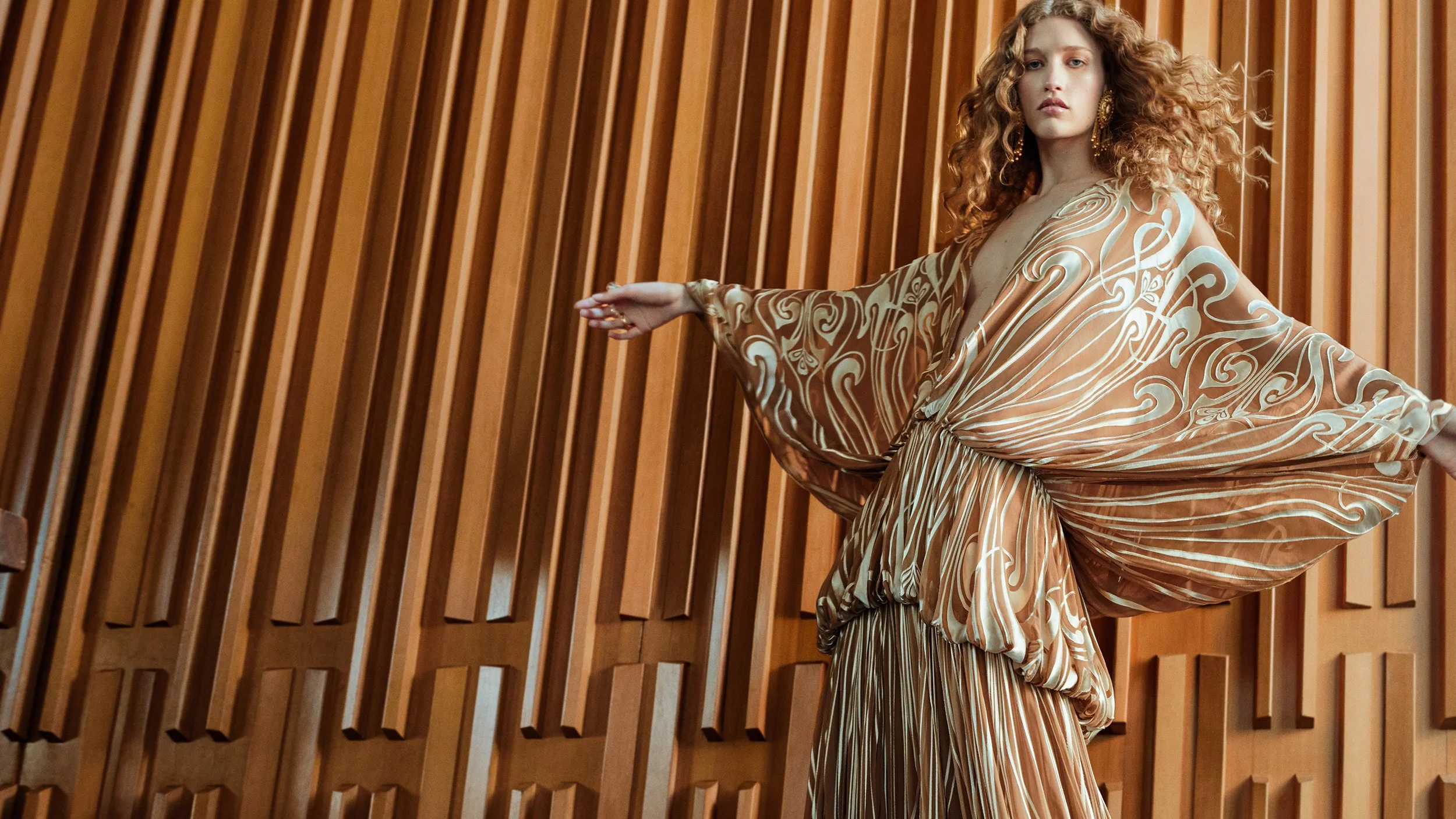
Courtesy of Zimmermann
