

ARTICLE JULY XX, 2026
FASHION REPORT YOUR NEXT OBSESSION HAS ALREADY BEEN CALCULATED FW26
BY TINA DIMKOVSKA
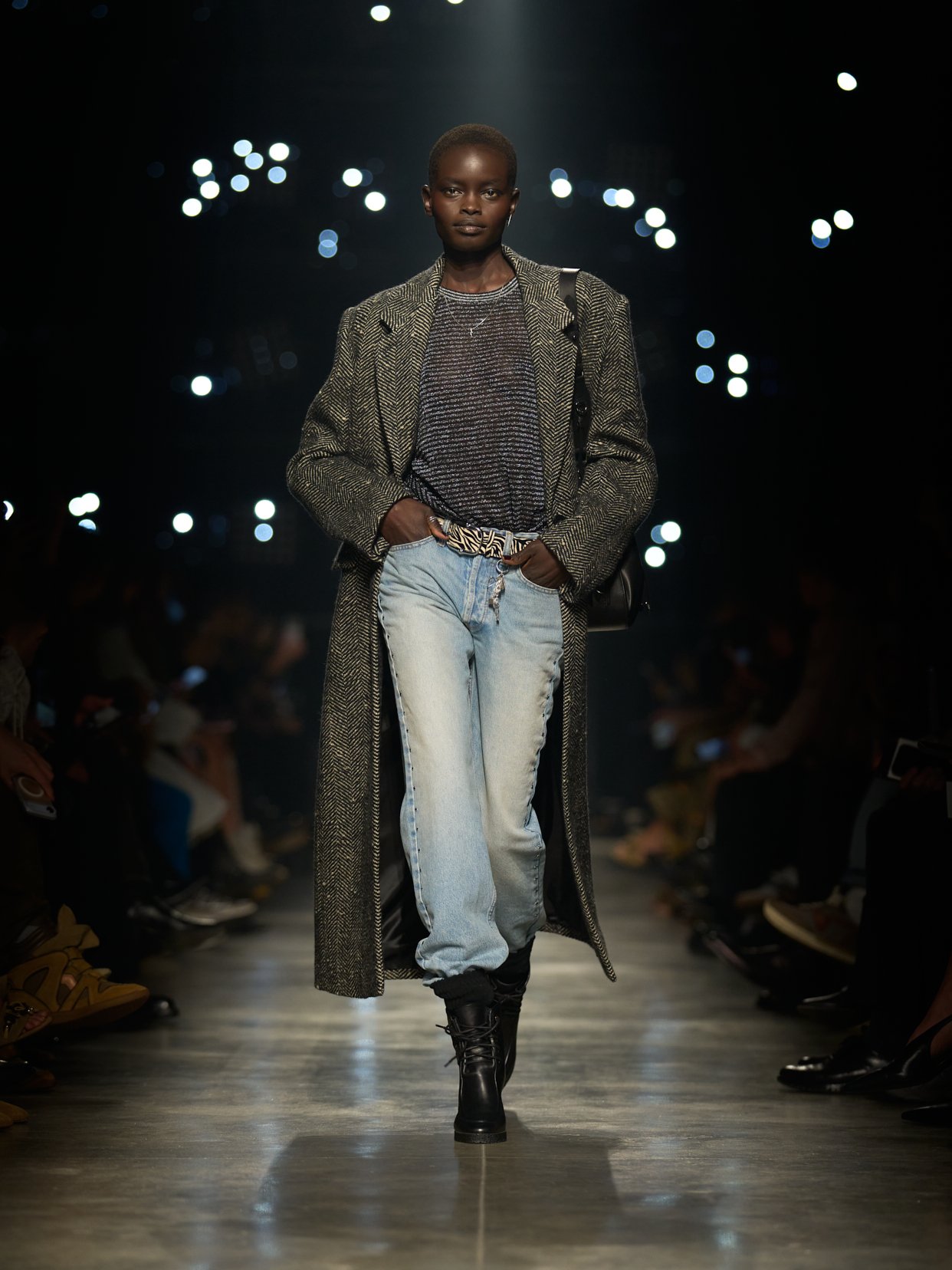
For Fall/Winter 2026–27, Isabel Marant channeled urban energy through distressed denim and assertive outerwear, emphasizing lived-in texture and metropolitan attitude.
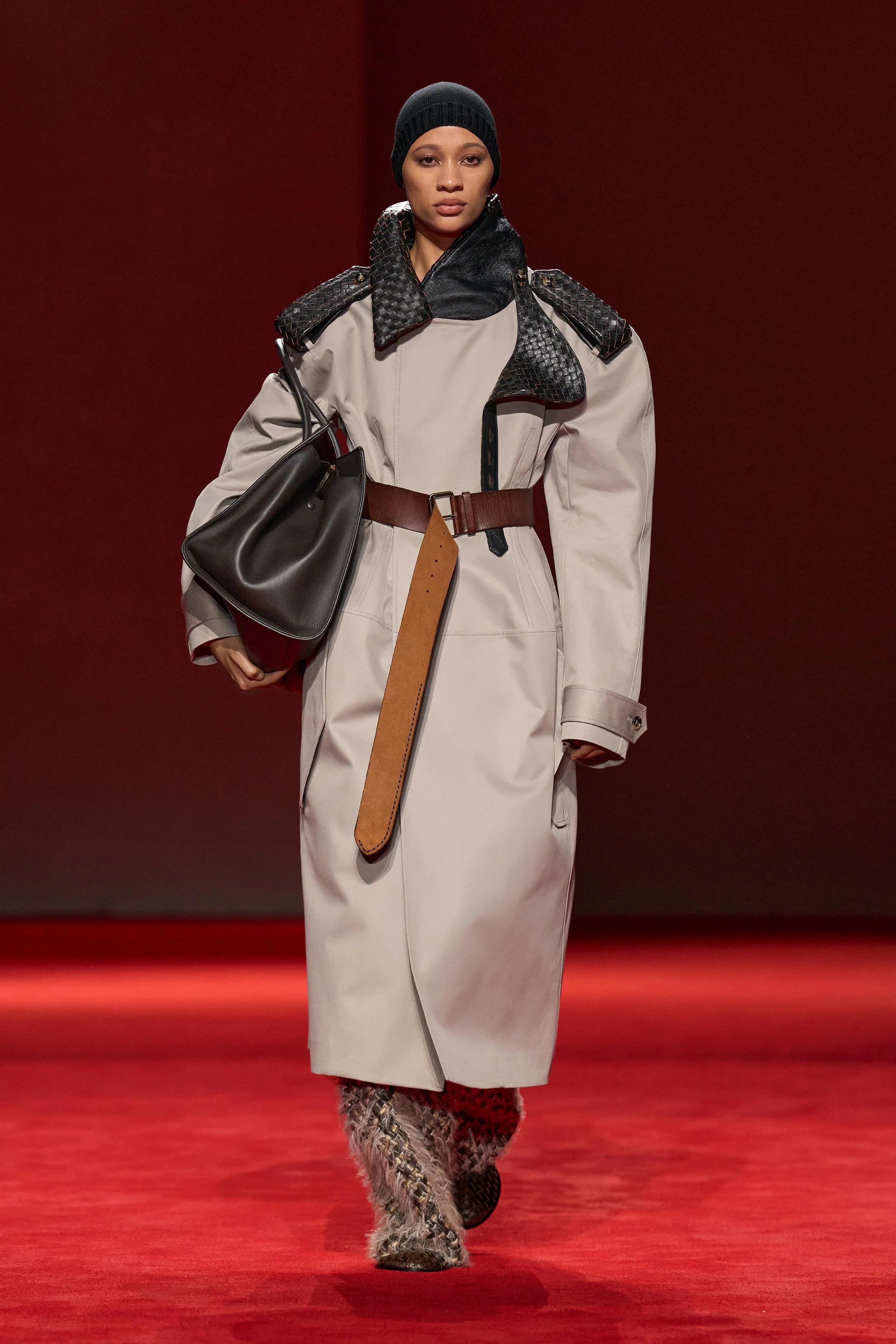
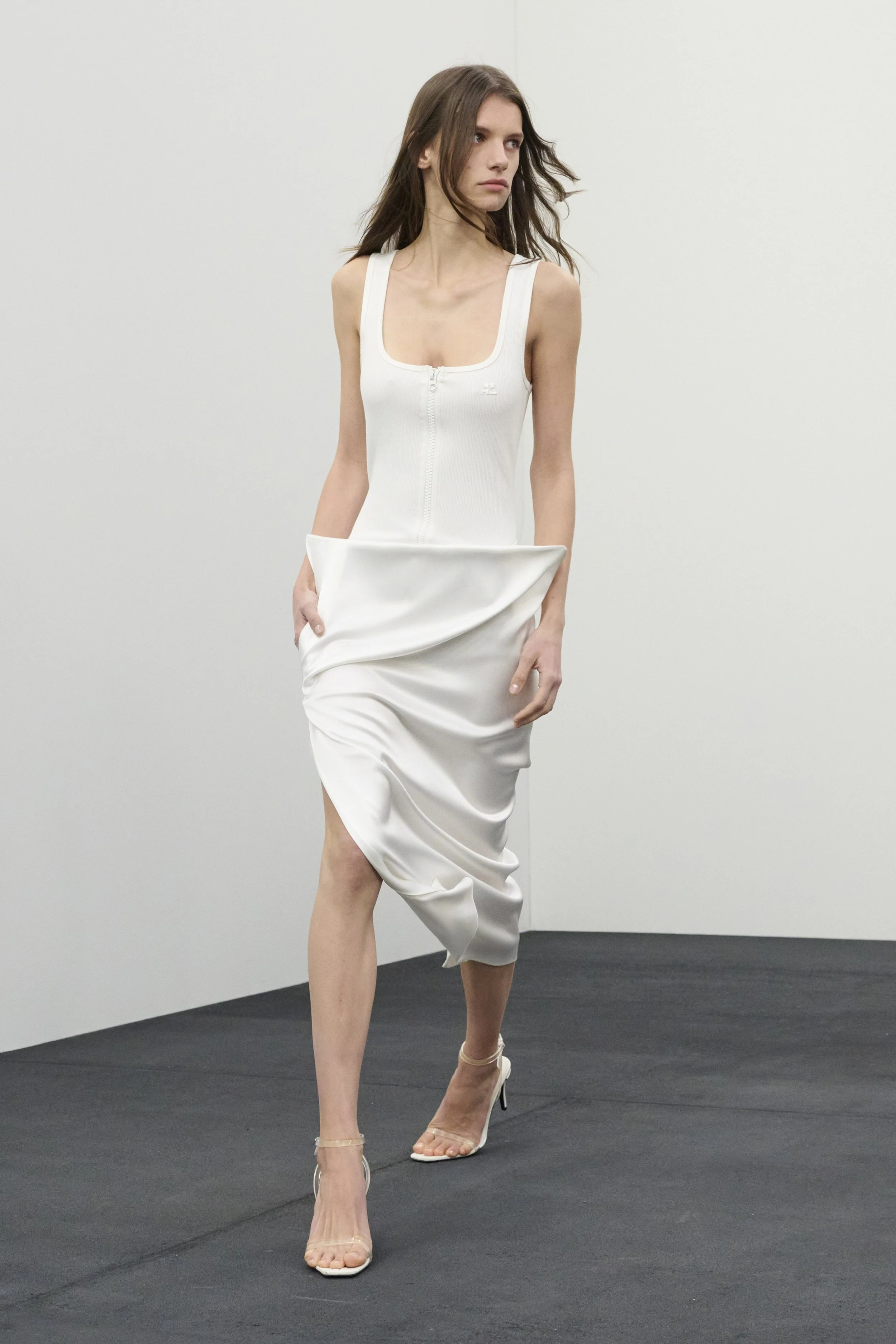
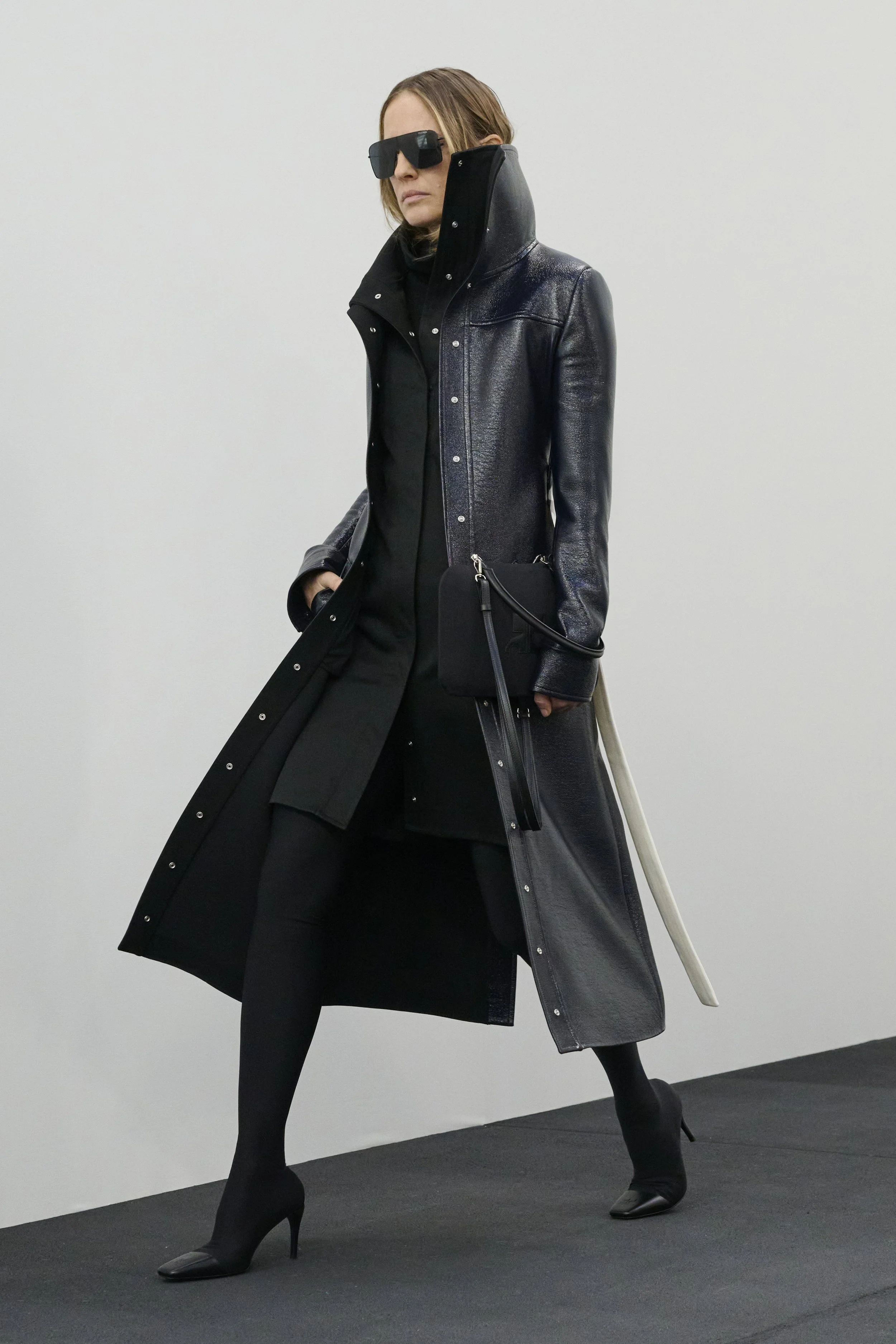
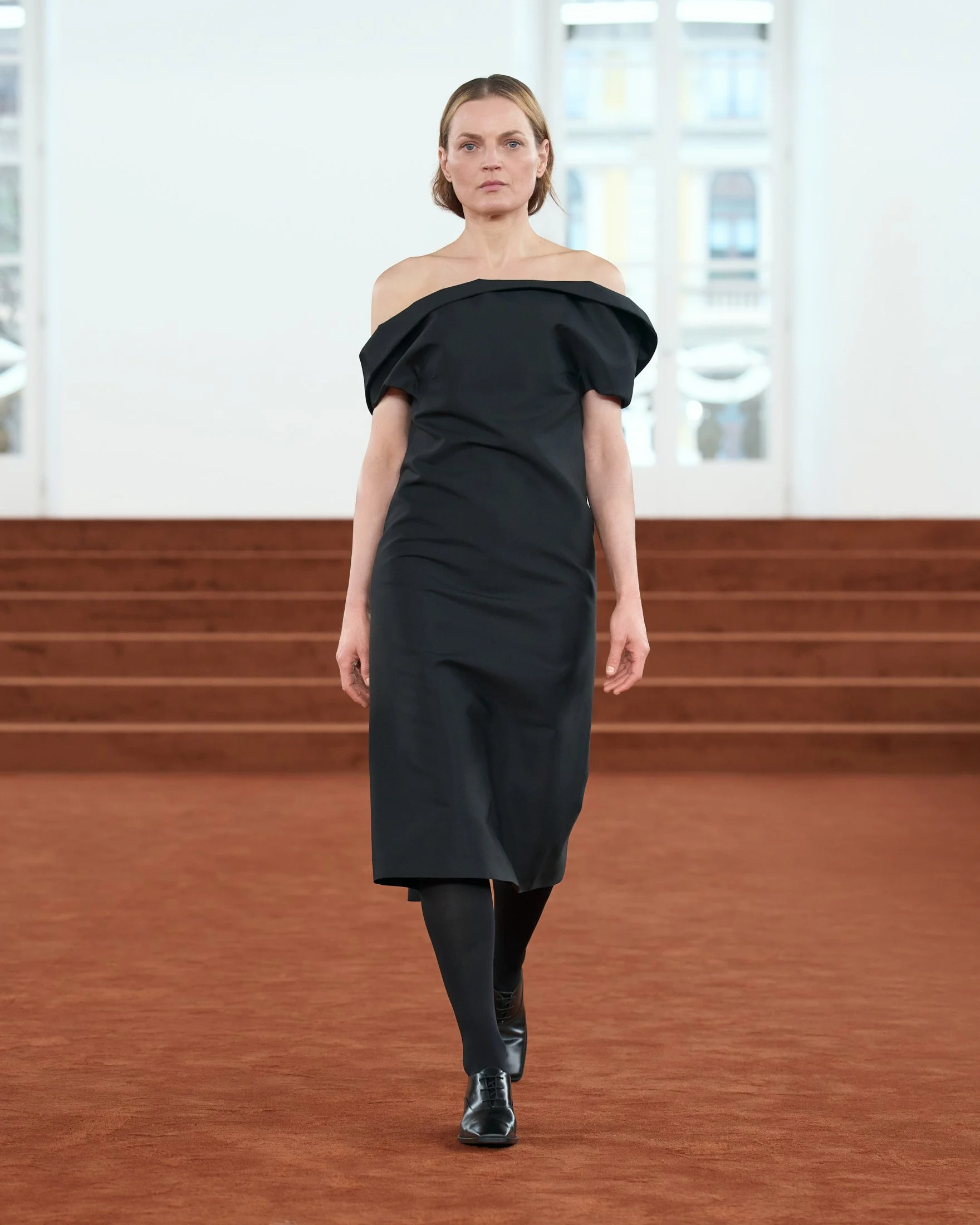
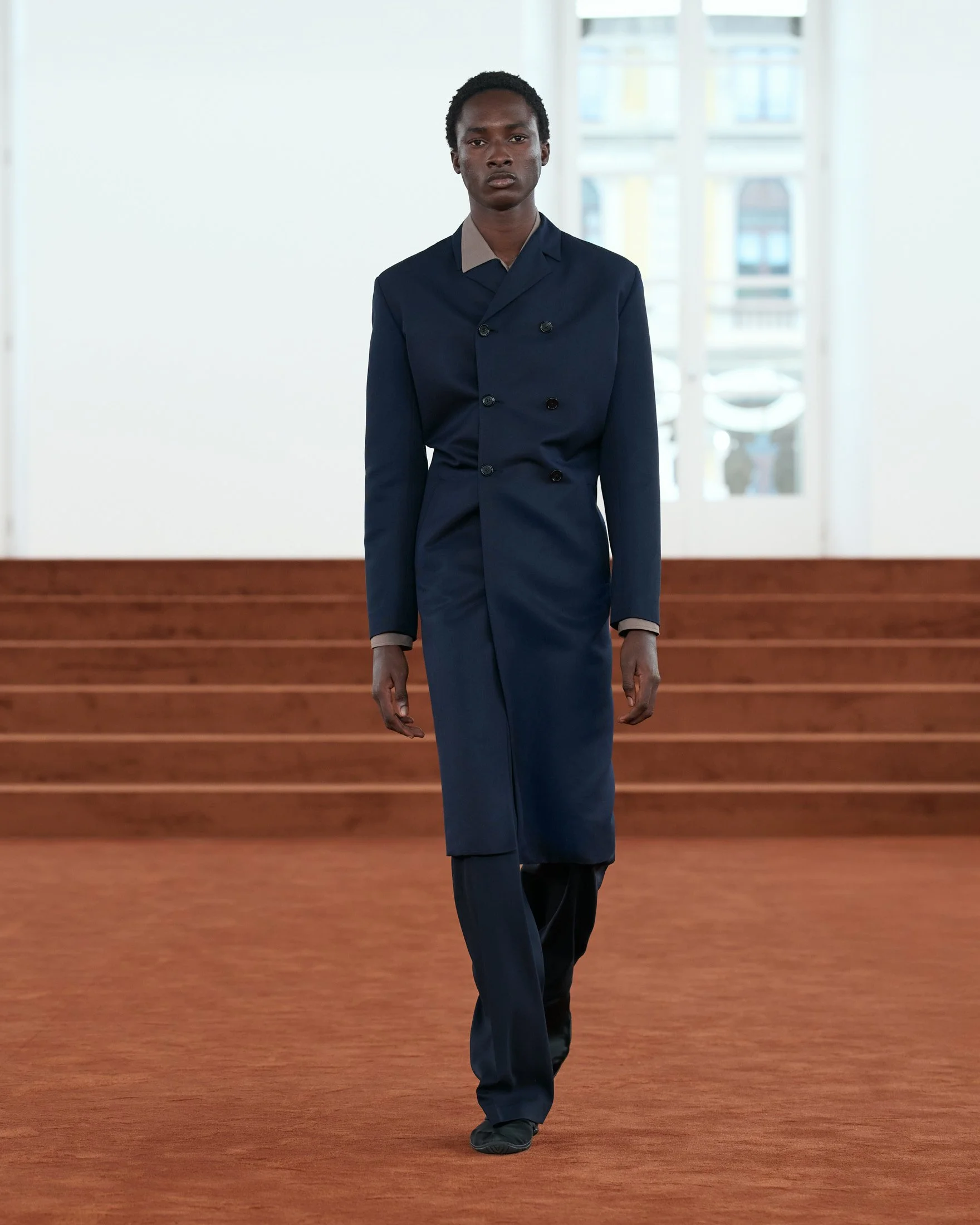
Etro balanced restraint with eclectic maximalism, masculine tailoring meeting vibrant patterns and bohemian sensibility. Chloé returned to an instinctive, body-aware femininity, where softness is expressed through construction. Romantic layering, fluid draping, and relaxed tailoring reinforced a sense of ease that felt lived-in. The collection leaned into bohemian romanticism and craft-driven silhouettes, reframing femininity as something immediate, grounded, and unforced. Jil Sander invited grit, grime, and excessive fabric into minimalism, introducing emotional warmth by exploring "the superfluous as essential." Bottega Veneta pursued a dialogue between brutalism and sensuality through texture innovation, hard forms softened by tactile surfaces. Valentino continued to translate romanticism through ornamental language and historical reference. Courrèges grounded sharp tailoring in lived reality through "24 Hours in the Life of a Courrèges Woman," a cinematic approach to designing for movement through cities, using geometric precision and kinetic silhouettes that prioritize function alongside form.
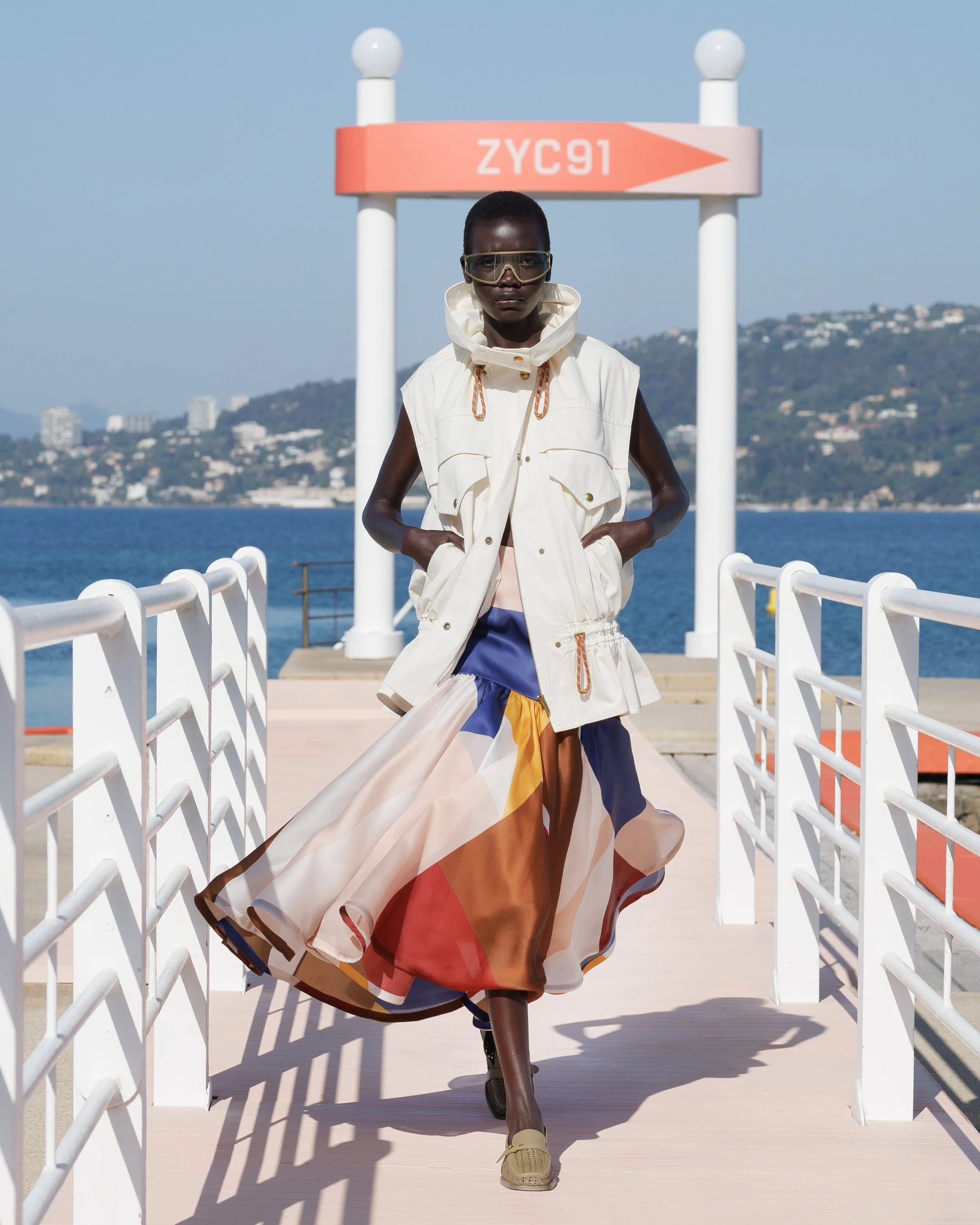
For Resort 2027, Zimmermann explored athleticism meeting elegance through movement and technical construction. Gucci Resort 2027 stripped back to sensuality and confidence that comes from how the clothes feel and function on the body, rather than from visual ornament. Khaite threaded softness through architecture—delicate, intimate moments paired with bold tailoring to create the collection's central friction: strength and vulnerability, polish and rawness, sensuality grounded in practicality. Kenzo centered craft and tactility, inspired by handmade pottery and artisanal practice, translated through utility dressing: weathered denim, worker jackets, cable-knit sweaters, and striped separates that emphasize handmade quality and everyday function.
When the same mood starts appearing across multiple collections at the same time, not the same silhouette, not the same color, but the same feeling, the more interesting question is not 'what is trendy'. It is why. And more importantly: 'how did everyone arrive here simultaneously?' Did all these designers wake up one morning with the same obsession? Was there a secret meeting somewhere in Paris where everyone agreed that for the next season luxury needed to feel human, tactile, and emotionally grounded? Not exactly. Fashion likes to present trends as spontaneous bursts of creativity, but behind every 'sudden' return of feeling, sensibility, or cultural mood, there is often a much larger system at work.
Fashion forecasting is the practice of predicting what people will want to wear before they want it. It looks at the future direction of colors, fabrics, silhouettes, patterns and cultural moods. For designers and brands, this is a business necessity. Collections are often planned months, sometimes even years, in advance. Getting the mood of the market wrong can lead to overproduction, markdowns, dead stock and waste. Forecasting promised to solve how to predict accurately, make only what's wanted, and eliminate waste.
Although fashion forecasting may sound like a modern invention, the desire to predict and control fashion is far from new. By the 20th century, fashion forecasting became more organised. In the 1920s, agencies such as the Color Association of the United States helped communicate color and style information between Paris and American retailers. Later, in the 1960s, agencies such as Promostyl helped standardise the industry through trend books: carefully curated reports which guided fashion designers, manufacturers and buyers on what was likely to matter next. Back then, forecasting was an elite sport. Fashion shows were not instantly
Courtesy of Bottega Veneta VIEW INSERT
ARTICLE WHAT REMAINS OF THE SEASON FW26
Courtesy of Bottega Veneta VIEW INSERT
ARTICLE WHAT REMAINS OF THE SEASON FW26
Courtesy of Courreges VIEW INSERT
Courtesy of Courreges VIEW INSERT
ARTICLE WHAT REMAINS OF THE SEASON FW26
Courtesy of Isabel Marant VIEW INSERT
available to everyone with a phone. They were attended by buyers, editors, forecasters and a select group of insiders (who in fact acted as gatekeepers). They watched the collections in New York, London, Milan and Paris, wrote reports, shaped publication narratives and advised department stores on what to buy next. The public received trends slowly, more controlled, and far more hierarchical. Editors were the ones telling readers what mattered. Buyers decided what reached stores. Consumers did participate, but at the very end of this chain. Then two things happened in quick succession that changed the system permanently. The rise of fast fashion in the 1990s accelerated the system dramatically, with brands like Zara compressing the time between design, production and retail. Then, in 1998, WGSN launched as one of the first major online trend forecasting platforms, replacing the slow circulation of printed trend books with instant global access to trend intelligence. WGSN transformed forecasting from a slow, seasonal exercise into a global information network. Today, that evolution has accelerated even further. Forecasting is no longer driven primarily by forecasters attending runway shows and compiling reports. It increasingly relies on artificial intelligence systems capable of processing millions of images, searches, purchases, and social signals in real time. Heuritech is one of the clearest examples of this shift. Founded in Paris in 2013 by two machine-learning PhDs, the company uses artificial intelligence to scan social media images and detect thousands of fashion attributes, from colors and textures to silhouettes, prints and accessories. Rather than relying only on runway analysis or expert intuition, it looks at what people are actually wearing, sharing and engaging with online. Its algorithms divide this data in three audience panels; edgy, trendy and mainstream, to track how a trend moves from the fringes to mass adoption. The results are, by any measure, striking. Heuritech's models predicted dotted prints, flat-thong sandals and the color yellow months before they appeared on the SS25 runways. All three showed up. Eventually, they'll reach Target and H&M too. WGSN, since its 1998’s inception has transformed into an AI powered forecasting company. However, their approach is different. It operates as more of a hybrid model. It combines data, AI tools and human editorial expertise. That distinction matters. AI can detect that teal is gaining visibility. But it cannot always explain why something matters culturally, or whether the online visibility will in fact translate to sales. A trend can go viral without becoming commercially powerful. That is where human interpretation still matters. AI can tell you a trend is growing across multiple regions, that the early signals came from consumer feedback and social sentiment six months ago, that they're trending across luxury demographics. But what it cannot tell you is why Zimmermann made it athletically kinetic, why Chloé made it intimately soft, why Jil Sander made it gritty warm, and why all three decisions feel completely right. The gap between the data point (people want luxury to feel human) and the design decision (and here's what human means to us) is where the real question lives. Forecasting systems do not operate in isolation. The signals they detect are produced, amplified, and circulated through a broader cultural ecosystem. Designers, forecasters, editors, stylists, celebrities, and consumers all participate in the same information environment, each influencing how a trend gains visibility and momentum. Editorials and celebrity styling accelerate this cycle. Trends no longer need to develop slowly across seasons. When a major publication runs a feature or a respected celebrity wears something on the red carpet, it can galvanize editorial coverage across the industry. Think of how quickly "quiet luxury" or "dopamine dressing" moved from editorial concept to widespread adoption, not through viral moments, but through sustained coverage in prestigious publications and celebrity endorsement. These are sophisticated aesthetic movements that generate real commercial momentum. If the skinny jeans once took years to rise and fall, now a cohesive editorial trend can move through high-fashion consciousness in months. Information cycles have accelerated dramatically. Trends that once took seasons to reach consumers now travel at the speed of editorial coverage. Peeks at Paris Fashion Week appear in publications instantly. Celebrities' outfits from red carpets are analyzed, referenced, and incorporated into collections almost immediately. The gatekeepers, editors, publications, influential figures, move faster than ever, but they remain the arbiters of what matters.
Courtesy of Isabel Marant VIEW INSERT
ARTICLE WHAT REMAINS OF THE SEASON FW26
Courtesy of Jil Sander VIEW INSERT
Courtesy of Jil Sander VIEW INSERT
ARTICLE WHAT REMAINS OF THE SEASON FW26
Fashion is more commercially accessible than ever. Online shopping removes the need to visit specific stores or wait for a product to appear locally. A consumer can see a look, search for a similar version, and purchase it almost instantly. But accessibility does not democratize direction. It accelerates distribution. Desire now moves faster, but it is still largely initiated and shaped from the top: by celebrities, stylists, editors, publications, and online fashion communities who translate cultural signals into visible authority. This is where the system begins to fracture. Once a trend is fully visible and widely circulated, its sense of exclusivity diminishes quickly. What once felt directional becomes overexposed in a matter of weeks. The cycle accelerates. Fast fashion can now respond within days. Forecasting platforms and social analytics track emerging references, while runway casting, celebrity dressing, and editorial positioning give those references legitimacy. By the time a trend reaches mass retail, early adopters, and often the cultural drivers themselves, have already moved on. And when there isn’t an obvious “next,” creation becomes more diffuse. Celebrities and stylists continue to set the initial signals, but consumers now participate in amplification via styling, remixing, and circulating looks within platforms governed by visibility, engagement, and virality. These signals are then absorbed back into the system: interpreted by editors, stylists, and brand teams, and increasingly processed through algorithmic forecasting tools that quantify attention. The result is a feedback loop that is not fully horizontal, but layered. Cultural authority still flows from a group of tastemakers, while platforms accelerate replication and visibility. Yet these tastemakers aren't inventing desires from scratch; they're reading the same cultural currents that designers are sensing. But they're reading those currents through feeds, metrics and visibility data. The tastemakers and the algorithms are now entangled. A celebrity's styling choice gets photographed, uploaded, analyzed by Heuritech, and fed back to brands as a "trend signal" within hours. The distinction between organic cultural signal and algorithmically amplified signal has collapsed.
When Isabel Marant, Etro, Chloé, Jil Sander, Bottega Veneta, Valentino, and Courrèges unveiled Fall/Winter 2026 collections emphasizing embodied luxury and craft, and when Zimmermann, Gucci, Khaite, and Kenzo continued the narrative with the same sensibility across Resort 2027 collections, they weren't copying each other or chasing what publications were already celebrating. They were all reading the same cultural frequency. Some detected it through editorial coverage and celebrity styling. Some through their own customer feedback. Some through the lived experience of inhabiting their cities. But they were all responding to a genuine signal about what people are feeling. A signal that would eventually appear in publications and on celebrities because it resonated culturally. This is the paradox forecasting reveals: The signal may be authentic, but it travels through algorithmically filtered channels. People are genuinely hungry for luxury that doesn't perform, that feels lived-in, that prioritizes the body's experience over the image, that values craft and tactility. That part is real. But designers aren't reading pure culture anymore. They're reading culture as it appears through algorithmically curated feeds, through social media visibility metrics, through platforms designed to show them what generates engagement. The hunger is authentic. The signal is real. But the channel through which it travels has been engineered. The designers' job was to translate that signal into their own language. But they're translating a signal that has already been filtered, amplified, and shaped by systems designed to extract commercial value from cultural feeling.
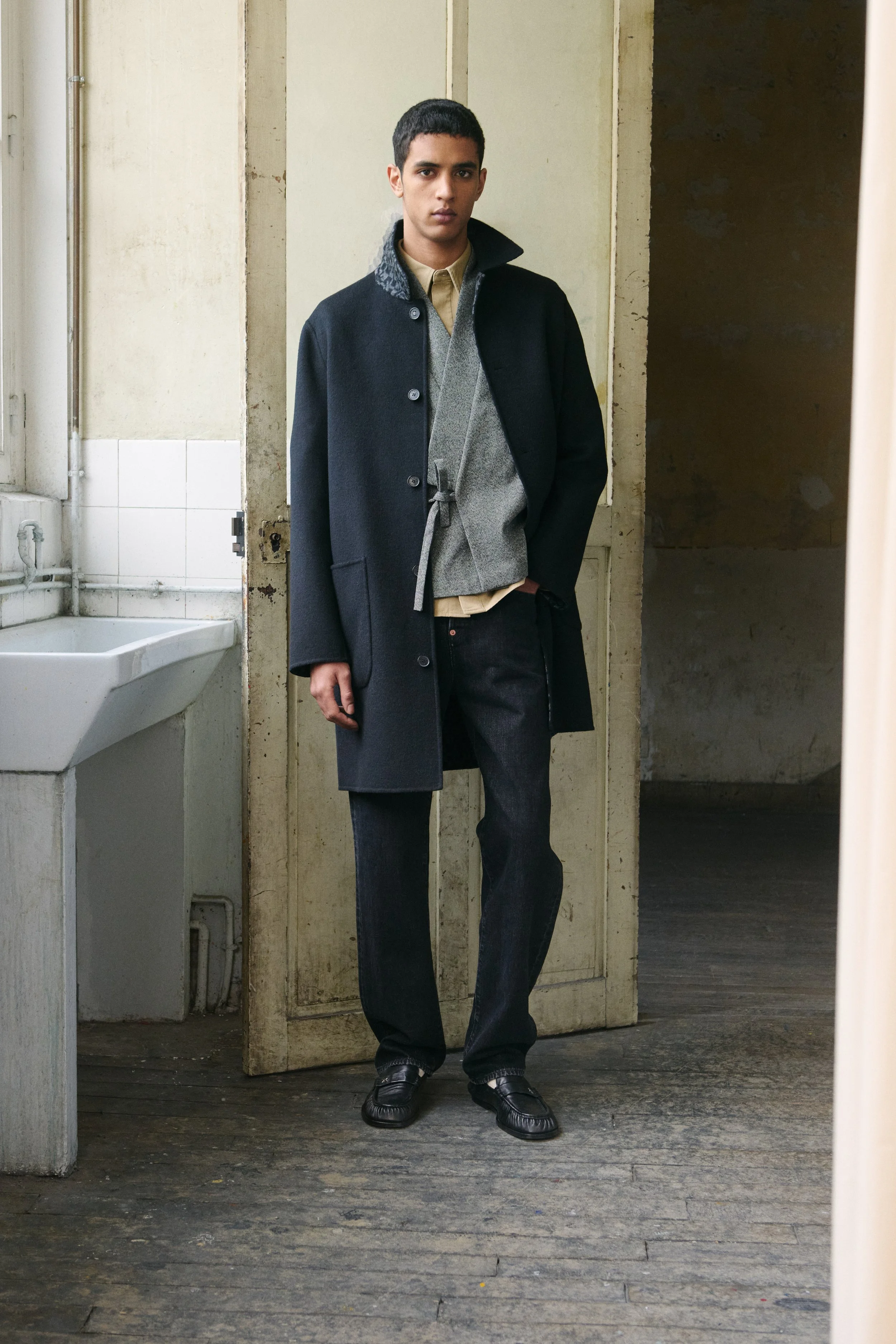
Courtesy of Kenzo VIEW INSERT
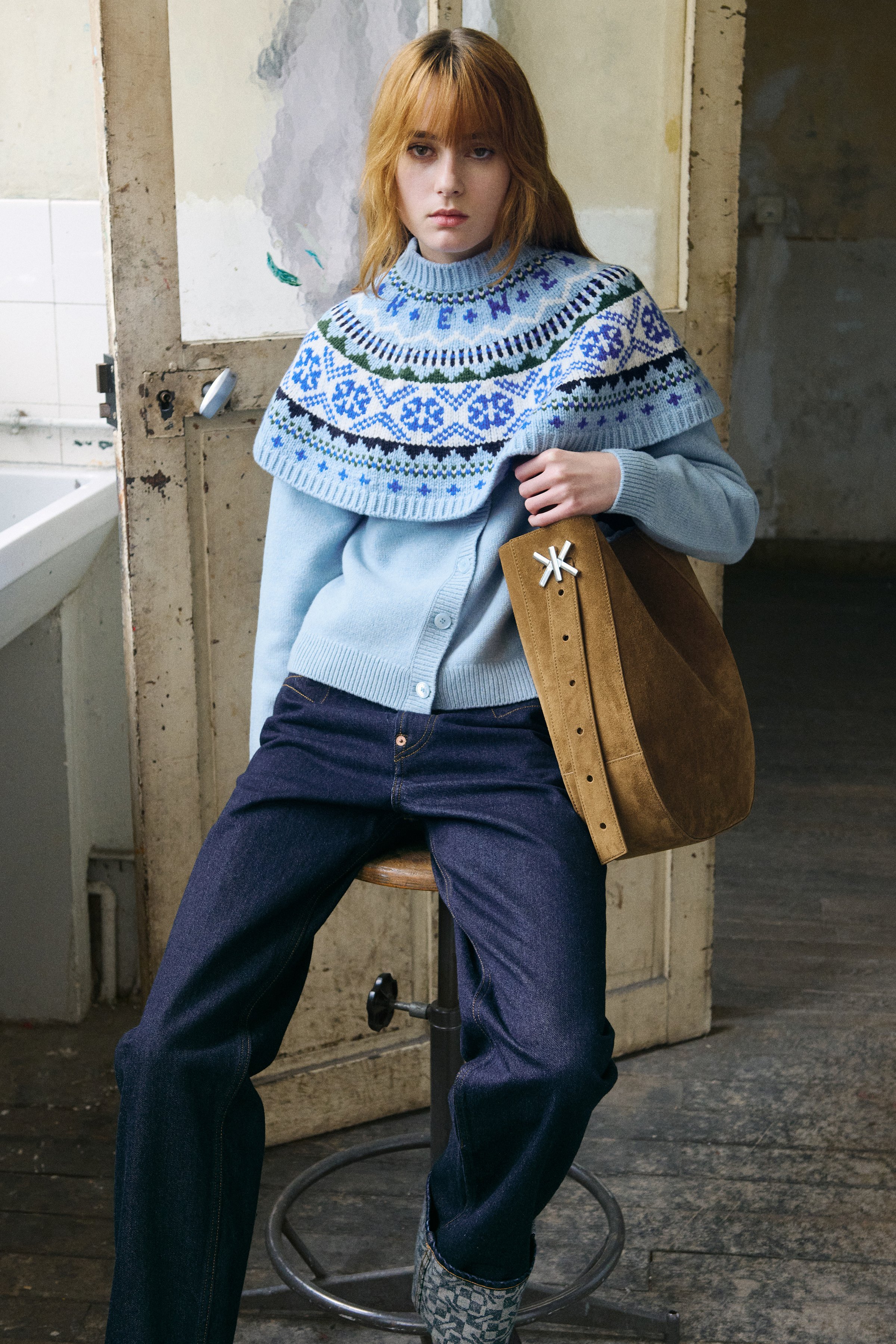
Courtesy of Kenzo VIEW INSERT
The question is no longer simple. Yes, every brand that subscribes to the same forecast platforms, reads the same trend reports, and acts on the same signals will arrive at a kind of aesthetic convergence: several brands all making soft, tactile, intimate luxury, all for the same reasons and at the same time. That's not a hypothetical endpoint. That's the system working as designed. And yes, that convergence gets commodified almost immediately. But here's what separates the designers who matter from the ones who don't: it's not whether they escape forecasting. They can't. The question is what they do within that coordinated system.
ARTICLE WHAT REMAINS OF THE SEASON FW26
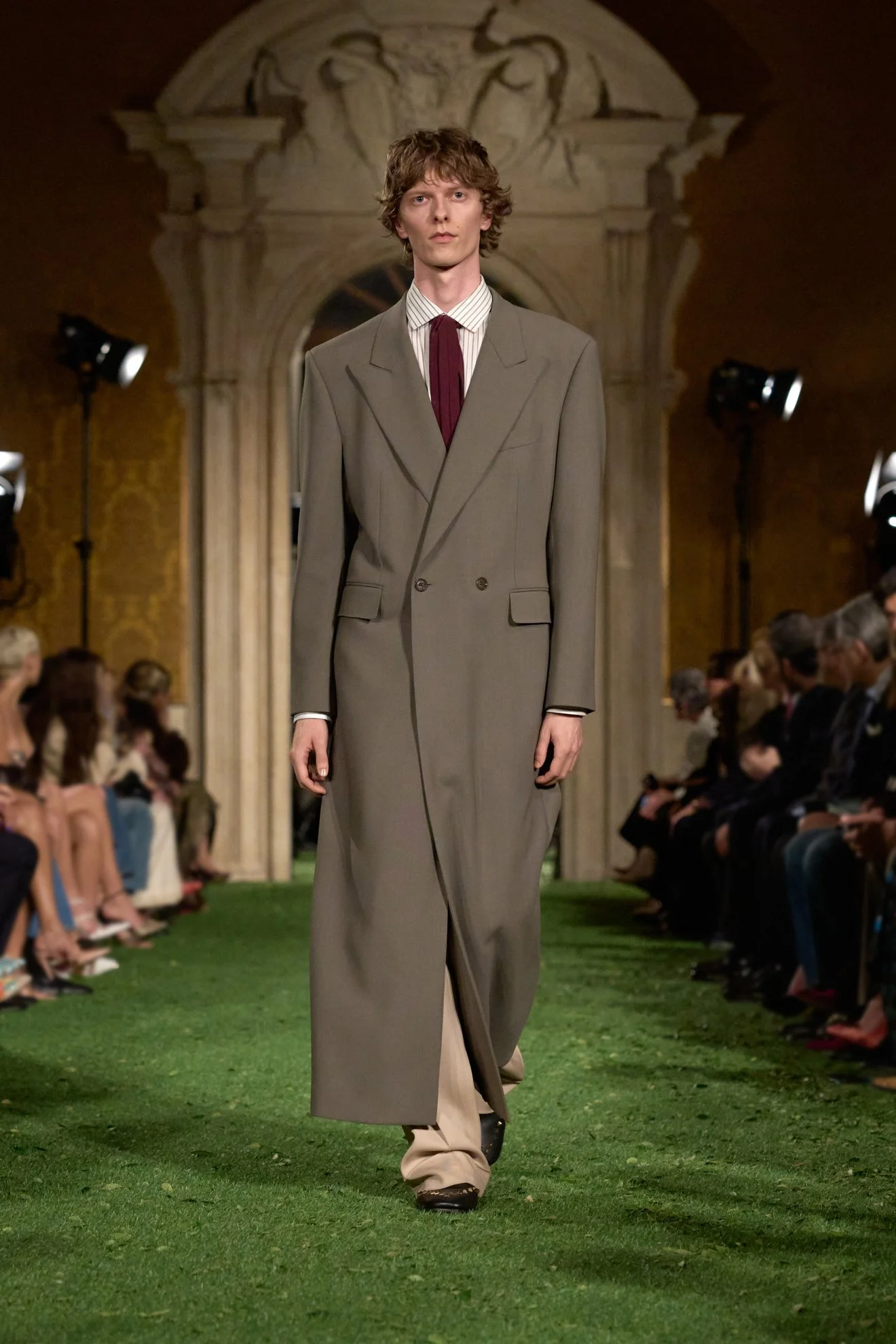
Courtesy of Valentino VIEW INSERT
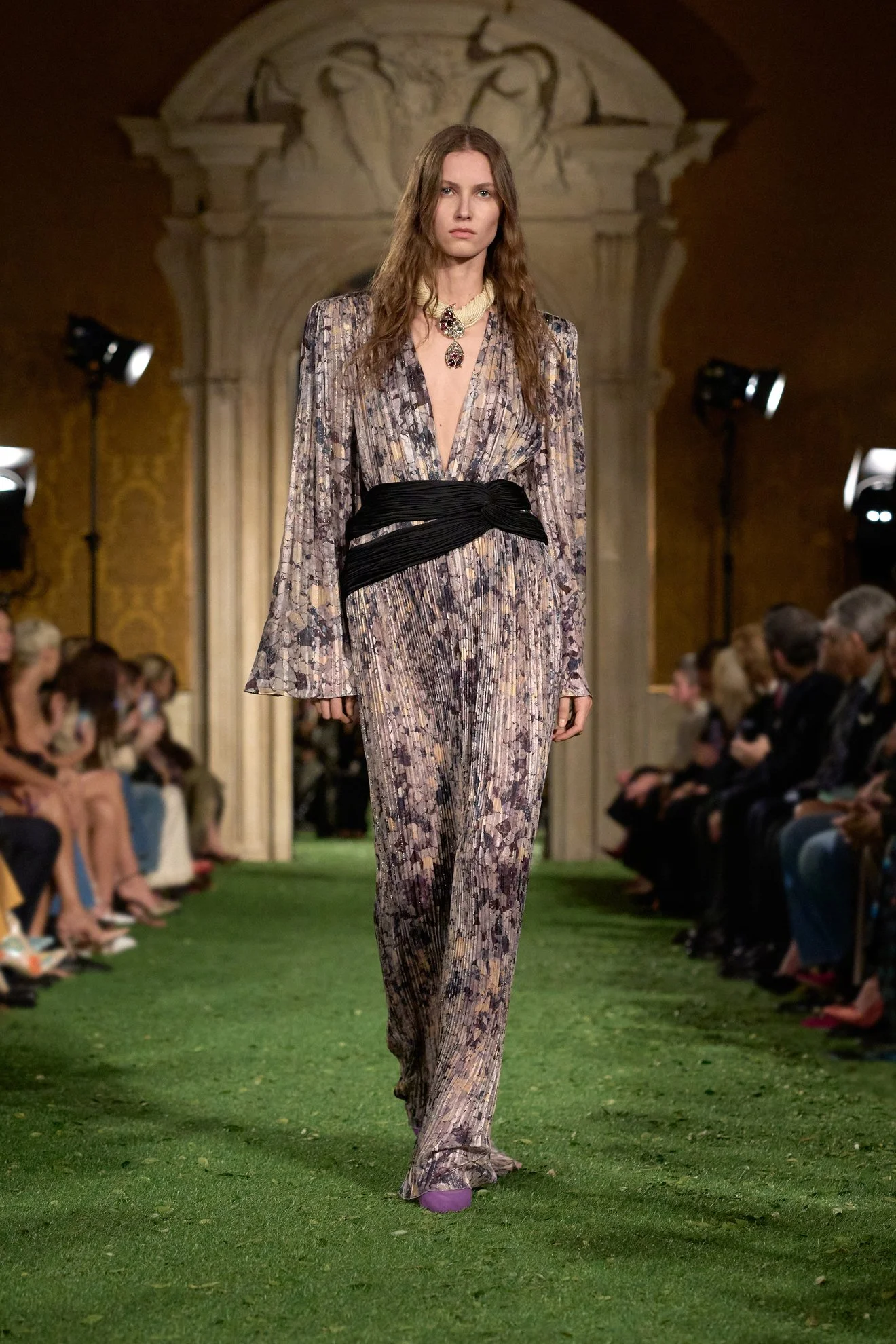
Courtesy of Valentino VIEW INSERT
A forecast may point towards humanity, tactility, and emotional authenticity. But a forecast does not make a collection. What matters is how a fashion house filters this data and morphs it into its own visual language. Not to escape the trend, but to express their singular vision through it. To take a coordinated signal and make it unmistakably theirs. That is why the same signal, softness, warmth, craft, embodied luxury, appears differently across houses. Not because they've escaped the system, but because they've committed more deeply to their own point of view within it. That is why the same signal is filtered through athletically kinetic at Zimmermann Resort 2027, sensual at Gucci Resort 2027, architecturally layered at Khaite Resort 2027, artisanal at Kenzo Resort 2027; urban at Isabel Marant FW26, eclectic at Etro FW26, intimately soft at Chloé FW26, gritty warm at Jil Sander FW26, hard-soft at Bottega Veneta FW26, heritage romanticism at Valentino FW26, and cinematic at Courrèges FW26. The forecast identifies the signal. The translation is everything, and it's the only thing that will matter six months from now, when this particular cycle of luxury has saturated the market and the forecasting platforms are already pointing toward something else.
ARTICLE WHAT REMAINS OF THE SEASON FW26
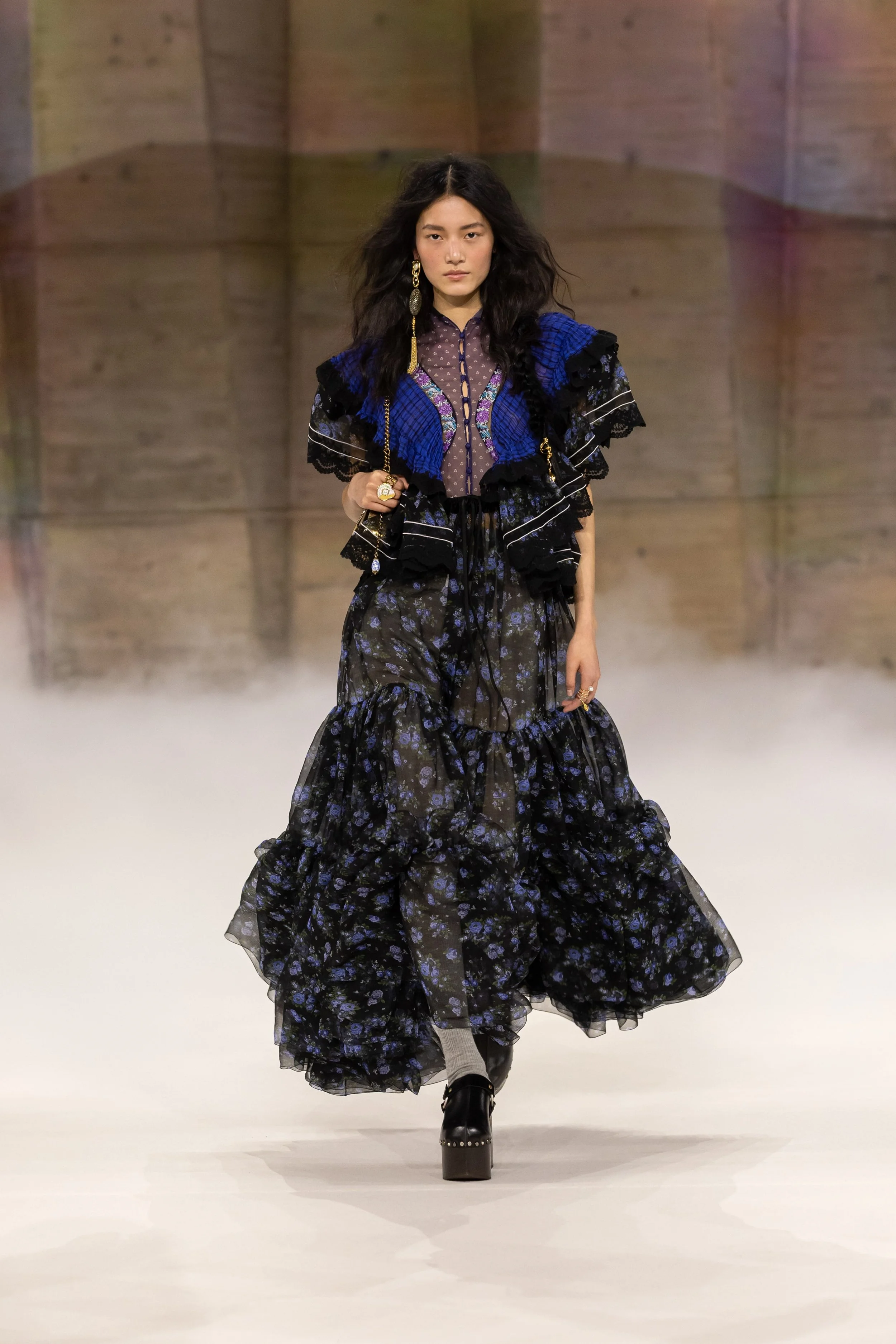
Courtesy of Valentino VIEW INSERT
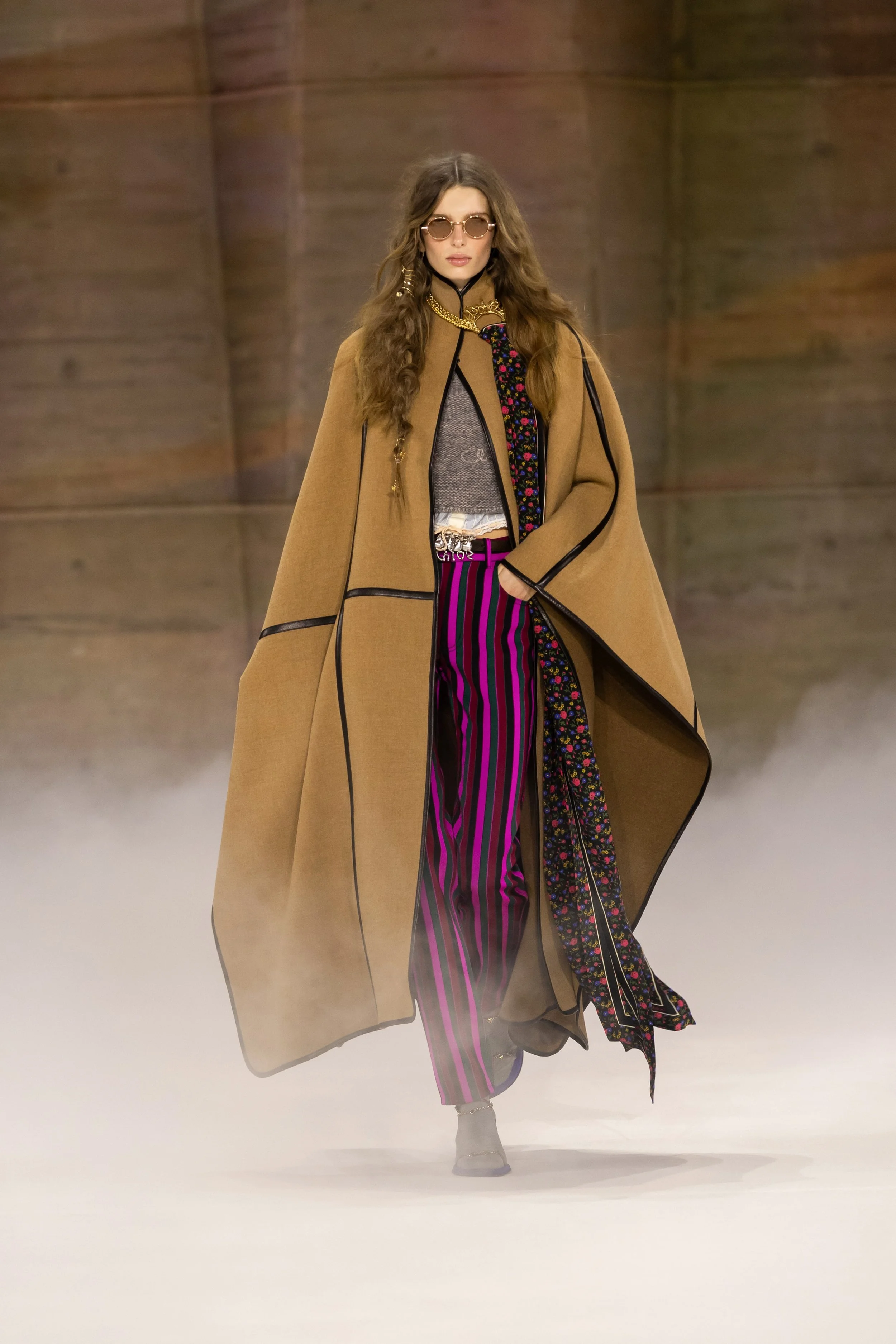
Courtesy of Valentino VIEW INSERT
Creativity is not killed by forecasting. It's tested by it. The designers who forget what their brand is really about, and who slap a trending motif onto a t-shirt hoping forecasting will save them, are not victims of AI. Frankly, they were already lost. The ones who survive are those who use the forecasting signal, this collective recognition that people want luxury to feel human, as clarification of their own vision, not as permission to go deeper. Permission is cheap. Vision is scarce. The ones who matter are those who already know what they're making, and use the signal as confirmation that the world is ready to see it. That clarity is the real power of forecasting. It tells designers they're not alone in reading this cultural frequency. Permission comes in that recognition. And what they do with that permission, whether they deepen their vision or merely follow orders, is where the meaningful work begins. The forecasting system can't make that choice for them. It never could.At Zimmermann, romance felt lighter but never passive. Nicky Zimmermann drew inspiration from trailblazing women of the 1920s. Among them was her own grandmother, who trained as a lifesaver at a time when women were not permitted to do so. That intrepid spirit fed directly into the clothes. Feminine silhouettes played with masculine references in fluid dresses crafted from men's silk scarves, lace-trimmed suiting, and lingerie worn as outerwear, rewriting the dress code rather than simply decorating it. Tailoring came spliced with panels of lingerie lace, while evening gowns had an Art Deco flavour, stitched velvet bodices and graphic chevron stripes grounding the romanticism in something with real structure and history. The femininity here was rooted in confidence, which made it feel more contemporary than almost anything else in the romance conversation.
